
News
For etisalat, More Bandwidth Is A Matter Of Digital Sovereignty
The etisalat group plans to expand its international capacity from 20 Tbps to more than 500 Tbps by 2030, with new routes designed for speed and resilience.


By 2030, etisalat group plans to lift its international connectivity capacity to more than 500 terabits per second (Tbps), more than 25 times the 20 Tbps it has today. The group presented the expansion as preparation for rising AI demand and an important move for the UAE’s digital sovereignty.
His Highness Sheikh Mansour bin Zayed Al Nahyan, Vice President, Deputy Prime Minister and Chairman of the Presidential Court, witnessed the launch of the project, which covers the UAE and international markets. Sheikh Mansour is also Chairman of the Emirates Investment Authority, etisalat group’s main shareholder.
He emphasized the role of coordinated national efforts in advancing the UAE’s AI and digital economy ambitions. “AI is a central pillar in our development journey moving forward,” he said, adding that developing the country’s digital capabilities would empower every institution, public and private, to build and innovate with AI “at the scale the coming decade will demand”.
“This project reflects our conviction that the UAE should not simply adopt AI, but govern it and build with it,” said H.E Jassem Mohamed Bu Ataba Alzaabi, Chairman of etisalat group. “That requires digital infrastructure at a scale that would prepare us for the future”. He cast greater international connectivity as a strategic answer to the challenges of processing and moving data globally.
Also Read: RØDE’s Low-Profile Studio Arm Is Designed To Stay Out Of Shot
Beyond raw bandwidth, the expansion will introduce new connectivity routes intended to improve reliability and efficiency, and Alzaabi tied them directly to the sovereignty goal. “Delivered through diversified routes and low-latency design, the project is set to keep the country’s connection to the global digital economy fast, direct and resilient, while ensuring the UAE’s digital sovereignty,” he said.
He also linked the plan to the group’s 50-year commitment to building infrastructure for the nation. The announcement didn’t mention what the expansion will cost. Nor did it name the new routes or say who will build them, the details that would show what digital sovereignty means in practice.





News
alkalma And BeehiveX Team Up To Turn Health Awareness Into Action
The UAE partnership will test what actually gets people to screen early, seek support and keep up healthier habits.


Awareness is only the first step when it comes to health. The harder part is getting people to act on it, and that’s the problem alkalma and BeehiveX have agreed to examine together.
Leaders from the two organizations signed a Memorandum of Understanding (MoU) at Future Health in Abu Dhabi today. The agreement will explore how health programs can better support participation in screening, earlier support-seeking and healthier behaviors. Work will begin in the UAE, with opportunities elsewhere in the region considered jointly.
For Dr. Omar Najim, Chairman, BeehiveX, the gap is clear: “Awareness alone does not change behavior. Real impact comes from understanding people, removing barriers to action and making healthier choices easier”.
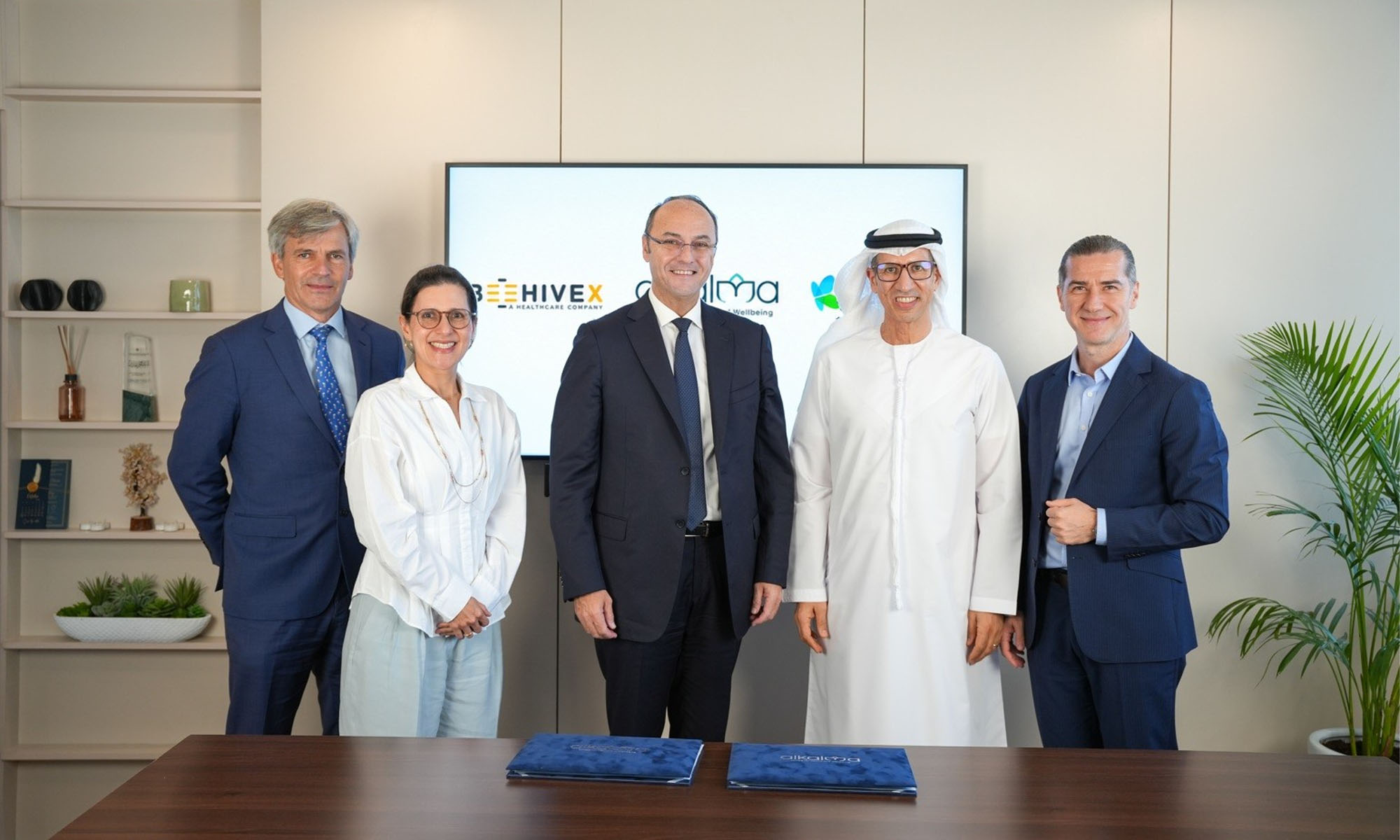
The partners each bring complementary tools. alkalma provides mental health and wellbeing services built on Keralty’s Population Health Management expertise, using it to identify the health needs and risks of different population groups and to run programs focused on prevention, early detection and coordinated care. BeehiveX adds behavioral science, research and communication expertise, studying people’s motivations, the barriers they face and their readiness to change.
The aim is to link how programs are designed with how people actually respond to them. Possible areas of collaboration include community wellbeing initiatives, school and workplace programs, and support for people managing long-term health conditions. The partners will also explore jointly designing, piloting and evaluating behavioral interventions, building evidence on what works and shaping programs that can scale.
Also Read: WHOOP Goes Arabic, Betting On The Gulf’s Appetite For Health Data
Dr. Emilio Herrera, CEO of alkalma and Keralty MENA, said: “A health program needs to do more than identify a risk or explain what someone should do. It also needs to understand their circumstances and help them take the next step”.
In the near future, specific initiatives will be developed and agreed jointly by the two organizations.

alkalma And BeehiveX Team Up To Turn Health Awareness Into Action

Mastercard And LiaPay Bring Earned Wage Access To GCC Workers

Dubai Residential Lets Tenants Break Up First Rent Installment

ESET Bets On Specialized Security AI At 0.5% The Training Cost

Whish Money Opens A Montreal Flagship To Enter The Canadian Market

Abu Dhabi’s Robot Kitchen Is Serving Up Biryani, Not Burgers

Shokz OpenDots 2 Review: Clip-On Audio Gets A Bass-Heavy Makeover

Checkout.com Reports 20% Higher Payment Acceptance For PRYPCO

Sennheiser’s MOMENTUM 5 Series Bets On Batteries You Can Swap

UAE’s 3-Minute University Registration Runs On Government Data


-
 News4 weeks ago
Abu Dhabi’s Robot Kitchen Is Serving Up Biryani, Not Burgers
-
 News3 weeks ago
Checkout.com Reports 20% Higher Payment Acceptance For PRYPCO
-

 News3 weeks ago
Apple Acknowledges iPhone Duo Display Issue After Viral Reports
-

 News3 weeks ago
Dubai Doubles Its AI Campus Target To 1,000 Companies By 2030