
Web3
5 Gaming Cryptos That Will Explode In 2024
Because the gaming metaverse is still in its infancy, gaming cryptos are emerging at a rapid rate, and these 5 promising projects could play important roles in it.


If there’s one segment of the cryptocurrency market that has been doing exceptionally well this year, it’s gaming cryptos. Platforms such as Decentraland (MANA) don’t need an introduction anymore because they’ve already attracted plenty of attention from seasoned crypto investors and regular fans of video games alike.
Even large video game publishers, such as Electronic Arts and Ubisoft Entertainment, believe that the most popular games in the future will be backed by blockchain technology, allowing their players to prove ownership of virtual assets and trade them as non-fungible tokens (NFTs).
Because the gaming metaverse is still in its infancy, gaming cryptos are emerging at a rapid rate, and the most promising projects could play important roles in it. By betting on them early, you can see a huge return on your investment down the road.
Disclaimer: This article is for informational purposes only, and it does not include any financial advice. Please remember to always do your own research before investing into any gaming cryptos. If you’re new to the crypto world, and would like to start your trading journey, we highly recommend you consider using a trusted exchange platform like Coinbase or Binance.
#1 – UFO Gaming (UFO)

Despite its recent slump, UFO Gaming has experienced an enviable growth this year, making the earliest investors extremely happy.
UFO Gaming is building something called a dark metaverse, which it describes as a closed-loop ever-expanding ecosystem consisting of play-to-earn games, breedable in-game NFTs, earning virtual land, and other aspects.
Right now, UFO Gaming has a single game, Super Galactic, but more games are coming in the near future. Thanks to the unique rating system, more active players can earn bigger rewards and access more challenging game content.
Recently, UFO Gaming branched off into the eSports territory by launching its own Apex Legends Tournament hosted by Twitch streamers Apryze and Nokokopuffs. The prize pool worth a whopping $10,000 immediately attracted plenty of attention, and that’s exactly what this gaming crypto needs to succeed.
#2 – Vulcan Forged (PYR)

Vulcan Forged is like an incubator for blockchain games. This community-based project supports developers by providing the resources, infrastructure, and money needed to create world-class blockchain games.
The platform has its own thriving NFT marketplace and a tool that allows for instant dApp and NFT creation, and they’re both powered by the PYR settlement, staking, and utility token.
What’s really interesting about Vulcan Forged is the fact that 10 percent of the entire PYR supply goes into the LAVA pool. Players can then earn LAVA tokens by simply playing and engaging with any Vulcan Forged-made or hosted game. Best of all, the more LAVA tokens a player has, the more PYR airdrops they can receive each month.
#3 – Merit Circle (MC)

Merit Circle isn’t your typical crypto game. Instead, it’s an innovative project whose goal is to maximize value accrual across different games in the metaverse.
To be more precise, Merit Circle is a branching decentralized autonomous organization (DAO) whose members work together to participate in play-to-earn games and precious NFTs so they can collectively earn money.
The project has partnered with many leaders in the play-to-earn industry, giving its members access to exclusive rewards and emerging games. If you would like to increase your earning potential, then you can join Merit Circle as a scholar by applying for a scholarship on the official Discord server.
Understandably, Merit Circle focuses on the largest games out there, such as Axie Infinity, which are often prohibitively expensive for new players to get into on their own. However, Merit Circle members can create subDAOs, each representing a specific play-to-earn game. All subDAOs then contribute to the mainDAO.
#4 – RMRK (Pronounced “Remark”)

It can be difficult to understand everything RMRK is trying to do because the scope of the project is pretty large.
What you should know is that it’s built on the Kusama blockchain, Polkadot’s canary network, and designed to enable NFT creators to put together and build a system of arbitrary complexity by combining the so-called NFT legos.
These NFT legos can own other NFTs and change their output media by equipping them with additional building blocks. For example, imagine that you own two NFTs: a virtual dog and a fancy dog collar. RMRK’s NFT legos make it possible to put the collar on the virtual dog to create what’s essentially an upgraded version of the original dog NFT, increasing its value.
If you would like to learn more about RMRK, you can join the RMRKable Hacktoberfest. Besides learning a lot of useful information, you can also earn $50,000 in prizes. Registration ends on November 30, 2021, so you better hurry up to secure your virtual seat.
#5 – Aavegotchi (GHST)

As the name of this gaming crypto suggests, the project is inspired by the wildly popular Japanese digital pet handheld game, Tamagotchi. Just like Tamagotchi, Aavegotchi lets you take care of a virtual pet, but there’s a lot more to it than that.
Each Aavegotchi virtual pet is an ERC-721 non-fungible token that has a cryptocurrency stake inside. This stake comes from tokens staked through the Aave DeFi lending protocol. Players earn interest depending on which token is staked inside their Aavegotchies.
Of course, Aavegotchies also have a certain rarity value, which reflects everything from the uniqueness of their names to their traits to equipped wearables within the Aavegotchi universe.
Aavegotchi has recently partnered with Blackpool, a quantitative hedge fund for the NFT, so the future is looking bright, indeed.
Wrapping Things Up
By looking at the top 5 gaming cryptos currently available, we feel that 2024 will be a huge year for blockchain gaming. Developers from around the world are working on extremely promising projects that implement many features cryptocurrency enthusiasts and gamers have been dreaming about for years, and major corporations see the growing demand and want to be part of this exciting space.
You can be part of it too. All you need to do is recognize the opportunity and join the right project early on.






Web3
2026 Crypto Trends: Bitcoin, ETFs & The Future Of Payments
From Bitcoin ETF flows to the rise of stablecoin payments, here are the key 2026 crypto trends shaping the future of digital finance.

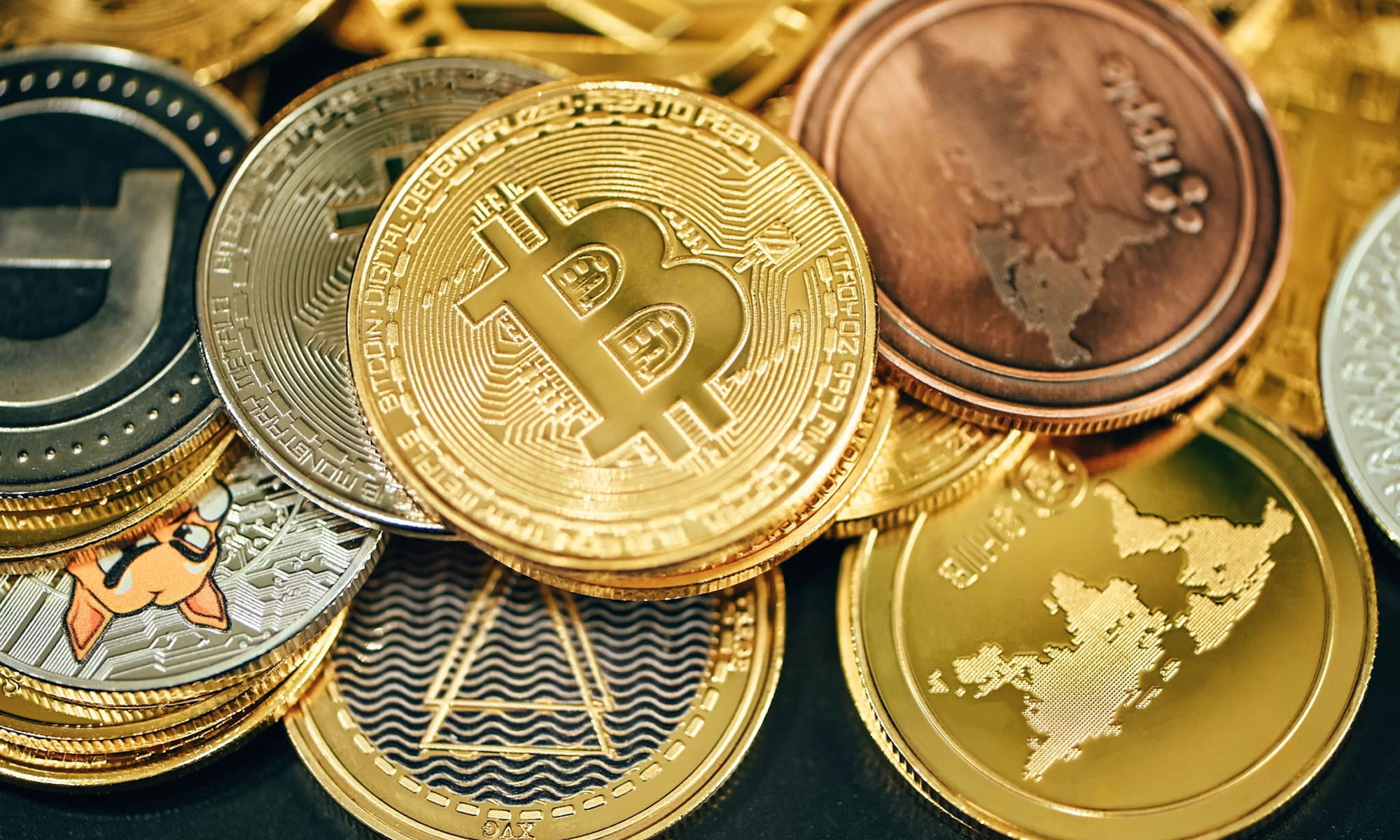
Heading into 2026, crypto doesn’t really move in one clear rhythm anymore, especially the kind that used to be driven by retail cycles or news flow. In Bitcoin, price action is now more tied to ETF-related capital flows and shifting liquidity conditions, with institutional positioning feeding through the market. At the same time, parts of the system are changing function: stablecoins are gradually moving into settlement and payment infrastructure, while speculative activity continues to exist but no longer defines the structure of the market on its own.
Crypto Market Trends In 2026
Bitcoin tends to react less to headlines now and more to ETF-driven flows. Since US spot Bitcoin ETFs launched in January 2024, periods of sustained net inflows have often been followed by continued price strength after a short delay, with the move reflecting fund rebalancing cycles rather than immediate trading pressure.
For example, during strong inflow phases in early 2024, when cumulative ETF inflows across issuers reached multi-billion-dollar levels within a few weeks, price trends kept extending even through intraday volatility. ETF-related flows don’t translate into price immediately, since execution and hedging processes introduce a delay between the initial allocation and visible market impact.
During the 2024-2025 rate swings, Bitcoin often moved in step with U.S. equities during risk-off periods. In several pullbacks, BTC declined alongside the Nasdaq, while on-chain activity stayed relatively steady. That pattern suggests portfolio rebalancing played a larger role than selling pressure originating inside the crypto market.
Institutional Structure And Liquidity
Liquidity is increasingly distributed beyond spot exchanges. Execution is increasingly routed through ETF issuers, custodians, and broker platforms such as Coinbase Institutional and Fidelity Digital Assets. This reduces the impact of single exchange order books and increases sensitivity to aggregated macro flows.
This became more visible during 2025 rate-sensitive phases. Bitcoin declines often coincided with equity drawdowns, but exchange volumes showed fewer sharp spikes compared to retail capitulation phases in 2021-2022. Price action unfolded more gradually, with behavior more consistent with portfolio reallocation than forced liquidation events.
Utility Beyond Trading
Stablecoins are already embedded in real settlement flows. In Latin America, USDT is widely used by freelancers and small exporters for USD payments, largely due to banking delays that can extend 2-5 business days and higher cross-border transfer costs compared to on-chain settlement.
The same pattern appears in Southeast Asia, where stablecoins are used in contractor payments and trade settlement layers.
Entry into Bitcoin is also shifting closer to payment infrastructure. Instead of exchange-first onboarding, users increasingly encounter crypto through fintech apps where fiat conversion is embedded in payment flows. In some cases, users can buy crypto assets with any card as part of the transaction process, without opening a separate exchange account or using a dedicated trading interface.
Bitcoin’s Pricing Drivers In 2026
Bitcoin’s price is influenced by ETF flows, the reduced supply after the 2024 halving, and global liquidity conditions. These forces rarely peak at the same time, so the market tends to move in uneven phases rather than along a steady trend, with periods of ETF-driven momentum followed by slower, liquidity-sensitive consolidation and short supply-driven interruptions from miners.
ETF flows remain the main directional signal in most observed periods. Since the launch of US spot ETFs in 2024, multi-day inflow streaks have often been followed by upward extensions after a short delay, while outflows usually cap momentum rather than causing immediate reversals.
Post-halving miner supply is lower but uneven. Selling pressure clusters around specific conditions:
- Weaker transaction fee periods during low network activity.
- Hash price compression when mining profitability declines.
- Difficulty adjustments that affect marginal operators during profitability stress.
On-chain miner data in 2024-2025 shows these outflows are episodic rather than continuous, which is why supply pressure appears in bursts.
Liquidity conditions determine how these flows translate into price. During looser phases in 2024, ETF inflows were absorbed with limited disruption. In tighter periods during 2025 rate volatility, Bitcoin increasingly moved in sync with equity drawdowns as portfolio risk reduction occurred across markets.
Compared to 2021-2022, recent corrections show less retail-driven volume expansion and fewer liquidation spikes, indicating a shift toward institutional flow mechanics rather than exchange-led stress.
Bitcoin Price Outlook For 2026
Bitcoin’s outlook in 2026 reflects the same structure seen in its drivers, but expressed through different regimes depending on how ETF flows, supply pressure, and liquidity overlap.
Base Case
The dominant structure remains a wide range with directional phases driven by ETF flow cycles. This pattern is visible in 2024-2025 ETF data, where multi-week inflow periods tend to coincide with upward extensions, while pauses in flows lead to consolidation rather than sharp reversals.
Miner supply creates short interruptions, typically aligning with fee weakness or hash price compression observed in 2024-2025.
Upside Case
A stronger outcome depends on sustained ETF inflows combined with stable macro liquidity conditions similar to early ETF expansion phases in 2024.
In that environment:
- Inflows persist across multiple weeks rather than short bursts.
- Miner distribution is absorbed without visible disruption.
- Drawdowns remain shallow due to faster supply clearance.
Downside Case
The stress scenario is driven by macro liquidity contraction rather than crypto-specific shocks.
During rate-sensitive periods in 2024-2025, Bitcoin showed higher correlation with equity indices in risk-off phases. If liquidity tightens again:
- ETF outflows align with equity and credit de-risking.
- Downside moves accelerate in parallel with traditional risk assets.
- Separation between crypto and macro markets narrows.
Unlike 2021-2022, where retail leverage and exchange liquidations amplified volatility, recent stress phases have been driven more by ETF flows and cross-asset portfolio adjustments.
Across scenarios, Bitcoin’s 2026 behavior is defined by timing gaps between ETF demand, miner supply, and liquidity conditions — with price emerging from how these forces overlap rather than any single catalyst. This dynamic is also why entry timing becomes more dependent on flow regimes than on headline events; research on Bitcoin price behavior in 2026 entry strategies highlights how positioning decisions increasingly follow these structural shifts rather than isolated price signals.
Stablecoins And Payment Rails In 2026
Stablecoins are increasingly used for settlement rather than trading, particularly where banking rails are slow or costly.
In Latin America, USDT is widely used for freelancer and SME payments because cross-border bank transfers often take 2-5 business days and involve intermediary fees. Stablecoins settle within minutes and are usually converted via exchanges or fintech on-ramps, improving USD liquidity access rather than serving as an investment tool. A similar pattern appears in Southeast Asia, including Vietnam and the Philippines, where stablecoins support contractor payments and trade settlements.
Payments Embedded In Onboarding
Crypto access is moving into payment flows instead of separate exchange platforms.
Users increasingly encounter crypto inside fintech apps and neobanks where fiat-to-crypto conversion happens at the payment layer. Card-based purchase flows are one example, where crypto is acquired during a transaction without additional onboarding or switching platforms.
This makes crypto entry a byproduct of payment activity rather than a separate investment step.
Split In Usage
Stablecoins are concentrated in settlement flows where speed and cost matter. Bitcoin remains outside this layer and continues to behave as a macro asset shaped by ETF flows and liquidity conditions.
Usage data increasingly shows this split: stablecoins are concentrated in payment corridors, while Bitcoin activity tracks more closely with ETF-driven cycles and broader market risk sentiment.
Bitcoin’s Pricing Drivers In 2026
Bitcoin’s price structure in 2026 is shaped by ETF flows, post-2024 halving supply, and global liquidity. These forces rarely line up at the same time, so price tends to unfold in phases rather than a steady trend.
ETF flows remain the main short-term signal. Since US spot ETF approval in 2024, price has typically reacted with a delay to sustained inflow or outflow periods. Multi-day inflows tend to support continuation moves, while flow slowdown first appears in momentum before any broader price reversal, reflecting allocation cycles inside ETF structures rather than spot trading.
Miner supply is lower after the 2024 halving, but not smooth. Selling pressure appears in short bursts tied to stress conditions:
- Weaker transaction fee environments.
- Hash price compression and reduced profitability.
- Difficulty adjustments impacting marginal miners.
These episodes show up intermittently in miner flow data, which is why supply pressure is irregular rather than persistent.
Liquidity conditions determine how these flows translate into price. In looser phases, ETF demand absorbs miner distribution and trends extend. In tighter phases, Bitcoin reacts more directly to macro risk-off moves, with ETF outflows and equity de-risking occurring in parallel.
Compared to 2021-2022, recent corrections show fewer retail liquidation spikes and more flow-driven repositioning across institutional channels.
Where The Market Converges In 2026
Bitcoin in 2026 behaves less like a directional asset and more like a sequence of shifting regimes. The same price level can reflect different conditions — accumulation, short-term supply pressure, or liquidity-driven repricing — depending on which flow dominates at that moment.
ETF activity is most informative at the edges of its cycles — when inflows start losing consistency or outflows begin to cluster. Miner supply matters mainly in short bursts and rarely defines direction on its own. Liquidity conditions decide how strongly either of these translates into price movement.
For positioning, the key distinction is not trend versus reversal, but whether the market is in absorption or de-risking. Most mispricing tends to emerge during these transitions rather than in clearly established phases.
Disclaimer: This article is for informational purposes only and does not constitute financial, investment, or trading advice. Cryptocurrency markets are highly volatile, and past performance or observed trends do not guarantee future results. Readers should conduct their own research and consider their individual financial situation before making any decisions related to digital assets.

Abu Dhabi’s Robot Kitchen Is Serving Up Biryani, Not Burgers

Sennheiser’s MOMENTUM 5 Series Bets On Batteries You Can Swap

UAE’s 3-Minute University Registration Runs On Government Data

How Online Ads Became A Delivery System For Zero-Click Spyware

Shokz OpenDots 2 Review: Clip-On Audio Gets A Bass-Heavy Makeover

Dubai Says Its Deepfake Detector Needs Just 7 Seconds Of Video

New Disney+ Streaming App Has Officially Launched In The UAE

NEOPAY Wants To Follow Merchants Across Channels And Borders

RØDE’s Low-Profile Studio Arm Is Designed To Stay Out Of Shot

G42’s Inception42 Wants AI To Show Its Work Before Investors Commit


-
 News3 weeks ago
Dubai Says Its Deepfake Detector Needs Just 7 Seconds Of Video
-
 News2 weeks ago
New Disney+ Streaming App Has Officially Launched In The UAE
-
 News3 weeks ago
NEOPAY Wants To Follow Merchants Across Channels And Borders
-
 News3 weeks ago
RØDE’s Low-Profile Studio Arm Is Designed To Stay Out Of Shot