
Web3
Non-Fungible Tokens: A Beginner’s Guide To Getting Started With NFTs

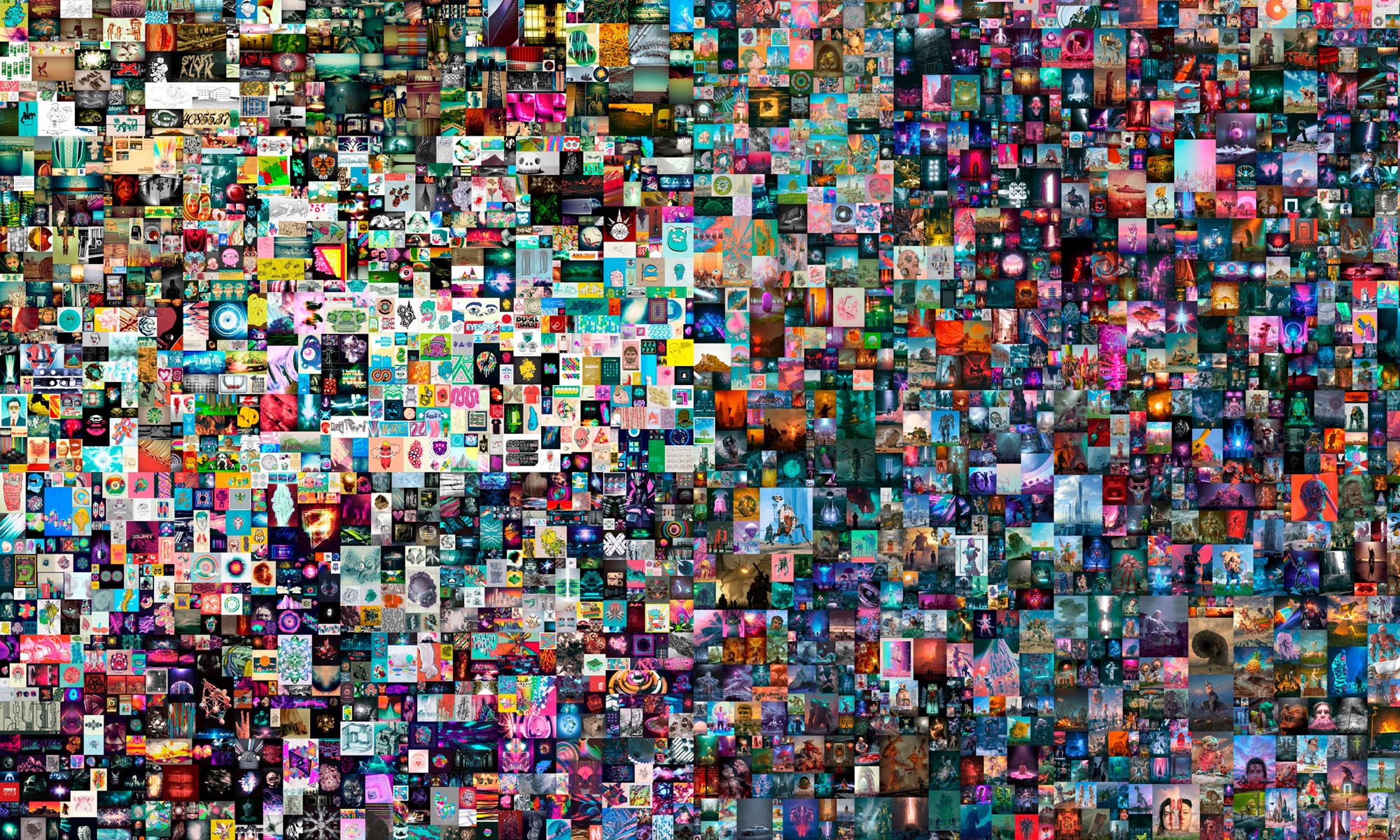
What does a relatively obscure digital artist named “Beeple” have in common with Twitter CEO and founder Jack Dorsey? “Non-Fungible Tokens”, or NFTs for short.
Still confused?
In March 2021, artist Mike Winkelmann (aka “Beeple”) entered the history books when one of his projects sold for over $69 million at famous auction house Chrisite’s. Meanwhile, Twitter CEO Jack Dorsey was auctioning off a part of his own digital legacy: His first ever Tweet from 2006, which eventually sold for an astounding $2.9 million!
The technology that allowed these sales to take place is known as an NFT, or Non-Fungible Token. Put simply, NFTs are cryptographic tokens that use blockchain technology to allow users to define the uniqueness of an individual asset.
If that description still sounds a little mystifying, and you’re having trouble getting your head around Non-Fungible Tokens, NFT art, or any other aspect of this burgeoning technological trend, don’t worry, we’ve put together this easy to understand guide to help get you started.
Non-Fungible Tokens: A Very Simple Definition
If you were lucky enough to be in the market for an original Picasso painting or perhaps the studio master of your favorite Beetles album, how would go about verifying that they were the real deal?
In the case of those two examples, the enormous costs involved would mean that the items would come with certificates of authenticity, and a mound of paperwork from industry experts that verified their “provenance”.
However, when it comes to digital-only items like Beeple’s artwork, how would you ever know that your JPEG file was the original? It could easily have been duplicated thousands of times before you ever got your hands on it!
This in a nutshell, is the purpose of an NFT. It allows someone to create a “digital tag” for an item, using blockchain technology to assign a unique identifier that guarantees authenticity.
NFTs can be used to prove the originality of digital art and even music tracks, but in the future they might also be used to track real-world assets too, such as a house, a car, or even a prize-winning racehorse!
What Does The Non-Fungible Part Mean?
Cryptographic tokens like Bitcoin are designed to replicate money: You could exchange your Bitcoin for a friend’s Bitcoin, as they both have equal value. Likewise, you could also split a Bitcoin between a group of people, much like a $20 bill. This makes Bitcoins “Fungible”.
On the other hand, although a “Non-Fungible” token is sort of like a Bitcoin in the way its technology works, it can’t be divided or distributed, and it can’t be exchanged on a like-for-like basis.
These properties make NFTs ideal for representing individual assets, as they can’t be modified or split. You can’t buy half a painting for example, and although you might be able to swap the painting for something similar, it must always exist as a unique item of its own accord.
How Does The Technology Work?
The technology behind NFTs is very complex, but if you can get your head around how “blockchain” works, you’ll easily understand the basic concept:
A blockchain is a bit like a database. It stores blocks of data in a linked chain. However, unlike a typical database that would be stored on a central server, blockchain is completely decentralized. Every node of the chain is spread around the entire world, and each part holds a full record of the data that’s been stored there since its creation.
The order of the data on the blockchain is important, but each block itself is useless on its own, and tampering with any of the nodes would render the entire chain invalid. Combine that with decentralization, and you have a very solid and secure method for storing data.
Because NFT items are transferred and traded within the infrastructure of the blockchain, ownership is provable and guaranteed, with a complete ledger of transaction history embedded within.
How To Make Money With NFTs
OK, so that’s the technical part explained. Now here’s the part that most readers are probably holding out for: How do you go about buying and selling NFTs, and how difficult is it to create NFT artwork for yourself?
Let’s dive right in:
How To Buy & Sell NFTs
First up, if you’re keen to start buying and selling NFT items, you’ll need to get yourself a digital wallet.
A digital wallet is, as the name suggests, a secure place where you store all of your cryptocurrencies. There are lots of different online exchanges available where you can go to swap your regular (Fiat) money for Cryptocurrencies, and these sites will also come with a digital wallet where you can store your digital currency.
Coinbase is probably the best known of these exchanges, and it’s super easy to join the site via iOS, Android or your web browser.
Choose Your Currency
At this point, the only consideration you’ll need to make is which of the various marketplaces you’ll be using to buy and sell your NFT items.
Not all NFT marketplaces use the same currency (or blockchain) for buying, selling or creating NFTs. As a beginner, you’re probably best sticking to a Coinbase wallet and using Ethereum, as this is the currency that’s used by some of the largest NFT marketplaces (more on those in a moment).
If you’d like to dive in at the deep end with some of the more obscure marketplaces, we’d suggest starting out with something called Metamask.
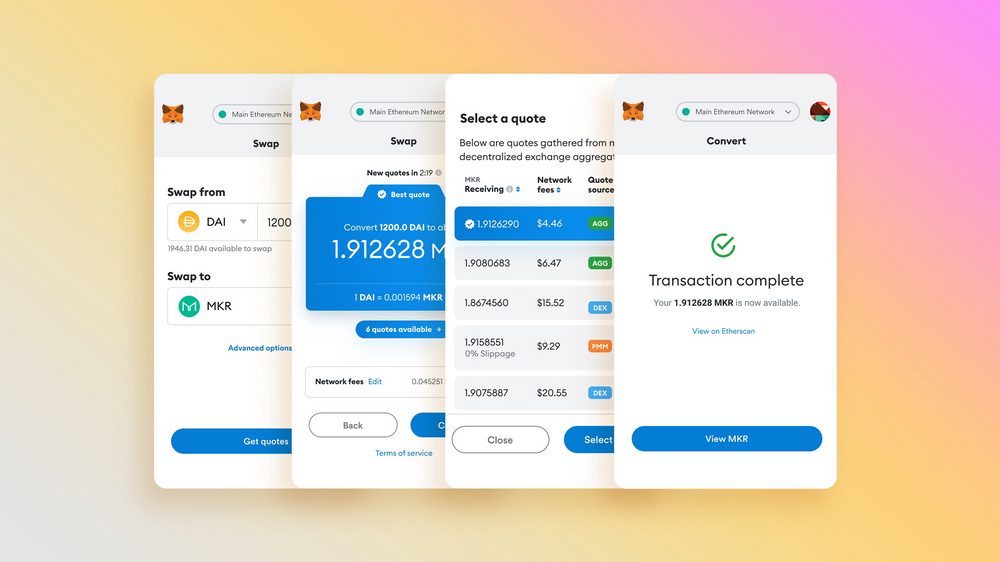
MetaMask Wallet
Metamask is a more flexible option than Coinbase, and comes with a browser extension and mobile app, giving you a secure wallet and a token exchange to manage a broader range of digital assets.
Different NFT Marketplaces
Once you have some digital currency loaded up, you can begin to browse the various NFT marketplaces. Once you’ve joined one, you can make as many purchases (or sales) as you’d like.
At the time of writing, we managed to find dozens of different platforms where you can buy and sell NFTs.
Here are the most popular:
- OpenSea
- Rarible
- SuperRare
- Mintable
- BakerySwap
- Foundation
- AtomicMarket
- KnownOrigin
- Enjin Marketplace
- Async Art
Out of that list, the top four entries make up the lion’s share of the current market, with OpenSea being by far the largest.
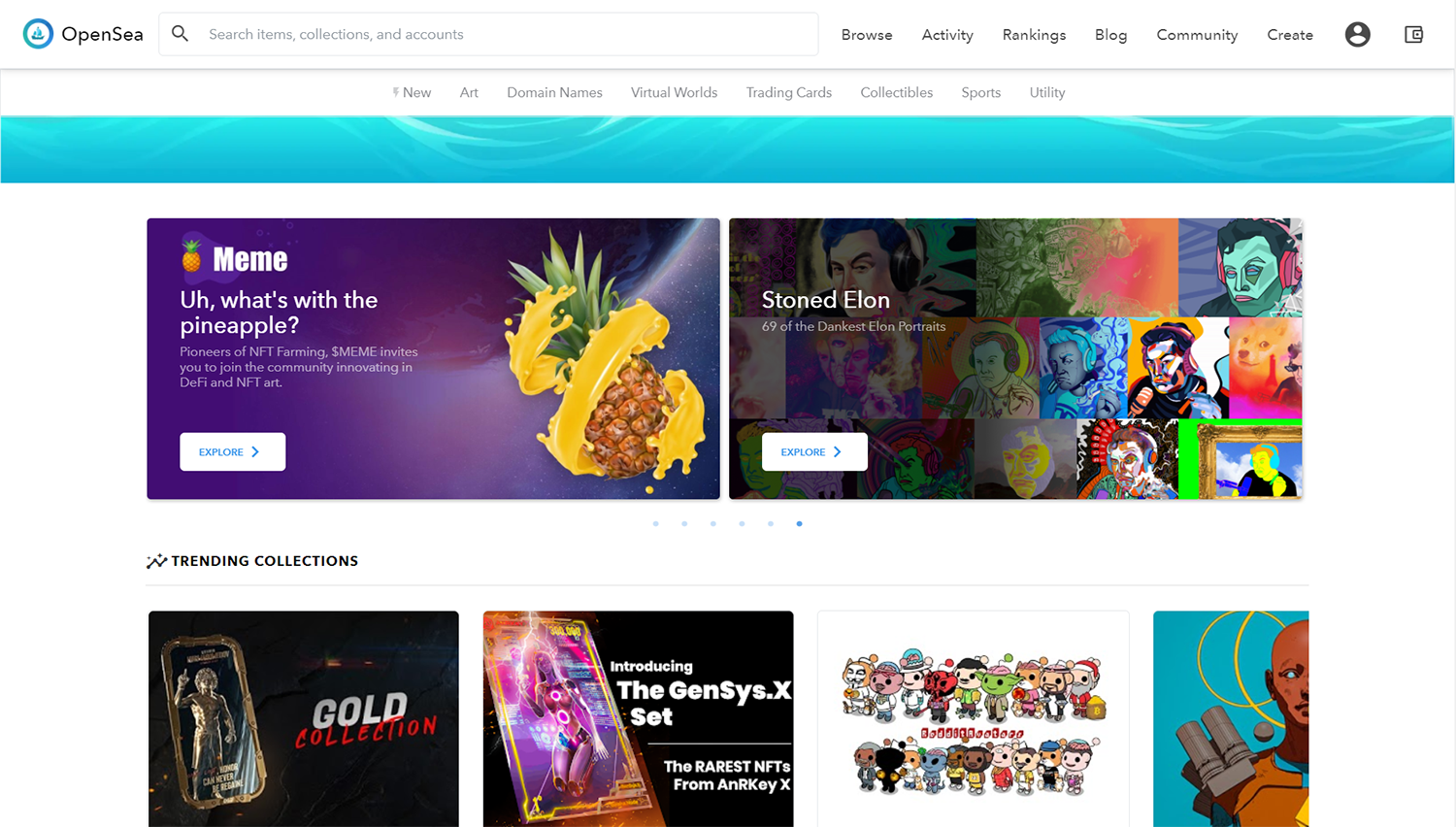
OpenSea Homepage
If you’ve made it this far, you’ll have no trouble buying and selling NFTs on a site like OpenSea. It’s as easy as making a bid on eBay!
So What Kind Of Items Are For Sale?
For the most part we’re talking digital art, but there’s a thriving economy for all sorts of digital assets. Here’s a non-exhaustive list:
- Trading cards like CryptoKitties (think Pokemon Go).
- Digital sports memorabilia, from NBA to F1.
- Censorship-resistant domain names.
- Virtual worlds and collectable Minecraft-style builds.
- Virtual clothing and wearables for avatars.
- Rare in-game items such as weapons and armor.
At this point, it’s important for us to make a bit of a disclaimer: Whilst the sites we’ve mentioned are completely legit, we’re not offering any investment or financial advice here. If you decide to start trading in digital artwork or collectables, you’re certainly not guaranteed to make money!
How To Create Your Own NFT Artwork
Buying and selling other people’s NFTs is one thing, but how do you go about making your own NFT art and publishing it on one of the marketplaces?
Surprisingly, it’s actually a pretty easy process and requires almost zero technical knowhow: If you’re signed up to one of the big marketplaces like Opensea or Rarible, all you need to do is make sure you have a crypto wallet attached to your account, then head over to the “Create” section of the site.
A few clicks later, you’ll be the proud owner of your very first piece of NFT art!
Is It Really That Simple?
Yes! Once you’ve uploaded your artwork and filled out some details (your name, description of the file, that kind of thing..), you’ll then go ahead and pay a small fee to “Mint” your creation (more on that below).
“Minting” is the process of adding a block onto the Ethereum blockchain, where your artwork’s unique identifier will live forever.
What Will Your Art Be Worth?
Your guess is as good as ours!
We’d wager that you probably won’t be breaking Beeple’s $69.3 million record anytime soon, but if you’re a talented artist, sites like OpenSea and Rarible could eventually help you to launch a full time career.
Bring Gas Money With You
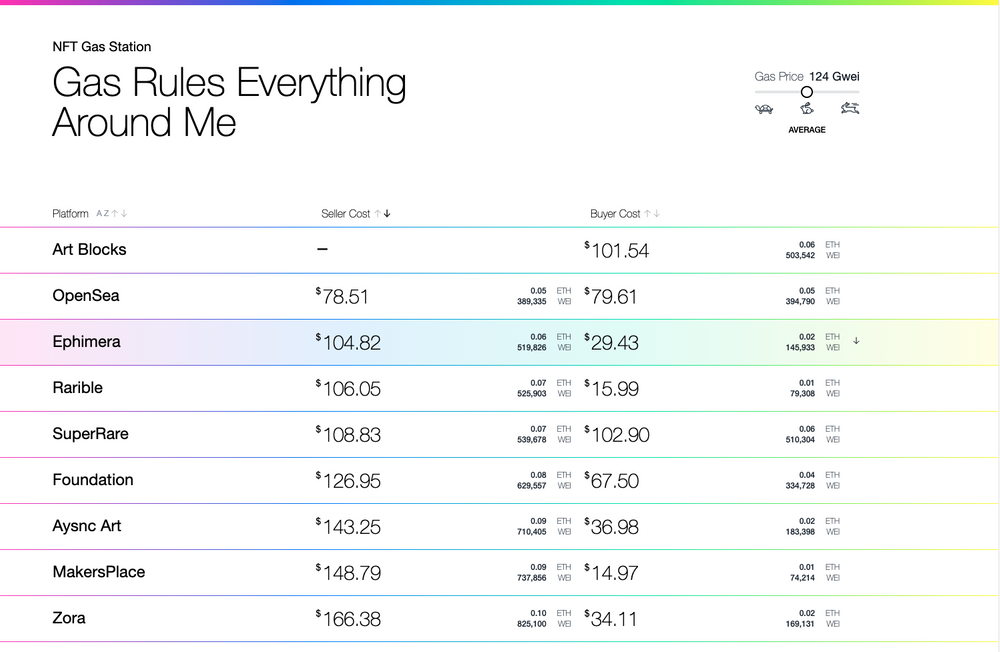
NFT Gas Station
Minting your own NFT requires the creation of a unique new entry on the blockchain, which ultimately requires a significant amount of processing power to get done. As Ethereum is the most commonly used network used to mint NFTs, this comes with what is known as a “gas fee” for the effort and energy used in computation. Optimist provides a helpful tool called NFT Gas Station which gives you an estimate of the gas fees on all major NFT marketplaces.
Some Real World Applications
So at this point, you probably fall into one of two camps: You’re either a digital creator trying to figure out how NFTs could help get your passion off of the ground, or you’re someone with an entrepreneurial spirit looking to make their fortune.
So the big question then: Are NFTs just hype, or do they have tangible uses in the future?
It’s still too early to tell, but we’re already seeing some interesting applications:
Digital Artists & Photographers: NFTs are fantastic news for anyone who makes a living with digital art. The NFT marketplaces allow you to show off your work to the entire world, and then trade it digitally without fear of it being copied.
The nature of blockchain also means that every time your piece gets traded online, you’ll get a fair commission from each and every sale, without having to employ a middleman like an agent or a gallery.
Musicians: Kings of Leon look set to be the first band to release an album using NFT technology. The release will be a little bit like a limited edition vinyl, with special perks like unique album art and access to front row concert seats.
NFTs are a natural fit for modern musicians, as they enable artists to release tracks or albums digitally in limited numbers, without the fear of piracy or duplication. NFTs enable an artist to retain the copyright for a track, but sell it on the open market as either a limited edition, or a one-off studio master.
Physical Items: It’s important to note that NFTs aren’t in any way restricted to digital items. The great thing about blockchain technology is that it not only keeps a paper-trail of every transaction the item has ever gone through, but it can also hold encrypted information or history.
- NFTs could prove the authenticity of art and antiques.
- Classic car owners could use NFTs to trace a vehicles history and originality.
- Real estate sales could be managed and tracked using NFT tokens.
Licensing & Record Keeping: In the future, it’s highly likely that a form of NFT technology will be used for sensitive information, such as medical records and even passports, whilst NFTs could also prove valuable for issuing patents and licenses for all manner of activities.
Summing Up
NFT technology and marketplaces like OpenSea are still very much in their infancy. However, the technology behind this new trend is sound, and could easily signal the start of a revolution for digital artists, musicians and other online creators, as well as offering practical solutions for offline applications as well.
Exciting times lie ahead that’s for sure, and there are certainly fortunes to be made for early adopters that do their research.




Web3
2026 Crypto Trends: Bitcoin, ETFs & The Future Of Payments
From Bitcoin ETF flows to the rise of stablecoin payments, here are the key 2026 crypto trends shaping the future of digital finance.
Heading into 2026, crypto doesn’t really move in one clear rhythm anymore, especially the kind that used to be driven by retail cycles or news flow. In Bitcoin, price action is now more tied to ETF-related capital flows and shifting liquidity conditions, with institutional positioning feeding through the market. At the same time, parts of the system are changing function: stablecoins are gradually moving into settlement and payment infrastructure, while speculative activity continues to exist but no longer defines the structure of the market on its own.
Crypto Market Trends In 2026
Bitcoin tends to react less to headlines now and more to ETF-driven flows. Since US spot Bitcoin ETFs launched in January 2024, periods of sustained net inflows have often been followed by continued price strength after a short delay, with the move reflecting fund rebalancing cycles rather than immediate trading pressure.
For example, during strong inflow phases in early 2024, when cumulative ETF inflows across issuers reached multi-billion-dollar levels within a few weeks, price trends kept extending even through intraday volatility. ETF-related flows don’t translate into price immediately, since execution and hedging processes introduce a delay between the initial allocation and visible market impact.
During the 2024-2025 rate swings, Bitcoin often moved in step with U.S. equities during risk-off periods. In several pullbacks, BTC declined alongside the Nasdaq, while on-chain activity stayed relatively steady. That pattern suggests portfolio rebalancing played a larger role than selling pressure originating inside the crypto market.
Institutional Structure And Liquidity
Liquidity is increasingly distributed beyond spot exchanges. Execution is increasingly routed through ETF issuers, custodians, and broker platforms such as Coinbase Institutional and Fidelity Digital Assets. This reduces the impact of single exchange order books and increases sensitivity to aggregated macro flows.
This became more visible during 2025 rate-sensitive phases. Bitcoin declines often coincided with equity drawdowns, but exchange volumes showed fewer sharp spikes compared to retail capitulation phases in 2021-2022. Price action unfolded more gradually, with behavior more consistent with portfolio reallocation than forced liquidation events.
Utility Beyond Trading
Stablecoins are already embedded in real settlement flows. In Latin America, USDT is widely used by freelancers and small exporters for USD payments, largely due to banking delays that can extend 2-5 business days and higher cross-border transfer costs compared to on-chain settlement.
The same pattern appears in Southeast Asia, where stablecoins are used in contractor payments and trade settlement layers.
Entry into Bitcoin is also shifting closer to payment infrastructure. Instead of exchange-first onboarding, users increasingly encounter crypto through fintech apps where fiat conversion is embedded in payment flows. In some cases, users can buy crypto assets with any card as part of the transaction process, without opening a separate exchange account or using a dedicated trading interface.
Bitcoin’s Pricing Drivers In 2026
Bitcoin’s price is influenced by ETF flows, the reduced supply after the 2024 halving, and global liquidity conditions. These forces rarely peak at the same time, so the market tends to move in uneven phases rather than along a steady trend, with periods of ETF-driven momentum followed by slower, liquidity-sensitive consolidation and short supply-driven interruptions from miners.
ETF flows remain the main directional signal in most observed periods. Since the launch of US spot ETFs in 2024, multi-day inflow streaks have often been followed by upward extensions after a short delay, while outflows usually cap momentum rather than causing immediate reversals.
Post-halving miner supply is lower but uneven. Selling pressure clusters around specific conditions:
- Weaker transaction fee periods during low network activity.
- Hash price compression when mining profitability declines.
- Difficulty adjustments that affect marginal operators during profitability stress.
On-chain miner data in 2024-2025 shows these outflows are episodic rather than continuous, which is why supply pressure appears in bursts.
Liquidity conditions determine how these flows translate into price. During looser phases in 2024, ETF inflows were absorbed with limited disruption. In tighter periods during 2025 rate volatility, Bitcoin increasingly moved in sync with equity drawdowns as portfolio risk reduction occurred across markets.
Compared to 2021-2022, recent corrections show less retail-driven volume expansion and fewer liquidation spikes, indicating a shift toward institutional flow mechanics rather than exchange-led stress.
Bitcoin Price Outlook For 2026
Bitcoin’s outlook in 2026 reflects the same structure seen in its drivers, but expressed through different regimes depending on how ETF flows, supply pressure, and liquidity overlap.
Base Case
The dominant structure remains a wide range with directional phases driven by ETF flow cycles. This pattern is visible in 2024-2025 ETF data, where multi-week inflow periods tend to coincide with upward extensions, while pauses in flows lead to consolidation rather than sharp reversals.
Miner supply creates short interruptions, typically aligning with fee weakness or hash price compression observed in 2024-2025.
Upside Case
A stronger outcome depends on sustained ETF inflows combined with stable macro liquidity conditions similar to early ETF expansion phases in 2024.
In that environment:
- Inflows persist across multiple weeks rather than short bursts.
- Miner distribution is absorbed without visible disruption.
- Drawdowns remain shallow due to faster supply clearance.
Downside Case
The stress scenario is driven by macro liquidity contraction rather than crypto-specific shocks.
During rate-sensitive periods in 2024-2025, Bitcoin showed higher correlation with equity indices in risk-off phases. If liquidity tightens again:
- ETF outflows align with equity and credit de-risking.
- Downside moves accelerate in parallel with traditional risk assets.
- Separation between crypto and macro markets narrows.
Unlike 2021-2022, where retail leverage and exchange liquidations amplified volatility, recent stress phases have been driven more by ETF flows and cross-asset portfolio adjustments.
Across scenarios, Bitcoin’s 2026 behavior is defined by timing gaps between ETF demand, miner supply, and liquidity conditions — with price emerging from how these forces overlap rather than any single catalyst. This dynamic is also why entry timing becomes more dependent on flow regimes than on headline events; research on Bitcoin price behavior in 2026 entry strategies highlights how positioning decisions increasingly follow these structural shifts rather than isolated price signals.
Stablecoins And Payment Rails In 2026
Stablecoins are increasingly used for settlement rather than trading, particularly where banking rails are slow or costly.
In Latin America, USDT is widely used for freelancer and SME payments because cross-border bank transfers often take 2-5 business days and involve intermediary fees. Stablecoins settle within minutes and are usually converted via exchanges or fintech on-ramps, improving USD liquidity access rather than serving as an investment tool. A similar pattern appears in Southeast Asia, including Vietnam and the Philippines, where stablecoins support contractor payments and trade settlements.
Payments Embedded In Onboarding
Crypto access is moving into payment flows instead of separate exchange platforms.
Users increasingly encounter crypto inside fintech apps and neobanks where fiat-to-crypto conversion happens at the payment layer. Card-based purchase flows are one example, where crypto is acquired during a transaction without additional onboarding or switching platforms.
This makes crypto entry a byproduct of payment activity rather than a separate investment step.
Split In Usage
Stablecoins are concentrated in settlement flows where speed and cost matter. Bitcoin remains outside this layer and continues to behave as a macro asset shaped by ETF flows and liquidity conditions.
Usage data increasingly shows this split: stablecoins are concentrated in payment corridors, while Bitcoin activity tracks more closely with ETF-driven cycles and broader market risk sentiment.
Bitcoin’s Pricing Drivers In 2026
Bitcoin’s price structure in 2026 is shaped by ETF flows, post-2024 halving supply, and global liquidity. These forces rarely line up at the same time, so price tends to unfold in phases rather than a steady trend.
ETF flows remain the main short-term signal. Since US spot ETF approval in 2024, price has typically reacted with a delay to sustained inflow or outflow periods. Multi-day inflows tend to support continuation moves, while flow slowdown first appears in momentum before any broader price reversal, reflecting allocation cycles inside ETF structures rather than spot trading.
Miner supply is lower after the 2024 halving, but not smooth. Selling pressure appears in short bursts tied to stress conditions:
- Weaker transaction fee environments.
- Hash price compression and reduced profitability.
- Difficulty adjustments impacting marginal miners.
These episodes show up intermittently in miner flow data, which is why supply pressure is irregular rather than persistent.
Liquidity conditions determine how these flows translate into price. In looser phases, ETF demand absorbs miner distribution and trends extend. In tighter phases, Bitcoin reacts more directly to macro risk-off moves, with ETF outflows and equity de-risking occurring in parallel.
Compared to 2021-2022, recent corrections show fewer retail liquidation spikes and more flow-driven repositioning across institutional channels.
Where The Market Converges In 2026
Bitcoin in 2026 behaves less like a directional asset and more like a sequence of shifting regimes. The same price level can reflect different conditions — accumulation, short-term supply pressure, or liquidity-driven repricing — depending on which flow dominates at that moment.
ETF activity is most informative at the edges of its cycles — when inflows start losing consistency or outflows begin to cluster. Miner supply matters mainly in short bursts and rarely defines direction on its own. Liquidity conditions decide how strongly either of these translates into price movement.
For positioning, the key distinction is not trend versus reversal, but whether the market is in absorption or de-risking. Most mispricing tends to emerge during these transitions rather than in clearly established phases.
Disclaimer: This article is for informational purposes only and does not constitute financial, investment, or trading advice. Cryptocurrency markets are highly volatile, and past performance or observed trends do not guarantee future results. Readers should conduct their own research and consider their individual financial situation before making any decisions related to digital assets.

New Disney+ Streaming App Has Officially Launched In The UAE

Dubai Says Its Deepfake Detector Needs Just 7 Seconds Of Video

OpenAI Has Announced A Visual Ad Format For ChatGPT

For etisalat, More Bandwidth Is A Matter Of Digital Sovereignty

NEOPAY Wants To Follow Merchants Across Channels And Borders

Trip.com Is Betting An AI Agent Will Book Your Next Vacation

Musk’s Boring Company Wants To Dig 150 KM Of Tunnel Under The UAE

OKX Bets Streaming Perks Can Take Crypto Mainstream Across MENA

Meta’s New $499 Plan Puts A Price On Reaching A Real Person

Egypt’s Mobile Wallets Are Booming, But Cash Still Has Power


-

 News3 weeks ago
Qatar Folds 45 State Companies Into A Single Investment Platform
-

 News3 weeks ago
In Kuwait, Your Surgeon Might Be Operating From Another Country
-

 News2 weeks ago
Microsoft Plans $10 Billion-Plus Gulf Expansion Despite Iran Conflict
-
 News7 days ago
NEOPAY Wants To Follow Merchants Across Channels And Borders