
News
Samsung Unpacked 2024: What To Expect From The July 10 Event
The Galaxy Watch Ultra could be revealed alongside new earbuds, foldables and the hotly-anticipated Galaxy Ring.


The summer months are usually a quiet time for new tech releases. However, the next Samsung Unpacked event — taking place in Paris on July 10 — could shake things up a little.
Although we’re unlikely to hear any news about next year’s Galaxy S devices, there’s a good chance we’ll learn more about Samsung’s latest foldable smartphones, a new smartwatch, and the hotly-anticipated Galaxy Ring that’s been teased over the last year.
Samsung Galaxy Ring

The Galaxy Ring is rumored to arrive “in or around August” according to Samsung itself, so it would be more of a surprise if the wearable didn’t make an appearance at Unpacked. The Galaxy Ring will come in three colors — gold, platinum silver, and ceramic black — and will be available in multiple sizes.
The device will monitor heart rate, breathing, and even movement, helping you track sleep. The ring is also expected to support fertility monitoring. The Galaxy Ring will pair with a Galaxy Watch, which will enable more precise health data.
Galaxy Z Fold 6 And Galaxy Z Flip 6

The Galaxy Z Fold 6 and Galaxy Z Flip 6 are rumored to make an appearance at the Unpacked event in Paris, though updates will be relatively minor. The Z Flip 6 should get a battery capacity boost to 4,000 mAh, an optional 12GB RAM upgrade, and a Snapdragon 8 Gen 3 processor. Cameras may be upgraded, too, with the 50MP camera from the Galaxy S23 and Galaxy S24 coming to the Z Flip 6.
There has also been talk of a more premium foldable known as the Galaxy Z Fold 6 Ultra, alongside slim versions of both foldable devices. However, we think these models are more likely to appear alongside the Galaxy S25 lineup in early 2025 — though we might get a teaser at this summer event.
Galaxy Watch And Galaxy Watch Ultra

Galaxy Watch 7 listings have already begun appearing on some online stores, so it’s likely we’ll see the new wearable appear at Unpacked. The Watch 7 is expected to sport a 3nm chipset with improved power and efficiency. The health sensors are due for a performance upgrade too.
Being 2024, AI features are sure to feature on the new Watch 7, including AI-powered sleep, exercise and messaging tools.
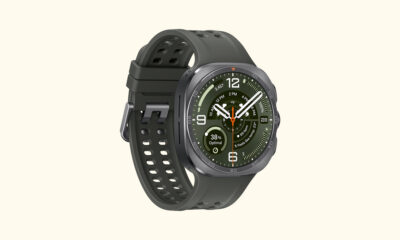
Rumors have also been circulating for some time about a Galaxy Watch Ultra. Leaked pictures suggest it’ll be thicker than a standard Galaxy Watch with a rectangular design and round watch face. Intriguingly, the Galaxy Watch Ultra may sport a digital crown-style dial instead of a rotating bezel.
Galaxy Buds 3 And Galaxy Buds 3 Pro

It’s been several years since the last Galaxy Buds arrived on the scene, so we should hear an announcement about the Galaxy Buds 3 and Buds 3 Pro at the July 10 Unpacked event.
Both models will be available in silver and white and have an IP57 dust and water resistance rating, along with SmartThings Find support. As with the Buds 2 Pro, the Buds 3 Pro will feature a two-way speaker designed to deliver improved audio, while the regular Buds 3 will stick to a one-way speaker. The higher-end model should also come with adaptive noise control, ambient sound, and blade lights while offering improved battery life.
Finally, Samsung’s Galaxy Buds are rumored to be adopting a stem design, like Apple’s AirPods. Whether you’re a fan of that layout or not, it does have the advantage of placing the microphone slightly closer to your mouth for potentially improved call quality.





News
ESET Bets On Specialized Security AI At 0.5% The Training Cost
ESET says NeoCortex can estimate an attacker’s next move, with a kill switch and human oversight built in to keep it from going rogue.


A sign-in anomaly, a suspicious process launch and an unusual connection may look harmless alone. Together, they can describe an intrusion that is hard for security to teams to piece together.
To solve that problem, ESET announced ESET NeoCortex on November 4, 2026: a specialized foundational AI model for cybersecurity. It powers ESET LiveCortex, available within the ESET PROTECT Platform, which connects fragmented security signals and turns them into actionable incidents.
Filtering is the main selling point, with LiveCortex processing billions of raw telemetry events daily, and just 0.00111% of them contributing to incidents presented to customers. The aim is less alert fatigue and more analyst time spent on threats that matter.
NeoCortex is built on world-model architecture, learning how digital environments behave and how events relate. ESET says that lets it reconstruct missing incident context, recognize similar past cases and estimate an attacker’s likely next step – what the company calls “minus-one-day defense,” a chance to intervene before the next stage unfolds. ESET points to Black October, the week leading up to October 25, 2026, when critical security issues affecting PHP, Linux, GitLab and other key systems demanded rapid, prioritized responses, as the kind of moment where that context matters.
ESET’s internal research also suggests a specialized model like NeoCortex can be trained at up to 200 times lower cost than a large general reasoning model, while delivering more accurate, defense-focused results. The company credits optimized training, a focus on cybersecurity vocabulary, lower computing requirements and privately owned hardware.
Also Read: Dubai Says Its Deepfake Detector Needs Just 7 Seconds Of Video
“AI is accelerating both cyberattacks and cyberdefenses. With ESET NeoCortex, we are applying our AI investment to develop specialized foundational cybersecurity intelligence that remains under our control and strengthens, rather than replaces, human expertise,” said Juraj Malcho, Chief Technology Officer at ESET.
As part of the design, NeoCortex forms part of a layered architecture combining specialized models, deterministic controls, correlation logic, validation, auditability and expert human oversight. Safeguards include restricted sandboxes, read-only tools, continuous monitoring, defined usage and token limits, a kill switch and human oversight of critical response decisions. The model is also developed and self-hosted on ESET’s own infrastructure, which the company says reduces exposure to shifts among third-party AI providers, including commercial and geopolitical ones.

ESET Bets On Specialized Security AI At 0.5% The Training Cost

Whish Money Opens A Montreal Flagship To Enter The Canadian Market

Abu Dhabi Is Making Its Rulebook Readable To AI, With OpenAI

Binance Reportedly Loses $6.3 Billion In Record Crypto Heist

Robinhood Receives Approval To Launch In The Middle East

G42’s Inception42 Wants AI To Show Its Work Before Investors Commit

Abu Dhabi’s Robot Kitchen Is Serving Up Biryani, Not Burgers

Shokz OpenDots 2 Review: Clip-On Audio Gets A Bass-Heavy Makeover

WHOOP Goes Arabic, Betting On The Gulf’s Appetite For Health Data

Sennheiser’s MOMENTUM 5 Series Bets On Batteries You Can Swap


-
 News3 weeks ago
Abu Dhabi’s Robot Kitchen Is Serving Up Biryani, Not Burgers
-
 Product Reviews3 weeks ago
Shokz OpenDots 2 Review: Clip-On Audio Gets A Bass-Heavy Makeover
-
 News3 weeks ago
Sennheiser’s MOMENTUM 5 Series Bets On Batteries You Can Swap
-
 News2 weeks ago
Checkout.com Reports 20% Higher Payment Acceptance For PRYPCO