News
Spotify Will Now Tell You If Your Favorite Artist Isn’t Real
The streaming platform is introducing an “AI Personas” label and cutting AI-generated artist profiles from its recommendations.


These days, the question of whether the artist you’re streaming actually exists is no longer hypothetical. Spotify intends to combat this issue by introducing a label called “AI Personas” for artist profiles that present an AI-generated, human-like identity rather than a real person. More consequentially, it will also keep those profiles out of its editorial and algorithmic recommendations by default.
From mid-September, listeners will start seeing an AI Persona badge on artist profiles, appearing in the banner and About section, in Search, and on track rows across playlists. Tapping the badge reveals whether the artist disclosed the AI identity themselves, or whether Spotify’s review team made the determination after examining the profile.
That distinction matters, because Spotify is not relying on self-disclosure alone. Artists can flag their own profiles as AI Personas through Spotify for Artists as of today, but the platform will also review profiles whose public identity – including name and imagery – appears to represent photorealistic AI-generated identities. The rollout begins with artists who have met defined audience thresholds, so the labels cover the vast majority of profiles listeners actually visit. Artists badged by Spotify’s reviewers will be notified and can self-disclose or appeal, and in the coming months listeners will be able to report suspected AI Personas themselves.
Also Read: Shokz OpenFit Pro Review: Open-Ear Audio Finally Grows Up
The company’s recommendations policy is also being tweaked. Music from AI Personas will not surface in a listener’s personalized recommendations unless, for example, they follow the artist. Spotify says all artists have a creative choice in how they present themselves, but its programming is focused on elevating music from authentic artists building careers in music.
The badge concerns identity, not production of the music itself. An artist who uses AI tools to make music is a separate question, one Spotify addresses through AI Credits and SongDNA. The AI Persona label sits alongside those features, plus Verified by Spotify and Artist Profile Protection, in what the company has made one of its top priorities this year: letting listeners trust that the artist behind the music is who they claim to be.



News
Microsoft Plans $10 Billion-Plus Gulf Expansion Despite Iran Conflict
Security is shaping Microsoft’s approach, from resilience work with governments to what it will say about how the money splits by country.
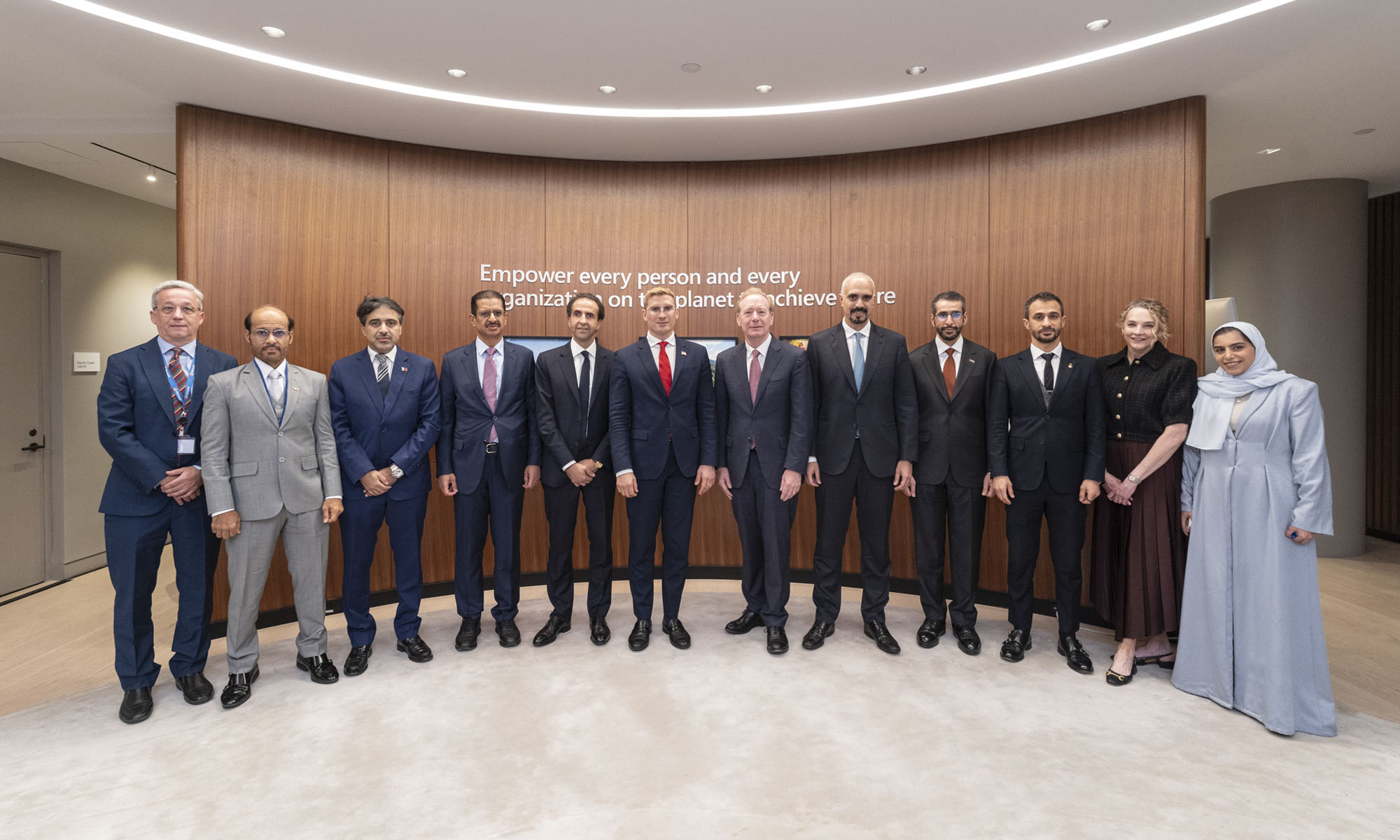
Microsoft is planning more than $10 billion of investment across the UAE, Saudi Arabia, Qatar and Kuwait through 2030, Vice Chair and President Brad Smith told Reuters, calling the spending schedule aggressive. The Iranian conflict that began on February 28 has not persuaded the company to scale back.
“We’re sustaining all the investments we planned to make before this conflict started, and we are in fact adding to them,” Smith said. The $10 billion-plus total does not, however, show how large those additions are.
The investment, which Smith described as part of Microsoft’s continued infrastructure expansion, is aimed at cloud and AI infrastructure and at the company’s growing regional operations. Microsoft also intends to put more than $400 million into subsea and terrestrial connectivity across the Middle East by 2030.
The spending fits the region’s own ambitions too. Gulf governments have been investing heavily in AI infrastructure as part of a push to diversify their economies beyond oil and gas and turn themselves into global technology hubs. Major cloud and AI providers have been drawn in part by the land and relatively low-cost energy on offer.
Microsoft is widening its partnerships with regional AI companies, though not on identical terms. In 2024, it invested $1.5 billion in Abu Dhabi-based G42 for a minority stake, and Smith currently sits on G42’s board. Saudi Arabia’s Humain and Qatar’s Qai are working with Microsoft on selected priority areas, but Smith said the company does not plan to make capital investments in either.
Also Read: Egypt’s Mobile Wallets Are Booming, But Cash Still Has Power
The conflict has added another strand to Microsoft’s work in the region. Since it began, Smith said, the company has supported regional partners with digital resilience assessments, and it is now working with Gulf countries through a digital resilience initiative focused on preparedness and the protection of critical data.
So far, the company has given no country-by-country breakdown of the investment, citing security among other factors. So while the headline figure is public, how Microsoft divides the spending among the four countries is not.

Microsoft Plans $10 Billion-Plus Gulf Expansion Despite Iran Conflict

In Kuwait, Your Surgeon Might Be Operating From Another Country

Qatar Folds 45 State Companies Into A Single Investment Platform

Trip.com Is Betting An AI Agent Will Book Your Next Vacation

Meta’s New $499 Plan Puts A Price On Reaching A Real Person

Visa’s Return To Syria Starts With A Test And A Bank In Lebanon

Apple’s Latest Product Releases Make The Headlines

Apple’s First Folding iPhone Arrives Late To A Shrinking Market
Trip.com Is Betting An AI Agent Will Book Your Next Vacation