
News
Qatar Folds 45 State Companies Into A Single Investment Platform
Doha Investment names AI, manufacturing and healthcare among its priorities – and pitches a state-owned vehicle as a boost for private enterprise.

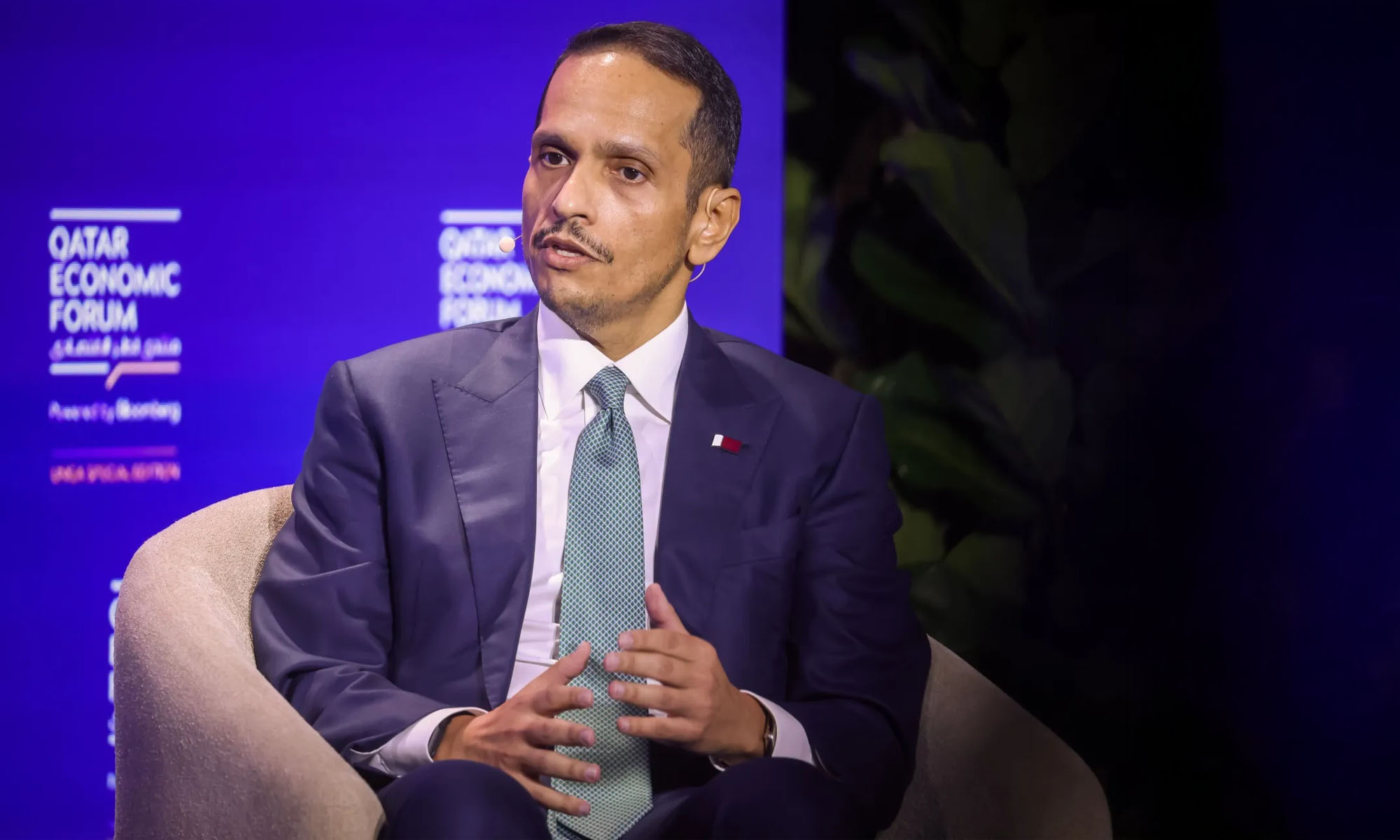
The Qatar Investment Authority has spent two decades deploying Qatari wealth at home and abroad, and now its domestic holdings have a vehicle of their own.
Qatar has placed 45 state-owned companies under a new platform, Doha Investment, as it seeks to accelerate its next phase of economic growth. Wholly owned by the QIA, the platform will run the sovereign wealth fund’s domestic portfolio under its own mandate and board, with artificial intelligence, advanced technology, manufacturing and healthcare among its priorities.
Prime Minister Sheikh Mohammed bin Abdulrahman Al Thani announced the plans on Sunday at a special edition of the Qatar Economic Forum in New York. “Through this platform, we aim to expand the role of the private sector in driving Qatar’s economic growth,” he said, adding that it would also deepen capital markets and bring in new international capital and expertise.
The companies operate across more than 80 markets and include Qatar Airways, QNB, Ooredoo, Qatari Diar, Katara Hospitality and Hassad Food. Together they span finance, transport and logistics, telecoms and technology, real estate, hospitality, food and agriculture. Aside from those familiar national names, other companies the platform will target include those operating in advanced technology, manufacturing, supply chains and healthcare.
Qai, Qatar’s national AI platform, set up to support the deployment of AI across businesses and wider society, is also included in the portfolio.
Also Read: OKX Bets Streaming Perks Can Take Crypto Mainstream Across MENA
Sheikh Faisal bin Thani Al Thani, the minister of commerce and industry, will serve as managing director and vice-chairman. He described the step as a consolidation rather than a new creation, one under consideration for more than a decade. “Strong economies are built company by company,” he said. “Doha Investment will be an active, long-term partner to the businesses in its portfolio, working alongside management teams to unlock new sources of value and support their growth and competitiveness in the region and internationally”.
The platform forms part of Qatar’s Third National Development Strategy, which aims to make the private sector a primary driver of a more sustainable and diversified economy. The QIA manages about $580 billion in assets, according to Global SWF.





News
ESET Bets On Specialized Security AI At 0.5% The Training Cost
ESET says NeoCortex can estimate an attacker’s next move, with a kill switch and human oversight built in to keep it from going rogue.

A sign-in anomaly, a suspicious process launch and an unusual connection may look harmless alone. Together, they can describe an intrusion that is hard for security to teams to piece together.
To solve that problem, ESET announced ESET NeoCortex on November 4, 2026: a specialized foundational AI model for cybersecurity. It powers ESET LiveCortex, available within the ESET PROTECT Platform, which connects fragmented security signals and turns them into actionable incidents.
Filtering is the main selling point, with LiveCortex processing billions of raw telemetry events daily, and just 0.00111% of them contributing to incidents presented to customers. The aim is less alert fatigue and more analyst time spent on threats that matter.
NeoCortex is built on world-model architecture, learning how digital environments behave and how events relate. ESET says that lets it reconstruct missing incident context, recognize similar past cases and estimate an attacker’s likely next step – what the company calls “minus-one-day defense,” a chance to intervene before the next stage unfolds. ESET points to Black October, the week leading up to October 25, 2026, when critical security issues affecting PHP, Linux, GitLab and other key systems demanded rapid, prioritized responses, as the kind of moment where that context matters.
ESET’s internal research also suggests a specialized model like NeoCortex can be trained at up to 200 times lower cost than a large general reasoning model, while delivering more accurate, defense-focused results. The company credits optimized training, a focus on cybersecurity vocabulary, lower computing requirements and privately owned hardware.
Also Read: Dubai Says Its Deepfake Detector Needs Just 7 Seconds Of Video
“AI is accelerating both cyberattacks and cyberdefenses. With ESET NeoCortex, we are applying our AI investment to develop specialized foundational cybersecurity intelligence that remains under our control and strengthens, rather than replaces, human expertise,” said Juraj Malcho, Chief Technology Officer at ESET.
As part of the design, NeoCortex forms part of a layered architecture combining specialized models, deterministic controls, correlation logic, validation, auditability and expert human oversight. Safeguards include restricted sandboxes, read-only tools, continuous monitoring, defined usage and token limits, a kill switch and human oversight of critical response decisions. The model is also developed and self-hosted on ESET’s own infrastructure, which the company says reduces exposure to shifts among third-party AI providers, including commercial and geopolitical ones.

ESET Bets On Specialized Security AI At 0.5% The Training Cost

Whish Money Opens A Montreal Flagship To Enter The Canadian Market

Abu Dhabi Is Making Its Rulebook Readable To AI, With OpenAI

Binance Reportedly Loses $6.3 Billion In Record Crypto Heist

Robinhood Receives Approval To Launch In The Middle East

Dubai Says Its Deepfake Detector Needs Just 7 Seconds Of Video

New Disney+ Streaming App Has Officially Launched In The UAE

G42’s Inception42 Wants AI To Show Its Work Before Investors Commit

Shokz OpenDots 2 Review: Clip-On Audio Gets A Bass-Heavy Makeover

WHOOP Goes Arabic, Betting On The Gulf’s Appetite For Health Data


-
 News3 weeks ago
G42’s Inception42 Wants AI To Show Its Work Before Investors Commit
-
 Product Reviews3 weeks ago
Shokz OpenDots 2 Review: Clip-On Audio Gets A Bass-Heavy Makeover
-
 News3 weeks ago
WHOOP Goes Arabic, Betting On The Gulf’s Appetite For Health Data
-

 News2 weeks ago
Sennheiser’s MOMENTUM 5 Series Bets On Batteries You Can Swap