
News
In Kuwait, Your Surgeon Might Be Operating From Another Country
Kuwait’s hospitals have performed more than 1,300 robot-assisted procedures. Going remote raises new questions about connectivity and consent.


For most of medical history, a surgeon and a patient obviously had to be in the same room. That assumption is no longer a given in Kuwait.
More than 1,300 robot-assisted procedures have now been carried out across five hospitals and specialist centers. Fifteen were performed remotely, with 12 by surgeons in other countries.
All 15 took place at Sheikh Sabah Al-Ahmad Kidney and Urology Center, which launched its remote program in December 2024. Patients remain at the center, with a medical team at their side, while the surgeon operates over a digital connection. Eight of the international cases were performed from Shanghai, two from Strasbourg and one each from Muscat and Padua.
The operations also run both ways. In September 2025, a Kuwaiti team at Sheikh Jaber Al-Ahmad Hospital operated remotely on a patient at Cruz Vermelha Hospital in Brazil, and a Brazilian team then performed a procedure on a patient in Kuwait. The two procedures spanned 12,034.92 kilometers and were recognized by Guinness World Records for the longest distance between a patient and surgeon.
Remote cases still only account for about 1% of the total. Sheikh Jaber Al-Ahmad Hospital alone has completed 1,145 procedures since launching its program in 2019.
New Jahra Hospital, whose first robotic operation was in April 2025, completed 100 within six months and had reached 155 by September 6, 2026. Farwaniya Hospital also performs robotic surgery, and Chest Diseases Hospital has used the technology in 30 thoracic and 25 cardiac procedures. The figures measure adoption, not clinical outcomes.
Also Read: Trip.com Is Betting An AI Agent Will Book Your Next Vacation
The push comes as Kuwait seeks to strengthen its position as a regional hub for advanced medical services. The Ministry of Health says further growth will require investment in equipment, training, maintenance and digital infrastructure, and that reliable connectivity, data protection and systems that operate safely and consistently are especially important for remote procedures.
Patient consent is part of the process too, with healthcare teams expected to explain how the robotic system works and the potential benefits, risks and alternatives – as well as where the surgeon is located and who is responsible for the patient.






News
G42’s Inception42 Wants AI To Show Its Work Before Investors Commit
Launched at SuperReturn Middle East, Alpha is pitched at sovereign wealth funds and private equity firms underwriting bigger deals on tighter timelines.
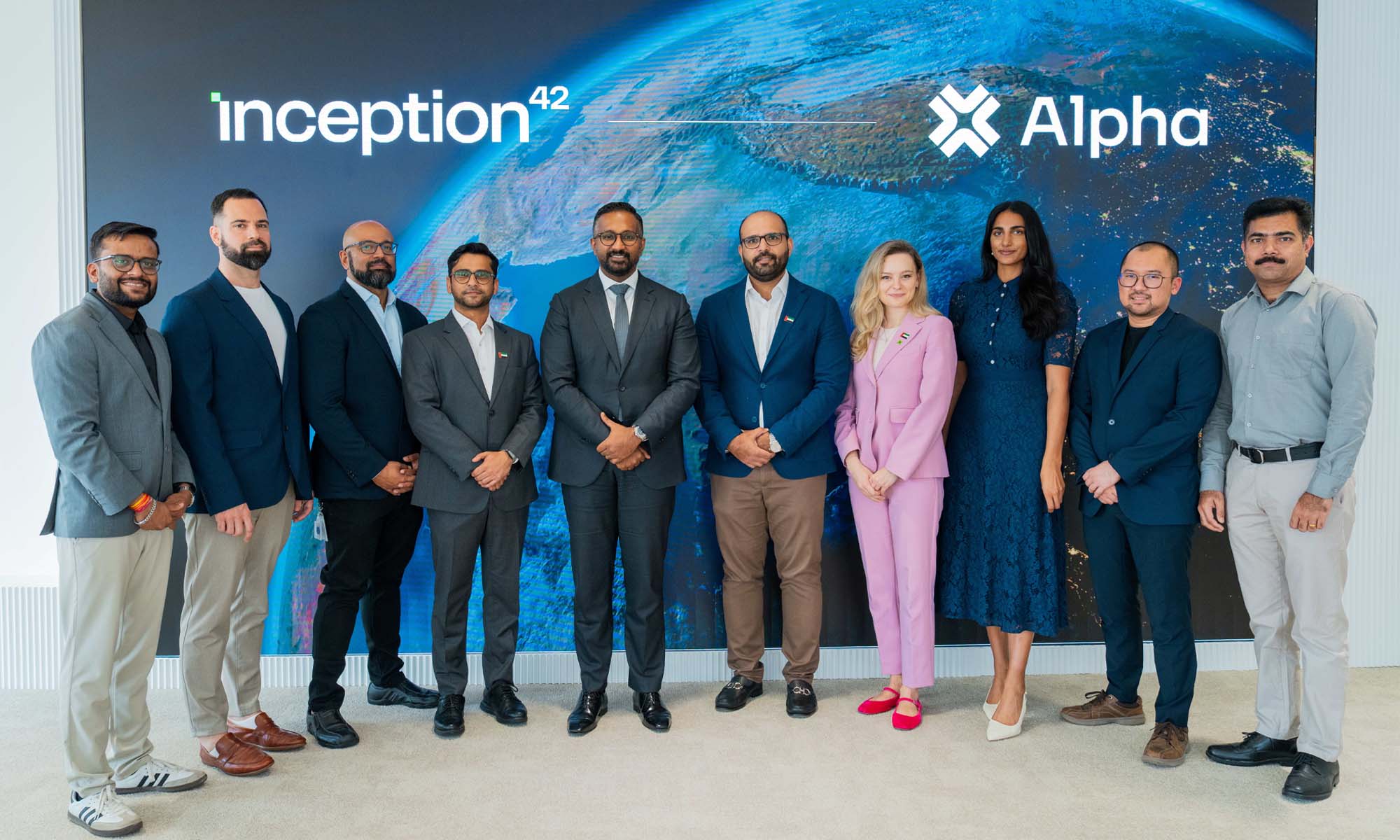
Inception42, G42’s agentic AI company, believes that institutional investors want AI they can check, not just AI that saves time. Its new tool, Alpha, launched at SuperReturn Middle East, is designed to draft investment memos in which every claim points back to its source.
Alpha is aimed at private equity firms, sovereign wealth funds and institutional allocators, which Inception42 says are underwriting larger, more complex positions under tighter timelines. Most AI tools, it argues, speed up individual tasks such as a memo draft or a comps table but leave the investment strategy scattered across files, inboxes and committee decks.
Teams upload Confidential Information Memoranda, diligence packs and portfolio data, which Alpha turns into insights grounded in that material. It checks how complete the diligence is, flagging gaps before they become late-stage surprises, then scores the deal against criteria the institution sets and drafts the memo.
Sourcing every claim is the core of Inception42’s Alpha pitch. Investment committees, the company says, have little time to challenge the evidence, and the audit trail is meant to give them more certainty. The company also promises institutions proof that their own strategy was applied consistently on every deal.
Also Read: Dubai Says Its Deepfake Detector Needs Just 7 Seconds Of Video
“Every investment committee wants the same thing: the full picture of a deal and the confidence to act on it,” says Ashish Koshy, CEO of Inception42. “Alpha gives deal teams and committee members that picture, with every insight traceable to its source, so speed and rigor finally pull in the same direction”.
Alpha is available as SaaS, and investment data, Inception42 says, stays under the institution’s control at every step. Firms can tailor the tool with custom agents, and Alpha Skills will eventually add reusable, practitioner-designed workflows for tasks such as comparables analysis and credit assessment.
The company says Alpha is already proven in the region’s most significant financial institutions. If the tool works as described, committees get an investment memo they can interrogate rather than simply take on trust.

G42’s Inception42 Wants AI To Show Its Work Before Investors Commit

WHOOP Goes Arabic, Betting On The Gulf’s Appetite For Health Data

New Disney+ Streaming App Has Officially Launched In The UAE

Dubai Says Its Deepfake Detector Needs Just 7 Seconds Of Video

OpenAI Has Announced A Visual Ad Format For ChatGPT

Trip.com Is Betting An AI Agent Will Book Your Next Vacation

OKX Bets Streaming Perks Can Take Crypto Mainstream Across MENA

Meta’s New $499 Plan Puts A Price On Reaching A Real Person

Microsoft Plans $10 Billion-Plus Gulf Expansion Despite Iran Conflict

In Kuwait, Your Surgeon Might Be Operating From Another Country


-
 News3 weeks ago
Microsoft Plans $10 Billion-Plus Gulf Expansion Despite Iran Conflict
-
 News3 weeks ago
Qatar Folds 45 State Companies Into A Single Investment Platform
-
 News2 weeks ago
NEOPAY Wants To Follow Merchants Across Channels And Borders
-
 News2 weeks ago
RØDE’s Low-Profile Studio Arm Is Designed To Stay Out Of Shot