
News
Samsung’s Fold Goes Wide, And The Whole Galaxy Range Gets Pricier
A new titanium build and a first-of-its-kind AI chip for wearables anchor the range, yet native Qi2 charging still isn’t part of the deal.


Samsung has run its Galaxy foldable and smartwatch reveals in July for several years now, which is likely a deliberate way of jumping early on the autumn hardware calendar. The 2026 event stuck to the same timings, though prices climbed too, albeit unevenly: $100 on the Flip, a new $2,100 Ultra tier above last year’s flagship, and $30 to $50 on the watches.
At the top sits the Galaxy Z Fold 8 Ultra at $2,100, a slab that measures just 4.1mm open and carries a 200MP main sensor, a 5,000mAh battery and an 8-inch interior display. Beneath it, the $1,900 Galaxy Z Fold 8 makes the more interesting bet. Samsung has stepped away from the tall, narrow shape it spent recent generations refining: the Fold 8 folds horizontally, so it’s wider than it is tall, with a 4:3 interior screen that sits about 9mm wider than the Ultra when closed. It drops the telephoto lens but gains battery, at 4,800mAh.
The clamshell Galaxy Z Flip 8 rounds out the phones at $1,200, up from the Flip 7’s $1,100, which was itself up from the $1,000 Flip 5.
All three devices run the Snapdragon 8 Elite Gen 5 for Galaxy and share a new Flex Titanium construction, a titanium alloy layer set beneath the flexible OLED that Samsung says strengthens display support, absorbs impact and reduces crease visibility. The progress has limits: none of the phones support Qi2 charging natively, 18 months after the Qi2-ready Galaxy S25. That means buyers will still need a magnetic case to get the most from a Qi2 charger.
The wearables move in the same upward direction. The Galaxy Watch 9 ($380 Bluetooth, $430 LTE) and Galaxy Watch Ultra 2 ($700) both run Qualcomm’s 3nm Snapdragon Wear Elite, the first wearable chip with a dedicated Hexagon NPU capable of supporting AI models with two billion parameters. The Ultra 2 is 12 percent thinner than its predecessor despite an 800mAh battery and a display reaching 5,000 nits.
Also Read: Dubai Police Finishes 65 Projects, Says AI Is The Next Priority
Pre-orders open today. The devices are set to reach shelves on August 7.




News
G42’s Inception42 Wants AI To Show Its Work Before Investors Commit
Launched at SuperReturn Middle East, Alpha is pitched at sovereign wealth funds and private equity firms underwriting bigger deals on tighter timelines.

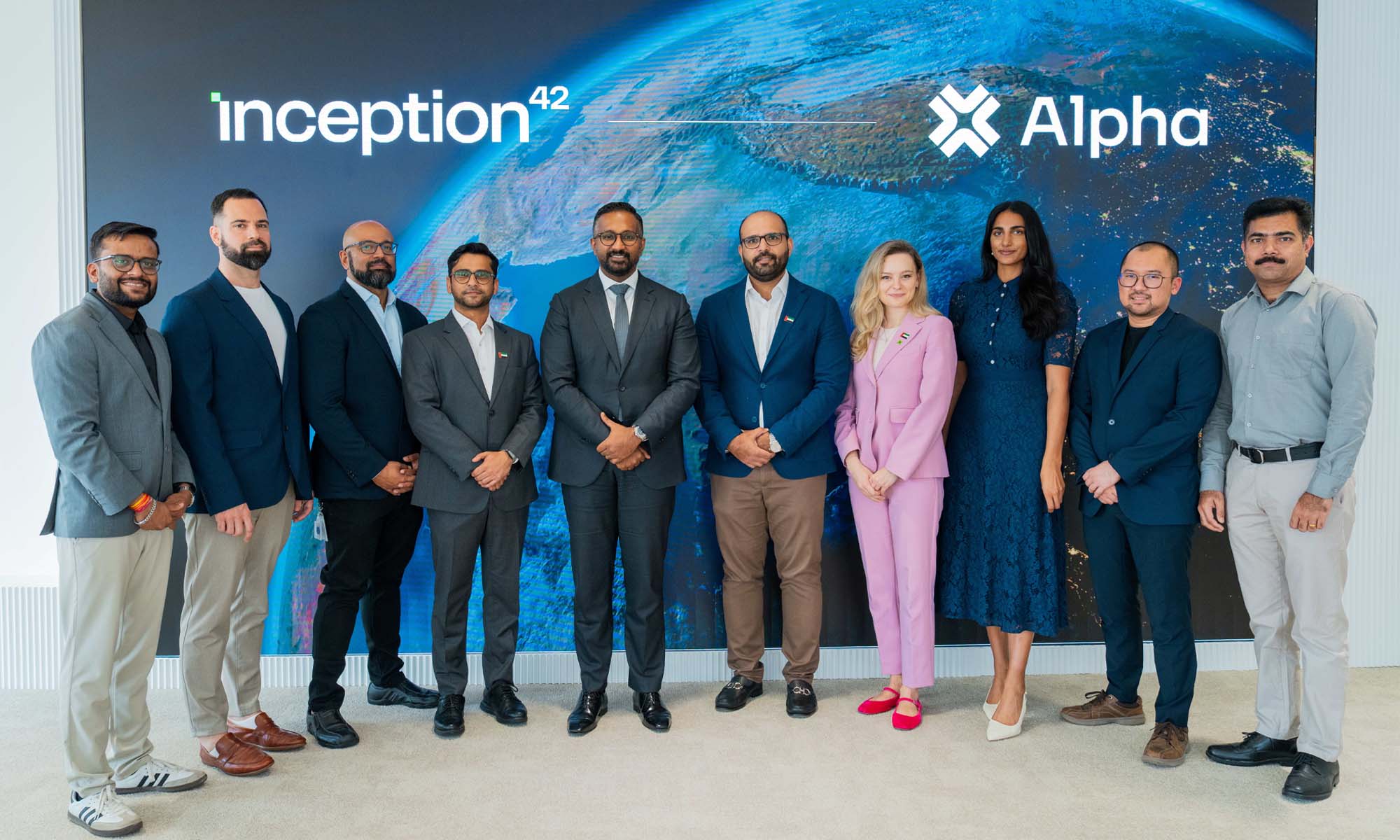
Inception42, G42’s agentic AI company, believes that institutional investors want AI they can check, not just AI that saves time. Its new tool, Alpha, launched at SuperReturn Middle East, is designed to draft investment memos in which every claim points back to its source.
Alpha is aimed at private equity firms, sovereign wealth funds and institutional allocators, which Inception42 says are underwriting larger, more complex positions under tighter timelines. Most AI tools, it argues, speed up individual tasks such as a memo draft or a comps table but leave the investment strategy scattered across files, inboxes and committee decks.
Teams upload Confidential Information Memoranda, diligence packs and portfolio data, which Alpha turns into insights grounded in that material. It checks how complete the diligence is, flagging gaps before they become late-stage surprises, then scores the deal against criteria the institution sets and drafts the memo.
Sourcing every claim is the core of Inception42’s Alpha pitch. Investment committees, the company says, have little time to challenge the evidence, and the audit trail is meant to give them more certainty. The company also promises institutions proof that their own strategy was applied consistently on every deal.
Also Read: Dubai Says Its Deepfake Detector Needs Just 7 Seconds Of Video
“Every investment committee wants the same thing: the full picture of a deal and the confidence to act on it,” says Ashish Koshy, CEO of Inception42. “Alpha gives deal teams and committee members that picture, with every insight traceable to its source, so speed and rigor finally pull in the same direction”.
Alpha is available as SaaS, and investment data, Inception42 says, stays under the institution’s control at every step. Firms can tailor the tool with custom agents, and Alpha Skills will eventually add reusable, practitioner-designed workflows for tasks such as comparables analysis and credit assessment.
The company says Alpha is already proven in the region’s most significant financial institutions. If the tool works as described, committees get an investment memo they can interrogate rather than simply take on trust.

Shokz OpenDots 2 Review: Clip-On Audio Gets A Bass-Heavy Makeover

G42’s Inception42 Wants AI To Show Its Work Before Investors Commit

WHOOP Goes Arabic, Betting On The Gulf’s Appetite For Health Data

New Disney+ Streaming App Has Officially Launched In The UAE

Dubai Says Its Deepfake Detector Needs Just 7 Seconds Of Video

In Kuwait, Your Surgeon Might Be Operating From Another Country

Microsoft Plans $10 Billion-Plus Gulf Expansion Despite Iran Conflict

Qatar Folds 45 State Companies Into A Single Investment Platform

NEOPAY Wants To Follow Merchants Across Channels And Borders

RØDE’s Low-Profile Studio Arm Is Designed To Stay Out Of Shot


-
 News3 weeks ago
In Kuwait, Your Surgeon Might Be Operating From Another Country
-
 News3 weeks ago
Microsoft Plans $10 Billion-Plus Gulf Expansion Despite Iran Conflict
-
 News3 weeks ago
Qatar Folds 45 State Companies Into A Single Investment Platform
-
 News2 weeks ago
NEOPAY Wants To Follow Merchants Across Channels And Borders