
News
OpenAI Has Announced A Visual Ad Format For ChatGPT
Partner-reported data suggests ads in ChatGPT are reaching new customers, though OpenAI says measuring their causal impact is still at an early stage.

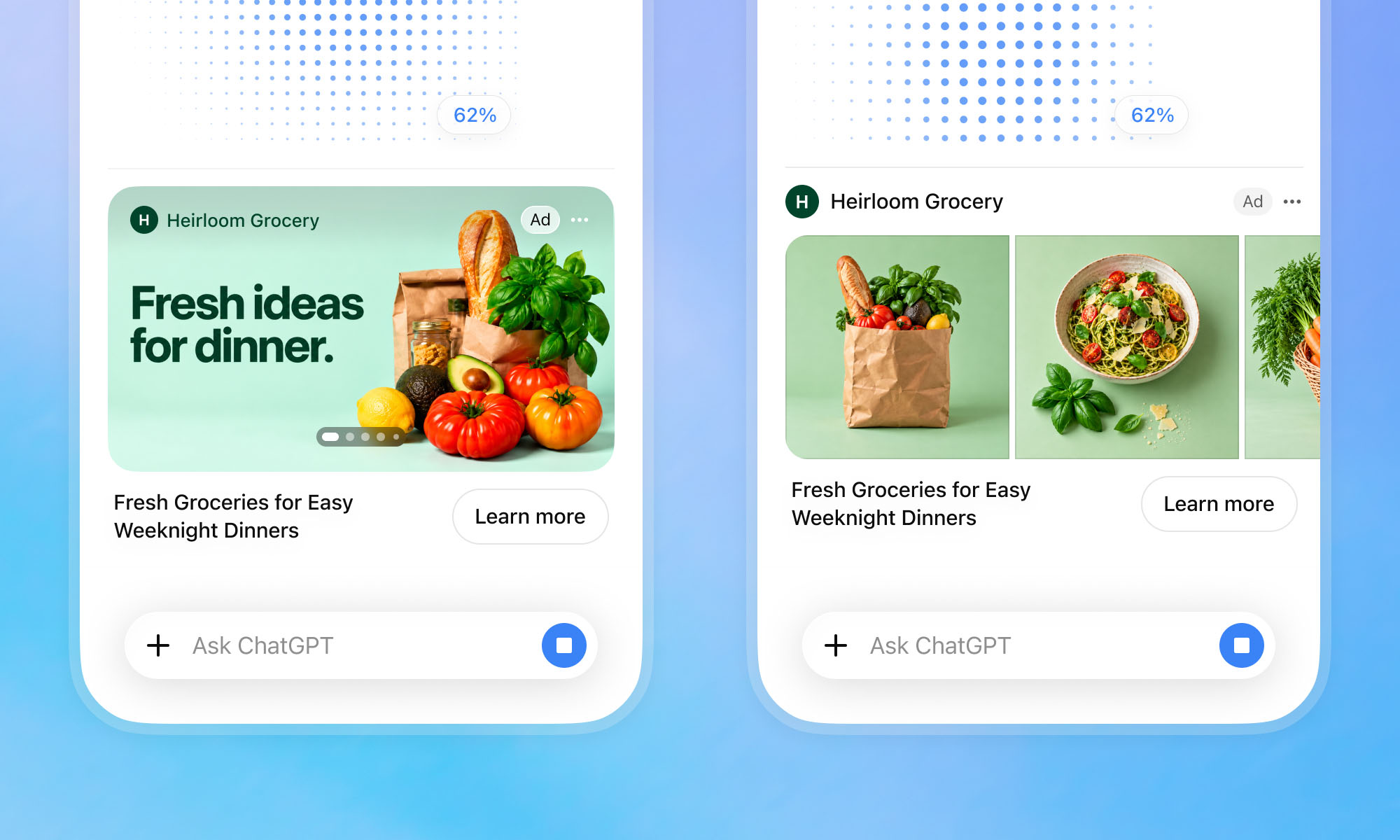
OpenAI’s advertising pitch starts with scale. ChatGPT reaches 1.2 billion people each week, according to the company, which says ads let it serve a much larger market than subscriptions alone. But most of the latest update, which introduces a new visual ad format, is about something else: giving advertisers confidence in what their ads deliver, and in where they appear.
That format will first appear during image generation, in a US test beginning later this month with an initial group of advertisers. The ads can show product inspiration, product usage or the experiences a product makes possible; OpenAI says they will be clearly labeled, kept apart from the generated image and will not influence ChatGPT’s answers.
“ChatGPT is creating a fundamentally different advertising environment, where context is defined by the conversation itself rather than a page or video,” says Mark Zagorski, CEO of DoubleVerify, in a recent statement.
On measurement, integrations with Hightouch, Tealium and LiveRamp now help advertisers send conversion data from existing systems, and supported attribution partners include DV Rockerbox and Triple Whale. OpenAI says its work on incrementality, an ad’s causal impact, is still in its early stages; it is exploring geo-based experiments with partners including WorkMagic.
Also Read: In Kuwait, Your Surgeon Might Be Operating From Another Country
The early results are three case studies from OpenAI’s measurement partners. According to DV Rockerbox, WeightWatchers’ attributed cost per acquisition on ChatGPT Ads was 15.3% lower than its blended paid-search benchmark. WorkMagic reports statistically significant lift for wellness brand Dose, with 67% of incremental purchases coming from net-new customers, while Triple Whale says 93% of Portland Leather’s visitors from ChatGPT Ads were new.
On placement, OpenAI says its guardrails assess whether a conversation is appropriate for advertising, helping keep ads away from emotionally vulnerable, sensitive or otherwise unsuitable contexts. It is also developing brand suitability evaluation pilots with DoubleVerify and Integral Ad Science. Neither will see private user conversations. Both will assess how OpenAI’s brand safety standards are applied in a controlled testing environment.




News
alkalma And BeehiveX Team Up To Turn Health Awareness Into Action
The UAE partnership will test what actually gets people to screen early, seek support and keep up healthier habits.


Awareness is only the first step when it comes to health. The harder part is getting people to act on it, and that’s the problem alkalma and BeehiveX have agreed to examine together.
Leaders from the two organizations signed a Memorandum of Understanding (MoU) at Future Health in Abu Dhabi today. The agreement will explore how health programs can better support participation in screening, earlier support-seeking and healthier behaviors. Work will begin in the UAE, with opportunities elsewhere in the region considered jointly.
For Dr. Omar Najim, Chairman, BeehiveX, the gap is clear: “Awareness alone does not change behavior. Real impact comes from understanding people, removing barriers to action and making healthier choices easier”.
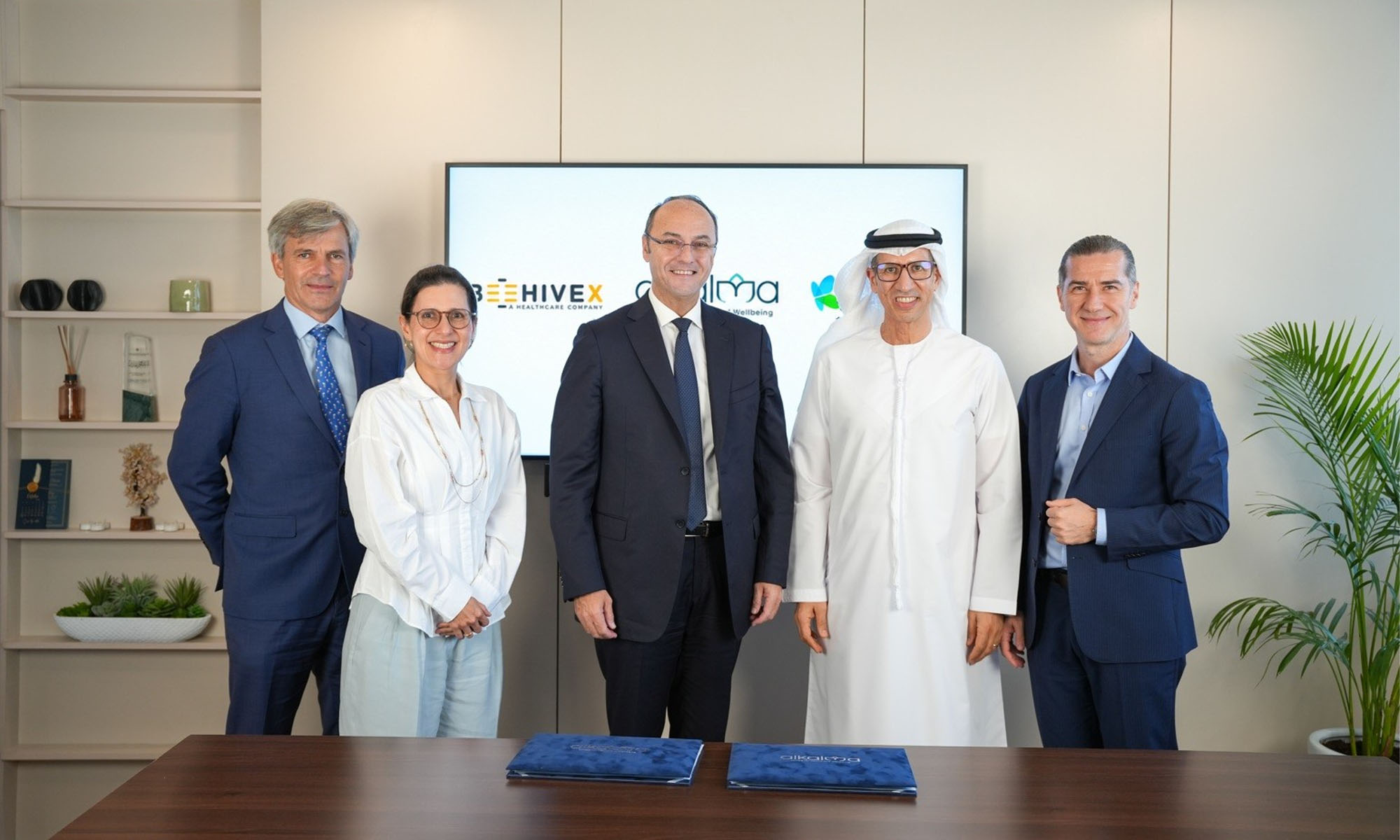
The partners each bring complementary tools. alkalma provides mental health and wellbeing services built on Keralty’s Population Health Management expertise, using it to identify the health needs and risks of different population groups and to run programs focused on prevention, early detection and coordinated care. BeehiveX adds behavioral science, research and communication expertise, studying people’s motivations, the barriers they face and their readiness to change.
The aim is to link how programs are designed with how people actually respond to them. Possible areas of collaboration include community wellbeing initiatives, school and workplace programs, and support for people managing long-term health conditions. The partners will also explore jointly designing, piloting and evaluating behavioral interventions, building evidence on what works and shaping programs that can scale.
Also Read: WHOOP Goes Arabic, Betting On The Gulf’s Appetite For Health Data
Dr. Emilio Herrera, CEO of alkalma and Keralty MENA, said: “A health program needs to do more than identify a risk or explain what someone should do. It also needs to understand their circumstances and help them take the next step”.
In the near future, specific initiatives will be developed and agreed jointly by the two organizations.

alkalma And BeehiveX Team Up To Turn Health Awareness Into Action

Mastercard And LiaPay Bring Earned Wage Access To GCC Workers

Dubai Residential Lets Tenants Break Up First Rent Installment

ESET Bets On Specialized Security AI At 0.5% The Training Cost

Whish Money Opens A Montreal Flagship To Enter The Canadian Market

Abu Dhabi’s Robot Kitchen Is Serving Up Biryani, Not Burgers

Shokz OpenDots 2 Review: Clip-On Audio Gets A Bass-Heavy Makeover

Checkout.com Reports 20% Higher Payment Acceptance For PRYPCO

Sennheiser’s MOMENTUM 5 Series Bets On Batteries You Can Swap

UAE’s 3-Minute University Registration Runs On Government Data


-
 News4 weeks ago
Abu Dhabi’s Robot Kitchen Is Serving Up Biryani, Not Burgers
-
 News3 weeks ago
Checkout.com Reports 20% Higher Payment Acceptance For PRYPCO
-

 News3 weeks ago
Apple Acknowledges iPhone Duo Display Issue After Viral Reports
-

 News3 weeks ago
Dubai Doubles Its AI Campus Target To 1,000 Companies By 2030