
News
Qatar Airways Flies The World’s First Starlink-Equipped 787-9
With 150 widebodies fitted and over 23 million passengers online since 2024, the Gulf carrier is close to making free satellite Wi-Fi standard fleetwide.


For most of commercial aviation’s modern history, closing the cabin door meant leaving the internet behind. Qatar Airways has spent nearly two years dismantling that idea, and this week it logged another first.
The Doha-based carrier has become the first airline in the world to operate a Starlink-equipped Boeing 787-9, and has finished fitting its 787-8 sub-fleet in seven months. That takes its Starlink-equipped widebody count to 150. More than half of its 787 fleet now carries the system, with the rest on track for completion by the end of 2026.
The airline upgraded its Boeing 777s in just nine months and its Airbus A350s in eight, and now operates the world’s first and largest Starlink-enabled fleets of all three types. The wider program has passed 83 percent completion, with up to 323 Starlink flights operating daily.
Uptake has been swift. More than 23 million passengers have connected since the service launched in October 2024, across over 86,000 flights. At speeds of up to 500 Mbps, SpaceX’s low-Earth-orbit constellation delivers something closer to home broadband than the sluggish, metered Wi-Fi that long defined flying. Qatar Airways was also the first carrier to offer Starlink on long-haul and ultra-long-haul routes across six continents, from the Americas and Australasia to gateways across Africa, Asia, Europe, and the Middle East.
Also Read: Dubai’s aradus Wants AI To Run The Back Office Of Physical Trade
There are, of course, a few caveats. The Wi-Fi is free and gate-to-gate, but access runs through Privilege Club authentication or enrollment, making onboard connectivity a subtle funnel into the airline’s loyalty program. Gate-to-gate coverage can also lapse at certain airports because of local regulatory requirements, and aircraft assignments on some routes may change for operational reasons.
With all that being said, it’s clear that satellite broadband is beginning to shift from novelty to standard fit, and competition among long-haul carriers is becoming less about whether the service exists, and more about bandwidth — meaning long flights are no longer an excuse to be unreachable.







News
Abu Dhabi’s Robot Kitchen Is Serving Up Biryani, Not Burgers
Circus SE wants to put a tiny automated factory inside the buildings where Gulf residents live and work, bypassing part of last-mile delivery.
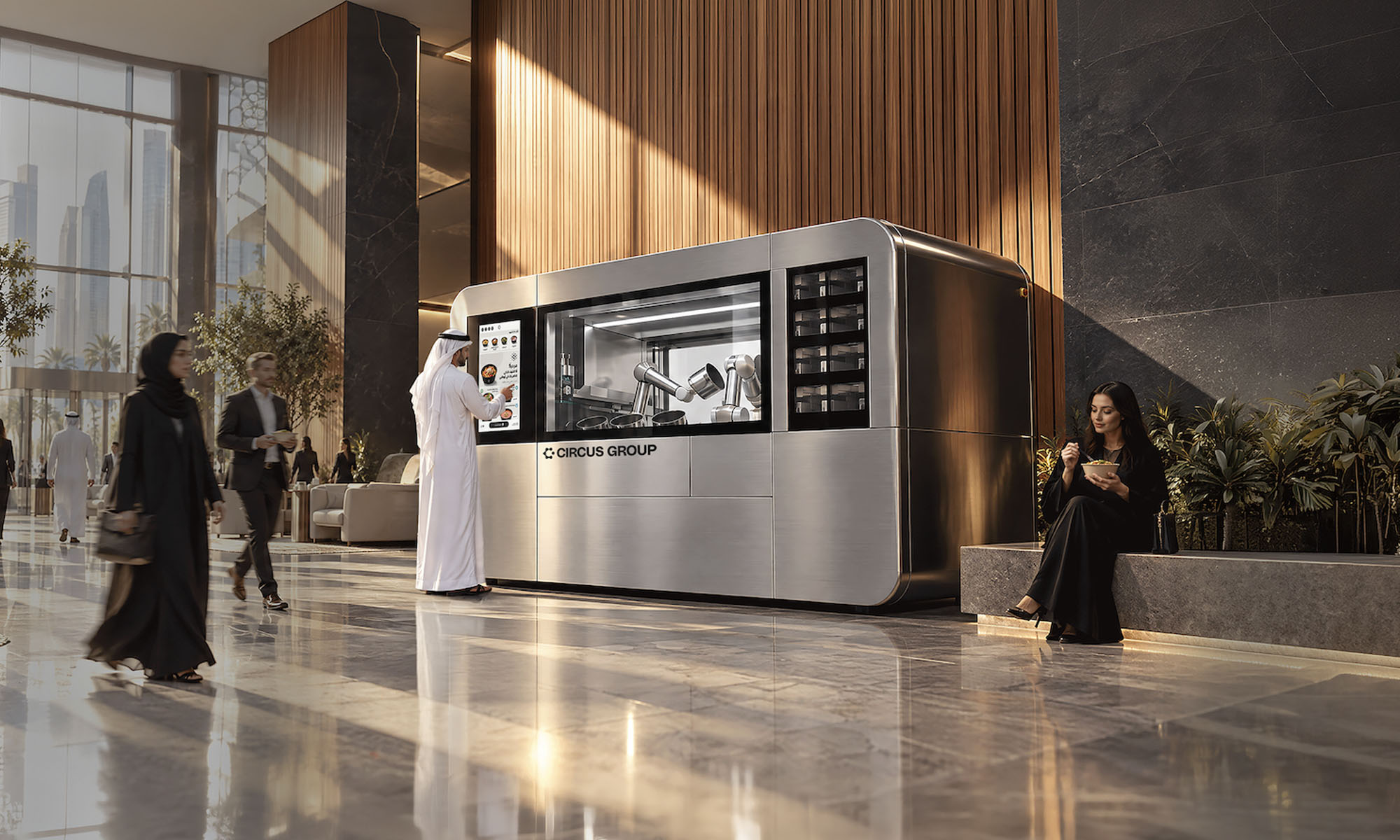
The most telling thing about a new autonomous kitchen now running in Abu Dhabi’s Marina Square is what it won’t cook:
“We don’t do fast food,” says Nikolas Bullwinkel, Founder and CEO of Circus SE. “We’ve actively decided not to build a machine that can only do burgers”.
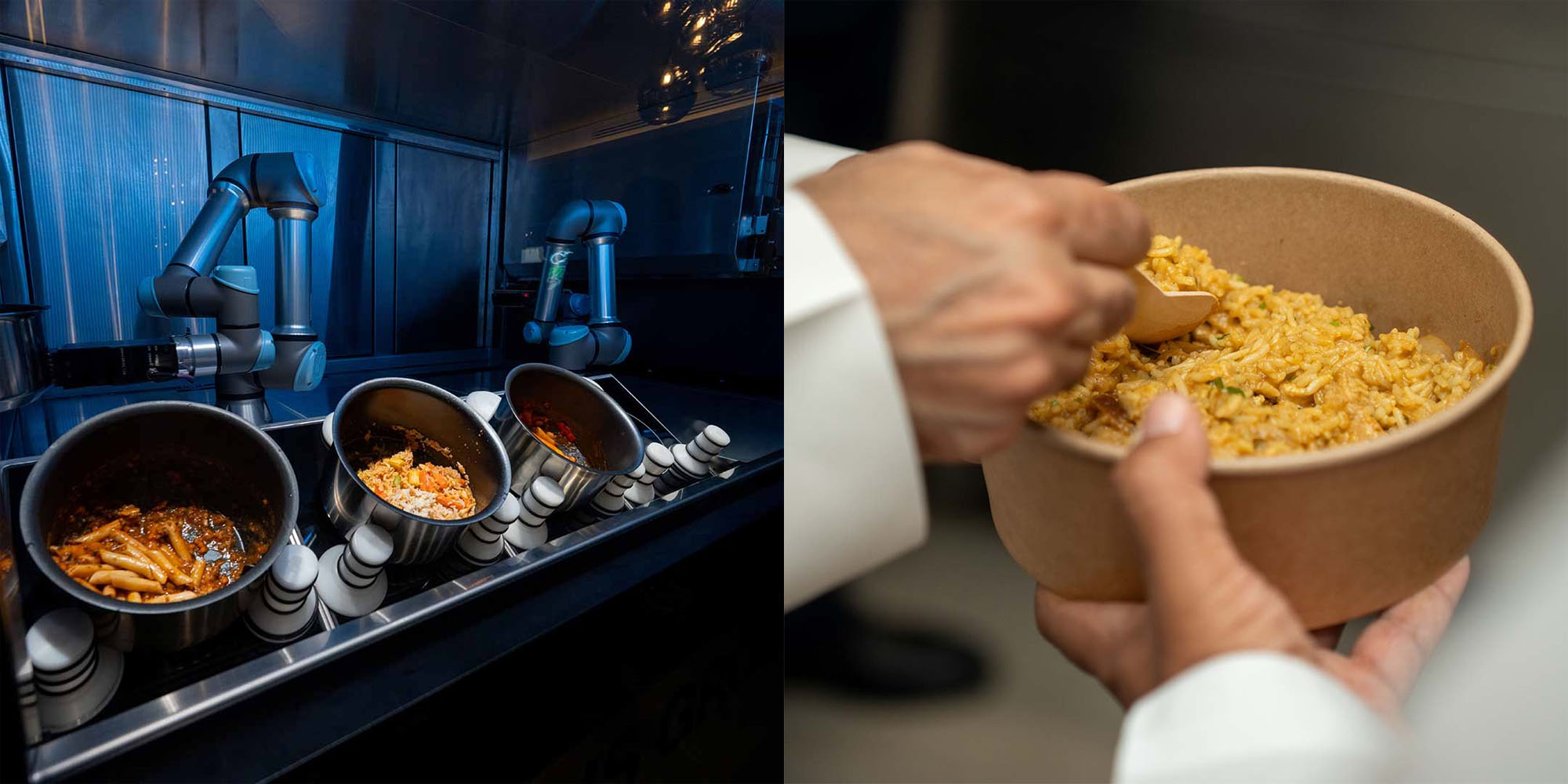
Instead, the CA-1 system is built around pot-based cooking: curries, pastas, soups and rice dishes. After experimenting with highly personalized recipes, Circus deliberately leaned back toward recognizable food. “We’re going with a chicken biryani because you know it,” Bullwinkel says of the AED 40 dish.
The Germany-based robotics and food technology company operates across eight countries, and Abu Dhabi is its first deployment outside Europe. More locations are expected there and in Dubai.
In Germany, its units can be placed in supermarkets, gas stations, airports and hospitals. In the Gulf, Bullwinkel wants them inside residential and office buildings, replacing some of the complexity of last-mile delivery. “We’re basically bringing a very tiny factory a few square meters into your building,” he says. Catering company Royal Prestige supplies the ingredients and knowledge of local tastes.
The CA-1 manages up to 36 refrigerated ingredient silos alongside automated induction cooking, robotic plating and a self-cleaning dishwasher. Two robotic arms move ingredients through the system with minimal human intervention. It can produce up to 120 hot meals an hour, and a meal such as rice and curry can take around three to four minutes.
Also Read: Ooredoo Qatar’s 5G+ Network Is Built For Machines As Much As People
Five cameras and multiple sensors monitor heat, temperature and consistency, an attempt to approximate what a chef perceives. “You can hear something gets burned, you can smell it, you can see it at some point,” Bullwinkel says. CircusOS, the company’s operating system, adjusts recipes in real time.
You might think of the platform as a threat to kitchen staff, but Bullwinkel frames Circus as a way for chefs to develop recipes and distribute them at scale. With that being said, rising labor costs and shortages are also part of his case for automation.

Abu Dhabi’s Robot Kitchen Is Serving Up Biryani, Not Burgers

Sennheiser’s MOMENTUM 5 Series Bets On Batteries You Can Swap

UAE’s 3-Minute University Registration Runs On Government Data

How Online Ads Became A Delivery System For Zero-Click Spyware

Shokz OpenDots 2 Review: Clip-On Audio Gets A Bass-Heavy Makeover

Dubai Says Its Deepfake Detector Needs Just 7 Seconds Of Video

NEOPAY Wants To Follow Merchants Across Channels And Borders

New Disney+ Streaming App Has Officially Launched In The UAE

RØDE’s Low-Profile Studio Arm Is Designed To Stay Out Of Shot

For etisalat, More Bandwidth Is A Matter Of Digital Sovereignty


-
 News3 weeks ago
Dubai Says Its Deepfake Detector Needs Just 7 Seconds Of Video
-
 News3 weeks ago
NEOPAY Wants To Follow Merchants Across Channels And Borders
-
 News2 weeks ago
New Disney+ Streaming App Has Officially Launched In The UAE
-
 News3 weeks ago
RØDE’s Low-Profile Studio Arm Is Designed To Stay Out Of Shot