
News
Binance Receives Virtual Assets License To Operate In Dubai
As its user base nears 200 million, CEO Richard Teng believes crypto adoption will soar over the next half of the decade.

Global crypto exchange Binance has been granted a full operational license in Dubai, in a move that’s expected to accelerate digital asset adoption and strengthen the UAE’s regulatory landscape.
The virtual asset service provider license (VASP) was granted by the Dubai Virtual Assets Regulatory Authority (VARA) and will allow Binance to extend its current range of services to retail investors, the company announced yesterday.
The move by Dubai authorities will be critical to Binance’s strategy of growing its user base globally. The crypto exchange expects to pass the 200 million user mark “quite shortly”, according to Richard Teng, the company’s CEO.
Once that milestone is achieved, Binance will have around twice as many users as rival platform Coinbase. Meanwhile, Crypto.com, another popular exchange with 80 million users, received a Dubai VASP license last week.
“We’re seeing much greater institutional adoption and institutional money coming into this space [along with] much greater regulatory clarity and a lot more jurisdictions approving [digital asset] products that bring in new investor classes,” Binance’s Richard Tang explained, adding: “As of now, we stand at about 5% crypto adoption globally, but that will become much faster moving forward”.
Also Read: Microsoft Invests $1.5 Billion In Abu Dhabi AI Tech Firm G42
Dubai and the UAE are extremely supportive of technologies like digital assets, and have already launched initiatives to boost adoption. The UAE has ambitious plans to become a world leader in the crypto economy of the future, with Dubai in particular being noteworthy for passing a new law to regulate virtual assets to support investors and exchanges.
“Global crypto regulation is currently showing diverging signs. Some developed countries have long suffered from crypto-related frauds and illegal exchanges. On the other hand, emerging nations like the UAE and Singapore have enacted crypto laws at faced pace,” said Vijay Valecha, chief investment officer of Dubai-based Century Financial.
As the UAE gears up to become one of the fastest-growing crypto capitals worldwide, investors and talent are flocking to places like Dubai. During 2023, the Emirates as a whole realized $204 million in capital gains from cryptocurrency investments, according to blockchain data analysts Chainalysis.





News
Microsoft Plans $10 Billion-Plus Gulf Expansion Despite Iran Conflict
Security is shaping Microsoft’s approach, from resilience work with governments to what it will say about how the money splits by country.
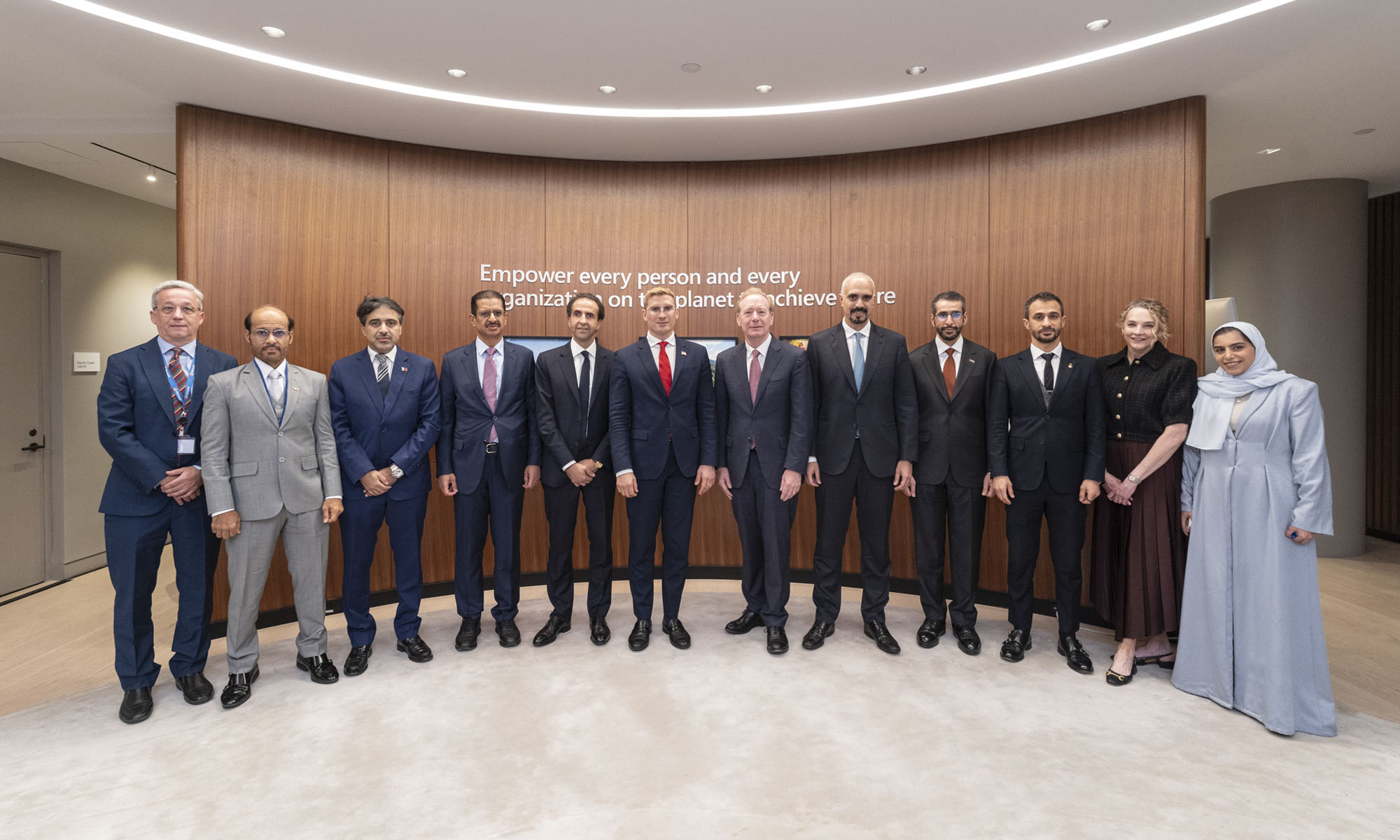
Microsoft is planning more than $10 billion of investment across the UAE, Saudi Arabia, Qatar and Kuwait through 2030, Vice Chair and President Brad Smith told Reuters, calling the spending schedule aggressive. The Iranian conflict that began on February 28 has not persuaded the company to scale back.
“We’re sustaining all the investments we planned to make before this conflict started, and we are in fact adding to them,” Smith said. The $10 billion-plus total does not, however, show how large those additions are.
The investment, which Smith described as part of Microsoft’s continued infrastructure expansion, is aimed at cloud and AI infrastructure and at the company’s growing regional operations. Microsoft also intends to put more than $400 million into subsea and terrestrial connectivity across the Middle East by 2030.
The spending fits the region’s own ambitions too. Gulf governments have been investing heavily in AI infrastructure as part of a push to diversify their economies beyond oil and gas and turn themselves into global technology hubs. Major cloud and AI providers have been drawn in part by the land and relatively low-cost energy on offer.
Microsoft is widening its partnerships with regional AI companies, though not on identical terms. In 2024, it invested $1.5 billion in Abu Dhabi-based G42 for a minority stake, and Smith currently sits on G42’s board. Saudi Arabia’s Humain and Qatar’s Qai are working with Microsoft on selected priority areas, but Smith said the company does not plan to make capital investments in either.
Also Read: Egypt’s Mobile Wallets Are Booming, But Cash Still Has Power
The conflict has added another strand to Microsoft’s work in the region. Since it began, Smith said, the company has supported regional partners with digital resilience assessments, and it is now working with Gulf countries through a digital resilience initiative focused on preparedness and the protection of critical data.
So far, the company has given no country-by-country breakdown of the investment, citing security among other factors. So while the headline figure is public, how Microsoft divides the spending among the four countries is not.

Microsoft Plans $10 Billion-Plus Gulf Expansion Despite Iran Conflict

In Kuwait, Your Surgeon Might Be Operating From Another Country

Qatar Folds 45 State Companies Into A Single Investment Platform

Trip.com Is Betting An AI Agent Will Book Your Next Vacation

Meta’s New $499 Plan Puts A Price On Reaching A Real Person

Apple’s First Folding iPhone Arrives Late To A Shrinking Market
Trip.com Is Betting An AI Agent Will Book Your Next Vacation

Egypt’s Mobile Wallets Are Booming, But Cash Still Has Power

OKX Bets Streaming Perks Can Take Crypto Mainstream Across MENA

Apple’s Latest Product Releases Make The Headlines


-
 News3 weeks ago
Apple’s First Folding iPhone Arrives Late To A Shrinking Market
-
 News2 weeks ago
Trip.com Is Betting An AI Agent Will Book Your Next Vacation
-
 News2 weeks ago
Egypt’s Mobile Wallets Are Booming, But Cash Still Has Power
-
 News2 weeks ago
OKX Bets Streaming Perks Can Take Crypto Mainstream Across MENA