
News
United Arab Emirates To Quit OPEC After 59 Years
Abu Dhabi’s exit clears the way for higher oil output as production limits and Gulf supply risks test the producer group.


The UAE will leave OPEC and OPEC+ on May 1, 2026, ending a 59-year membership and changing its role in global energy markets.
The decision was announced in a government statement carried by state news agency WAM after what Abu Dhabi described as a broad review of its production policy and capacity. The statement said the move reflects “the UAE’s long-term strategic and economic vision and evolving energy profile”.
For Abu Dhabi, the break removes a quota system that had become harder to justify. OPEC’s production limits are meant to support prices by holding back supply. That model fits economies more exposed to oil revenue. The UAE says its non-oil economy now accounts for about 75 percent of GDP, while ADNOC (The Abu Dhabi National Oil Company) has spent heavily to lift crude capacity.
It does not plan an immediate surge in production. The UAE said it would bring more barrels to market “in a gradual and measured manner, aligned with demand and market conditions”. It also pointed to continued spending on oil, gas, renewables and low-carbon technologies.
The market reaction was swift. Brent crude, the European benchmark, moved above $100 per barrel for the first time since April 8 and reached $111 as of writing.
The timing is awkward for OPEC. Iraq, Kazakhstan and the UAE have all produced above agreed quotas in recent months and faced pressure to compensate. The UAE is the group’s third-largest producer. Its departure follows Qatar’s exit in 2019 and comes as OPEC prepared for a meeting in Vienna on Wednesday.
Also Read: Creative Zone Launches UAE Startup Setup Program
There’s also the Strait of Hormuz issue. The statement referred to disruption linked to the conflict with Iran, which has sharply restricted tanker movement through the waterway between Iran and Oman. Around a fifth of global crude oil and liquefied natural gas normally passes through the route. The EIA estimates Iraq, Saudi Arabia, Kuwait, the UAE, Qatar and Bahrain kept 7.5 million barrels per day of crude output offline in March and 9.1 million in April.
Despite current volatility, the split hasn’t appeared from nowhere. In 2021, the UAE resisted an extension of production cuts unless its quota was raised, arguing that capacity investments were being constrained by outdated baselines. A compromise followed, but the dispute exposed the core issue: Abu Dhabi wanted to produce more than the system allowed.
Abu Dhabi is targeting 5 million barrels per day by 2027. Current production is around 3.4 million barrels per day, while the OPEC+ limit has held the country near 3.2 million despite capacity above 4 million.





News
G42’s Inception42 Wants AI To Show Its Work Before Investors Commit
Launched at SuperReturn Middle East, Alpha is pitched at sovereign wealth funds and private equity firms underwriting bigger deals on tighter timelines.

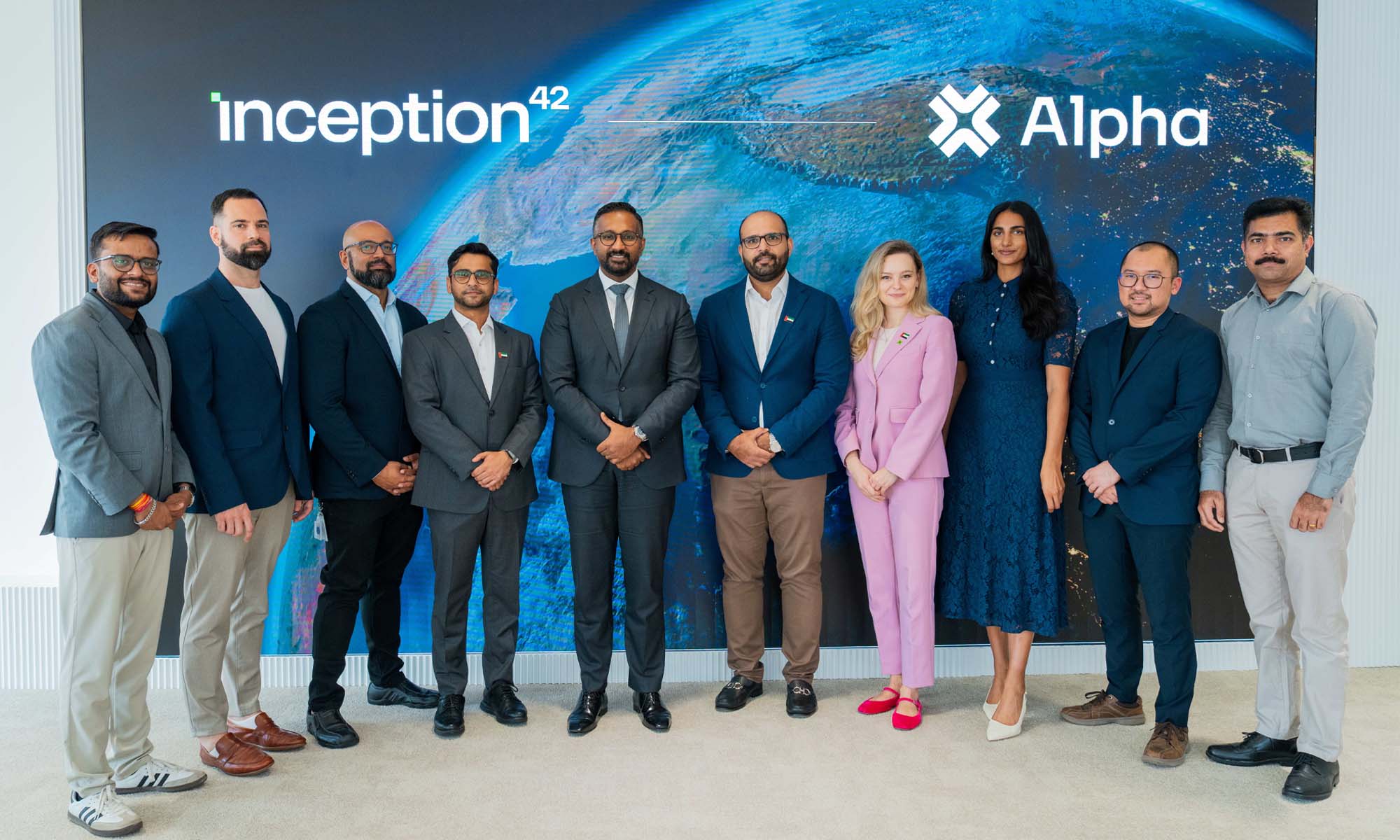
Inception42, G42’s agentic AI company, believes that institutional investors want AI they can check, not just AI that saves time. Its new tool, Alpha, launched at SuperReturn Middle East, is designed to draft investment memos in which every claim points back to its source.
Alpha is aimed at private equity firms, sovereign wealth funds and institutional allocators, which Inception42 says are underwriting larger, more complex positions under tighter timelines. Most AI tools, it argues, speed up individual tasks such as a memo draft or a comps table but leave the investment strategy scattered across files, inboxes and committee decks.
Teams upload Confidential Information Memoranda, diligence packs and portfolio data, which Alpha turns into insights grounded in that material. It checks how complete the diligence is, flagging gaps before they become late-stage surprises, then scores the deal against criteria the institution sets and drafts the memo.
Sourcing every claim is the core of Inception42’s Alpha pitch. Investment committees, the company says, have little time to challenge the evidence, and the audit trail is meant to give them more certainty. The company also promises institutions proof that their own strategy was applied consistently on every deal.
Also Read: Dubai Says Its Deepfake Detector Needs Just 7 Seconds Of Video
“Every investment committee wants the same thing: the full picture of a deal and the confidence to act on it,” says Ashish Koshy, CEO of Inception42. “Alpha gives deal teams and committee members that picture, with every insight traceable to its source, so speed and rigor finally pull in the same direction”.
Alpha is available as SaaS, and investment data, Inception42 says, stays under the institution’s control at every step. Firms can tailor the tool with custom agents, and Alpha Skills will eventually add reusable, practitioner-designed workflows for tasks such as comparables analysis and credit assessment.
The company says Alpha is already proven in the region’s most significant financial institutions. If the tool works as described, committees get an investment memo they can interrogate rather than simply take on trust.

G42’s Inception42 Wants AI To Show Its Work Before Investors Commit

WHOOP Goes Arabic, Betting On The Gulf’s Appetite For Health Data

New Disney+ Streaming App Has Officially Launched In The UAE

Dubai Says Its Deepfake Detector Needs Just 7 Seconds Of Video

OpenAI Has Announced A Visual Ad Format For ChatGPT

Trip.com Is Betting An AI Agent Will Book Your Next Vacation

OKX Bets Streaming Perks Can Take Crypto Mainstream Across MENA

Meta’s New $499 Plan Puts A Price On Reaching A Real Person

Microsoft Plans $10 Billion-Plus Gulf Expansion Despite Iran Conflict

In Kuwait, Your Surgeon Might Be Operating From Another Country


-
 News3 weeks ago
Microsoft Plans $10 Billion-Plus Gulf Expansion Despite Iran Conflict
-
 News3 weeks ago
In Kuwait, Your Surgeon Might Be Operating From Another Country
-
 News3 weeks ago
Qatar Folds 45 State Companies Into A Single Investment Platform
-
 News2 weeks ago
NEOPAY Wants To Follow Merchants Across Channels And Borders