
News
NVIDIA Puts GPT-5.5 Codex In Hands Of 10,000 Staff
The chipmaker has significantly expanded OpenAI’s latest model across teams from engineering to HR under tight internal controls.

NVIDIA has started rolling out OpenAI’s GPT-5.5 model through the Codex coding agent to more than 10,000 employees, extending the tool well beyond software teams and into core business functions.
The deployment covers engineering, product, legal, marketing, finance, sales, HR, operations and developer programs. Staff are using Codex for coding, internal research and routine knowledge work as companies test whether AI agents can move from demos to daily use.
GPT-5.5 is running on NVIDIA’s GB200 NVL72 rack-scale systems, linking OpenAI’s newest model directly to the chipmaker’s latest infrastructure push. NVIDIA said the systems cut cost per million tokens by 35 times and raise token output per second per megawatt by 50 times versus earlier generations.
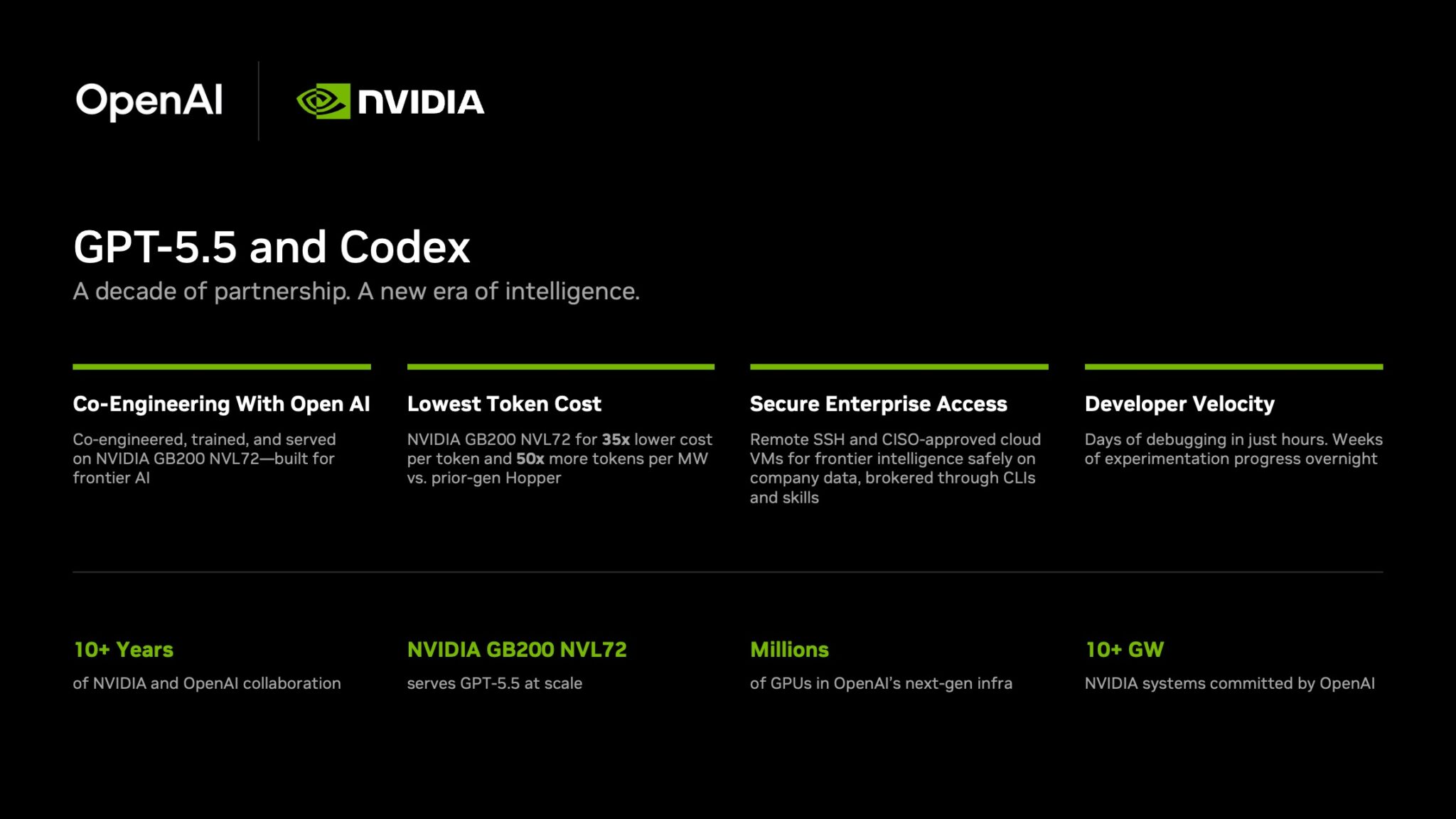
Inside the company, it says the effects are immediate. Debugging work that once took days is being finished in hours and experiments across large codebases that used to stretch over weeks are now handled overnight. Teams are also building features from natural-language prompts with fewer failed runs.
In a company-wide note urging staff to adopt the tool, CEO Jensen Huang wrote: “Let’s jump to lightspeed. Welcome to the age of AI.”
Security remains central to the rollout. Codex can connect through Secure Shell to approved cloud virtual machines, allowing agents to work with company data without moving it outside approved environments. NVIDIA said it assigned cloud VMs to employees so agents run in isolated sandboxes with full audit trails.
Also Read: Deezer Says AI Tracks Now Make Up 44% Of Uploads
The company added that the setup uses a zero-data-retention policy. Access to production systems is read-only through command-line tools and internal automation layers.
The move also highlights NVIDIA’s long relationship with OpenAI. NVIDIA said the partnership began in 2016, when Huang personally delivered the first DGX-1 AI supercomputer to OpenAI’s San Francisco office.
The two companies have since worked across hardware and model deployment. NVIDIA also said OpenAI plans to deploy more than 10 gigawatts of NVIDIA systems for future AI infrastructure.
For Gulf markets pouring money into sovereign AI and enterprise automation, the signal is clear: internal AI agents are moving from pilot phase to standard tooling.




News
G42’s Inception42 Wants AI To Show Its Work Before Investors Commit
Launched at SuperReturn Middle East, Alpha is pitched at sovereign wealth funds and private equity firms underwriting bigger deals on tighter timelines.
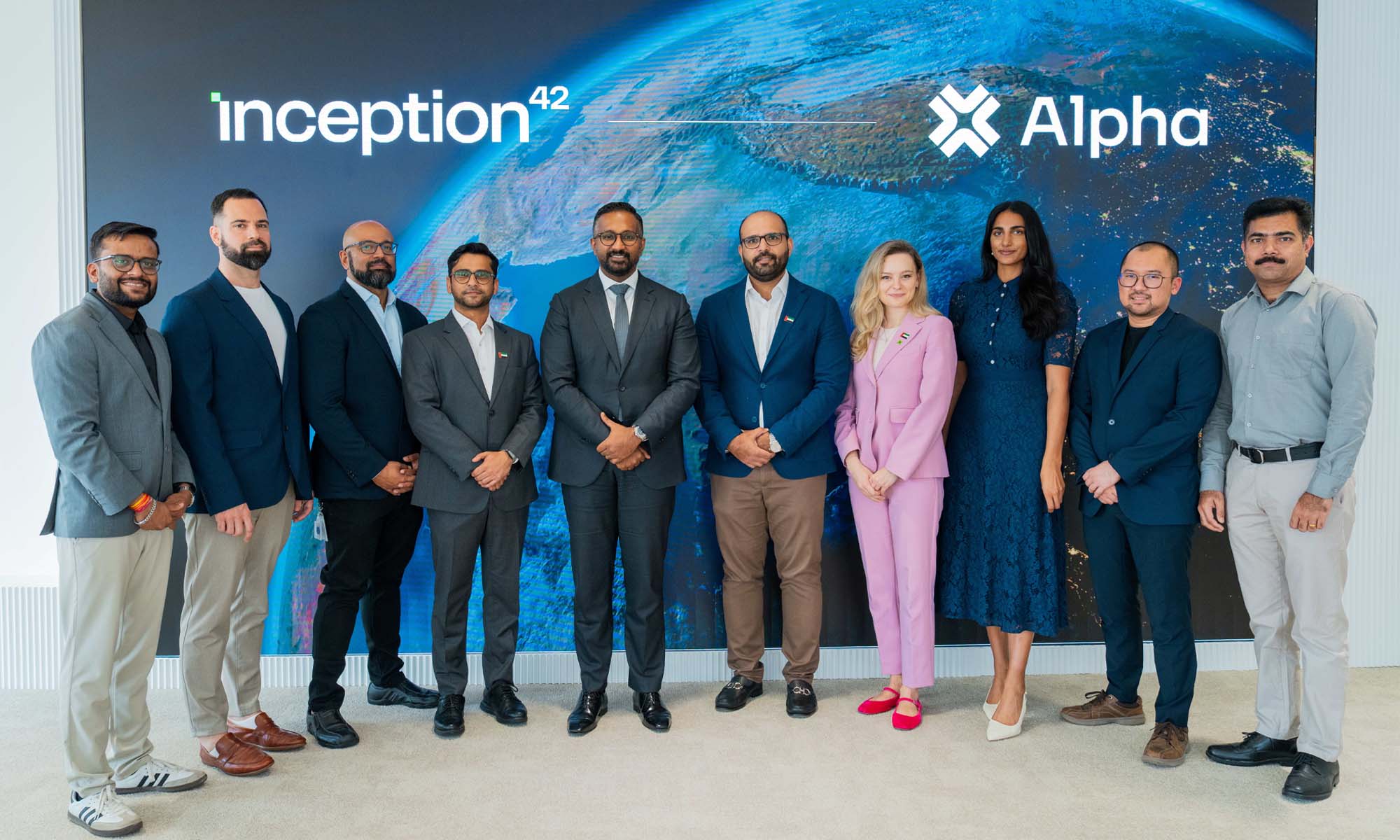
Inception42, G42’s agentic AI company, believes that institutional investors want AI they can check, not just AI that saves time. Its new tool, Alpha, launched at SuperReturn Middle East, is designed to draft investment memos in which every claim points back to its source.
Alpha is aimed at private equity firms, sovereign wealth funds and institutional allocators, which Inception42 says are underwriting larger, more complex positions under tighter timelines. Most AI tools, it argues, speed up individual tasks such as a memo draft or a comps table but leave the investment strategy scattered across files, inboxes and committee decks.
Teams upload Confidential Information Memoranda, diligence packs and portfolio data, which Alpha turns into insights grounded in that material. It checks how complete the diligence is, flagging gaps before they become late-stage surprises, then scores the deal against criteria the institution sets and drafts the memo.
Sourcing every claim is the core of Inception42’s Alpha pitch. Investment committees, the company says, have little time to challenge the evidence, and the audit trail is meant to give them more certainty. The company also promises institutions proof that their own strategy was applied consistently on every deal.
Also Read: Dubai Says Its Deepfake Detector Needs Just 7 Seconds Of Video
“Every investment committee wants the same thing: the full picture of a deal and the confidence to act on it,” says Ashish Koshy, CEO of Inception42. “Alpha gives deal teams and committee members that picture, with every insight traceable to its source, so speed and rigor finally pull in the same direction”.
Alpha is available as SaaS, and investment data, Inception42 says, stays under the institution’s control at every step. Firms can tailor the tool with custom agents, and Alpha Skills will eventually add reusable, practitioner-designed workflows for tasks such as comparables analysis and credit assessment.
The company says Alpha is already proven in the region’s most significant financial institutions. If the tool works as described, committees get an investment memo they can interrogate rather than simply take on trust.

G42’s Inception42 Wants AI To Show Its Work Before Investors Commit

WHOOP Goes Arabic, Betting On The Gulf’s Appetite For Health Data

New Disney+ Streaming App Has Officially Launched In The UAE

Dubai Says Its Deepfake Detector Needs Just 7 Seconds Of Video

OpenAI Has Announced A Visual Ad Format For ChatGPT

Trip.com Is Betting An AI Agent Will Book Your Next Vacation

OKX Bets Streaming Perks Can Take Crypto Mainstream Across MENA

Meta’s New $499 Plan Puts A Price On Reaching A Real Person

Microsoft Plans $10 Billion-Plus Gulf Expansion Despite Iran Conflict

In Kuwait, Your Surgeon Might Be Operating From Another Country


-
 News3 weeks ago
Microsoft Plans $10 Billion-Plus Gulf Expansion Despite Iran Conflict
-
 News3 weeks ago
In Kuwait, Your Surgeon Might Be Operating From Another Country
-
 News3 weeks ago
Qatar Folds 45 State Companies Into A Single Investment Platform
-

 News2 weeks ago
NEOPAY Wants To Follow Merchants Across Channels And Borders