
News
GluCare Rebrands To Metabolic, Dropping Diabetes-Only Identity
The Dubai health player is widening its scope and setting sights on UK and US expansion.


Dubai-based Metabolic has rebranded from its former moniker of GluCare.Health, stepping beyond its roots as a diabetes-focused clinic to position itself as a broader metabolic health platform.
Launched in 2020 by Ali Hashemi, Dr. Ihsan Almarzooqi and Zeina Abdalla, the company says the name change reflects how its clinical model has widened over five years in the UAE. Instead of centering solely on glucose control, it now targets metabolic syndrome as a web of linked risks — from obesity and cardiovascular disease to fatty liver disease, PCOS and chronic kidney disease.
The core product is what the company calls “Metabolic OS,” a hybrid care operating system that connects diagnostics, continuous remote monitoring and AI-driven decision support inside a clinician-led model. The pitch centers on delivering fewer disconnected tests, and more coordinated oversight between visits.
“Over five years we’ve built what we wish the healthcare system had from day one: an operating system for metabolic risk,” said Ali Hashemi, CEO and co-founder. “Not a collection of apps, devices, and disconnected tests, but an integrated model where data becomes signal, signal becomes action, and action translates into outcomes. AI is most powerful when it supports great clinicians and helps patients stay engaged between visits. That’s the DNA of Metabolic OS”.
The shift comes as the Middle Eastern health sector grapples with some of the highest diabetes and obesity rates globally. In the UAE, many people with type 2 diabetes remain uncontrolled, while the same underlying drivers spill into heart disease and endocrine disorders.
Also Read: Private Jet Operator AirX Wins Saudi Aviation Clearance
“[Those] metabolic drivers are fueling obesity, cardiovascular disease, fatty liver disease, and hormonal disorders,” said Dr. Ihsan Almarzooqi, managing director and co-founder. “The clinical need is clear: earlier detection, better risk stratification, and longitudinal support. The technology now exists to do this well, but only if it’s integrated into a coordinated care model. That’s what we’ve built”.
Metabolic’s services now span endocrinology, cardiology, obesity management, sleep-related metabolic disorders and hormone care for men and women. Preventive health and executive risk assessments are part of the mix.
The company cites 2025 real-world publications showing HbA1c reductions of up to 2.3 percentage points, around 10% weight loss within three months, and improvements in triglycerides and blood pressure. It also reported stronger muscle preservation among patients using GLP-1 therapies.
GluCare.Health will remain as the group’s research and evidence arm.



News
Abu Dhabi’s Robot Kitchen Is Serving Up Biryani, Not Burgers
Circus SE wants to put a tiny automated factory inside the buildings where Gulf residents live and work, bypassing part of last-mile delivery.
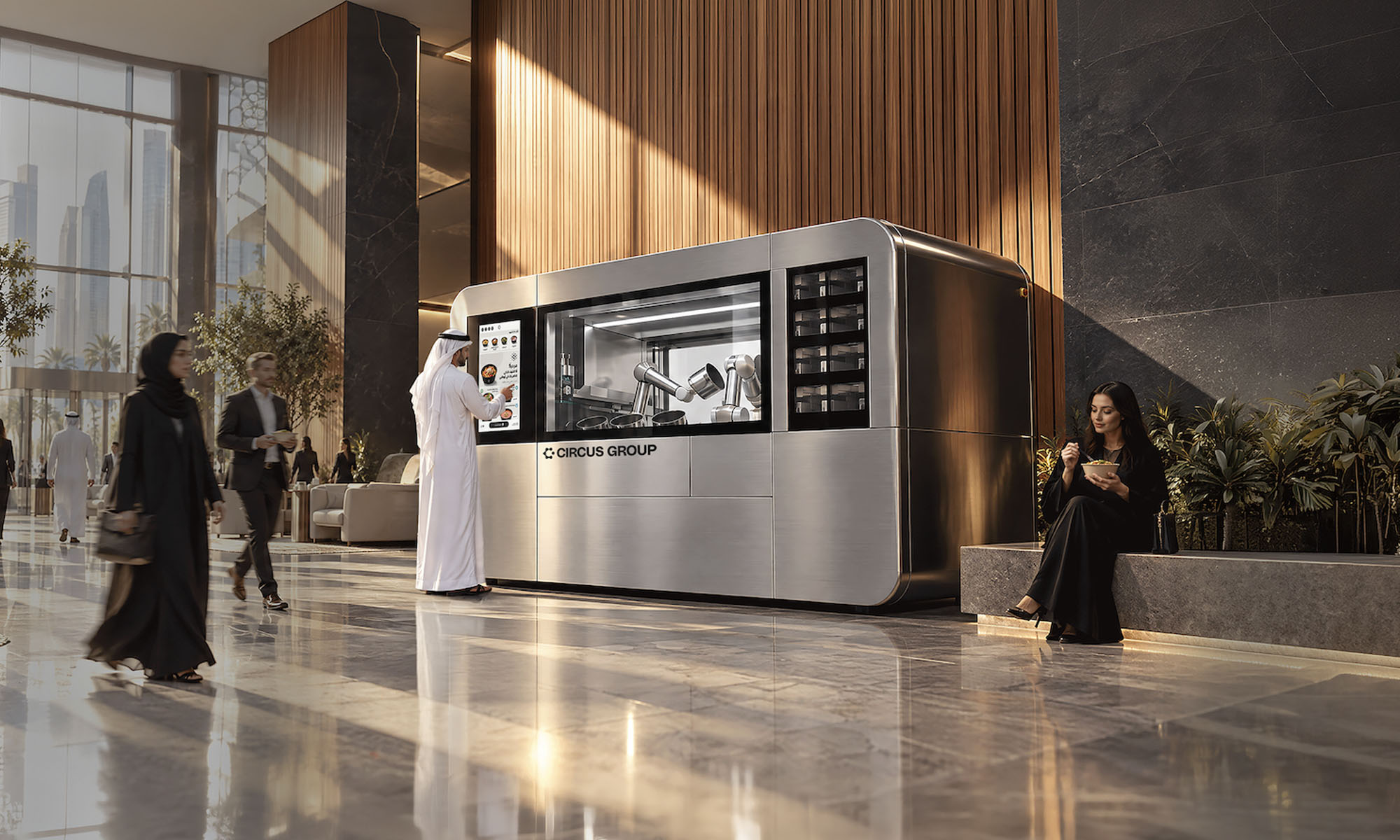
The most telling thing about a new autonomous kitchen now running in Abu Dhabi’s Marina Square is what it won’t cook:
“We don’t do fast food,” says Nikolas Bullwinkel, Founder and CEO of Circus SE. “We’ve actively decided not to build a machine that can only do burgers”.
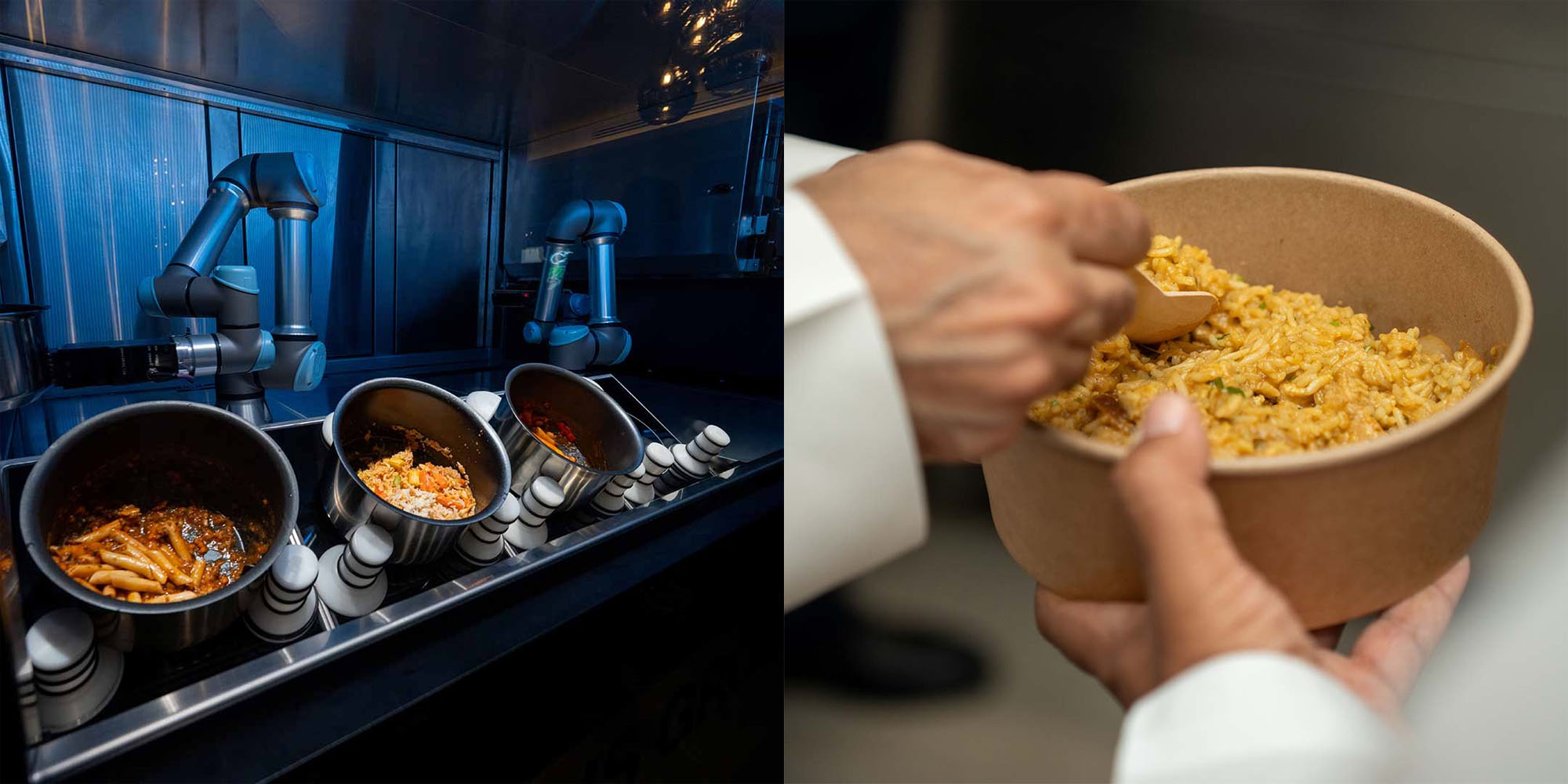
Instead, the CA-1 system is built around pot-based cooking: curries, pastas, soups and rice dishes. After experimenting with highly personalized recipes, Circus deliberately leaned back toward recognizable food. “We’re going with a chicken biryani because you know it,” Bullwinkel says of the AED 40 dish.
The Germany-based robotics and food technology company operates across eight countries, and Abu Dhabi is its first deployment outside Europe. More locations are expected there and in Dubai.
In Germany, its units can be placed in supermarkets, gas stations, airports and hospitals. In the Gulf, Bullwinkel wants them inside residential and office buildings, replacing some of the complexity of last-mile delivery. “We’re basically bringing a very tiny factory a few square meters into your building,” he says. Catering company Royal Prestige supplies the ingredients and knowledge of local tastes.
The CA-1 manages up to 36 refrigerated ingredient silos alongside automated induction cooking, robotic plating and a self-cleaning dishwasher. Two robotic arms move ingredients through the system with minimal human intervention. It can produce up to 120 hot meals an hour, and a meal such as rice and curry can take around three to four minutes.
Also Read: Ooredoo Qatar’s 5G+ Network Is Built For Machines As Much As People
Five cameras and multiple sensors monitor heat, temperature and consistency, an attempt to approximate what a chef perceives. “You can hear something gets burned, you can smell it, you can see it at some point,” Bullwinkel says. CircusOS, the company’s operating system, adjusts recipes in real time.
You might think of the platform as a threat to kitchen staff, but Bullwinkel frames Circus as a way for chefs to develop recipes and distribute them at scale. With that being said, rising labor costs and shortages are also part of his case for automation.

Abu Dhabi’s Robot Kitchen Is Serving Up Biryani, Not Burgers

Sennheiser’s MOMENTUM 5 Series Bets On Batteries You Can Swap

UAE’s 3-Minute University Registration Runs On Government Data

How Online Ads Became A Delivery System For Zero-Click Spyware

Shokz OpenDots 2 Review: Clip-On Audio Gets A Bass-Heavy Makeover

Dubai Says Its Deepfake Detector Needs Just 7 Seconds Of Video

New Disney+ Streaming App Has Officially Launched In The UAE

NEOPAY Wants To Follow Merchants Across Channels And Borders

RØDE’s Low-Profile Studio Arm Is Designed To Stay Out Of Shot

G42’s Inception42 Wants AI To Show Its Work Before Investors Commit


-
 News3 weeks ago
Dubai Says Its Deepfake Detector Needs Just 7 Seconds Of Video
-
 News2 weeks ago
New Disney+ Streaming App Has Officially Launched In The UAE
-
 News3 weeks ago
NEOPAY Wants To Follow Merchants Across Channels And Borders
-
 News3 weeks ago
RØDE’s Low-Profile Studio Arm Is Designed To Stay Out Of Shot