
News
Apple’s March 4 Event Rumored To Put New Macs In Play
Lower-cost MacBook and M5 Pro upgrades expected as Apple lines up a multi-city hardware reveal.


Apple will stage its first product event of 2026 on March 4 at 9AM ET, hosting parallel gatherings in New York, London and Shanghai under the “Apple Experience” banner. The focus is hardware, with new Macs expected to lead the announcements.
The headline prospect is a cheaper MacBook, positioned beneath the MacBook Air. Bloomberg previously reported that Apple has been developing a model powered by the A18 Pro chip — an iPhone-class processor — rather than an M-series chip. The trade-off could extend to memory: industry chatter points to 8GB of RAM, even as Apple has shifted most of its Mac line to 16GB as standard.
Pricing is tipped between $699 and $799. If that holds, it would mark Apple’s lowest entry point into modern Mac laptops in years and widen its reach among students and cost-conscious buyers.
At the other end of the range, refreshed MacBook Pro models with M5 Pro and M5 Max chips are widely expected too. Apple has already introduced a base M5 configuration, but the higher-tier variants typically arrive later with more CPU and GPU cores. Reports suggest tweaks to the chip design aimed at better thermals and improved manufacturing yields, potentially allowing the Max version to scale further.
Current M4 Max configurations are facing shipping delays, a pattern that often precedes a refresh cycle.
Tablets are also in line for updates. A 12th-generation base iPad is rumored to move from the A16 to the A18 chip, aligning it more closely with Apple’s on-device AI push. The iPad Air could shift from M3 to M4 — a jump that would narrow the performance gap with the Pro models.
Also Read: Samsung Reveals AI Camera Overhaul Ahead Of S26 Launch
On the iPhone side, Apple is expected to refresh its entry model with the iPhone 17e, roughly a year after the 16e debuted. Reports point to an A19 chip and possible MagSafe support, while keeping the $599 price.
Other hardware, including a new Studio Display or Mac Studio, remains possible, though less certain. A broader Siri overhaul is unlikely to surface here, with software updates typically reserved for Apple’s developer conference later in the year.
The March 4 event looks set to reset Apple’s core devices in one sweep — from entry laptops to high-end silicon — as competition tightens and AI features edge closer to the center of its pitch.




News
Abu Dhabi’s Robot Kitchen Is Serving Up Biryani, Not Burgers
Circus SE wants to put a tiny automated factory inside the buildings where Gulf residents live and work, bypassing part of last-mile delivery.
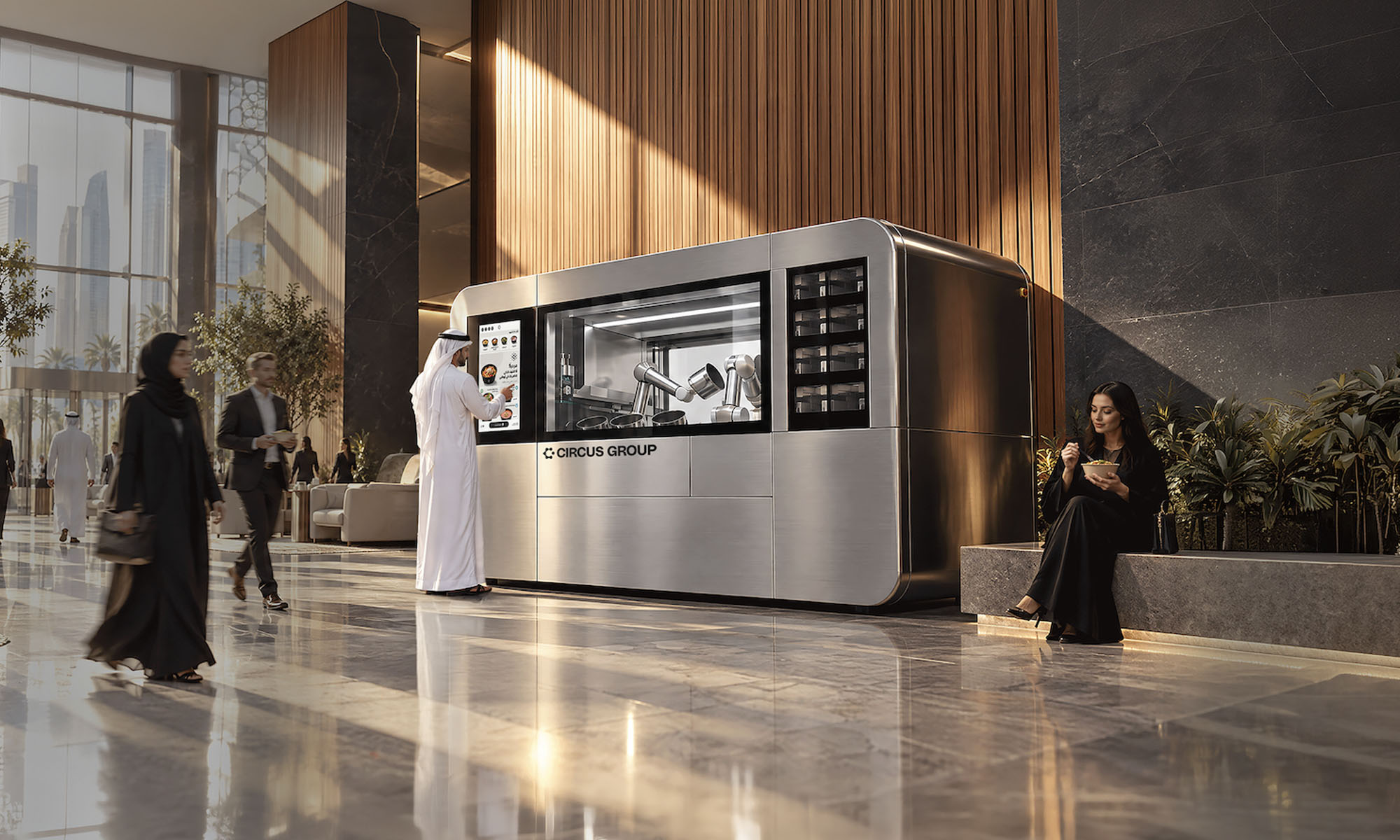
The most telling thing about a new autonomous kitchen now running in Abu Dhabi’s Marina Square is what it won’t cook:
“We don’t do fast food,” says Nikolas Bullwinkel, Founder and CEO of Circus SE. “We’ve actively decided not to build a machine that can only do burgers”.
Instead, the CA-1 system is built around pot-based cooking: curries, pastas, soups and rice dishes. After experimenting with highly personalized recipes, Circus deliberately leaned back toward recognizable food. “We’re going with a chicken biryani because you know it,” Bullwinkel says of the AED 40 dish.
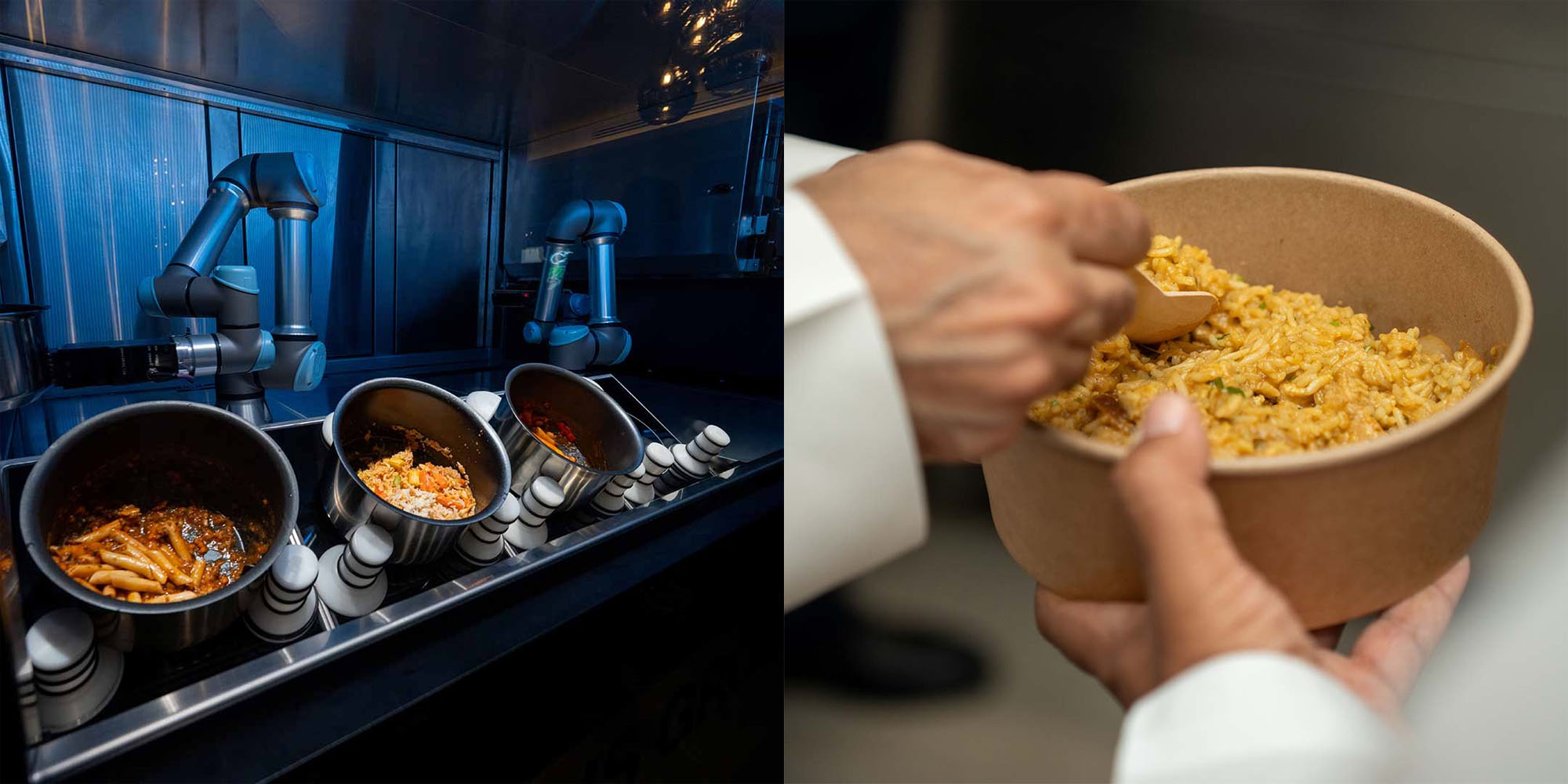
The Germany-based robotics and food technology company operates across eight countries, and Abu Dhabi is its first deployment outside Europe. More locations are expected there and in Dubai.
In Germany, its units can be placed in supermarkets, gas stations, airports and hospitals. In the Gulf, Bullwinkel wants them inside residential and office buildings, replacing some of the complexity of last-mile delivery. “We’re basically bringing a very tiny factory a few square meters into your building,” he says. Catering company Royal Prestige supplies the ingredients and knowledge of local tastes.
The CA-1 manages up to 36 refrigerated ingredient silos alongside automated induction cooking, robotic plating and a self-cleaning dishwasher. Two robotic arms move ingredients through the system with minimal human intervention. It can produce up to 120 hot meals an hour, and a meal such as rice and curry can take around three to four minutes.
Also Read: Ooredoo Qatar’s 5G+ Network Is Built For Machines As Much As People
Five cameras and multiple sensors monitor heat, temperature and consistency, an attempt to approximate what a chef perceives. “You can hear something gets burned, you can smell it, you can see it at some point,” Bullwinkel says. CircusOS, the company’s operating system, adjusts recipes in real time.
You might think of the platform as a threat to kitchen staff, but Bullwinkel frames Circus as a way for chefs to develop recipes and distribute them at scale. With that being said, rising labor costs and shortages are also part of his case for automation.

Abu Dhabi’s Robot Kitchen Is Serving Up Biryani, Not Burgers

Sennheiser’s MOMENTUM 5 Series Bets On Batteries You Can Swap

UAE’s 3-Minute University Registration Runs On Government Data

How Online Ads Became A Delivery System For Zero-Click Spyware

Shokz OpenDots 2 Review: Clip-On Audio Gets A Bass-Heavy Makeover

Dubai Says Its Deepfake Detector Needs Just 7 Seconds Of Video

New Disney+ Streaming App Has Officially Launched In The UAE

NEOPAY Wants To Follow Merchants Across Channels And Borders

RØDE’s Low-Profile Studio Arm Is Designed To Stay Out Of Shot

G42’s Inception42 Wants AI To Show Its Work Before Investors Commit


-
 News3 weeks ago
Dubai Says Its Deepfake Detector Needs Just 7 Seconds Of Video
-
 News2 weeks ago
New Disney+ Streaming App Has Officially Launched In The UAE
-
 News3 weeks ago
NEOPAY Wants To Follow Merchants Across Channels And Borders
-
 News3 weeks ago
RØDE’s Low-Profile Studio Arm Is Designed To Stay Out Of Shot