
News
iPhone 18 Pro Leak Hints At Under-Screen Face ID
Rumors are also circulating about new silicon and a split launch cycle as Apple tests bigger batteries, satellite 5G, and updated colors.


Apple’s next Pro iPhones may hide Face ID hardware under the screen, leaving only a small selfie camera cut-out pushed to the top-left. The Dynamic Island would shrink but stay relatively unchanged as a software-based feature for alerts and Live Activities. It’s the clearest sign of a front redesign after years of incremental changes.
Renders on Chinese platforms show the Pro and Pro Max keeping their rear look while testing new Burgundy, Brown and Purple finishes. The Pro Max is tipped for a 6.9-inch LTPO 120 Hz display and a 5,100 mAh battery. The regular Pro sticks to 6.3 inches. Lower-tier models such as the iPhone 18 and Air 2 would retain the Dynamic Island and 120 Hz panels at 6.3 and 6.5 inches.
Photography controls could also change again: Reports say Apple is dropping the capacitive camera button for a pressure-based mechanism with firmer feedback and simpler manufacturing. A variable-aperture main camera is also being tested to handle lighting shifts without heavy computational tricks, a feature already seen on select Android flagships.
Silicon is moving in-house: Pro models are rumored to run an A20 Pro chip on a 2 nm process and a C2 modem instead of Qualcomm parts, underscoring Apple’s bid to control radio performance and supply. Satellite-based 5G is also being explored beyond emergency SOS to provide basic connectivity when terrestrial coverage fails. Coverage gaps in remote regions, including many parts of the MENA region, make that push relevant for roaming and tourism.
Timing may be the bigger shake-up: Multiple tipsters point to a two-season cycle, with the iPhone 18 Pro and Pro Max appearing in September 2026, then the standard iPhone 18 and iPhone Air 2 in March 2027. A cheaper iPhone 17e could land in between, hinting at tighter segmentation and smoother production loads for Apple’s supply chain.
Also Read: Belkin Launches Wireless HDMI Adapter With 131-Foot Range
None of this is confirmed. Display specs come from Digital Chat Station, a prolific Weibo leaker with prior Apple hits. The volume of detail suggests Apple is preparing a more assertive hardware refresh after conservative moves on recent generations.




News
Abu Dhabi’s Robot Kitchen Is Serving Up Biryani, Not Burgers
Circus SE wants to put a tiny automated factory inside the buildings where Gulf residents live and work, bypassing part of last-mile delivery.

The most telling thing about a new autonomous kitchen now running in Abu Dhabi’s Marina Square is what it won’t cook:
“We don’t do fast food,” says Nikolas Bullwinkel, Founder and CEO of Circus SE. “We’ve actively decided not to build a machine that can only do burgers”.
Instead, the CA-1 system is built around pot-based cooking: curries, pastas, soups and rice dishes. After experimenting with highly personalized recipes, Circus deliberately leaned back toward recognizable food. “We’re going with a chicken biryani because you know it,” Bullwinkel says of the AED 40 dish.
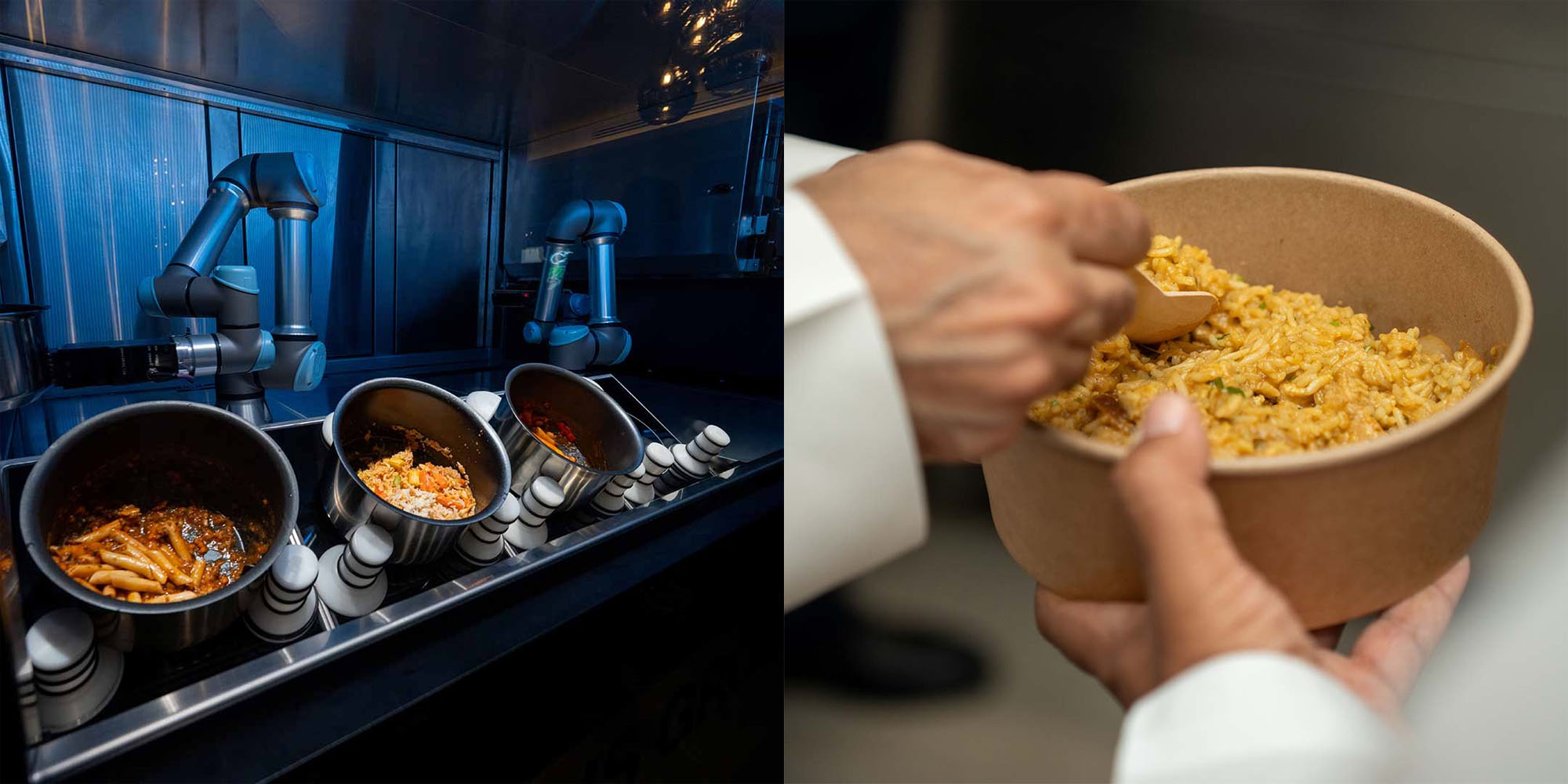
The Germany-based robotics and food technology company operates across eight countries, and Abu Dhabi is its first deployment outside Europe. More locations are expected there and in Dubai.
In Germany, its units can be placed in supermarkets, gas stations, airports and hospitals. In the Gulf, Bullwinkel wants them inside residential and office buildings, replacing some of the complexity of last-mile delivery. “We’re basically bringing a very tiny factory a few square meters into your building,” he says. Catering company Royal Prestige supplies the ingredients and knowledge of local tastes.
The CA-1 manages up to 36 refrigerated ingredient silos alongside automated induction cooking, robotic plating and a self-cleaning dishwasher. Two robotic arms move ingredients through the system with minimal human intervention. It can produce up to 120 hot meals an hour, and a meal such as rice and curry can take around three to four minutes.
Also Read: Ooredoo Qatar’s 5G+ Network Is Built For Machines As Much As People
Five cameras and multiple sensors monitor heat, temperature and consistency, an attempt to approximate what a chef perceives. “You can hear something gets burned, you can smell it, you can see it at some point,” Bullwinkel says. CircusOS, the company’s operating system, adjusts recipes in real time.
You might think of the platform as a threat to kitchen staff, but Bullwinkel frames Circus as a way for chefs to develop recipes and distribute them at scale. With that being said, rising labor costs and shortages are also part of his case for automation.

Abu Dhabi’s Robot Kitchen Is Serving Up Biryani, Not Burgers

Sennheiser’s MOMENTUM 5 Series Bets On Batteries You Can Swap

UAE’s 3-Minute University Registration Runs On Government Data

How Online Ads Became A Delivery System For Zero-Click Spyware

Shokz OpenDots 2 Review: Clip-On Audio Gets A Bass-Heavy Makeover

Dubai Says Its Deepfake Detector Needs Just 7 Seconds Of Video

New Disney+ Streaming App Has Officially Launched In The UAE

NEOPAY Wants To Follow Merchants Across Channels And Borders

RØDE’s Low-Profile Studio Arm Is Designed To Stay Out Of Shot

G42’s Inception42 Wants AI To Show Its Work Before Investors Commit


-
 News3 weeks ago
Dubai Says Its Deepfake Detector Needs Just 7 Seconds Of Video
-
 News2 weeks ago
New Disney+ Streaming App Has Officially Launched In The UAE
-
 News3 weeks ago
NEOPAY Wants To Follow Merchants Across Channels And Borders
-
 News3 weeks ago
RØDE’s Low-Profile Studio Arm Is Designed To Stay Out Of Shot