
News
UAE-Built Falcon-H1 Arabic Leads LLM Benchmarks
The lean Emirati-built language model beats larger global systems and puts Arabic at the center of training.


Abu Dhabi’s Technology Innovation Institute has released an Arabic-first large language model that tops global test boards, an uncommon edge for a region long served by English-centric systems.
Falcon-H1 Arabic comes in 3B, 7B and 34B versions. The flagship posts 75.36% accuracy on comprehensive Arabic tasks and ranks first on the Open Arabic LLM Leaderboard. It also outperforms Meta’s Llama-70B and Alibaba’s Qwen-72B while using less than half their parameters. The smallest model beats Microsoft’s Phi-4 Mini by ten percentage points on equivalent benchmarks.
Arabic remains hard territory for AI. Flexible word order, dense morphology and constant switching between regional dialects and Modern Standard Arabic leave many global models missing context or tone. Academic research has pointed to a shortage of annotated datasets for dialect and informal speech. The impact shows up in classrooms, call centers and government portals where Arabic chatbots lag their English counterparts.
TII trained Falcon-H1 Arabic on formal writing, dialects and culturally grounded content. Beyond scores, it handles practical use: long conversations, reasoning rather than literal translation, and inputs of up to 192,000 words — enough for medical records or legal filings.
“The aim is innovation that is accessible, relevant, and impactful,” said Faisal Al Bannai, Adviser to the UAE President and Secretary-General of the Advanced Technology Research Council.
Also Read: Governata Raises $4M For Saudi AI Data-Governance Push
Arabic is spoken by more than 450 million people across over 20 countries, yet has often been treated as a secondary language for foundation models. The UAE move signals a push to flip that logic and build Arabic-native stacks rather than wait for global systems to improve.
Falcon models have led their categories since 2023. With H1 Arabic, TII is offering free access via chat.falconllm.tii.ae for developers, media, healthcare and public-sector users looking to automate in natural Arabic.
As the region continues to invest in sovereign computing and data localization, the addition of Falcon-H1 Arabic adds a powerful tool built for the native language, instead of an afterthought attached to an English-trained system.

News
New Disney+ Streaming App Has Officially Launched In The UAE
The app’s recommendations now factor in what’s popular in the UAE, and a dedicated Junior Mode gives kids their own corner of Disney+.

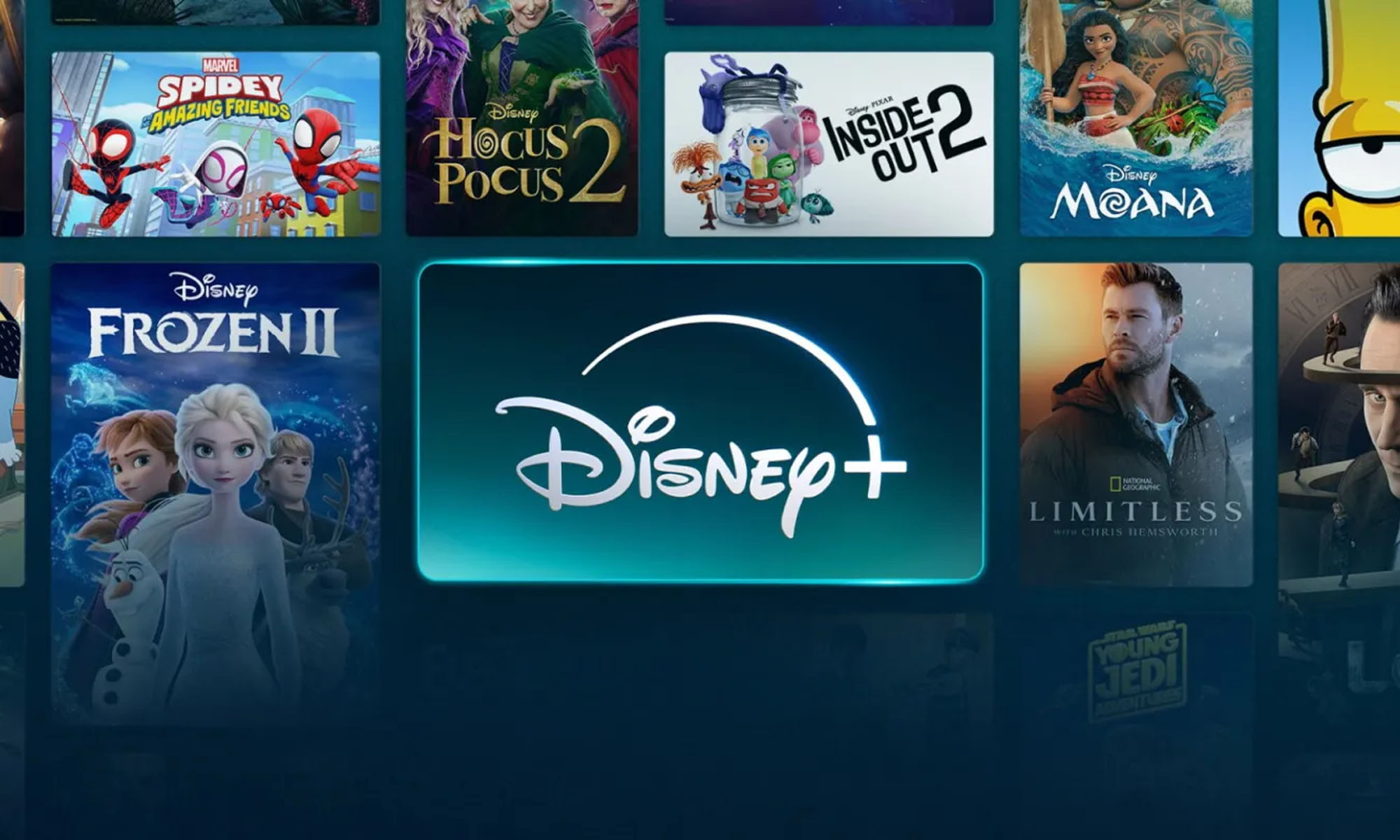
A new Disney+ app has officially launched in the UAE, and subscribers can now keep watching their favorite titles when they travel. Disney+ says access extends across supported markets in Europe, the United States and beyond.
The app is built around a dynamic homepage and simpler navigation, with recommendations drawn from each customer’s viewing habits and what’s popular in the UAE. Content from Hulu and ESPN is now easier to find alongside Disney+’s own library, the company says. Audio and subtitles come in up to 25 languages, and supported devices get high-quality video and sound.
For families, the app includes Junior Mode, a dedicated, simplified version of Disney+ for younger viewers, built around age-appropriate shows and movies. It sits alongside existing controls such as PIN-protected profiles, customizable content ratings and account notifications when a profile is changed.
The catalog still spans Disney, Pixar, Marvel, Star Wars, National Geographic, Hulu and FX. Returning series include Season 8 of “The Kardashians,” Season 23 of “Grey’s Anatomy” and Season 38 of “The Simpsons”. Also on the service are the second season of International Emmy and BAFTA Award-winning series “Rivals,” comedy “Only Murders in the Building,” Walt Disney Animation Studios’ “Zootropolis 2” and 20th Century Studios’ “Send Help”.
Also Read: Best Video Streaming Services In The Middle East
Marvel Television’s “VisionQuest” is on the way, and Disney’s live-action “Moana” is due later this autumn. Beyond Hollywood, the Turkish title “Halef” is coming to the platform alongside a lineup of Korean entertainment: Korean-Japanese romantic comedy “Merry Berry Love” is streaming now, and “The Remarried Empress” arrives November 4.
Existing subscribers will be prompted to download the new app and sign in with their current credentials, with on-screen steps covering account confirmation and profile setup. Subscriptions start at AED 49.99 per month and can be canceled at any time.
For UAE subscribers planning to travel, the update will likely be well received, but Disney has left one question open. It confirms Europe and the United States as supported markets but doesn’t yet say which others fall under and beyond.

New Disney+ Streaming App Has Officially Launched In The UAE

Dubai Says Its Deepfake Detector Needs Just 7 Seconds Of Video

OpenAI Has Announced A Visual Ad Format For ChatGPT

For etisalat, More Bandwidth Is A Matter Of Digital Sovereignty

NEOPAY Wants To Follow Merchants Across Channels And Borders

Trip.com Is Betting An AI Agent Will Book Your Next Vacation

Musk’s Boring Company Wants To Dig 150 KM Of Tunnel Under The UAE

OKX Bets Streaming Perks Can Take Crypto Mainstream Across MENA

Meta’s New $499 Plan Puts A Price On Reaching A Real Person

Apple’s First Folding iPhone Arrives Late To A Shrinking Market


-
 News3 weeks ago
Trip.com Is Betting An AI Agent Will Book Your Next Vacation
-
 News4 weeks ago
Musk’s Boring Company Wants To Dig 150 KM Of Tunnel Under The UAE
-
 News3 weeks ago
OKX Bets Streaming Perks Can Take Crypto Mainstream Across MENA
-
 News3 weeks ago
Meta’s New $499 Plan Puts A Price On Reaching A Real Person