
News
Apple’s iPhone 17 Launch: Air, Pro, AirPods Pro 3, And More
Apple’s September event unveiled iPhone 17, iPhone Air, Pro models, AirPods Pro 3, and new Apple Watches. Pre-orders open September 12.


Apple’s September showcase delivered the expected iPhone refresh — and a few surprises. The headline was the new iPhone Air, joined by the iPhone 17 and 17 Pro ranges, updated Apple Watches, and the AirPods Pro 3. All products land later this month, with pre-orders opening Friday, September 12.
iPhone 17

The standard iPhone 17 line gets a 6.3-inch, 120Hz display with slimmer bezels and Ceramic Shield 2, which is now three times more scratch-resistant.
The A19 chip brings a six-core CPU, five-core GPU and upgraded neural engine. Apple claims it’s faster, more efficient, and stretches battery life by up to eight hours.
The rear system pairs a 48MP Fusion main camera with a 12MP telephoto, while the new square-sensor front camera improves stabilization and removes the need to rotate for landscape shots.
Pricing starts at $799 (256GB).
iPhone Air
The thinnest iPhone to date, the 5.6mm iPhone Air uses a titanium frame with Ceramic Shield 2 on both sides. The 6.5-inch always-on display supports ProMotion and peaks at 3,000 nits.
It runs on the A19 Pro chip and Apple’s new N1 wireless silicon, adding Wi-Fi 7 and Bluetooth 6, alongside a faster C1X modem. Despite a slim design, it carries a dual-lens setup hidden behind a single housing: 48MP Fusion plus 12MP telephoto.
Adaptive Power Mode manages use patterns for longer runtimes, though Apple still frames it as an “all-day” battery. Apple has also built a thinner MagSafe pack to match.
Launch price: $999 (256GB).
iPhone 17 Pro
The 17 Pro is pitched as Apple’s most powerful iPhone to date, introducing an anodized aluminum unibody, a vapor-chamber cooling system and the largest iPhone battery so far.
The camera array sits on a raised “plateau” and includes a 48MP telephoto (up to 8x optical-quality zoom), plus 48MP wide and ultra-wide sensors. The front “center stage” camera jumps to 18MP. Display sizes are 6.3-inch (Pro) and 6.9-inch (Pro Max), both using Ceramic Shield 2. Battery life stretches to 39 hours of video playback on the Pro Max.
Pricing starts at $1,099 (256GB).
AirPods Pro 3
The third-gen AirPods Pro add heart-rate tracking, improved active noise cancellation (four times stronger than the original), foam-infused ear tips and spatial audio refinements. A headline feature is live translation, triggered by a new gesture and powered by Apple Intelligence. Battery life is rated at eight hours.
Available now for $249.
Apple Watch Series 11, Ultra 3 And SE
- Series 11: Slimmer, more durable, 5G-enabled and with hypertension alerts via improved sensors. Battery life extends to 24 hours. From $399.
- Ultra 3: Larger LTPO 3 display, satellite connectivity and Emergency SOS. From $799.
- Watch SE: Gains always-on display, optional 5G and new gestures. Adds Sleep Score and sleep apnea alerts but keeps an 18-hour battery. From $249.
Availability
Pre-orders for all major devices open Friday, September 12, with general availability on September 19.



News
Microsoft Plans $10 Billion-Plus Gulf Expansion Despite Iran Conflict
Security is shaping Microsoft’s approach, from resilience work with governments to what it will say about how the money splits by country.

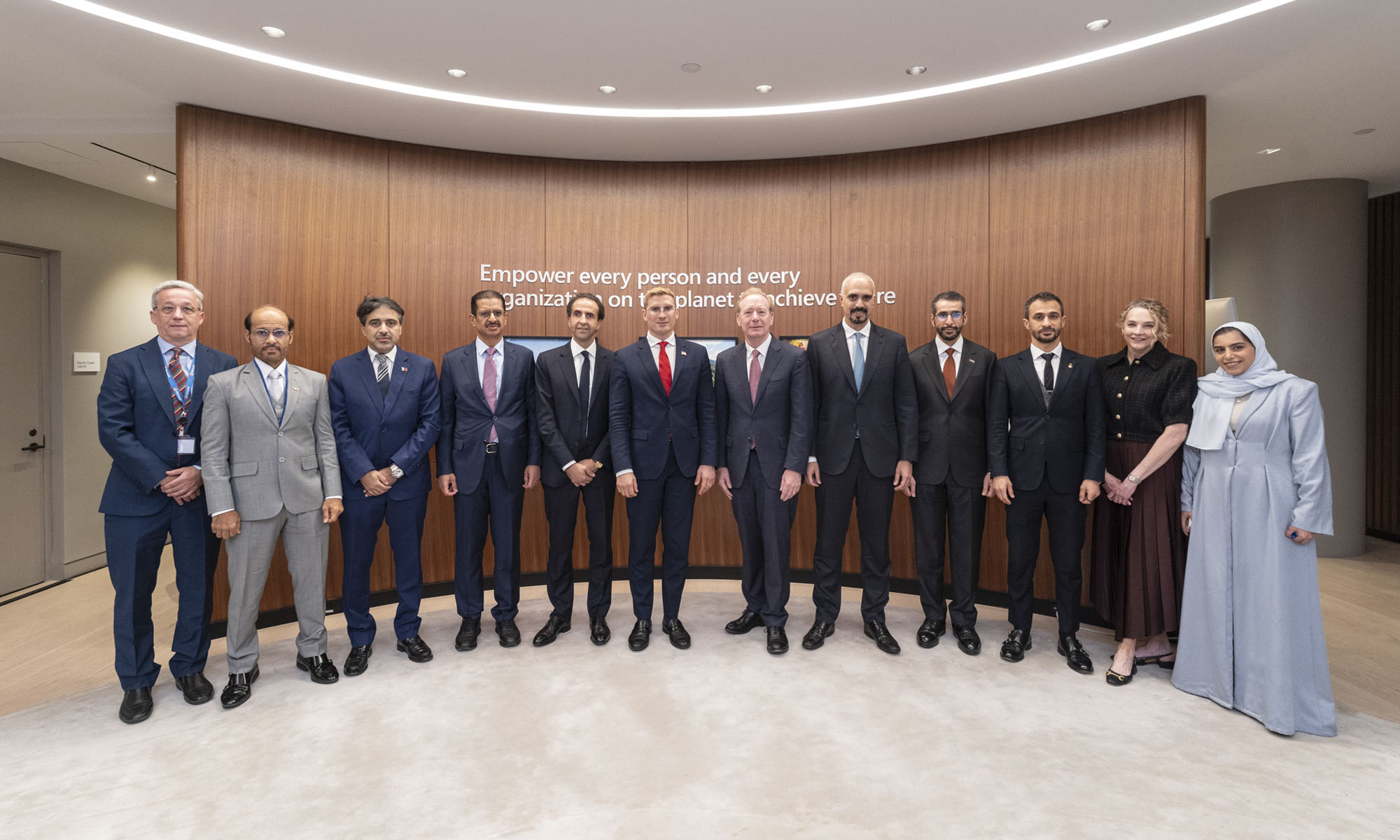
Microsoft is planning more than $10 billion of investment across the UAE, Saudi Arabia, Qatar and Kuwait through 2030, Vice Chair and President Brad Smith told Reuters, calling the spending schedule aggressive. The Iranian conflict that began on February 28 has not persuaded the company to scale back.
“We’re sustaining all the investments we planned to make before this conflict started, and we are in fact adding to them,” Smith said. The $10 billion-plus total does not, however, show how large those additions are.
The investment, which Smith described as part of Microsoft’s continued infrastructure expansion, is aimed at cloud and AI infrastructure and at the company’s growing regional operations. Microsoft also intends to put more than $400 million into subsea and terrestrial connectivity across the Middle East by 2030.
The spending fits the region’s own ambitions too. Gulf governments have been investing heavily in AI infrastructure as part of a push to diversify their economies beyond oil and gas and turn themselves into global technology hubs. Major cloud and AI providers have been drawn in part by the land and relatively low-cost energy on offer.
Microsoft is widening its partnerships with regional AI companies, though not on identical terms. In 2024, it invested $1.5 billion in Abu Dhabi-based G42 for a minority stake, and Smith currently sits on G42’s board. Saudi Arabia’s Humain and Qatar’s Qai are working with Microsoft on selected priority areas, but Smith said the company does not plan to make capital investments in either.
Also Read: Egypt’s Mobile Wallets Are Booming, But Cash Still Has Power
The conflict has added another strand to Microsoft’s work in the region. Since it began, Smith said, the company has supported regional partners with digital resilience assessments, and it is now working with Gulf countries through a digital resilience initiative focused on preparedness and the protection of critical data.
So far, the company has given no country-by-country breakdown of the investment, citing security among other factors. So while the headline figure is public, how Microsoft divides the spending among the four countries is not.

Microsoft Plans $10 Billion-Plus Gulf Expansion Despite Iran Conflict

In Kuwait, Your Surgeon Might Be Operating From Another Country

Qatar Folds 45 State Companies Into A Single Investment Platform

Trip.com Is Betting An AI Agent Will Book Your Next Vacation

Meta’s New $499 Plan Puts A Price On Reaching A Real Person

Apple’s First Folding iPhone Arrives Late To A Shrinking Market
Trip.com Is Betting An AI Agent Will Book Your Next Vacation

Egypt’s Mobile Wallets Are Booming, But Cash Still Has Power

OKX Bets Streaming Perks Can Take Crypto Mainstream Across MENA

Musk’s Boring Company Wants To Dig 150 KM Of Tunnel Under The UAE


-
 News3 weeks ago
Apple’s First Folding iPhone Arrives Late To A Shrinking Market
-
 News2 weeks ago
Trip.com Is Betting An AI Agent Will Book Your Next Vacation
-
 News2 weeks ago
Egypt’s Mobile Wallets Are Booming, But Cash Still Has Power
-
 News2 weeks ago
OKX Bets Streaming Perks Can Take Crypto Mainstream Across MENA