
News
SIRBAI Unveils Autonomous Drone Swarm Technology At UMEX
The AI-led platform marks SIRBAI’s entry into defense tech with drone swarm coordination built for modern scenarios.


Abu Dhabi’s SIRBAI has revealed what it calls the Middle East’s first autonomous drone swarm platform, using UMEX 2026 to mark its push into defense technology.
The system lets groups of unmanned aircraft coordinate with minimal operator input. Planning, command and execution all sit on a single software platform. The pitch: lighter workload and faster decisions, even under jamming attempts, patchy signals or GPS-denied conditions. Resilient navigation keeps swarms flying when connectivity degrades, with operators able to override if needed.
Drone swarm technologies are not new globally, but SIRBAI is the first regional firm to bring one to market. Its 40-person engineering team draws on research out of Abu Dhabi’s Technology Innovation Institute (TII). The company is banking on a software-first model that scales from compact tactical drones to larger unmanned combat aircraft and other platforms as they appear.
TII chief executive Dr. Najwa Aaraj called the launch “an important milestone for the region’s defense technology ecosystem” and said SIRBAI is setting “a new benchmark for resilient, operator-centric mission systems”.
Use cases span surveillance, perimeter protection and manned-unmanned teaming. Gulf militaries are exploring the latter as they modernize command-and-control and attempt to cut cognitive burden in complex missions. A modular architecture also appeals to procurement teams looking to integrate local and imported kit without locking into proprietary hardware.
Also Read: Governata Raises $4M For Saudi AI Data-Governance Push
SIRBAI chief technology officer Dr. Dario Albani said the platform “enables seamless coordination across manned and unmanned systems,” keeping information flowing in fast-changing missions.
The UAE has been expanding its home-grown defense research as part of wider industrial and digital agendas. Swarm autonomy fits that push, opening room for software, interoperability and secure comms — areas long dominated by Western contractors. UMEX has become a test bed for that shift, drawing interest from Gulf and Asian buyers seeking alternatives to legacy unmanned systems.
With the debut, SIRBAI is positioning Abu Dhabi as an emerging node for advanced autonomous systems and signaling that regional defense suppliers can move beyond hardware assembly into AI-enabled mission software.




News
Abu Dhabi’s Robot Kitchen Is Serving Up Biryani, Not Burgers
Circus SE wants to put a tiny automated factory inside the buildings where Gulf residents live and work, bypassing part of last-mile delivery.

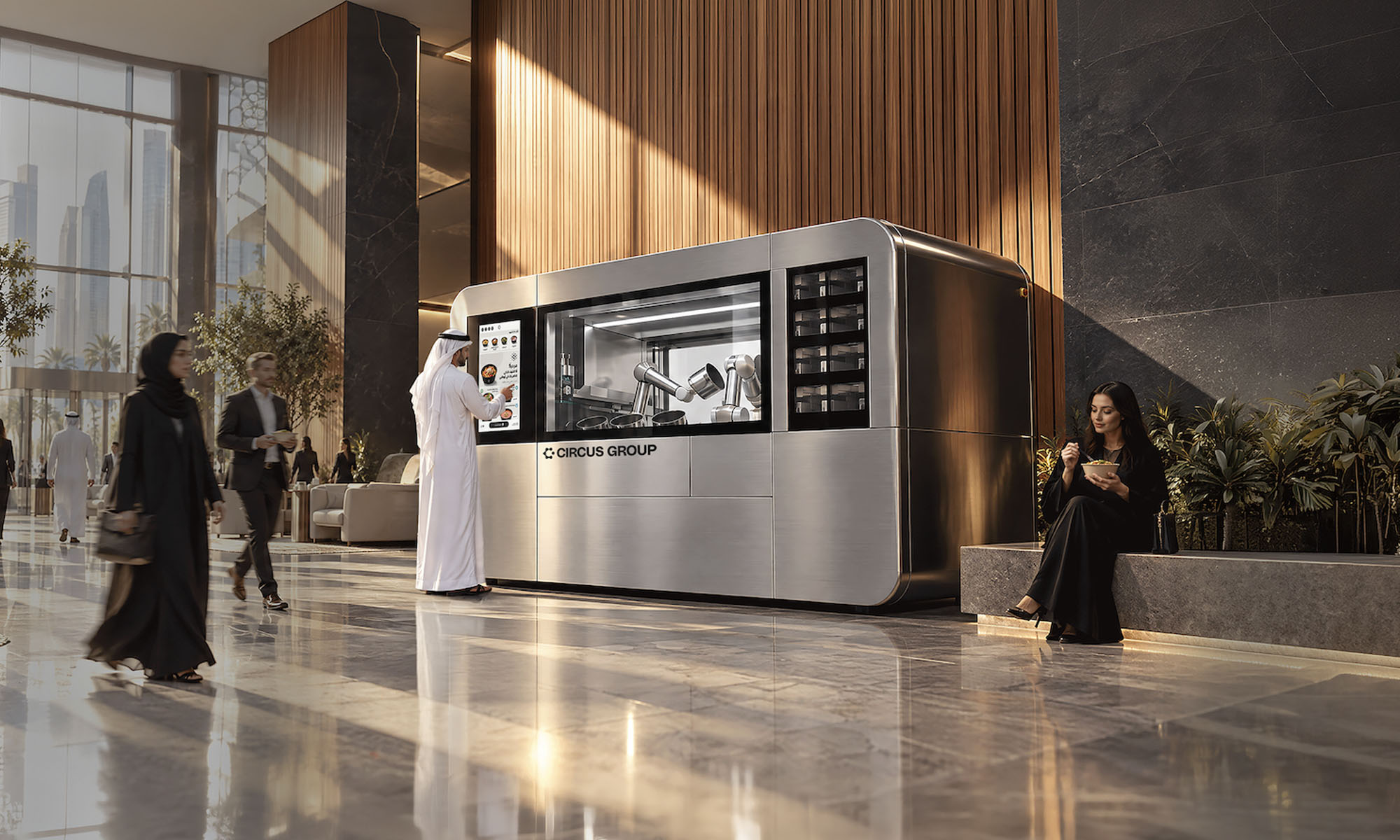
The most telling thing about a new autonomous kitchen now running in Abu Dhabi’s Marina Square is what it won’t cook:
“We don’t do fast food,” says Nikolas Bullwinkel, Founder and CEO of Circus SE. “We’ve actively decided not to build a machine that can only do burgers”.
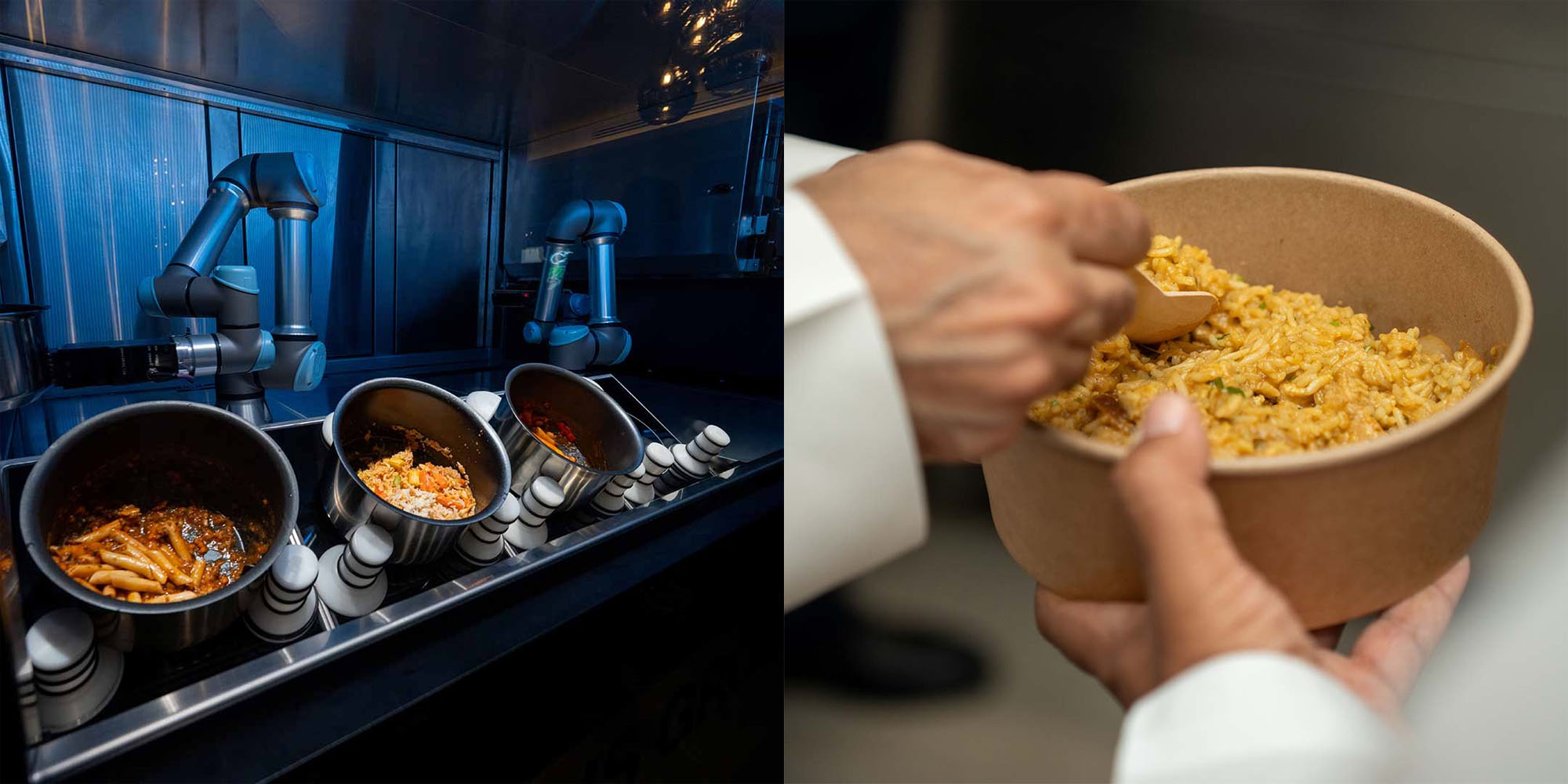
Instead, the CA-1 system is built around pot-based cooking: curries, pastas, soups and rice dishes. After experimenting with highly personalized recipes, Circus deliberately leaned back toward recognizable food. “We’re going with a chicken biryani because you know it,” Bullwinkel says of the AED 40 dish.
The Germany-based robotics and food technology company operates across eight countries, and Abu Dhabi is its first deployment outside Europe. More locations are expected there and in Dubai.
In Germany, its units can be placed in supermarkets, gas stations, airports and hospitals. In the Gulf, Bullwinkel wants them inside residential and office buildings, replacing some of the complexity of last-mile delivery. “We’re basically bringing a very tiny factory a few square meters into your building,” he says. Catering company Royal Prestige supplies the ingredients and knowledge of local tastes.
The CA-1 manages up to 36 refrigerated ingredient silos alongside automated induction cooking, robotic plating and a self-cleaning dishwasher. Two robotic arms move ingredients through the system with minimal human intervention. It can produce up to 120 hot meals an hour, and a meal such as rice and curry can take around three to four minutes.
Also Read: Ooredoo Qatar’s 5G+ Network Is Built For Machines As Much As People
Five cameras and multiple sensors monitor heat, temperature and consistency, an attempt to approximate what a chef perceives. “You can hear something gets burned, you can smell it, you can see it at some point,” Bullwinkel says. CircusOS, the company’s operating system, adjusts recipes in real time.
You might think of the platform as a threat to kitchen staff, but Bullwinkel frames Circus as a way for chefs to develop recipes and distribute them at scale. With that being said, rising labor costs and shortages are also part of his case for automation.

Abu Dhabi’s Robot Kitchen Is Serving Up Biryani, Not Burgers

Sennheiser’s MOMENTUM 5 Series Bets On Batteries You Can Swap

UAE’s 3-Minute University Registration Runs On Government Data

How Online Ads Became A Delivery System For Zero-Click Spyware

Shokz OpenDots 2 Review: Clip-On Audio Gets A Bass-Heavy Makeover

Dubai Says Its Deepfake Detector Needs Just 7 Seconds Of Video

New Disney+ Streaming App Has Officially Launched In The UAE

NEOPAY Wants To Follow Merchants Across Channels And Borders

RØDE’s Low-Profile Studio Arm Is Designed To Stay Out Of Shot

G42’s Inception42 Wants AI To Show Its Work Before Investors Commit


-
 News3 weeks ago
Dubai Says Its Deepfake Detector Needs Just 7 Seconds Of Video
-
 News2 weeks ago
New Disney+ Streaming App Has Officially Launched In The UAE
-
 News3 weeks ago
NEOPAY Wants To Follow Merchants Across Channels And Borders
-
 News3 weeks ago
RØDE’s Low-Profile Studio Arm Is Designed To Stay Out Of Shot