
News
Logitech’s New Folding Mouse Is Designed For Work On The Go
Most professionals own a mouse, few will use one in a cafe. Logitech thinks the answer folds in half and lives in your pocket.

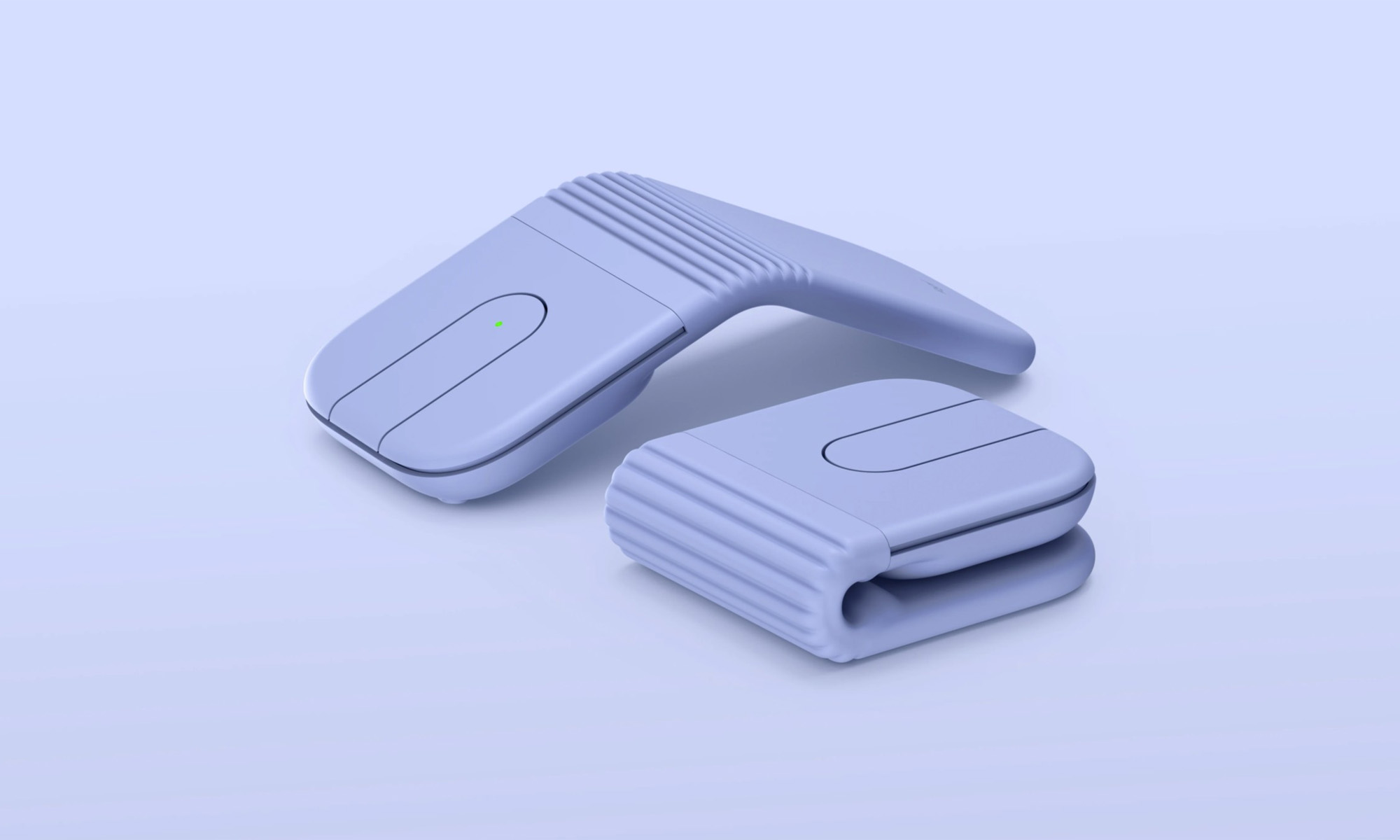
Logitech has unveiled the Mobi Fold, its first foldable mouse, pitched squarely at people who work from airport lounges, cafes and hotel lobbies rather than a fixed desk. The device collapses to roughly half its size, powers on automatically when opened and switches off when folded.
The company’s case rests on a gap in its own research: 72% of professionals own a mouse, but only 26% use one in public. Logitech blames the “bulk and friction” of conventional designs, which leave most people defaulting to the trackpad. The Mobi Fold, it claims, reduces muscle strain by 22% compared with a laptop trackpad.
“For a long time, people have left their mice behind simply because they were a hassle to carry around, not because they didn’t want to use one,” said Joseph Mingori, VP and General Manager at Logitech, adding that the company aims to ensure a professional setup is a constant, not a compromise.
The spec sheet is genuinely travel-minded. The mouse pairs with up to three devices over Bluetooth and works across Windows, macOS, ChromeOS, Android, iPadOS and Linux. Quiet-clicks keep it inoffensive in shared spaces, the hinge is tested to withstand 15 years of daily use, and the exterior is drop-tested and wrapped in a dust-resistant silicone sleeve. A one-minute charge yields 22 hours of use; a full charge lasts up to 30 days. An on-device AI model helps prevent unintentional clicks while folding, and it is the first Logitech input device certified for Google’s Fast Pair. Adaptive Touch Scrolling and two customizable buttons, configured through the Logi Options+ app, handle the precision work.
Also Read: iFLYTEK Smart Translator 4.0 Review: A Traveler’s Companion
Logitech is also leaning on sustainability credentials: up to 36% post-consumer recycled plastic in Graphite models, magnets made entirely from post-consumer recycled rare earth metal, and FSC-certified packaging. Three colorways were announced – Graphite, Lilac and Off-White – though the availability notice mentions only Graphite.
Pricing has not been announced, which is likely the one spec that decides whether a second mouse earns its place in a travel setup.

News
Ooredoo Qatar’s 5G+ Network Is Built For Machines As Much As People
Built on 5G Standalone and 5G Advanced, the upgrade lays the groundwork for Qatar’s 2030 digital ambitions.


Ooredoo Qatar has launched what it calls the country’s first 5G+ mobile network. Customers get faster connections, but much of what the operator is promising is aimed at machines.
5G+ isn’t a new generation of mobile technology so much as a layering of upgrades, building on 5G Standalone and 5G Advanced. The result is the familiar trio of higher speeds, greater capacity and lower latency.
For consumers, Ooredoo promises smoother streaming, more responsive gaming and steadier connections on the move. The service is commercially available through mobile broadband in 5G+ coverage areas, and the operator is aiming it at campers during the camping season. The network has been deployed at locations across Qatar, but the announcement doesn’t name them, say whether smartphone plans are included or put figures on the speed and latency gains.
The business case is more detailed: Greater capacity lets more devices connect and exchange data efficiently, while shorter response times support real-time equipment monitoring and automated processes. Network slicing tailors connectivity to specific uses, and 5G Advanced combined with edge computing targets mission-critical applications that require rapid responses. Expanded IoT capabilities cover industrial sensors, asset trackers and utility meters, the building blocks for automation and future smart city services. The company also cites AI-enabled services and complex digital workloads.
Also Read: WHOOP Goes Arabic, Betting On The Gulf’s Appetite For Health Data
“With the 5G+ network, we are enhancing everyday digital experiences for our consumers, enabling innovation, and strengthening the competitiveness of businesses across the country,” said Sheikh Ali bin Jabor bin Mohammad Al Thani, chief executive officer of Ooredoo Qatar.
“From launching the world’s first 5G network in 2018 to deploying Qatar’s first 5G Standalone core network, we have consistently advanced connectivity,” he added.
Ooredoo ties the rollout to Qatar National Vision 2030 and the Digital Agenda 2030, framing it as part of the country’s effort to strengthen its position as a leading regional digital hub. For that ambition, the devices that matter most may be the ones without screens.

Shokz OpenDots 2 Review: Clip-On Audio Gets A Bass-Heavy Makeover

Ooredoo Qatar’s 5G+ Network Is Built For Machines As Much As People

G42’s Inception42 Wants AI To Show Its Work Before Investors Commit

WHOOP Goes Arabic, Betting On The Gulf’s Appetite For Health Data

New Disney+ Streaming App Has Officially Launched In The UAE

In Kuwait, Your Surgeon Might Be Operating From Another Country

Microsoft Plans $10 Billion-Plus Gulf Expansion Despite Iran Conflict

Qatar Folds 45 State Companies Into A Single Investment Platform

NEOPAY Wants To Follow Merchants Across Channels And Borders

RØDE’s Low-Profile Studio Arm Is Designed To Stay Out Of Shot


-
 News3 weeks ago
In Kuwait, Your Surgeon Might Be Operating From Another Country
-
 News3 weeks ago
Microsoft Plans $10 Billion-Plus Gulf Expansion Despite Iran Conflict
-
 News4 weeks ago
Qatar Folds 45 State Companies Into A Single Investment Platform
-
 News2 weeks ago
NEOPAY Wants To Follow Merchants Across Channels And Borders