
News
Tech Firms Form Partnership To Boost UAE’s Space Program
The team of companies aims to enhance the nation’s space tech and exploration potential using remote sensing and Earth Observation (EO) capabilities.

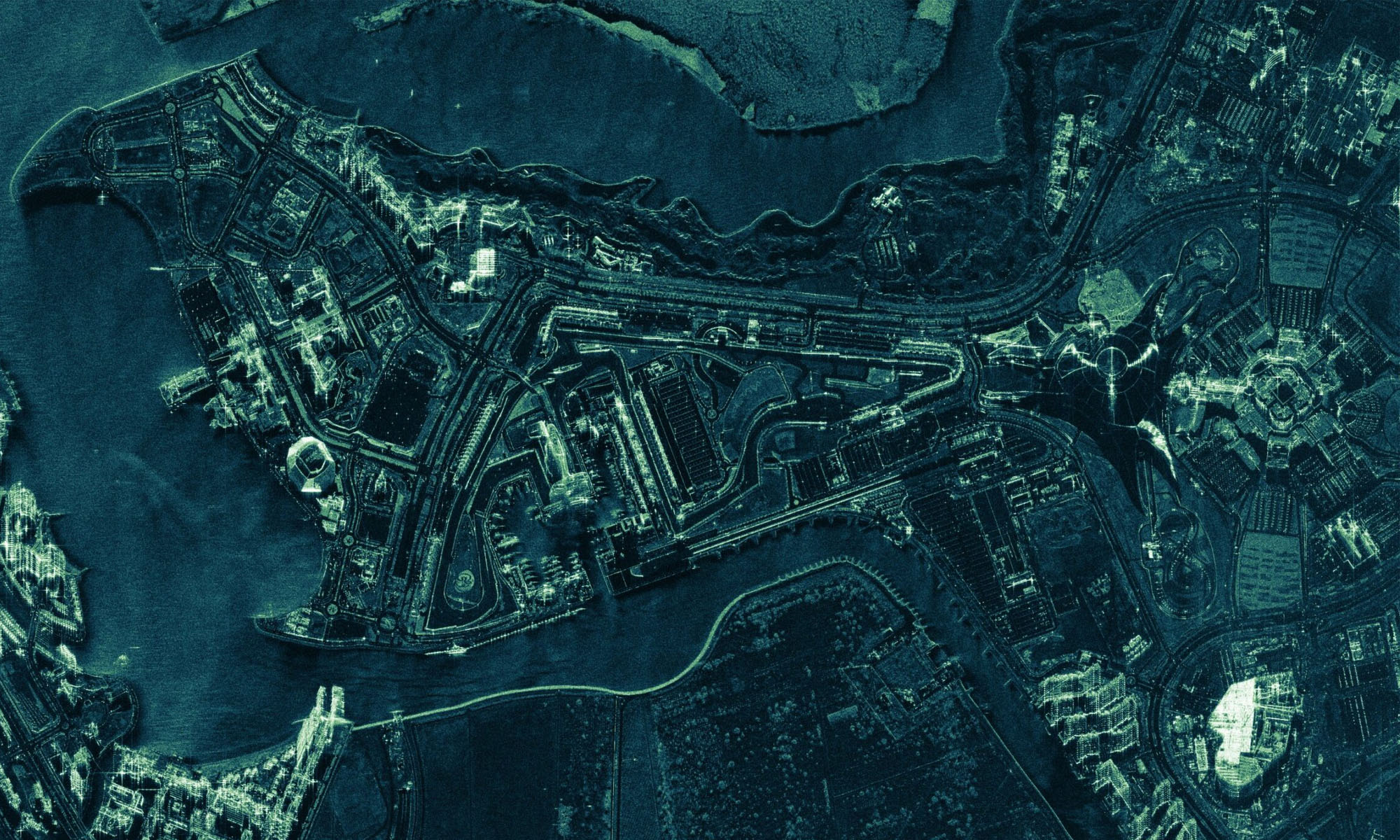
A leading AI-powered geospatial tech company called Bayanat has teamed up with fellow UAE firm and satellite solutions provider Yahsat on a new space program.
The pair will be joined by ICEYE, a well-known Synthetic Aperture Radar (SAR) producer from Finland, to build cutting-edge remote satellite sensing and Earth Observation (EO) technologies.
Synthetic Aperture Radar technology allows active sensing of the Earth’s surface, and produces high-resolution images that aren’t affected by weather conditions or the sun’s output. In addition, unlike regular imaging satellites, SAR-equipped solutions can capture images both night and day. ICEYE’s SAR satellites offer broad coverage and higher-resolution images than most, providing valuable insights for various applications.
Meanwhile, the Bayanat and Yahsat role in the space program will be to develop a constellation of around five SAR low Earth orbit (LEO) satellites. The constellation will enable stable data streams for end-to-end SAR applications and provide a wide range of geospatial insights. Between Yahsat’s advanced satellite infrastructure and Bayanat’s data analytics and AI capabilities, the program represents a significant advancement in the UAE’s journey toward building a comprehensive space ecosystem.
Aside from developing remote sensing capabilities, the program also aims to improve in-country satellite manufacturing expertise and enhance the UAE’s space exploration capabilities.
Also Read: Qatar’s Capital Aims To Become A Regional Technology Hub
Hasan Al Hosani, CEO of Bayanat, said, “The partnership between Bayanat and Iceye, in collaboration with Yahsat, will drive the development of a sovereign EO ecosystem, whilst contributing to skill development, scientific advancements, and sustained economic growth.” Meanwhile, Ali Al Hashemi, Group CEO of Yahsat, stated, “As part of Yahsat’s active role in empowering the space economy sector in line with the UAE’s Space Strategy 2030, we are pleased to collaborate […] on this ambitious program [to] strengthen the UAE’s leadership in the space sector in the MENA region”.
The new program follows hot on the heels of UAE astronaut Sultan Al Neyadi, who became the first Arab to perform a spacewalk from the International Space Station (ISS). The historic event lasted for 7.01 hours in the cold vacuum of space, accomplishing key objectives to maintain cabling and insulation on the station’s starboard truss.





News
Microsoft Plans $10 Billion-Plus Gulf Expansion Despite Iran Conflict
Security is shaping Microsoft’s approach, from resilience work with governments to what it will say about how the money splits by country.
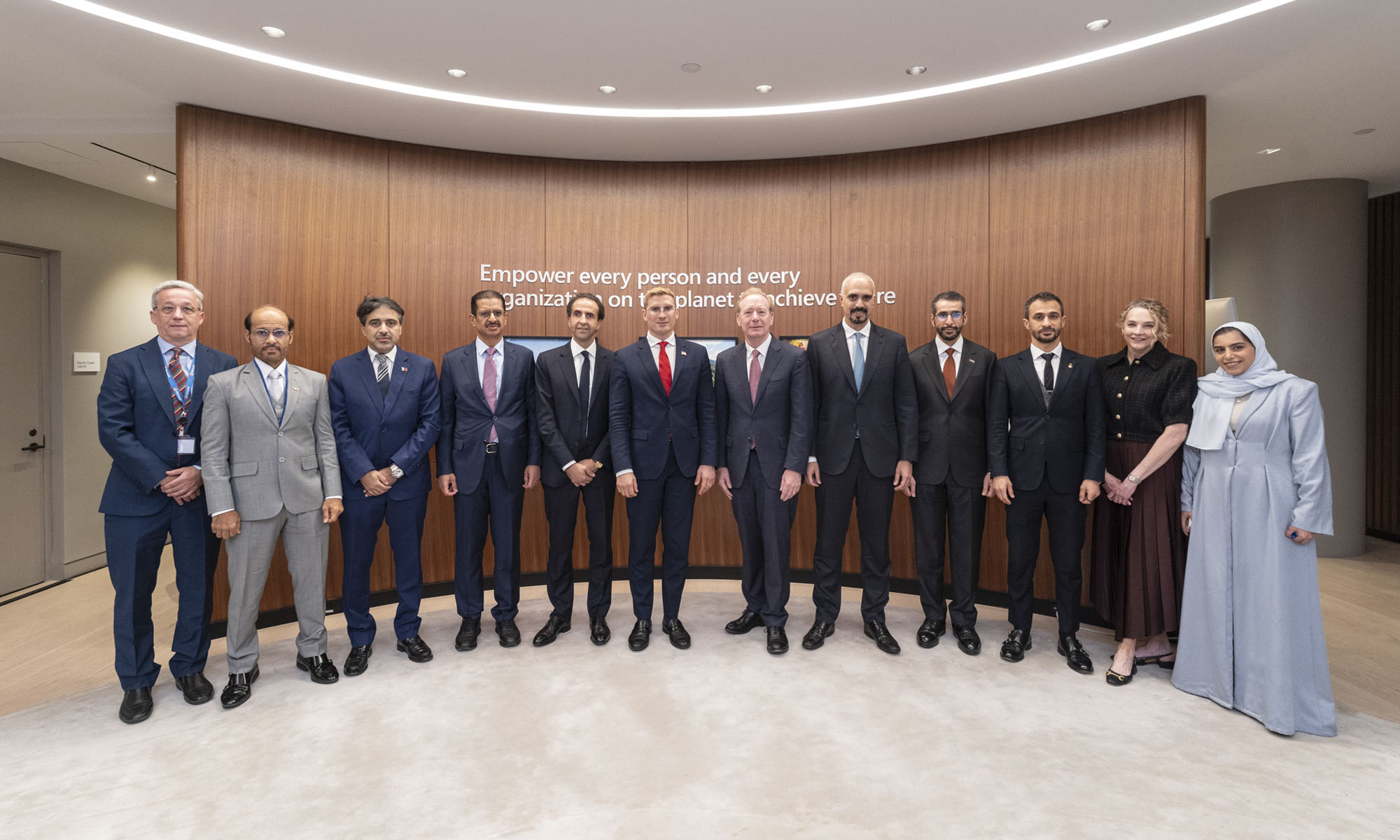
Microsoft is planning more than $10 billion of investment across the UAE, Saudi Arabia, Qatar and Kuwait through 2030, Vice Chair and President Brad Smith told Reuters, calling the spending schedule aggressive. The Iranian conflict that began on February 28 has not persuaded the company to scale back.
“We’re sustaining all the investments we planned to make before this conflict started, and we are in fact adding to them,” Smith said. The $10 billion-plus total does not, however, show how large those additions are.
The investment, which Smith described as part of Microsoft’s continued infrastructure expansion, is aimed at cloud and AI infrastructure and at the company’s growing regional operations. Microsoft also intends to put more than $400 million into subsea and terrestrial connectivity across the Middle East by 2030.
The spending fits the region’s own ambitions too. Gulf governments have been investing heavily in AI infrastructure as part of a push to diversify their economies beyond oil and gas and turn themselves into global technology hubs. Major cloud and AI providers have been drawn in part by the land and relatively low-cost energy on offer.
Microsoft is widening its partnerships with regional AI companies, though not on identical terms. In 2024, it invested $1.5 billion in Abu Dhabi-based G42 for a minority stake, and Smith currently sits on G42’s board. Saudi Arabia’s Humain and Qatar’s Qai are working with Microsoft on selected priority areas, but Smith said the company does not plan to make capital investments in either.
Also Read: Egypt’s Mobile Wallets Are Booming, But Cash Still Has Power
The conflict has added another strand to Microsoft’s work in the region. Since it began, Smith said, the company has supported regional partners with digital resilience assessments, and it is now working with Gulf countries through a digital resilience initiative focused on preparedness and the protection of critical data.
So far, the company has given no country-by-country breakdown of the investment, citing security among other factors. So while the headline figure is public, how Microsoft divides the spending among the four countries is not.

Microsoft Plans $10 Billion-Plus Gulf Expansion Despite Iran Conflict

In Kuwait, Your Surgeon Might Be Operating From Another Country

Qatar Folds 45 State Companies Into A Single Investment Platform

Trip.com Is Betting An AI Agent Will Book Your Next Vacation

Meta’s New $499 Plan Puts A Price On Reaching A Real Person

Apple’s First Folding iPhone Arrives Late To A Shrinking Market
Trip.com Is Betting An AI Agent Will Book Your Next Vacation

Egypt’s Mobile Wallets Are Booming, But Cash Still Has Power

OKX Bets Streaming Perks Can Take Crypto Mainstream Across MENA

Musk’s Boring Company Wants To Dig 150 KM Of Tunnel Under The UAE


-
 News3 weeks ago
Apple’s First Folding iPhone Arrives Late To A Shrinking Market
-
 News2 weeks ago
Trip.com Is Betting An AI Agent Will Book Your Next Vacation
-
 News2 weeks ago
Egypt’s Mobile Wallets Are Booming, But Cash Still Has Power
-
 News2 weeks ago
OKX Bets Streaming Perks Can Take Crypto Mainstream Across MENA