
News
Aramco Installs Middle East’s First Industrial Quantum Computer
Saudi Arabia brings quantum hardware into day-to-day energy work, pushing the tech from theory to field use.


Aramco has switched on the Middle East’s first industrial quantum computer at its Dhahran data center, a direct move to fold advanced computing into upstream and downstream operations. The machine — built with French firm Pasqal — is the startup’s most powerful system yet and the first in the region intended for real industrial workloads rather than lab trials.
The rollout sits inside Aramco’s wider digital shift. Ahmad O. Al-Khowaiter, Executive Vice President of Technology & Innovation, said quantum fits the company’s push to modernize core operations. “We are deploying AI and other technologies at scale to further enhance our operations, maximize efficiency and unlock value across our business,” he said.
Pasqal’s unit uses 200 neutral-atom qubits arranged in programmable two-dimensional arrays. That opens room for optimization and simulation work that stretches classical hardware. Aramco is targeting subsurface modelling, materials research and logistics planning — areas where marginal improvements can reshape high-volume industrial processes.
For Pasqal, the installation signals a foothold in a market aligned with Saudi Arabia’s Vision 2030. CEO Loïc Henriet called it “a historic milestone,” adding, “The deployment of our most powerful quantum computer yet is a piece of history and a landmark for the Middle East’s quantum future”.
Also Read: IBM Unveils Nighthawk And Loon Quantum Chips
The companies have been working together for several years. Wa’ed Ventures, Aramco’s VC arm, backed Pasqal early in 2023 and helped the firm build a presence in the Kingdom. Training programs and joint research tracks are planned, giving Saudi engineers access to live quantum hardware — a rarity even in mature tech markets.
Unlike many quantum setups still locked in academic roles, the Dhahran machine is meant for immediate testing and decision-making in industrial and high-end environments. Aramco aims to probe quantum-driven optimization, computational chemistry and predictive models, hoping to spot practical gains long before fault-tolerant systems arrive. The move places the Kingdom among a small set of countries exploring quantum tools on strategic industrial workloads.






News
Abu Dhabi’s Robot Kitchen Is Serving Up Biryani, Not Burgers
Circus SE wants to put a tiny automated factory inside the buildings where Gulf residents live and work, bypassing part of last-mile delivery.
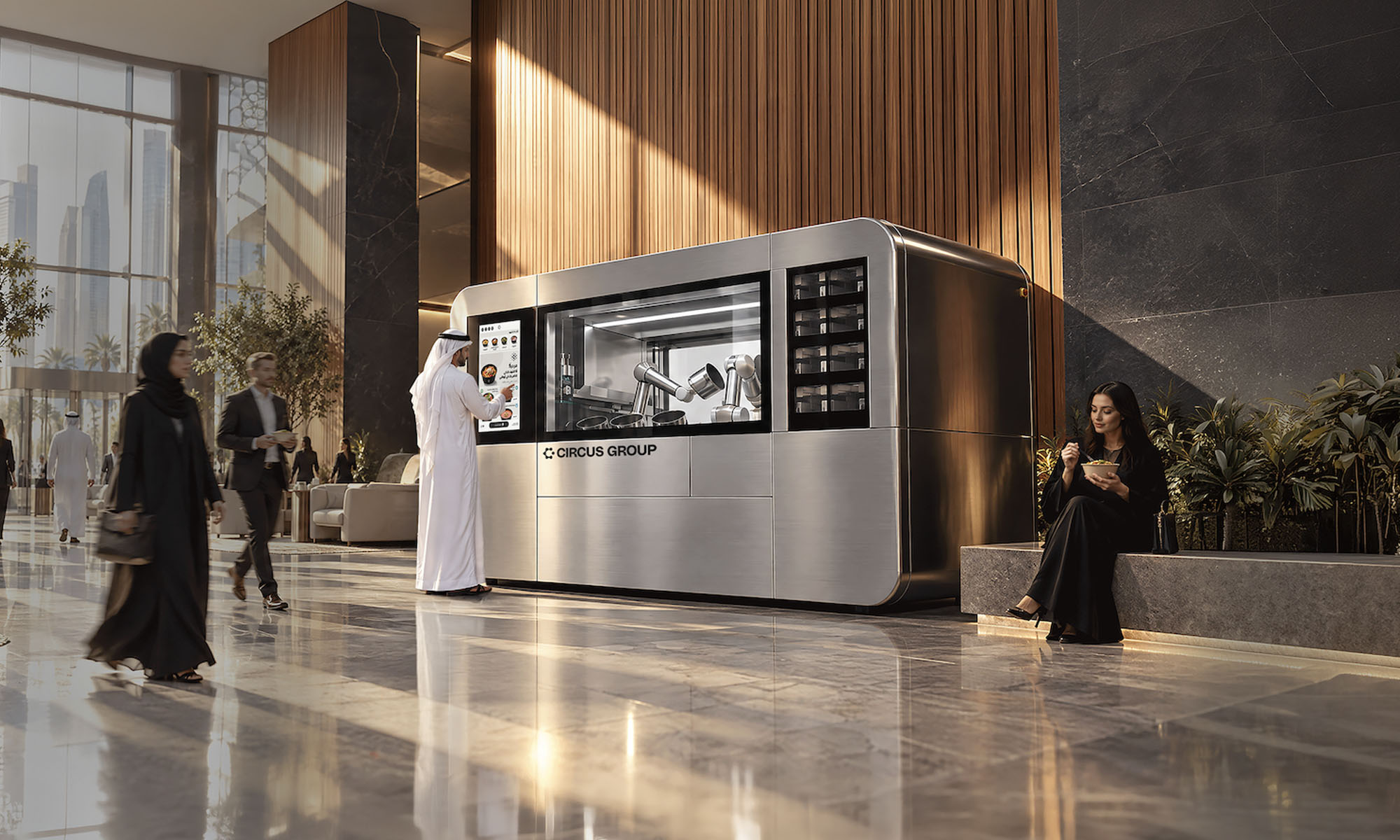
The most telling thing about a new autonomous kitchen now running in Abu Dhabi’s Marina Square is what it won’t cook:
“We don’t do fast food,” says Nikolas Bullwinkel, Founder and CEO of Circus SE. “We’ve actively decided not to build a machine that can only do burgers”.
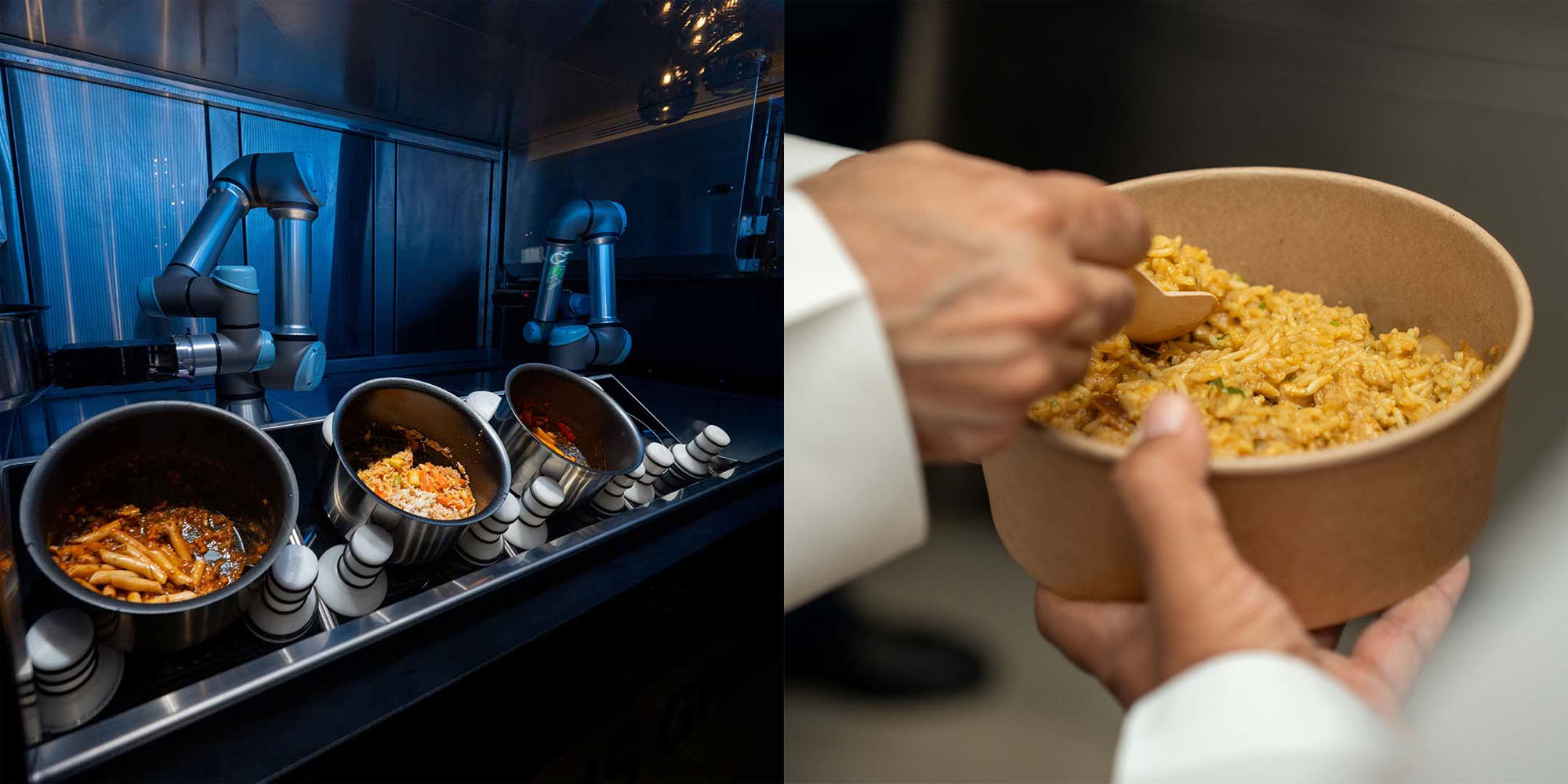
Instead, the CA-1 system is built around pot-based cooking: curries, pastas, soups and rice dishes. After experimenting with highly personalized recipes, Circus deliberately leaned back toward recognizable food. “We’re going with a chicken biryani because you know it,” Bullwinkel says of the AED 40 dish.
The Germany-based robotics and food technology company operates across eight countries, and Abu Dhabi is its first deployment outside Europe. More locations are expected there and in Dubai.
In Germany, its units can be placed in supermarkets, gas stations, airports and hospitals. In the Gulf, Bullwinkel wants them inside residential and office buildings, replacing some of the complexity of last-mile delivery. “We’re basically bringing a very tiny factory a few square meters into your building,” he says. Catering company Royal Prestige supplies the ingredients and knowledge of local tastes.
The CA-1 manages up to 36 refrigerated ingredient silos alongside automated induction cooking, robotic plating and a self-cleaning dishwasher. Two robotic arms move ingredients through the system with minimal human intervention. It can produce up to 120 hot meals an hour, and a meal such as rice and curry can take around three to four minutes.
Also Read: Ooredoo Qatar’s 5G+ Network Is Built For Machines As Much As People
Five cameras and multiple sensors monitor heat, temperature and consistency, an attempt to approximate what a chef perceives. “You can hear something gets burned, you can smell it, you can see it at some point,” Bullwinkel says. CircusOS, the company’s operating system, adjusts recipes in real time.
You might think of the platform as a threat to kitchen staff, but Bullwinkel frames Circus as a way for chefs to develop recipes and distribute them at scale. With that being said, rising labor costs and shortages are also part of his case for automation.

Abu Dhabi’s Robot Kitchen Is Serving Up Biryani, Not Burgers

Sennheiser’s MOMENTUM 5 Series Bets On Batteries You Can Swap

UAE’s 3-Minute University Registration Runs On Government Data

How Online Ads Became A Delivery System For Zero-Click Spyware

Shokz OpenDots 2 Review: Clip-On Audio Gets A Bass-Heavy Makeover

Microsoft Plans $10 Billion-Plus Gulf Expansion Despite Iran Conflict

NEOPAY Wants To Follow Merchants Across Channels And Borders

RØDE’s Low-Profile Studio Arm Is Designed To Stay Out Of Shot

Dubai Says Its Deepfake Detector Needs Just 7 Seconds Of Video

New Disney+ Streaming App Has Officially Launched In The UAE


-
 News3 weeks ago
NEOPAY Wants To Follow Merchants Across Channels And Borders
-
 News3 weeks ago
RØDE’s Low-Profile Studio Arm Is Designed To Stay Out Of Shot
-
 News2 weeks ago
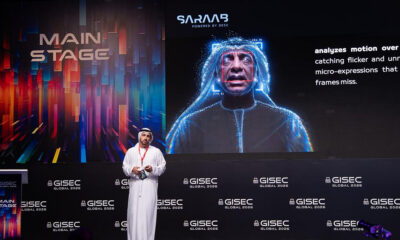
Dubai Says Its Deepfake Detector Needs Just 7 Seconds Of Video
-
 News2 weeks ago
New Disney+ Streaming App Has Officially Launched In The UAE