
News
Google Pushes Gemini 3 Pro Into Search And The Gemini App
The new model lands a few weeks before Gemini 2’s first birthday and brings a task-running agent to the Gemini app.


Google has pushed Gemini 3 Pro across its consumer and developer platforms, dropping the model into the Gemini app, Google Search’s AI Mode and other products across the company’s cloud stack in a single sweep.
In the app, the model sits behind the “Thinking” option and is open to all users, with higher limits for paid tiers. Answers are reported to be tighter and better structured. More importantly, it unlocks Gemini Agent, a task-runner built on last year’s Project Mariner. Once granted access to Google apps, it can handle chores directly — managing email instead of just suggesting how.
Search has also received a major upgrade. Gemini 3 Pro goes live first for AI Pro and Ultra subscribers inside AI Mode and will also power AI Overviews for the hardest queries. A new routing system (due soon), will decide when a question is sent to the upgraded model. For now, subscribers can trigger it by selecting “Thinking” in AI Mode.
Google argues the model strengthens the “fan-out” technique behind AI Mode by running broader, deeper searches and surfacing material earlier versions overlooked. Better multimodal analysis should also produce more functional answers; researching personal loans, for example, could return an embedded calculator rather than a wall of text.
The company is leaning on benchmark gains to anchor the launch. On benchmarking platform Humanity’s Last Exam, the model hit 37.5 percent accuracy, topping Grok 4 by 12.1 points without using web search. It also leads the LMArena board with 1,501 points.
Also Read: IBM Unveils Nighthawk And Loon Quantum Chips
Developers get the same upgrades too: Gemini 3 Pro is now in the Gemini API, AI Studio and Vertex AI. Google is also adding Antigravity, an autonomous coding tool that writes software while generating its own subtasks and progress notes. Gemini 3 Deep Think, a higher-end reasoning mode, will reach safety testers first before moving to AI Ultra users.
For MENA firms already prototyping with Google models, the rollout offers quicker access to production-grade assistants and coding agents as competition between global AI platforms tightens.


News
Microsoft Plans $10 Billion-Plus Gulf Expansion Despite Iran Conflict
Security is shaping Microsoft’s approach, from resilience work with governments to what it will say about how the money splits by country.
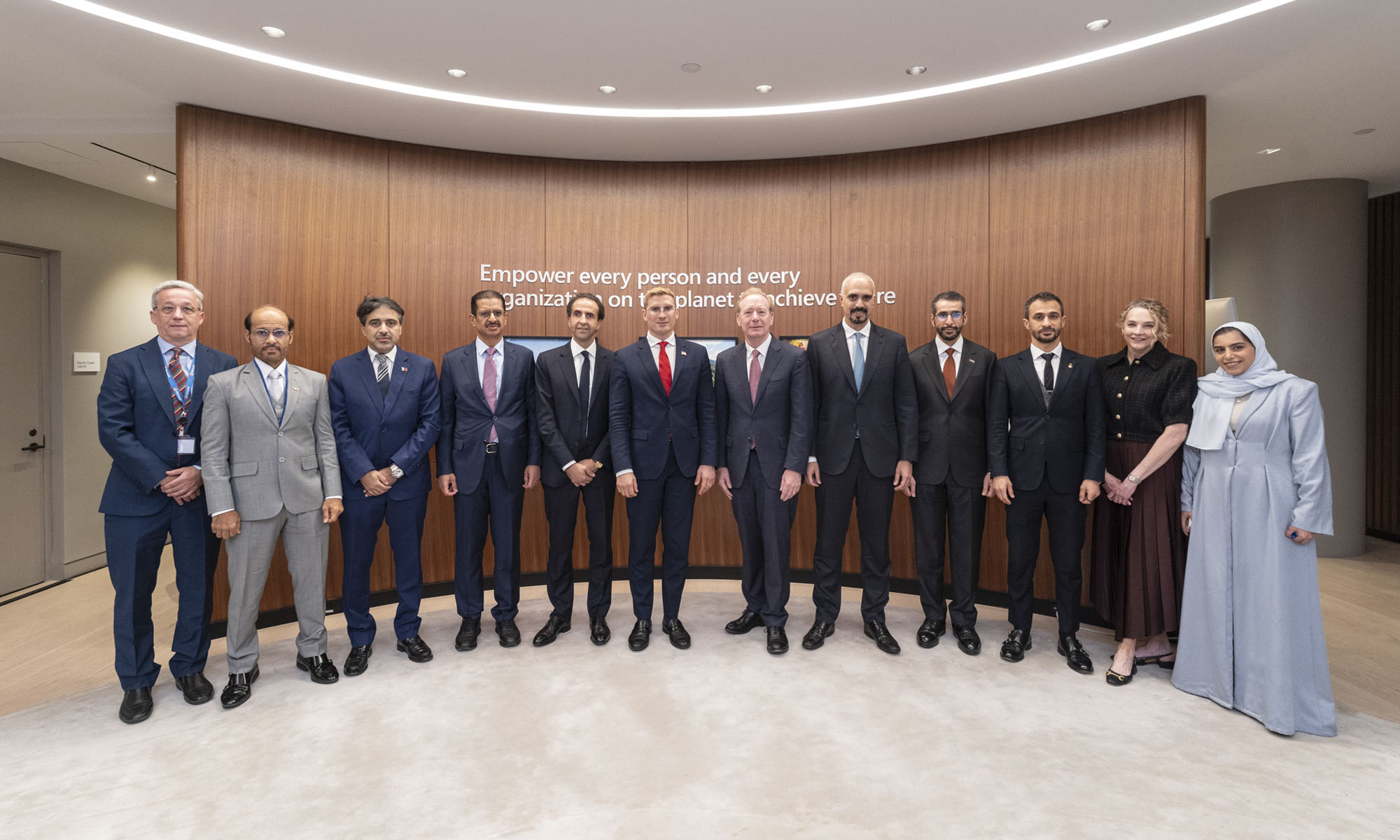
Microsoft is planning more than $10 billion of investment across the UAE, Saudi Arabia, Qatar and Kuwait through 2030, Vice Chair and President Brad Smith told Reuters, calling the spending schedule aggressive. The Iranian conflict that began on February 28 has not persuaded the company to scale back.
“We’re sustaining all the investments we planned to make before this conflict started, and we are in fact adding to them,” Smith said. The $10 billion-plus total does not, however, show how large those additions are.
The investment, which Smith described as part of Microsoft’s continued infrastructure expansion, is aimed at cloud and AI infrastructure and at the company’s growing regional operations. Microsoft also intends to put more than $400 million into subsea and terrestrial connectivity across the Middle East by 2030.
The spending fits the region’s own ambitions too. Gulf governments have been investing heavily in AI infrastructure as part of a push to diversify their economies beyond oil and gas and turn themselves into global technology hubs. Major cloud and AI providers have been drawn in part by the land and relatively low-cost energy on offer.
Microsoft is widening its partnerships with regional AI companies, though not on identical terms. In 2024, it invested $1.5 billion in Abu Dhabi-based G42 for a minority stake, and Smith currently sits on G42’s board. Saudi Arabia’s Humain and Qatar’s Qai are working with Microsoft on selected priority areas, but Smith said the company does not plan to make capital investments in either.
Also Read: Egypt’s Mobile Wallets Are Booming, But Cash Still Has Power
The conflict has added another strand to Microsoft’s work in the region. Since it began, Smith said, the company has supported regional partners with digital resilience assessments, and it is now working with Gulf countries through a digital resilience initiative focused on preparedness and the protection of critical data.
So far, the company has given no country-by-country breakdown of the investment, citing security among other factors. So while the headline figure is public, how Microsoft divides the spending among the four countries is not.

Microsoft Plans $10 Billion-Plus Gulf Expansion Despite Iran Conflict

In Kuwait, Your Surgeon Might Be Operating From Another Country

Qatar Folds 45 State Companies Into A Single Investment Platform

Trip.com Is Betting An AI Agent Will Book Your Next Vacation

Meta’s New $499 Plan Puts A Price On Reaching A Real Person

Apple’s First Folding iPhone Arrives Late To A Shrinking Market
Trip.com Is Betting An AI Agent Will Book Your Next Vacation

Egypt’s Mobile Wallets Are Booming, But Cash Still Has Power

OKX Bets Streaming Perks Can Take Crypto Mainstream Across MENA

Musk’s Boring Company Wants To Dig 150 KM Of Tunnel Under The UAE


-
 News3 weeks ago
Apple’s First Folding iPhone Arrives Late To A Shrinking Market
-
 News2 weeks ago
Trip.com Is Betting An AI Agent Will Book Your Next Vacation
-
 News2 weeks ago
Egypt’s Mobile Wallets Are Booming, But Cash Still Has Power
-
 News2 weeks ago
OKX Bets Streaming Perks Can Take Crypto Mainstream Across MENA