
News
Emirates Airline To Roll Out Free Starlink Wi-Fi This Month
The airline’s two-year program begins November 2025, and will put Gulf rivals in a fast race for high-speed inflight access.


Emirates has begun a push to upgrade its entire in-service fleet with SpaceX’s Starlink, a move that shifts inflight connectivity from a perk to a standard feature on Gulf long-haul routes. The first modified Boeing 777-300ER, A6-EPF, is on display at the Dubai Airshow and will operate the airline’s first commercial flight with the service once the show closes.
The rollout starts on Boeing 777s this month. A380 installations follow from February 2026. Emirates plans to work through about 14 aircraft a month, aiming to cover all 232 active jets by mid-2027.
Access will be free across all cabins, without logins or loyalty requirements. The carrier says bandwidth should support streaming, gaming, video calls and work apps on personal devices and seatback screens.

Sir Tim Clark, Emirates’ president, cast the tie-up as part of a wider cabin refresh. “Partnering with Starlink is another defining moment in our continuous commitment to ensuring our customers fly better,” he said, pointing to refurbishments across First, Business and Premium Economy.
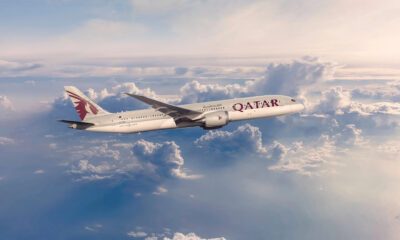
The region’s airline sector is moving quickly with hi-speed Wi-Fi. Qatar Airways says more than 100 of its widebodies now carry Starlink. Several Saudi operators are following suit. With Gulf hubs stitching together long east-west networks, fast internet is becoming a differentiator — especially in sectors where travelers expect to stay online.
For Emirates, the connectivity upgrade lands alongside one of the largest cabin projects in commercial aviation, tightening the airline’s pitch as Dubai grows its role as a global transit stop.
Also Read: Lebanon Sets 2027 Launch Date For Low-Cost “Fly Beirut” Airline
SpaceX framed the scale of the deal as a stress test of Starlink’s capacity on dense, long-haul fleets. “With Starlink onboard your Emirates flight, you’ll be able to stream, game, and have seamless video calls, just as you can do on the ground,” said Chad Gibbs, vice-president of Starlink Business Operations.
As the Middle Eastern carriers compete to anchor next-generation passenger experience standards, Emirates’ two-year timetable signals that high-bandwidth connectivity is shifting from a premium option to a baseline expectation across the region’s long-haul fleets.





News
Microsoft Plans $10 Billion-Plus Gulf Expansion Despite Iran Conflict
Security is shaping Microsoft’s approach, from resilience work with governments to what it will say about how the money splits by country.
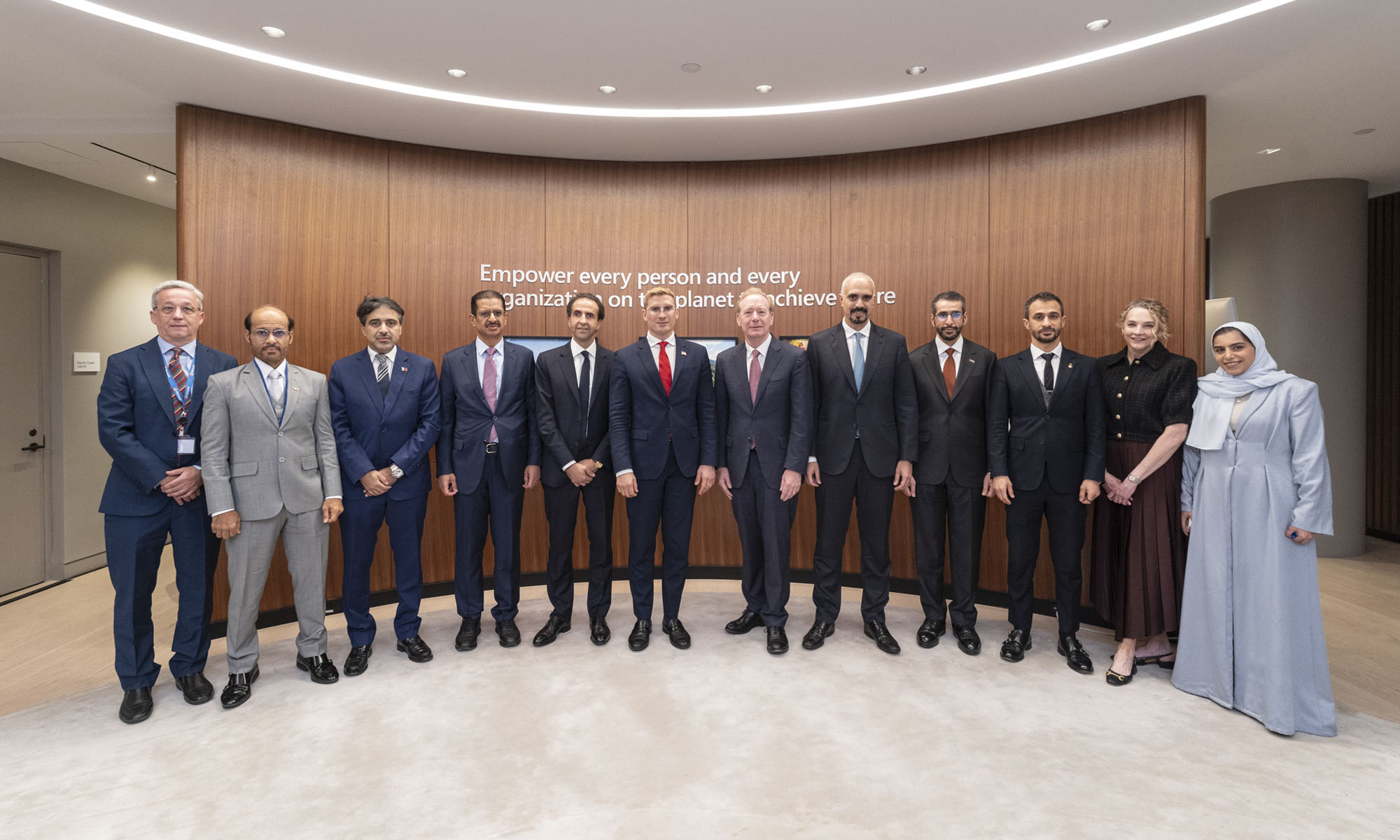
Microsoft is planning more than $10 billion of investment across the UAE, Saudi Arabia, Qatar and Kuwait through 2030, Vice Chair and President Brad Smith told Reuters, calling the spending schedule aggressive. The Iranian conflict that began on February 28 has not persuaded the company to scale back.
“We’re sustaining all the investments we planned to make before this conflict started, and we are in fact adding to them,” Smith said. The $10 billion-plus total does not, however, show how large those additions are.
The investment, which Smith described as part of Microsoft’s continued infrastructure expansion, is aimed at cloud and AI infrastructure and at the company’s growing regional operations. Microsoft also intends to put more than $400 million into subsea and terrestrial connectivity across the Middle East by 2030.
The spending fits the region’s own ambitions too. Gulf governments have been investing heavily in AI infrastructure as part of a push to diversify their economies beyond oil and gas and turn themselves into global technology hubs. Major cloud and AI providers have been drawn in part by the land and relatively low-cost energy on offer.
Microsoft is widening its partnerships with regional AI companies, though not on identical terms. In 2024, it invested $1.5 billion in Abu Dhabi-based G42 for a minority stake, and Smith currently sits on G42’s board. Saudi Arabia’s Humain and Qatar’s Qai are working with Microsoft on selected priority areas, but Smith said the company does not plan to make capital investments in either.
Also Read: Egypt’s Mobile Wallets Are Booming, But Cash Still Has Power
The conflict has added another strand to Microsoft’s work in the region. Since it began, Smith said, the company has supported regional partners with digital resilience assessments, and it is now working with Gulf countries through a digital resilience initiative focused on preparedness and the protection of critical data.
So far, the company has given no country-by-country breakdown of the investment, citing security among other factors. So while the headline figure is public, how Microsoft divides the spending among the four countries is not.

Microsoft Plans $10 Billion-Plus Gulf Expansion Despite Iran Conflict

In Kuwait, Your Surgeon Might Be Operating From Another Country

Qatar Folds 45 State Companies Into A Single Investment Platform

Trip.com Is Betting An AI Agent Will Book Your Next Vacation

Meta’s New $499 Plan Puts A Price On Reaching A Real Person

Apple’s First Folding iPhone Arrives Late To A Shrinking Market
Trip.com Is Betting An AI Agent Will Book Your Next Vacation

Egypt’s Mobile Wallets Are Booming, But Cash Still Has Power

OKX Bets Streaming Perks Can Take Crypto Mainstream Across MENA

Musk’s Boring Company Wants To Dig 150 KM Of Tunnel Under The UAE


-
 News3 weeks ago
Apple’s First Folding iPhone Arrives Late To A Shrinking Market
-
 News2 weeks ago
Trip.com Is Betting An AI Agent Will Book Your Next Vacation
-
 News2 weeks ago
Egypt’s Mobile Wallets Are Booming, But Cash Still Has Power
-
 News2 weeks ago
OKX Bets Streaming Perks Can Take Crypto Mainstream Across MENA