
News
Lebanon Sets 2027 Launch Date For Low-Cost “Fly Beirut” Airline
New carrier and airport projects mark a rare attempt to reset Lebanon’s strained aviation network.


Lebanon has outlined its most ambitious aviation push in years, confirming plans to roll out a low-cost airline, expand Beirut’s main airport, and reopen a long-idle airfield in the north.
The announcement came during the Middle East Airlines (MEA) 80th-anniversary event at Rafic Hariri International Airport. MEA chairman Mohammad Hout said the budget carrier, Fly Beirut, is slated to begin operations in early 2027. The airline will sit under MEA, breaking no monopolies but promising cheaper fares — a long-running grievance for Lebanese expatriates facing steep ticket prices.
Hout said MEA will add six aircraft to its fleet next year and move to restore Beirut’s role as a maintenance hub for foreign airlines. “Plans have been drawn up for the company’s future, starting with restoring Beirut’s role as a maintenance hub for foreign airlines, which will require new facilities,” he told officials, including Prime Minister Nawaf Salam.
The carrier’s continued operations during last year’s Israeli strikes, with flights taking off as explosions hit nearby suburbs, intensified calls for a clearer long-term strategy as regional rivals scale up.
Public Works and Transport Minister Fayez Rasamny used the ceremony to set out phased airport works running from 2025 through 2030 and beyond. He said a Fast Track lane is nearing launch to ease passenger movement and expects upgrades to raise capacity by roughly two million travelers a year. “We are not just renovating an airport; we are creating a new travel experience to and from Lebanon,” he said.
Beirut’s airport has struggled with chronic queues and overcrowding, worsened after a 2023 corruption scandal forced the cancellation of a planned Terminal 2. Officials now aim to lift annual passenger capacity to 16 million within the decade, then push toward 20 million.
Also Read: AltoVolo Opens Orders For Limited Edition Sigma eVTOLs
The second part of the overhaul targets the Rene Mouawad Airport in Qleiaat, a former civilian airfield turned military base in the Akkar district. Rasamny said reopening the site would connect northern Lebanon to international routes and support development in one of the country’s poorest regions. An Expression of Interest has drawn more than two dozen proposals from local and foreign companies.
The government expects to award the project early next year. If works proceed, Lebanon could operate two civilian airports for the first time in decades — a shift that may ease pressure on Beirut and give Fly Beirut room to scale once it takes off.




News
Microsoft Plans $10 Billion-Plus Gulf Expansion Despite Iran Conflict
Security is shaping Microsoft’s approach, from resilience work with governments to what it will say about how the money splits by country.

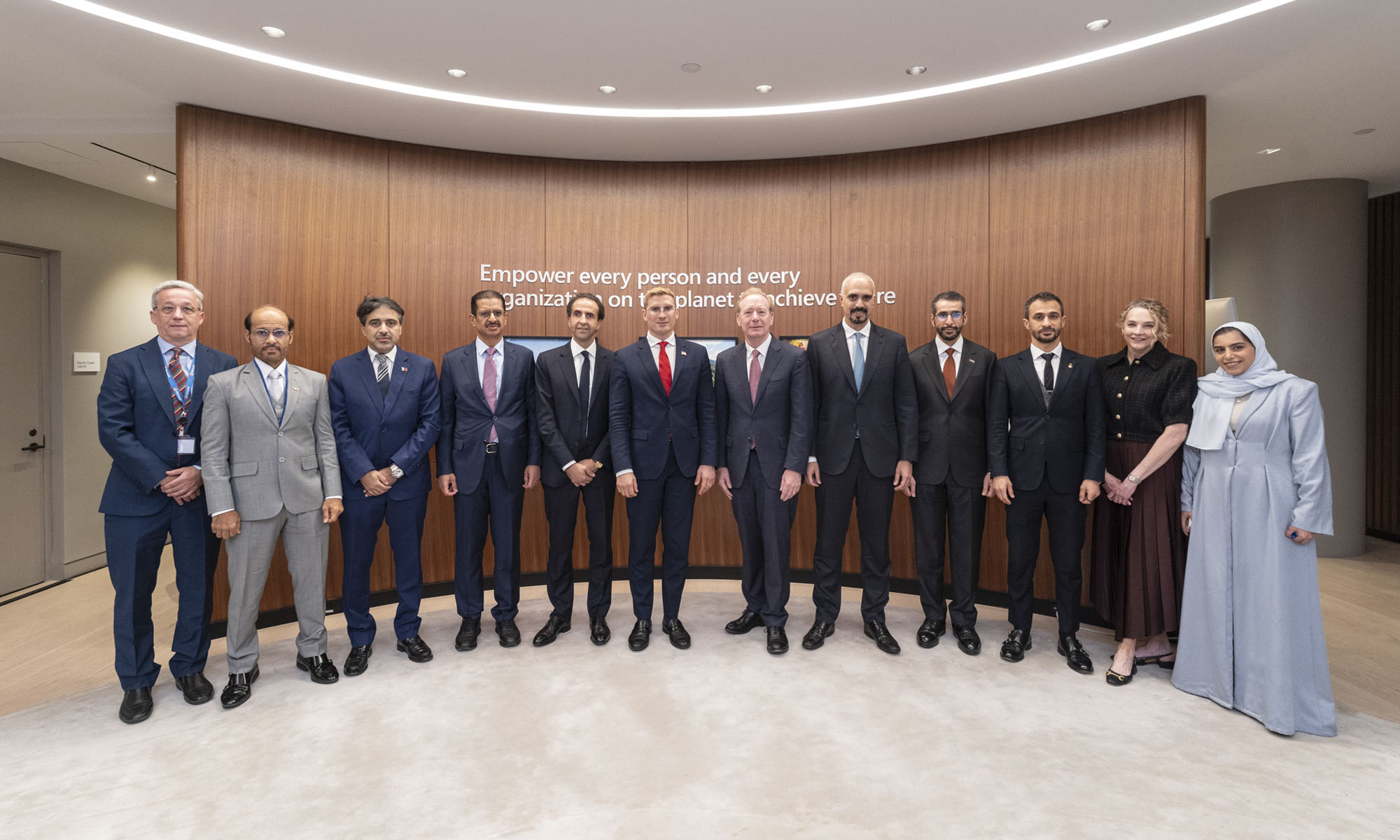
Microsoft is planning more than $10 billion of investment across the UAE, Saudi Arabia, Qatar and Kuwait through 2030, Vice Chair and President Brad Smith told Reuters, calling the spending schedule aggressive. The Iranian conflict that began on February 28 has not persuaded the company to scale back.
“We’re sustaining all the investments we planned to make before this conflict started, and we are in fact adding to them,” Smith said. The $10 billion-plus total does not, however, show how large those additions are.
The investment, which Smith described as part of Microsoft’s continued infrastructure expansion, is aimed at cloud and AI infrastructure and at the company’s growing regional operations. Microsoft also intends to put more than $400 million into subsea and terrestrial connectivity across the Middle East by 2030.
The spending fits the region’s own ambitions too. Gulf governments have been investing heavily in AI infrastructure as part of a push to diversify their economies beyond oil and gas and turn themselves into global technology hubs. Major cloud and AI providers have been drawn in part by the land and relatively low-cost energy on offer.
Microsoft is widening its partnerships with regional AI companies, though not on identical terms. In 2024, it invested $1.5 billion in Abu Dhabi-based G42 for a minority stake, and Smith currently sits on G42’s board. Saudi Arabia’s Humain and Qatar’s Qai are working with Microsoft on selected priority areas, but Smith said the company does not plan to make capital investments in either.
Also Read: Egypt’s Mobile Wallets Are Booming, But Cash Still Has Power
The conflict has added another strand to Microsoft’s work in the region. Since it began, Smith said, the company has supported regional partners with digital resilience assessments, and it is now working with Gulf countries through a digital resilience initiative focused on preparedness and the protection of critical data.
So far, the company has given no country-by-country breakdown of the investment, citing security among other factors. So while the headline figure is public, how Microsoft divides the spending among the four countries is not.

Microsoft Plans $10 Billion-Plus Gulf Expansion Despite Iran Conflict

In Kuwait, Your Surgeon Might Be Operating From Another Country

Qatar Folds 45 State Companies Into A Single Investment Platform

Trip.com Is Betting An AI Agent Will Book Your Next Vacation

Meta’s New $499 Plan Puts A Price On Reaching A Real Person

Apple’s First Folding iPhone Arrives Late To A Shrinking Market
Trip.com Is Betting An AI Agent Will Book Your Next Vacation

Egypt’s Mobile Wallets Are Booming, But Cash Still Has Power

OKX Bets Streaming Perks Can Take Crypto Mainstream Across MENA

Apple’s Latest Product Releases Make The Headlines


-
 News3 weeks ago
Apple’s First Folding iPhone Arrives Late To A Shrinking Market
-
 News2 weeks ago
Trip.com Is Betting An AI Agent Will Book Your Next Vacation
-
 News2 weeks ago
Egypt’s Mobile Wallets Are Booming, But Cash Still Has Power
-
 News2 weeks ago
OKX Bets Streaming Perks Can Take Crypto Mainstream Across MENA