
News
IBM Unveils Nighthawk And Loon Quantum Chips
The company’s new processors push toward practical quantum advantage with two divergent chip designs.


IBM has released a pair of quantum chips — Nighthawk and Loon — that the company hopes will give it a credible shot at demonstrating the quantum advantage over regular processors. The designs split into two directions, with the Loon chip being the more experimental of the pair.
Nighthawk is IBM’s main bet. The chip is a 120-qubit version that’s due for distribution to partners in late 2025, using 218 tunable couplers in a square lattice to tighten control over qubit interactions. IBM says the layout will let it “execute circuits with 30 percent more complexity” and run problems that require up to 5,000 two-qubit gates. The company wants this line to mature quickly enough to power its first verifiable advantage claim.
Loon goes off the conventional path. Instead of keeping qubits on a flat plane, it links them vertically as well. New Scientist has flagged the design as an early test of 3D quantum layouts — an attempt to reduce errors by giving qubits more routes to talk to each other. It’s not aimed at near-term rollout but could shape future rigs if the approach holds.
The split strategy underlines IBM’s view that smart connectivity, not headline qubit counts, will decide who reaches the next milestone. Google, on the other hand, is leaning another way: Its Willow chip, paired with the “Quantum Echoes” algorithm, has already been presented as a proof point for “the first-ever verifiable quantum advantage running the out-of-order time correlator (OTOC) algorithm”.
Also Read: RØDE Unveils Wireless Micro Camera Kit For Hybrid Shooters
IBM is also backing a community-run quantum advantage tracker with Algorithmiq, the Flatiron Institute and BlueQubit. The framework “supports three experiments for quantum advantage across observable estimation, variational problems, and problems with efficient classical verification,” and IBM is pushing researchers to contribute.
For MENA labs building quantum and HPC programs under national digitalization efforts, the contrast between Nighthawk and Loon offers a clearer view of where the hardware race may bend next — tight, lattice-driven control on one side; a stab at 3D connectivity on the other.
The field is moving fast, and IBM’s twin quantum chips mark its next swing at staying in the fight.




News
Abu Dhabi’s Robot Kitchen Is Serving Up Biryani, Not Burgers
Circus SE wants to put a tiny automated factory inside the buildings where Gulf residents live and work, bypassing part of last-mile delivery.
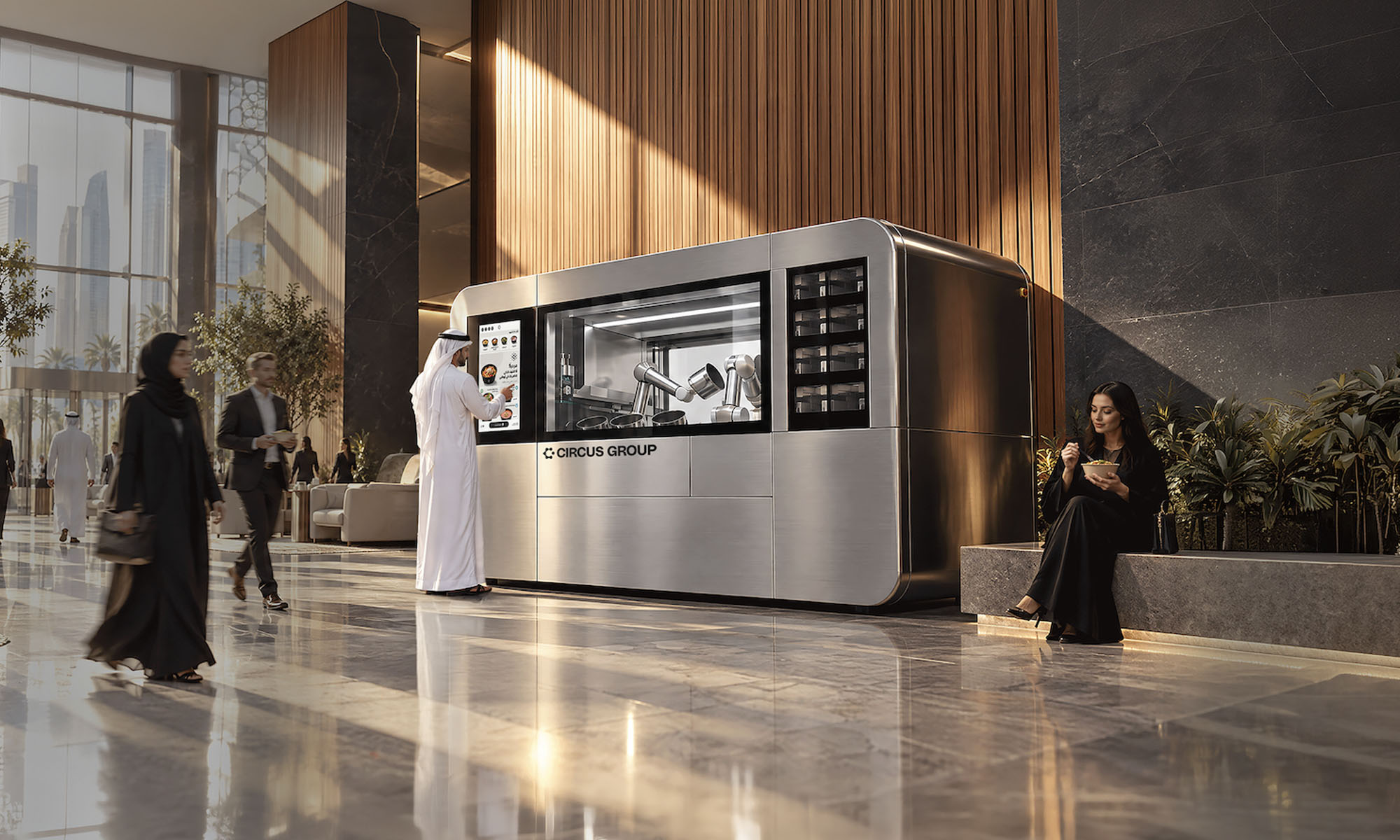
The most telling thing about a new autonomous kitchen now running in Abu Dhabi’s Marina Square is what it won’t cook:
“We don’t do fast food,” says Nikolas Bullwinkel, Founder and CEO of Circus SE. “We’ve actively decided not to build a machine that can only do burgers”.
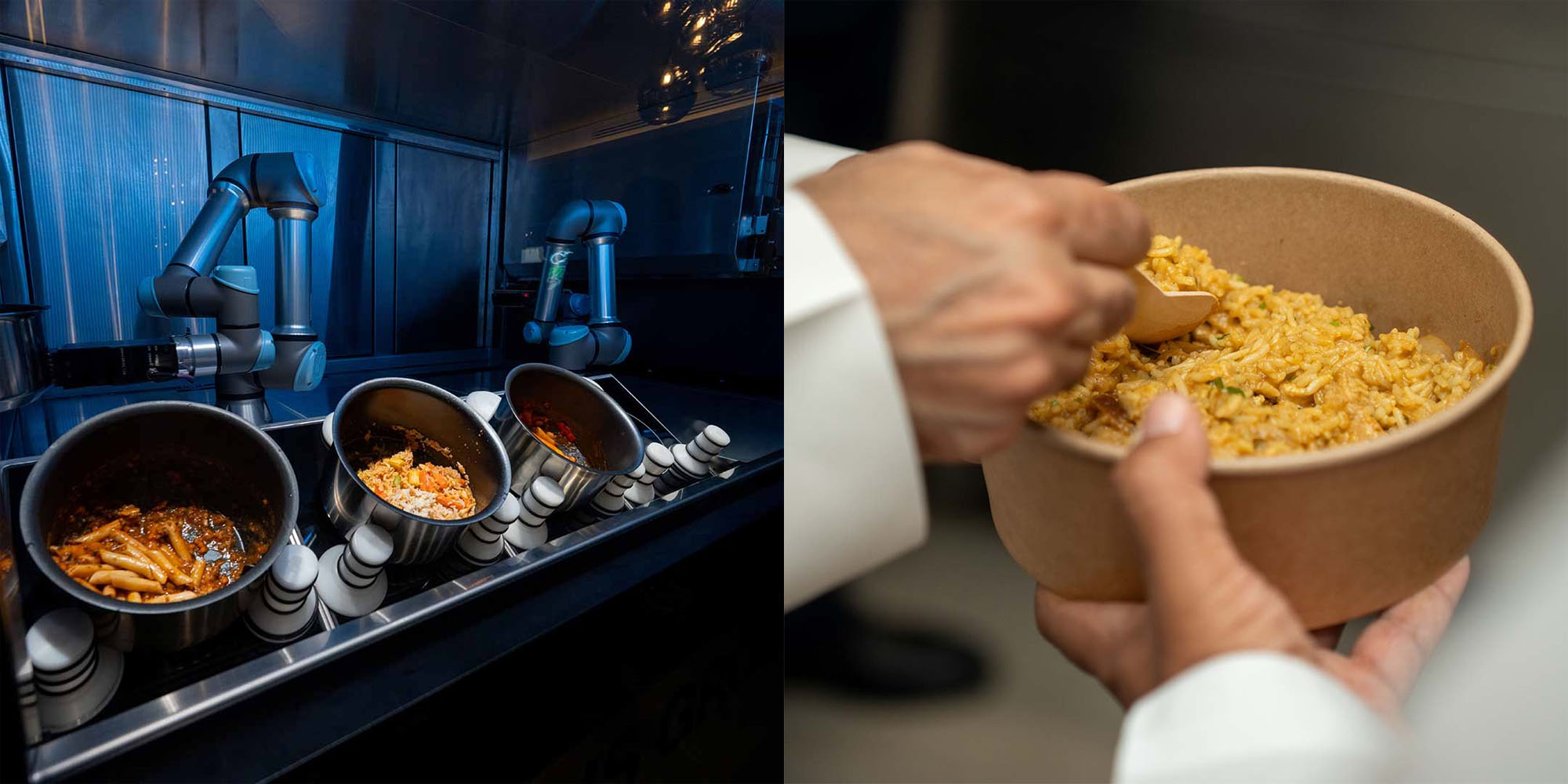
Instead, the CA-1 system is built around pot-based cooking: curries, pastas, soups and rice dishes. After experimenting with highly personalized recipes, Circus deliberately leaned back toward recognizable food. “We’re going with a chicken biryani because you know it,” Bullwinkel says of the AED 40 dish.
The Germany-based robotics and food technology company operates across eight countries, and Abu Dhabi is its first deployment outside Europe. More locations are expected there and in Dubai.
In Germany, its units can be placed in supermarkets, gas stations, airports and hospitals. In the Gulf, Bullwinkel wants them inside residential and office buildings, replacing some of the complexity of last-mile delivery. “We’re basically bringing a very tiny factory a few square meters into your building,” he says. Catering company Royal Prestige supplies the ingredients and knowledge of local tastes.
The CA-1 manages up to 36 refrigerated ingredient silos alongside automated induction cooking, robotic plating and a self-cleaning dishwasher. Two robotic arms move ingredients through the system with minimal human intervention. It can produce up to 120 hot meals an hour, and a meal such as rice and curry can take around three to four minutes.
Also Read: Ooredoo Qatar’s 5G+ Network Is Built For Machines As Much As People
Five cameras and multiple sensors monitor heat, temperature and consistency, an attempt to approximate what a chef perceives. “You can hear something gets burned, you can smell it, you can see it at some point,” Bullwinkel says. CircusOS, the company’s operating system, adjusts recipes in real time.
You might think of the platform as a threat to kitchen staff, but Bullwinkel frames Circus as a way for chefs to develop recipes and distribute them at scale. With that being said, rising labor costs and shortages are also part of his case for automation.

Abu Dhabi’s Robot Kitchen Is Serving Up Biryani, Not Burgers

Sennheiser’s MOMENTUM 5 Series Bets On Batteries You Can Swap

UAE’s 3-Minute University Registration Runs On Government Data

How Online Ads Became A Delivery System For Zero-Click Spyware

Shokz OpenDots 2 Review: Clip-On Audio Gets A Bass-Heavy Makeover

Dubai Says Its Deepfake Detector Needs Just 7 Seconds Of Video

New Disney+ Streaming App Has Officially Launched In The UAE

NEOPAY Wants To Follow Merchants Across Channels And Borders

RØDE’s Low-Profile Studio Arm Is Designed To Stay Out Of Shot

G42’s Inception42 Wants AI To Show Its Work Before Investors Commit


-
 News3 weeks ago
Dubai Says Its Deepfake Detector Needs Just 7 Seconds Of Video
-
 News2 weeks ago
New Disney+ Streaming App Has Officially Launched In The UAE
-
 News3 weeks ago
NEOPAY Wants To Follow Merchants Across Channels And Borders
-
 News3 weeks ago
RØDE’s Low-Profile Studio Arm Is Designed To Stay Out Of Shot