
News
UAE-Built Falcon-H1 Arabic Leads LLM Benchmarks
The lean Emirati-built language model beats larger global systems and puts Arabic at the center of training.


Abu Dhabi’s Technology Innovation Institute has released an Arabic-first large language model that tops global test boards, an uncommon edge for a region long served by English-centric systems.
Falcon-H1 Arabic comes in 3B, 7B and 34B versions. The flagship posts 75.36% accuracy on comprehensive Arabic tasks and ranks first on the Open Arabic LLM Leaderboard. It also outperforms Meta’s Llama-70B and Alibaba’s Qwen-72B while using less than half their parameters. The smallest model beats Microsoft’s Phi-4 Mini by ten percentage points on equivalent benchmarks.
Arabic remains hard territory for AI. Flexible word order, dense morphology and constant switching between regional dialects and Modern Standard Arabic leave many global models missing context or tone. Academic research has pointed to a shortage of annotated datasets for dialect and informal speech. The impact shows up in classrooms, call centers and government portals where Arabic chatbots lag their English counterparts.
TII trained Falcon-H1 Arabic on formal writing, dialects and culturally grounded content. Beyond scores, it handles practical use: long conversations, reasoning rather than literal translation, and inputs of up to 192,000 words — enough for medical records or legal filings.
“The aim is innovation that is accessible, relevant, and impactful,” said Faisal Al Bannai, Adviser to the UAE President and Secretary-General of the Advanced Technology Research Council.
Also Read: Governata Raises $4M For Saudi AI Data-Governance Push
Arabic is spoken by more than 450 million people across over 20 countries, yet has often been treated as a secondary language for foundation models. The UAE move signals a push to flip that logic and build Arabic-native stacks rather than wait for global systems to improve.
Falcon models have led their categories since 2023. With H1 Arabic, TII is offering free access via chat.falconllm.tii.ae for developers, media, healthcare and public-sector users looking to automate in natural Arabic.
As the region continues to invest in sovereign computing and data localization, the addition of Falcon-H1 Arabic adds a powerful tool built for the native language, instead of an afterthought attached to an English-trained system.




News
Trip.com Is Betting An AI Agent Will Book Your Next Vacation
Abu Dhabi, Jazeera Airways and a run of hotel deals give the company more inventory. Its Mastercard demo says the most about where booking technology is headed.
Most of what Trip.com Group announced at Arabian Travel Market 2026 this week reads like the standard expansion playbook of an online travel agency: a new agreement with a tourism board, a run of hotel partnerships, an airline deal. However, one item was considerably more interesting: a demonstration built with Mastercard of an AI agent that doesn’t just suggest trips but also pays for them.
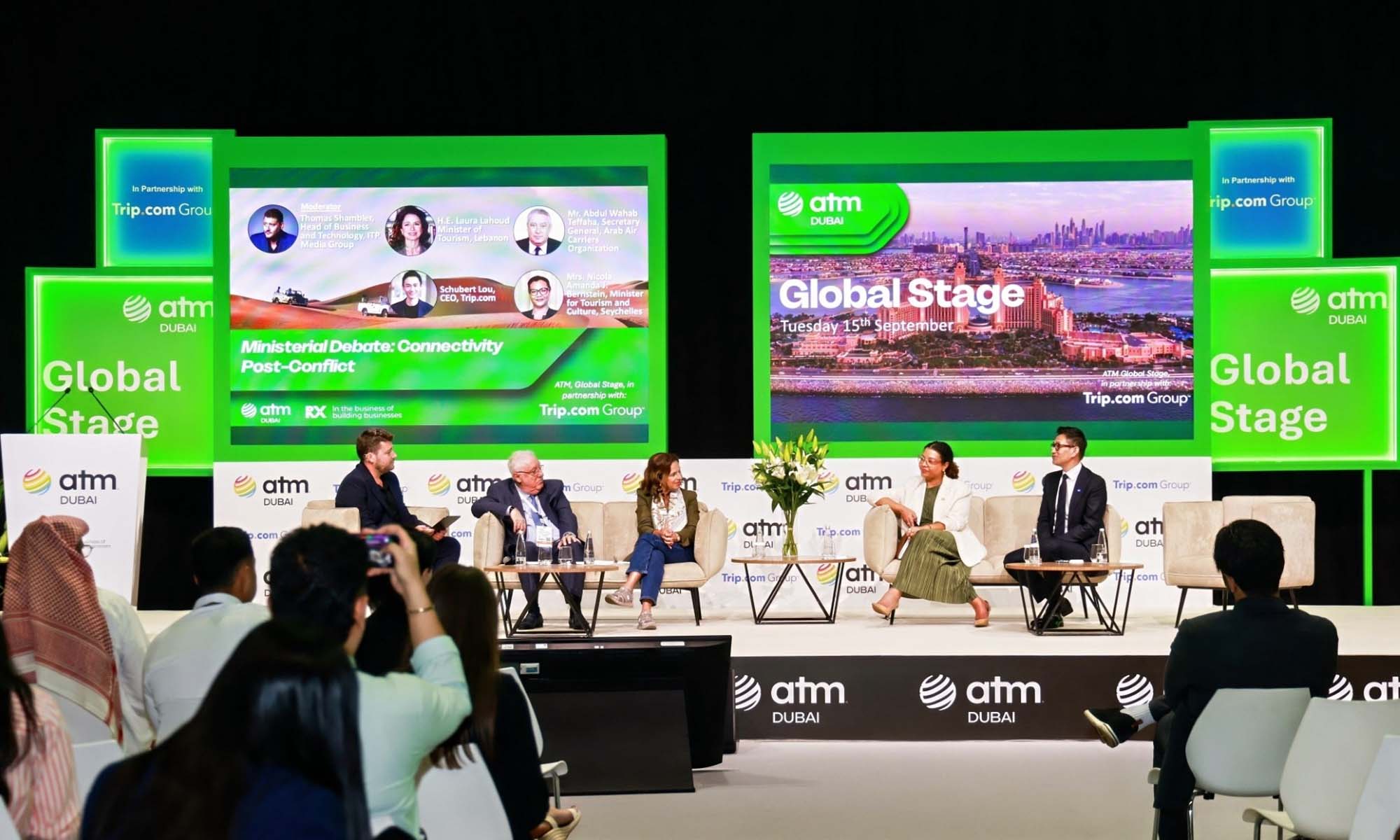
The showcase put TripGenie, the company’s AI travel assistant, to work searching, selecting and completing purchases inside a single booking flow, with Mastercard’s Agent Suite for Merchants handling the payment step and Network International processing the transactions on the merchant side. It’s limited for now to attractions and ancillary services, but the partners plan a phased commercial rollout from early 2027.
“As traveller expectations change, technology and AI will play an increasingly important role in how people plan their journeys,” says Schubert Lou, CEO of Trip.com.
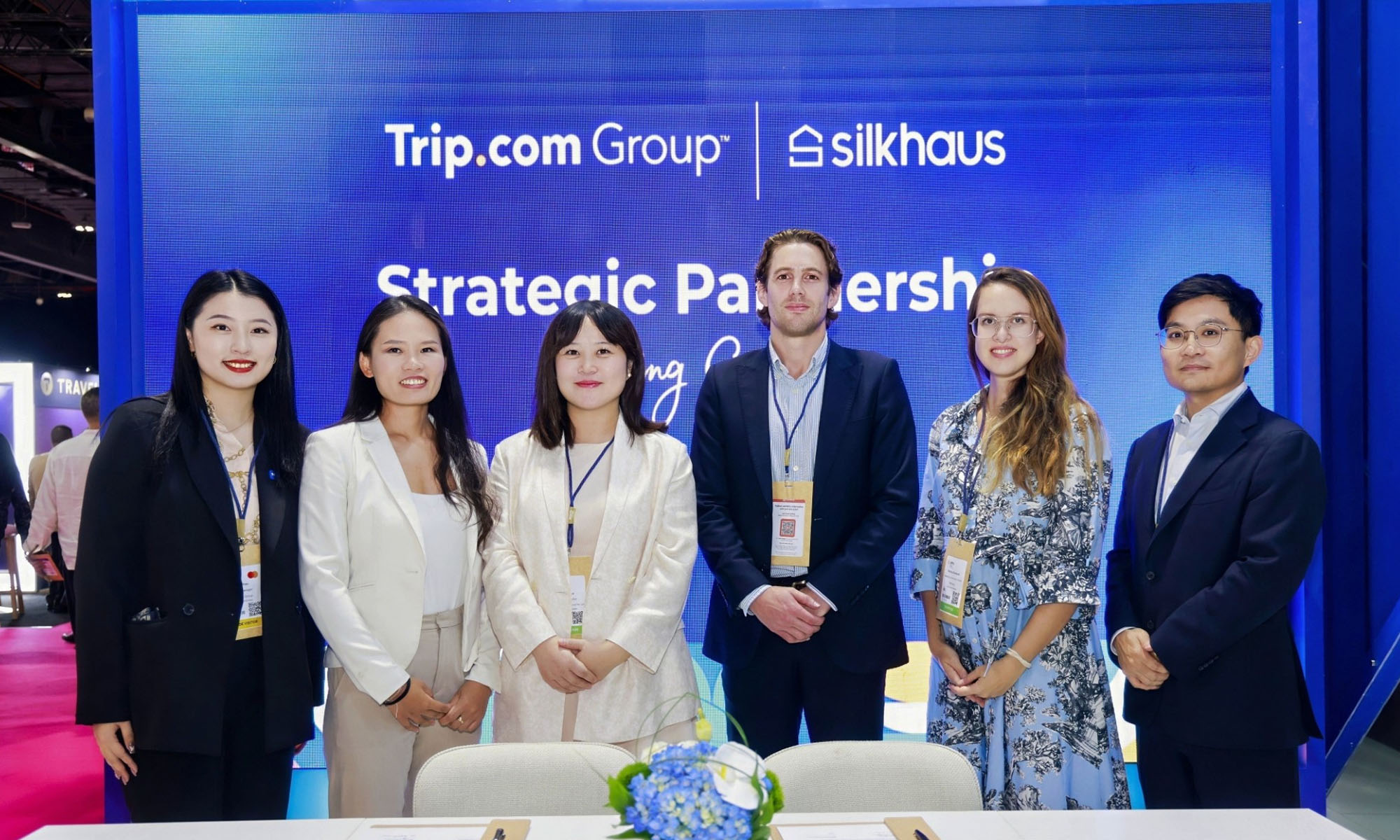
Meanwhile, in more conventional news, CEO Lou and Saleh Mohamed Al Geziry (Director General for Tourism at the Department of Culture and Tourism – Abu Dhabi), signed an agreement building on the two organizations’ existing partnership, with joint marketing and Abu Dhabi destination content to be pushed across Trip.com Group’s platforms.
Also Read: Musk’s Boring Company Wants To Dig 150 KM Of Tunnel Under The UAE
On accommodation, the group expanded its partnerships with JA Hotels & Resorts, Ishraq Hospitality and Aleph Hospitality and deepened its work with Silkhaus, which brings vacation homes into a portfolio that has so far leaned on hotels. Jazeera Airways signed a strategic partnership intended to widen the Kuwaiti carrier’s reach and encourage earlier bookings, tied to Kuwait’s own tourism ambitions.
The company moved into a larger Dubai office earlier this year and describes its long-term aim as a two-way ecosystem: sending Middle East travelers abroad while drawing international visitors in.

Trip.com Is Betting An AI Agent Will Book Your Next Vacation

Meta’s New $499 Plan Puts A Price On Reaching A Real Person

OKX Bets Streaming Perks Can Take Crypto Mainstream Across MENA

Musk’s Boring Company Wants To Dig 150 KM Of Tunnel Under The UAE

Egypt’s Mobile Wallets Are Booming, But Cash Still Has Power

Qatar Airways Flies The World’s First Starlink-Equipped 787-9

RØDE’s New DS3 Studio Arm Is Built For Heavier Creator Setups

Visa’s Return To Syria Starts With A Test And A Bank In Lebanon

Former Rockstar Director Dismisses GTA 6 Leaks As “Nothing Burger”

Dubai Turns AI On Its Own Civil Service To Measure Productivity


-
 News3 weeks ago
RØDE’s New DS3 Studio Arm Is Built For Heavier Creator Setups
-
 News3 weeks ago
Visa’s Return To Syria Starts With A Test And A Bank In Lebanon
-
 News3 weeks ago
Dubai Turns AI On Its Own Civil Service To Measure Productivity
-

 News1 week ago
Apple’s Latest Product Releases Make The Headlines