
News
Dubai Establishes $272 Million Future District Fund To Attract Tech Companies
Digital companies relocating to Dubai’s Future District get to enjoy a number of benefits, including access to a large pool of entrepreneurial talent and hyper-connected infrastructure.


To establish 1,000 digital companies in the Dubai Future District (DFD) over the next five years, Dubai has recently launched a AED 1 billion fund ($272.3 million), called the Dubai Future District Fund, encouraging companies to list in the Dubai Financial Markets and stock exchange.
The fund is an initiative of the Dubai Securities and Exchange Higher Committee, and it reflects the directives of His Highness Sheikh Mohammed bin Rashid Al Maktoum, the Vice President and Prime Minister of the UAE and Ruler of Dubai.
“The Dubai Future District Fund supports national efforts and strategies aimed at enabling entrepreneurs to reach new horizons, realize Dubai’s aspirations for the new economy, and contribute to enhancing the emirate’s status as a preferred destination for investment environment and exceptional facilities,” stated Sheikh Maktoum bin Mohammed Deputy Ruler, Dubai Deputy Prime Minister Minister of Finance.
One half of the fund is dedicated to investments into venture capital funds with a local focus, while the other half is supposed to support startups directly or through Future District affiliated programs.
Also Read: Oracle Opens A New Cloud Region In Abu Dhabi
Digital companies that decide to base their operations in the Dubai Future District get to enjoy a number of benefits, including access to a large pool of entrepreneurial talent and hyper-connected infrastructure. Dubai has also very recently demonstrated its ability to quickly react to rapidly changing conditions when it became one of the first cities in the world to recover from the pandemic and reopen its economy.
All this makes it a very attractive place for startups and venture capital, and the UAE Centennial 2071 plan, whose goal is nothing less than to make the UAE the best country in the world by 2071, only reaffirms Dubai’s ongoing commitment to serve as a global hub for business.




News
Egypt’s Mobile Wallets Are Booming, But Cash Still Has Power
Egypt’s telecom regulator says $57.6 billion moved through more than 57 million wallets in six months. And one operator handled 77% of the value.

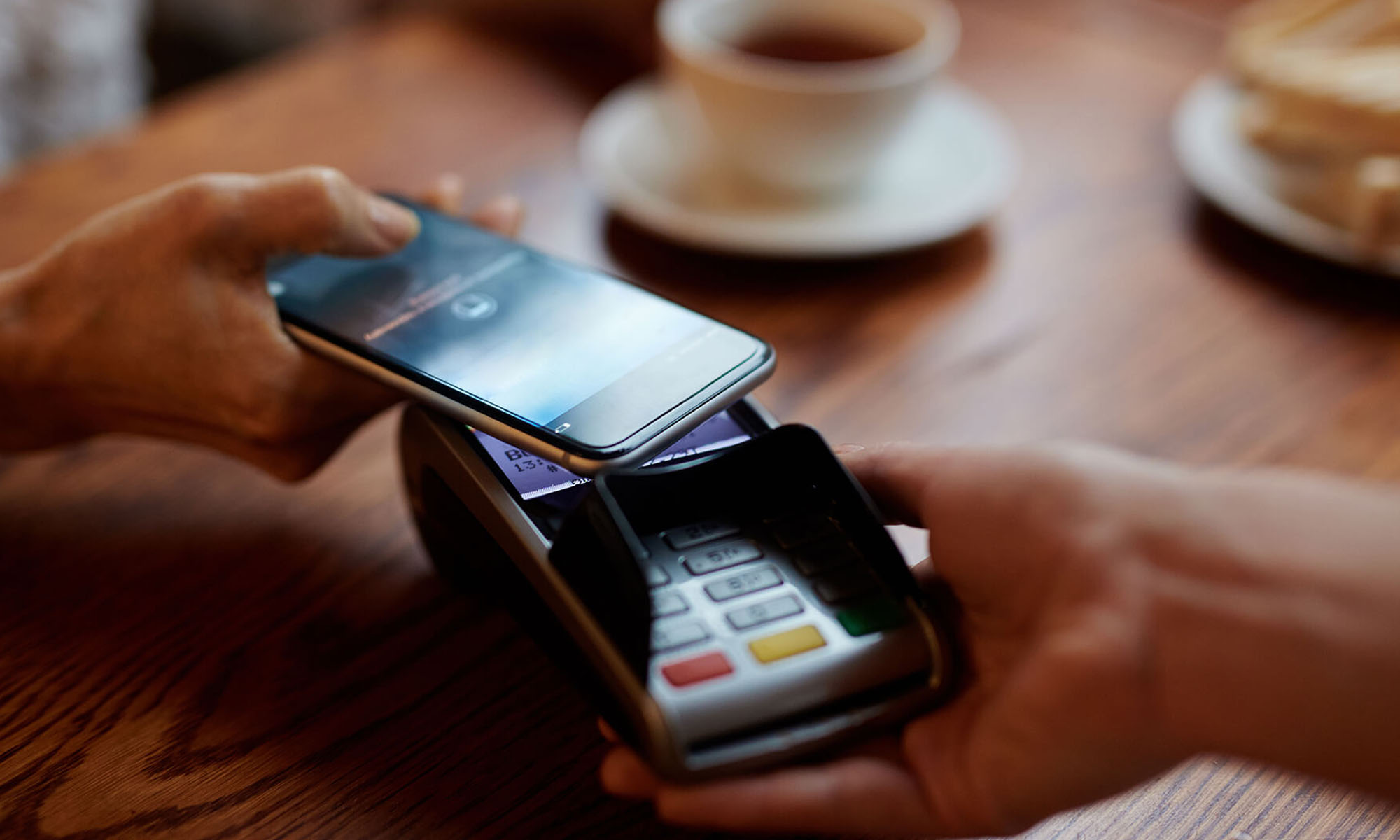
Egypt’s mobile wallets handled EGP 2.96 trillion ($57.6 billion) in transactions in the first half of 2026, according to the National Telecom Regulatory Authority – a 56% rise on the EGP 1.90 trillion ($36.9 billion) recorded a year earlier. Transactions grew faster still, up 62% to 2.22 billion, while registered wallets climbed 23% to 57.01 million.
On one reading, that is exactly what Egypt’s regulators have been pushing for: a payments system that runs through telecom-linked wallets rather than banknotes. But the same data shows how far cash still reaches into it. Cash withdrawals made up just 12% of the transactions taking money out of wallets, yet 75% of the value withdrawn or spent.
Money arrives mostly from bank accounts: transfers through InstaPay accounted for 78% of deposit transactions and 58% of the value deposited, while incoming remittances from abroad made up 3% of deposit transactions but 10% of their value. Once inside, it largely moves between wallets – wallet-to-wallet transfers accounted for 54% of all transactions and 67% of total value, with mobile and internet top-ups a distant second at 25% of volume. In effect, the wallet is serving as a transfer layer: the place money passes through between the bank account and the banknote.
That layer also runs predominantly through one operator. Vodafone Cash held 53% of registered wallets and 57% of active ones, but handled 69% of transactions and 77% of their value. Its nearest rival, e& money, held 23% of registered wallets but 14% of transaction value; Orange Cash 20% and 8%; WE Pay 4% of wallets. How many of the 57.01 million are active is not stated.
Also Read: Visa’s Return To Syria Starts With A Test And A Bank In Lebanon
Adoption is rather uneven in other respects. Men held 38 million wallets, or 67% of the total, against 19 million held by women. Users aged 26 to 45 accounted for half of all wallets, and Cairo alone had 10.6 million, or 19% of the national total, with Giza next at 6.5 million.
The NTRA says it is continuing to work with telecom operators on the regulatory framework for wallet services, part of a wider effort to expand electronic payments and financial inclusion. Its own figures show that effort succeeding on the way in. On the way out, three-quarters of the value still leaves as cash.

Egypt’s Mobile Wallets Are Booming, But Cash Still Has Power

Apple’s First Folding iPhone Arrives Late To A Shrinking Market

Apple’s Latest Product Releases Make The Headlines

Visa’s Return To Syria Starts With A Test And A Bank In Lebanon

RØDE’s New DS3 Studio Arm Is Built For Heavier Creator Setups

Anghami’s New Elite Program Starts With A Three-Decade Catalog

Dubai’s aradus Wants AI To Run The Back Office Of Physical Trade

Qatar Is Getting Its First EV Plant, Built To Cope With Gulf Heat

Qatar Airways Flies The World’s First Starlink-Equipped 787-9

Former Rockstar Director Dismisses GTA 6 Leaks As “Nothing Burger”


-
 News3 weeks ago
Former Rockstar Director Dismisses GTA 6 Leaks As “Nothing Burger”
-
 News3 weeks ago
RØDE’s New DS3 Studio Arm Is Built For Heavier Creator Setups
-

 News3 weeks ago
Dubai Turns AI On Its Own Civil Service To Measure Productivity
-
 News3 weeks ago
Visa’s Return To Syria Starts With A Test And A Bank In Lebanon