
News
Facebook Scammers Pose As Support Staff On 3,200 Fake Profiles
A leading cybersecurity firm’s Dubai-based team uncovered a widespread scam targeting celebrities, businesses, sports teams, and individual accounts.


Global cybersecurity experts Group-IB today published new research into a worldwide phishing campaign carried out on Facebook by cybercriminals impersonating Meta (Facebook’s parent company) support staff.
Between February and March 2023, Group-IB researchers based in Dubai identified over 3,200 Facebook profiles falsely claiming to be written by Meta support staff in over 20 languages. Upon discovering the scammers’ accounts, Group-IB’s Computer Emergency Response Team shared information with Facebook, which it must be noted had already deleted some of the offending profiles.
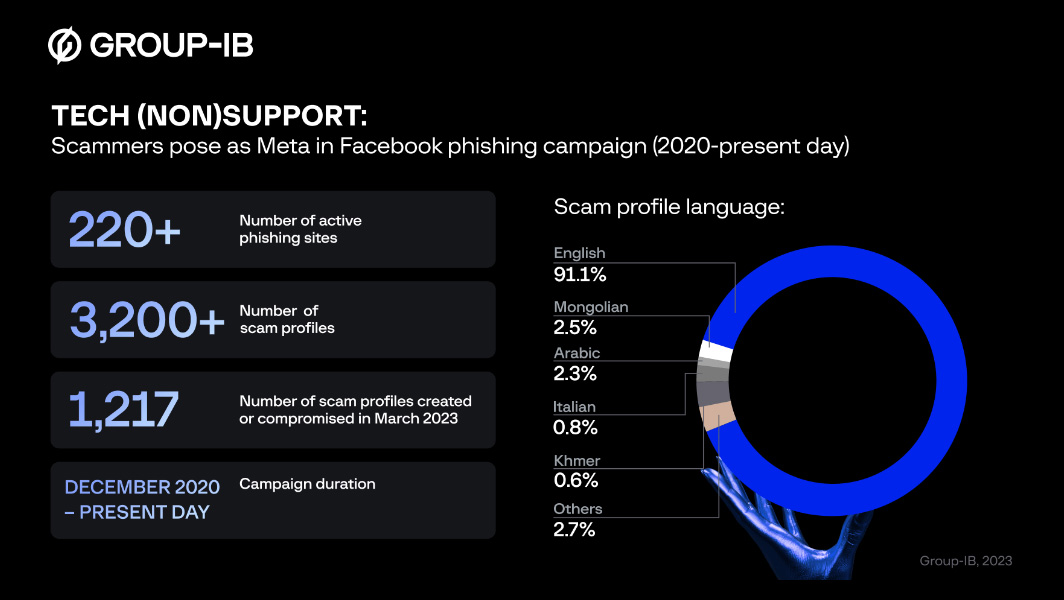
The cybercriminals’ goal was to hack the Facebook accounts of public figures and celebrities, businesses, sports teams, and individual accounts. As part of the elaborate scam, cookie data, and session hijacking were employed, though the criminals mostly used traditional phishing techniques to trick people into voluntarily entering email and password information.
Group-IB researchers began tracking this widespread scam in February 2023. As well as 3,200 fake Facebook profiles containing scam posts, the cybersecurity experts also discovered 220 websites intended to trick users into parting with their data.
The Details Of The Scam
This Facebook scammers used social engineering techniques to trick users into thinking their accounts were marked for suspension due to copyright violations. If victims attempted to verify their profile to prevent it from being blocked, they would be taken to a phishing website, where they were presented with a page that contained official-looking Meta or Facebook branding.
Also Read: Filmmaker Uses AI To Visualize Thousands Of Leaked Passwords
“Cybercriminals can use compromised accounts to launch further phishing attacks. Individuals can suffer legal and reputational damage [and] threat actors could also gain access to the victim’s financial services [and] hold compromised accounts for ransom, demanding payment from the victim for retrieval of the account,” says Sharef Hlal, Head of Group-IB’s Digital Risk Protection Analytics Team.
Group-IB recommends social network users ensure that their passwords are “strong and unique, and that they enable two-factor authentication (2FA) to provide an extra layer of security”. In addition, if you’re ever directed away from official social media platform pages, it’s a good idea to closely check the URL to ensure it’s legitimate.






News
Abu Dhabi’s Robot Kitchen Is Serving Up Biryani, Not Burgers
Circus SE wants to put a tiny automated factory inside the buildings where Gulf residents live and work, bypassing part of last-mile delivery.

The most telling thing about a new autonomous kitchen now running in Abu Dhabi’s Marina Square is what it won’t cook:
“We don’t do fast food,” says Nikolas Bullwinkel, Founder and CEO of Circus SE. “We’ve actively decided not to build a machine that can only do burgers”.
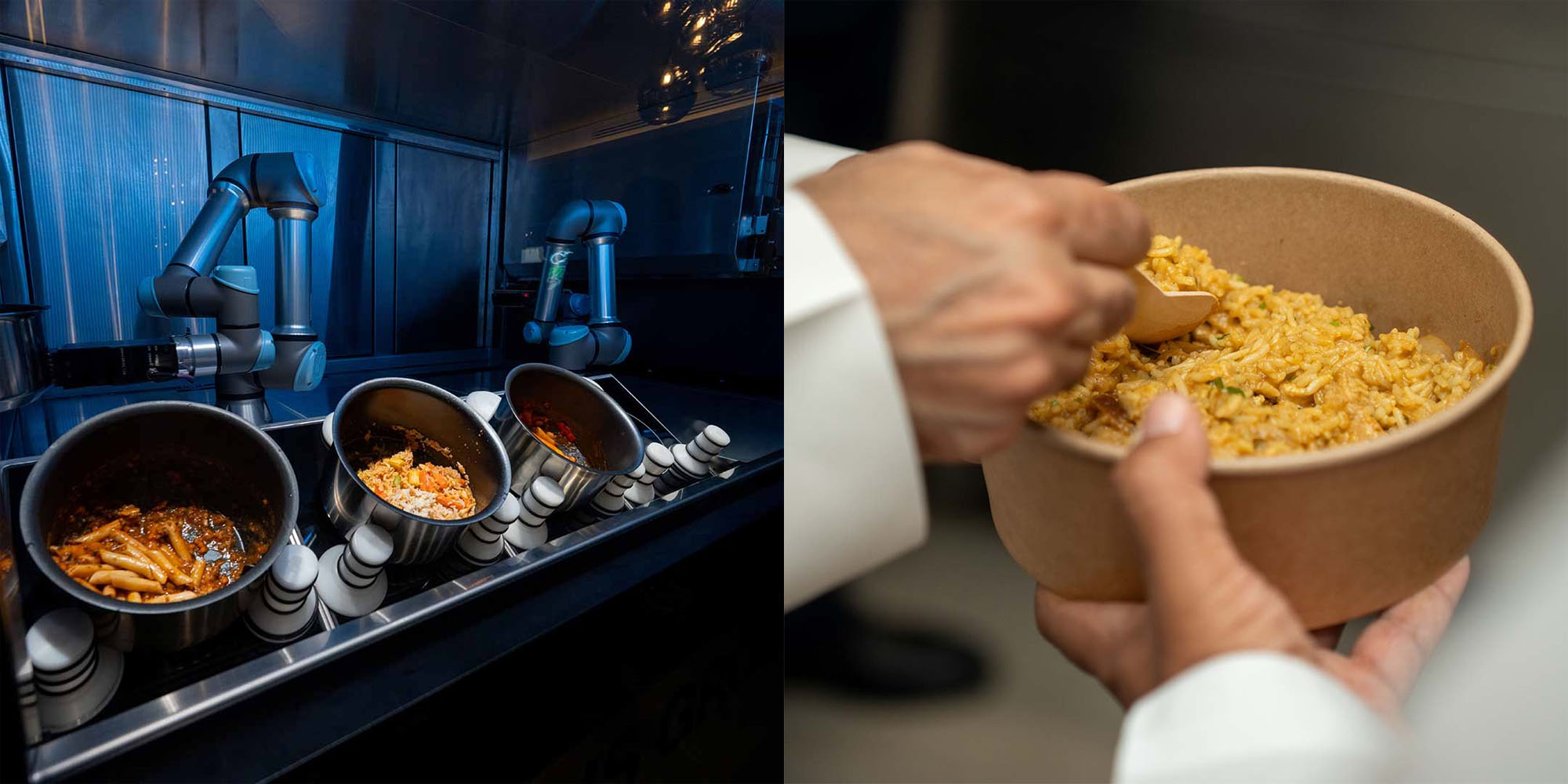
Instead, the CA-1 system is built around pot-based cooking: curries, pastas, soups and rice dishes. After experimenting with highly personalized recipes, Circus deliberately leaned back toward recognizable food. “We’re going with a chicken biryani because you know it,” Bullwinkel says of the AED 40 dish.
The Germany-based robotics and food technology company operates across eight countries, and Abu Dhabi is its first deployment outside Europe. More locations are expected there and in Dubai.
In Germany, its units can be placed in supermarkets, gas stations, airports and hospitals. In the Gulf, Bullwinkel wants them inside residential and office buildings, replacing some of the complexity of last-mile delivery. “We’re basically bringing a very tiny factory a few square meters into your building,” he says. Catering company Royal Prestige supplies the ingredients and knowledge of local tastes.
The CA-1 manages up to 36 refrigerated ingredient silos alongside automated induction cooking, robotic plating and a self-cleaning dishwasher. Two robotic arms move ingredients through the system with minimal human intervention. It can produce up to 120 hot meals an hour, and a meal such as rice and curry can take around three to four minutes.
Also Read: Ooredoo Qatar’s 5G+ Network Is Built For Machines As Much As People
Five cameras and multiple sensors monitor heat, temperature and consistency, an attempt to approximate what a chef perceives. “You can hear something gets burned, you can smell it, you can see it at some point,” Bullwinkel says. CircusOS, the company’s operating system, adjusts recipes in real time.
You might think of the platform as a threat to kitchen staff, but Bullwinkel frames Circus as a way for chefs to develop recipes and distribute them at scale. With that being said, rising labor costs and shortages are also part of his case for automation.

Abu Dhabi’s Robot Kitchen Is Serving Up Biryani, Not Burgers

Sennheiser’s MOMENTUM 5 Series Bets On Batteries You Can Swap

UAE’s 3-Minute University Registration Runs On Government Data

How Online Ads Became A Delivery System For Zero-Click Spyware

Shokz OpenDots 2 Review: Clip-On Audio Gets A Bass-Heavy Makeover

Microsoft Plans $10 Billion-Plus Gulf Expansion Despite Iran Conflict

NEOPAY Wants To Follow Merchants Across Channels And Borders

RØDE’s Low-Profile Studio Arm Is Designed To Stay Out Of Shot

Dubai Says Its Deepfake Detector Needs Just 7 Seconds Of Video

New Disney+ Streaming App Has Officially Launched In The UAE


-
 News3 weeks ago
NEOPAY Wants To Follow Merchants Across Channels And Borders
-
 News3 weeks ago
RØDE’s Low-Profile Studio Arm Is Designed To Stay Out Of Shot
-
 News2 weeks ago
Dubai Says Its Deepfake Detector Needs Just 7 Seconds Of Video
-
 News2 weeks ago
New Disney+ Streaming App Has Officially Launched In The UAE