
News
ExecuJet Middle East Expands Ultra-Long-Range Jet Fleet
Catering to elite travelers, the high-end carrier is updating its fleet with next-gen jets, redefining private aviation standards.


In response to rising global mobility among ultra-high-net-worth individuals and increased demand for high-performance aircraft, ExecuJet Middle East is expanding its fleet with some of the most advanced large-cabin jets on the market. The move signals a strategic shift toward smarter, more personalized ownership experiences and reflects the evolving expectations of a globally connected clientele.
Based at its new flagship terminal at Al Maktoum International Airport (DWC), ExecuJet is strengthening its regional presence with the addition of ultra-long-range aircraft such as the Bombardier Global 7500, Global 6000, Global 5000, Challenger 650, Gulfstream G650ER, Dassault Falcon 7X, Falcon 8X, and the Boeing Business Jet. These aircraft represent the leading edge of performance, efficiency, and cabin innovation — designed to deliver effortless long-haul travel with maximum comfort and privacy.

Headlining the fleet is the Bombardier Global 7500, featuring cutting-edge avionics, luxurious interiors and the ability to fly over 7,700 nautical miles nonstop, connecting Dubai with key global destinations like New York, Tokyo, and Sydney.
While most aircraft in the fleet are privately owned and not offered for charter, the expansion enhances ExecuJet’s operational agility — supporting better crewing, aircraft management, and personalized service models tailored to owners’ needs across the region.
“As the demands of private aviation continue to evolve, our focus remains on delivering a seamless, intelligent and globally connected ownership experience,” said Khalid Al Hai, Board Member, ExecuJet Middle East. “This fleet expansion represents not only a response to growing client needs but also a reflection of our long-term vision to set new benchmarks in operational excellence and personalized service”.
Also Read: UAE’s Etihad Rail Launches In 2026 — What You Need To Know
Patrick Hansen, CEO of parent company Luxaviation Group, echoed the sentiment, adding, “ExecuJet Middle East’s fleet expansion is a strong step toward delivering advanced, tailored solutions for the next generation of jet owners”.
Looking ahead, ExecuJet Middle East aims to manage 30 aircraft by 2030. This target will be supported by investments in fleet optimization technologies and enhanced fixed-base operation (FBO) and hangar infrastructure at strategic international locations.
This milestone reflects ExecuJet’s broader commitment to shaping the future of private aviation — where technological innovation, global reach, and personalized ownership converge to meet the lifestyle demands of modern business leaders and private clients.





News
Abu Dhabi’s Robot Kitchen Is Serving Up Biryani, Not Burgers
Circus SE wants to put a tiny automated factory inside the buildings where Gulf residents live and work, bypassing part of last-mile delivery.

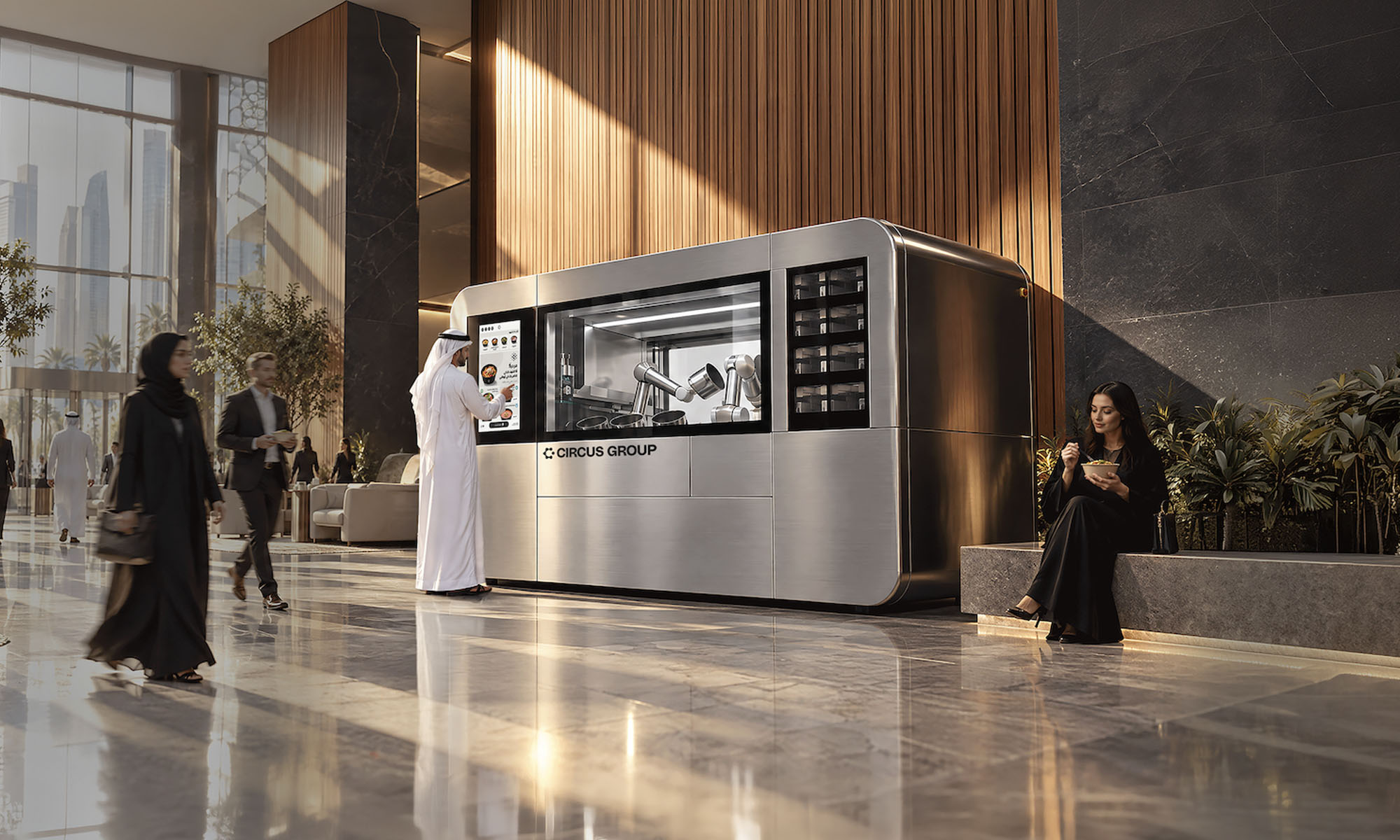
The most telling thing about a new autonomous kitchen now running in Abu Dhabi’s Marina Square is what it won’t cook:
“We don’t do fast food,” says Nikolas Bullwinkel, Founder and CEO of Circus SE. “We’ve actively decided not to build a machine that can only do burgers”.
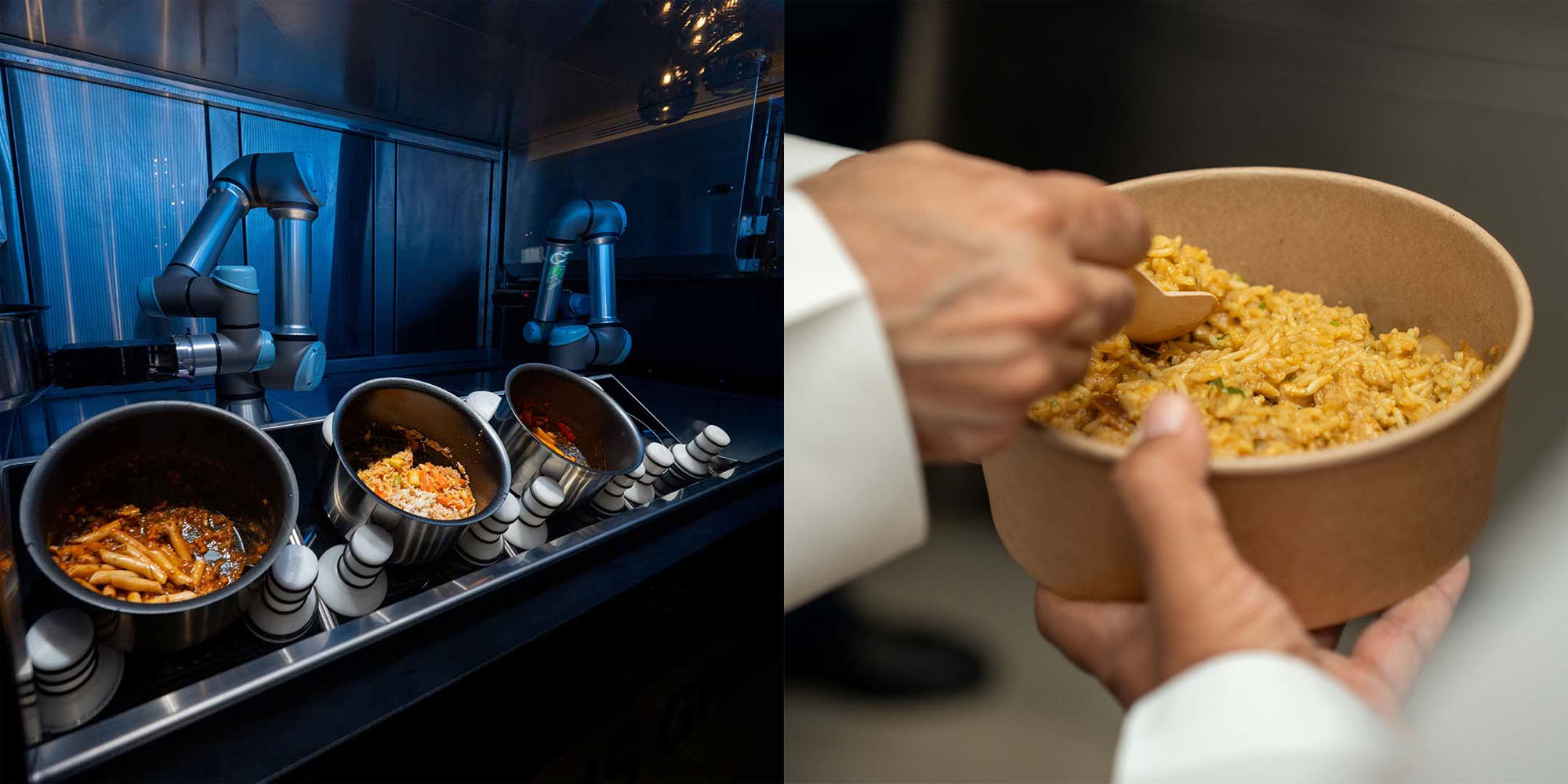
Instead, the CA-1 system is built around pot-based cooking: curries, pastas, soups and rice dishes. After experimenting with highly personalized recipes, Circus deliberately leaned back toward recognizable food. “We’re going with a chicken biryani because you know it,” Bullwinkel says of the AED 40 dish.
The Germany-based robotics and food technology company operates across eight countries, and Abu Dhabi is its first deployment outside Europe. More locations are expected there and in Dubai.
In Germany, its units can be placed in supermarkets, gas stations, airports and hospitals. In the Gulf, Bullwinkel wants them inside residential and office buildings, replacing some of the complexity of last-mile delivery. “We’re basically bringing a very tiny factory a few square meters into your building,” he says. Catering company Royal Prestige supplies the ingredients and knowledge of local tastes.
The CA-1 manages up to 36 refrigerated ingredient silos alongside automated induction cooking, robotic plating and a self-cleaning dishwasher. Two robotic arms move ingredients through the system with minimal human intervention. It can produce up to 120 hot meals an hour, and a meal such as rice and curry can take around three to four minutes.
Also Read: Ooredoo Qatar’s 5G+ Network Is Built For Machines As Much As People
Five cameras and multiple sensors monitor heat, temperature and consistency, an attempt to approximate what a chef perceives. “You can hear something gets burned, you can smell it, you can see it at some point,” Bullwinkel says. CircusOS, the company’s operating system, adjusts recipes in real time.
You might think of the platform as a threat to kitchen staff, but Bullwinkel frames Circus as a way for chefs to develop recipes and distribute them at scale. With that being said, rising labor costs and shortages are also part of his case for automation.

Abu Dhabi’s Robot Kitchen Is Serving Up Biryani, Not Burgers

Sennheiser’s MOMENTUM 5 Series Bets On Batteries You Can Swap

UAE’s 3-Minute University Registration Runs On Government Data

How Online Ads Became A Delivery System For Zero-Click Spyware

Shokz OpenDots 2 Review: Clip-On Audio Gets A Bass-Heavy Makeover

Microsoft Plans $10 Billion-Plus Gulf Expansion Despite Iran Conflict

NEOPAY Wants To Follow Merchants Across Channels And Borders

RØDE’s Low-Profile Studio Arm Is Designed To Stay Out Of Shot

Dubai Says Its Deepfake Detector Needs Just 7 Seconds Of Video

New Disney+ Streaming App Has Officially Launched In The UAE


-
 News3 weeks ago
NEOPAY Wants To Follow Merchants Across Channels And Borders
-
 News3 weeks ago
RØDE’s Low-Profile Studio Arm Is Designed To Stay Out Of Shot
-
 News2 weeks ago
Dubai Says Its Deepfake Detector Needs Just 7 Seconds Of Video
-
 News2 weeks ago
New Disney+ Streaming App Has Officially Launched In The UAE