
News
Global Tech Leaders Unite To Launch Stargate UAE AI Supercluster
G42, OpenAI, Oracle, and other global tech giants will build a 1-gigawatt AI infrastructure hub spanning 10 square miles in Abu Dhabi.


In a landmark move for artificial intelligence and global tech collaboration, G42, OpenAI, Oracle, NVIDIA, SoftBank Group, and Cisco have announced the launch of Stargate UAE, a next-generation AI supercluster that will form the core of the newly unveiled UAE–U.S. AI Campus in Abu Dhabi.
The project marks the first Stargate deployment outside the U.S. and will deliver 1 gigawatt of AI compute capacity. Operated by OpenAI and Oracle and built by G42, the facility will run on NVIDIA’s latest Grace Blackwell GB300 systems, integrating cutting-edge AI infrastructure with sovereign-grade data security. The first 200-megawatt cluster is expected to go live in 2026.
Spanning 10 square miles and offering 5 gigawatts of total AI data center capacity, the UAE–U.S. AI Campus will be the largest deployment of its kind outside the United States. Powered by a mix of nuclear, solar, and natural gas, the campus aims to minimize carbon emissions while driving sustainable innovation. It will also house a dedicated science park focused on talent development, R&D, and advanced computing.
Stargate UAE is designed to unlock scalable, low-latency AI capabilities for industries ranging from healthcare and energy to finance, education, and transport. It reflects a shift toward sovereign infrastructure that can power national-level innovation with global impact.
G42 Group CEO Peng Xiao described the launch as a “significant step in the UAE–U.S. AI partnership,” calling it a bridge rooted in trust and ambition. OpenAI CEO Sam Altman framed the project as the first major milestone in the company’s OpenAI for Countries initiative, focused on building global AI infrastructure with trusted partners.
Also Read: Saudi Arabia’s $5B AI Zone To Spark Tech Jobs & Global Innovation
Oracle Chairman Larry Ellison emphasized the role of Stargate in delivering “nation-scale digital sovereignty,” while NVIDIA CEO Jensen Huang called it a bold investment in powering the country’s vision for AI-driven growth. SoftBank’s Masayoshi Son and Cisco’s Chuck Robbins echoed similar sentiments, underscoring the potential of this collaboration to fuel global transformation.
As global demand for AI infrastructure surges, Stargate UAE positions the Emirates as a frontrunner in the race to deliver secure, sovereign, and scalable AI infrastructure — with benefits that stretch far beyond its borders.


News
Microsoft Plans $10 Billion-Plus Gulf Expansion Despite Iran Conflict
Security is shaping Microsoft’s approach, from resilience work with governments to what it will say about how the money splits by country.
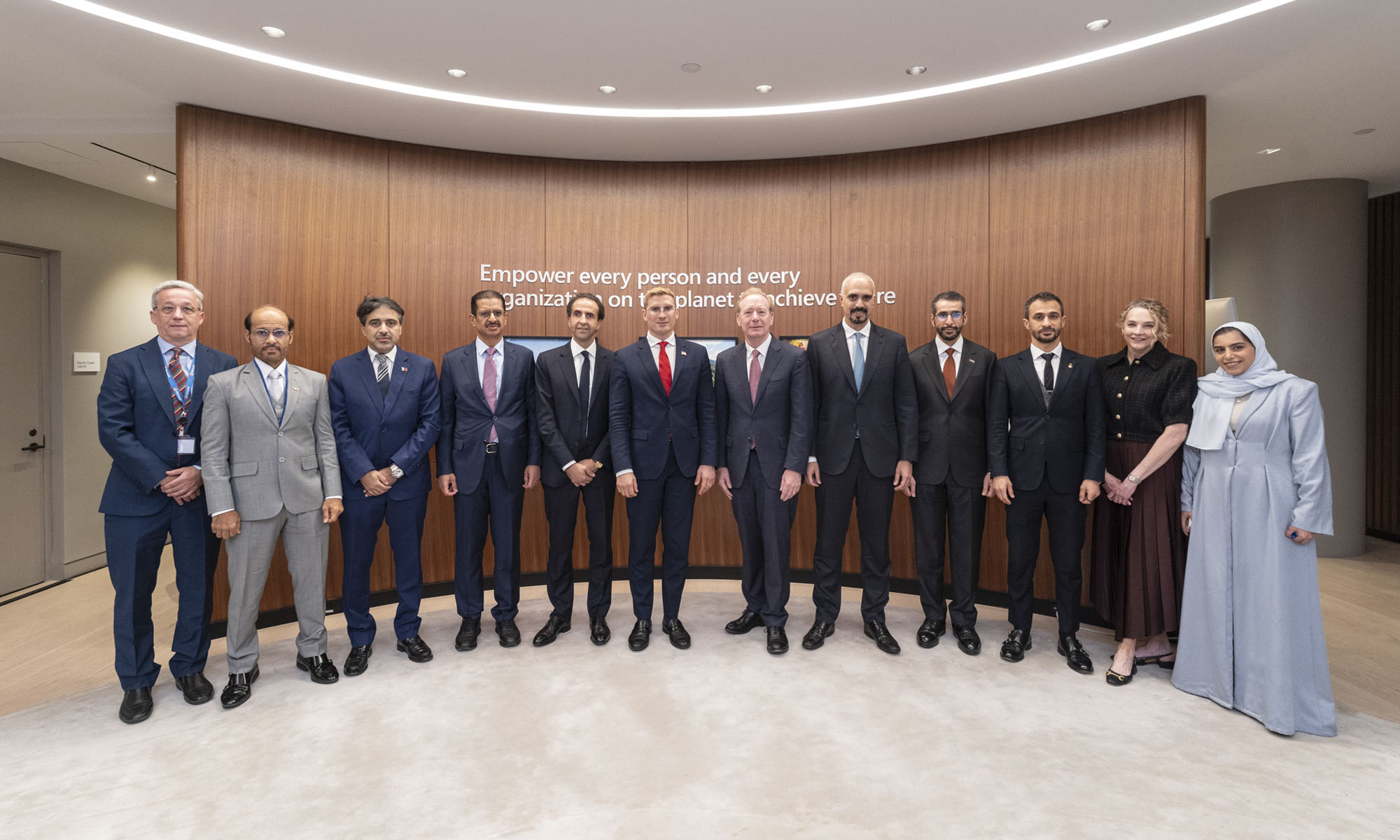
Microsoft is planning more than $10 billion of investment across the UAE, Saudi Arabia, Qatar and Kuwait through 2030, Vice Chair and President Brad Smith told Reuters, calling the spending schedule aggressive. The Iranian conflict that began on February 28 has not persuaded the company to scale back.
“We’re sustaining all the investments we planned to make before this conflict started, and we are in fact adding to them,” Smith said. The $10 billion-plus total does not, however, show how large those additions are.
The investment, which Smith described as part of Microsoft’s continued infrastructure expansion, is aimed at cloud and AI infrastructure and at the company’s growing regional operations. Microsoft also intends to put more than $400 million into subsea and terrestrial connectivity across the Middle East by 2030.
The spending fits the region’s own ambitions too. Gulf governments have been investing heavily in AI infrastructure as part of a push to diversify their economies beyond oil and gas and turn themselves into global technology hubs. Major cloud and AI providers have been drawn in part by the land and relatively low-cost energy on offer.
Microsoft is widening its partnerships with regional AI companies, though not on identical terms. In 2024, it invested $1.5 billion in Abu Dhabi-based G42 for a minority stake, and Smith currently sits on G42’s board. Saudi Arabia’s Humain and Qatar’s Qai are working with Microsoft on selected priority areas, but Smith said the company does not plan to make capital investments in either.
Also Read: Egypt’s Mobile Wallets Are Booming, But Cash Still Has Power
The conflict has added another strand to Microsoft’s work in the region. Since it began, Smith said, the company has supported regional partners with digital resilience assessments, and it is now working with Gulf countries through a digital resilience initiative focused on preparedness and the protection of critical data.
So far, the company has given no country-by-country breakdown of the investment, citing security among other factors. So while the headline figure is public, how Microsoft divides the spending among the four countries is not.

Microsoft Plans $10 Billion-Plus Gulf Expansion Despite Iran Conflict

In Kuwait, Your Surgeon Might Be Operating From Another Country

Qatar Folds 45 State Companies Into A Single Investment Platform

Trip.com Is Betting An AI Agent Will Book Your Next Vacation

Meta’s New $499 Plan Puts A Price On Reaching A Real Person

Apple’s First Folding iPhone Arrives Late To A Shrinking Market
Trip.com Is Betting An AI Agent Will Book Your Next Vacation

Egypt’s Mobile Wallets Are Booming, But Cash Still Has Power

OKX Bets Streaming Perks Can Take Crypto Mainstream Across MENA

Apple’s Latest Product Releases Make The Headlines


-
 News3 weeks ago
Apple’s First Folding iPhone Arrives Late To A Shrinking Market
-
 News2 weeks ago
Trip.com Is Betting An AI Agent Will Book Your Next Vacation
-
 News2 weeks ago
Egypt’s Mobile Wallets Are Booming, But Cash Still Has Power
-
 News2 weeks ago
OKX Bets Streaming Perks Can Take Crypto Mainstream Across MENA