
News
MENA Among World’s Fastest-Growing Digital Economies
The region is leading fintech adoption worldwide, with eCommerce, AI tools, and real-time payments reshaping the wider digital economy.


The Middle East and North Africa have emerged as one of the world’s most forward-moving digital economies, according to Checkout.com’s fifth annual State of Digital Commerce in MENA 2025 report. The study highlights how bold moves by central banks, regulators, and fintech innovators — combined with a digitally native population — are accelerating the region’s shift to a tech-driven economy.
Over the past five years, daily online transactions across MENA have surged by 139%, while Checkout.com’s own processing volumes have climbed 626%, including a 78% year-on-year increase. Food delivery now dominates as the leading eCommerce category, capturing 47% of online spending, followed by clothing and fashion (38%) and a tie between electronics and beauty products (34%).

MENA consumers are also reshaping financial habits. In the UAE alone, the use of Account Funding Transactions (AFTs) — which enable real-time digital payouts — has grown 388% in the past year. This shift is extending digital commerce well beyond shopping into areas like salary payments, gig economy wages, and peer-to-peer transfers. Meanwhile, the once-dominant cash-on-delivery model has dropped by 60% since 2020.
Fintech and AI continue to be key pillars of the region’s evolution. A reported 62% of users now engage with fintech platforms for investments and wealth management, while 43% send money weekly via digital wallets or apps. AI-driven shopping is already widely adopted, with 45% of consumers having used generative chatbots and 53% using visual search tools to support online purchases.
Also Read: A Guide To Digital Payment Methods In The Middle East
However, this increased digital maturity comes with new risks: Reports of online fraud have increased sharply — from 33% in 2023 to 49% in 2024 — driven in part by scams involving AI and deepfakes. Checkout.com highlights the growing need for intelligent fraud prevention, pointing to tools such as machine learning, behavioral biometrics, and anomaly detection as critical to maintaining security without compromising performance.
“In this increasingly competitive landscape, payment performance has become a critical differentiator,” said Remo Giovanni Abbondandolo, General Manager, MENA at Checkout.com. “Fast, secure, and intelligent payments are foundational to commercial success — not just at the point of transaction, but across the entire customer experience”.





News
Abu Dhabi’s Robot Kitchen Is Serving Up Biryani, Not Burgers
Circus SE wants to put a tiny automated factory inside the buildings where Gulf residents live and work, bypassing part of last-mile delivery.
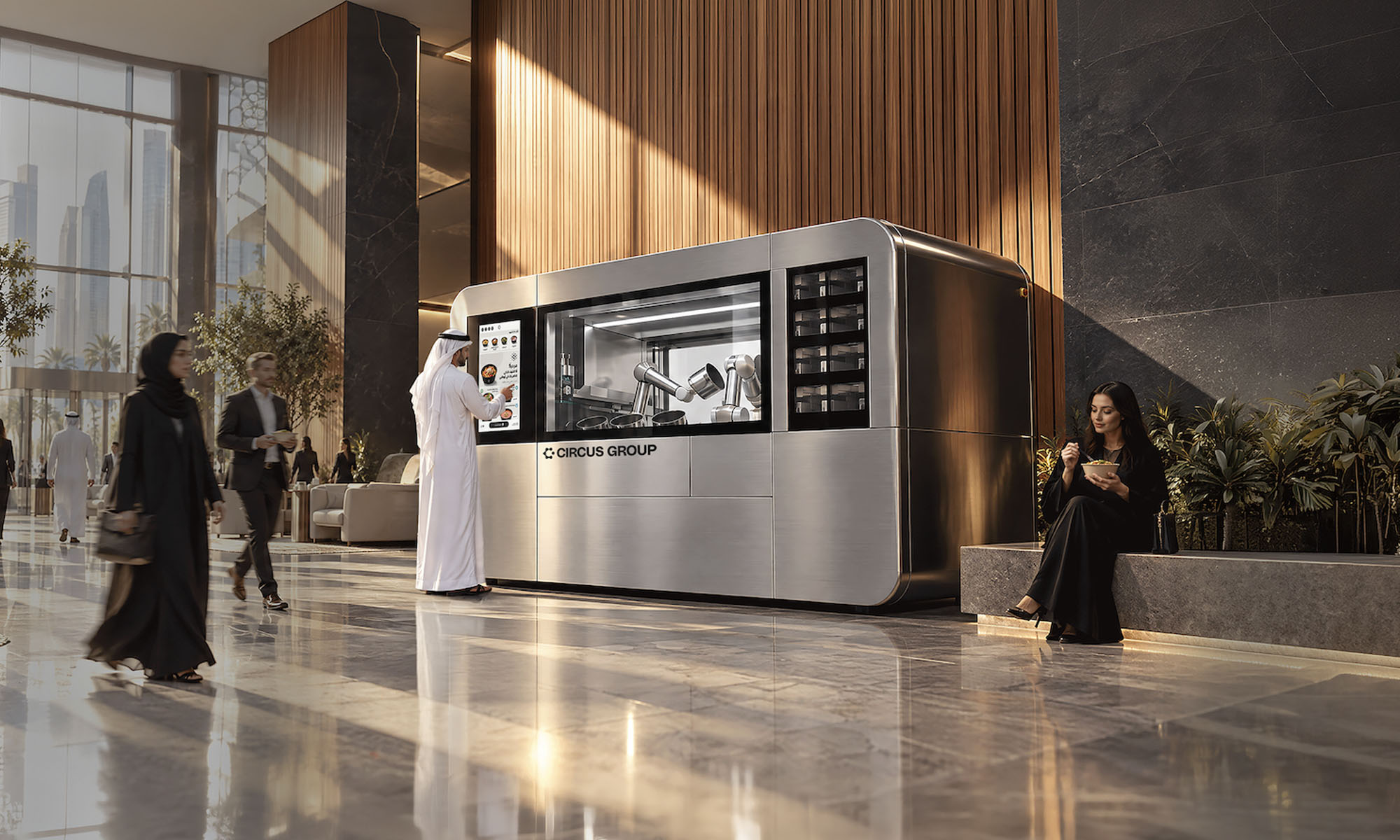
The most telling thing about a new autonomous kitchen now running in Abu Dhabi’s Marina Square is what it won’t cook:
“We don’t do fast food,” says Nikolas Bullwinkel, Founder and CEO of Circus SE. “We’ve actively decided not to build a machine that can only do burgers”.
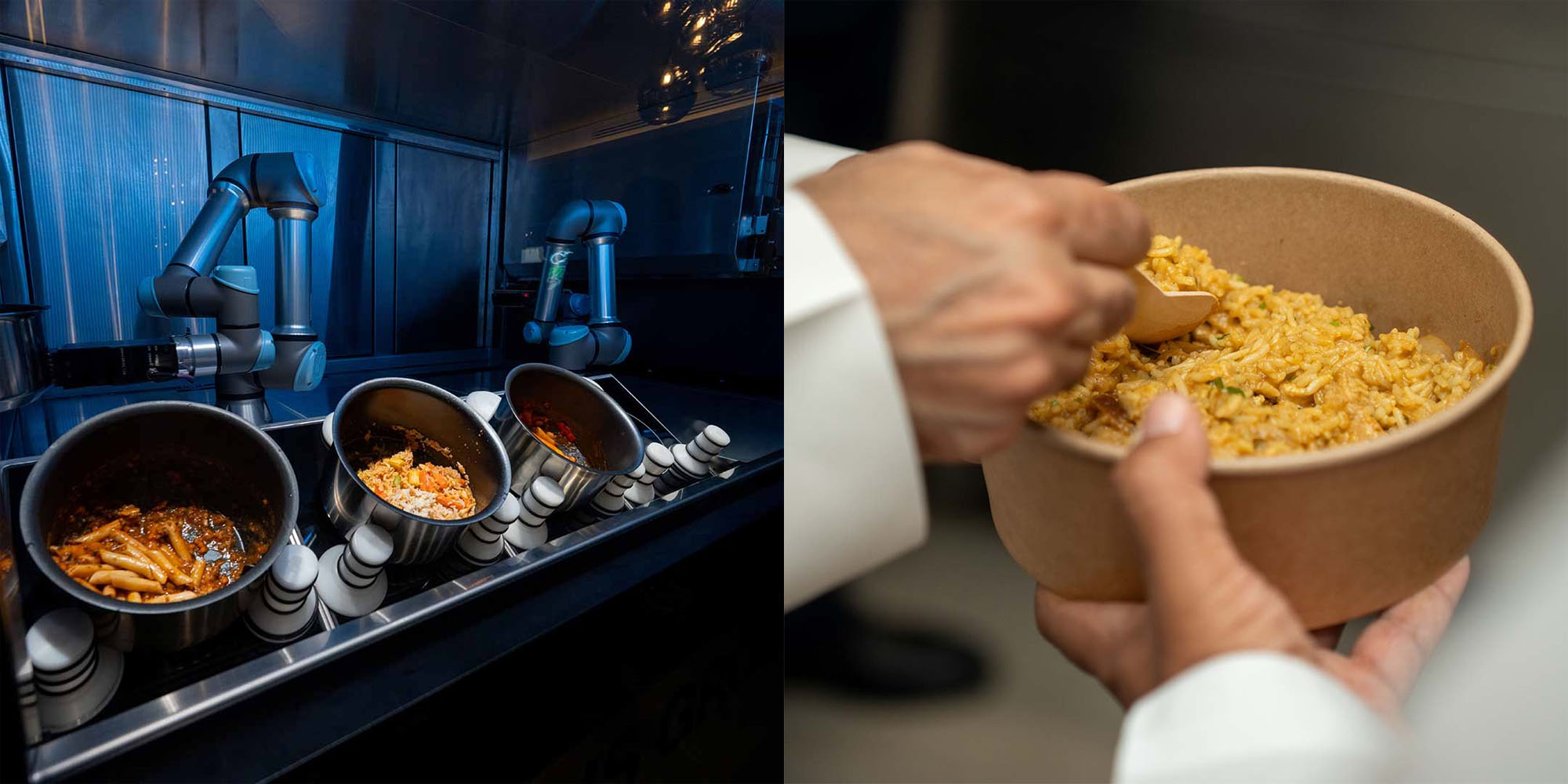
Instead, the CA-1 system is built around pot-based cooking: curries, pastas, soups and rice dishes. After experimenting with highly personalized recipes, Circus deliberately leaned back toward recognizable food. “We’re going with a chicken biryani because you know it,” Bullwinkel says of the AED 40 dish.
The Germany-based robotics and food technology company operates across eight countries, and Abu Dhabi is its first deployment outside Europe. More locations are expected there and in Dubai.
In Germany, its units can be placed in supermarkets, gas stations, airports and hospitals. In the Gulf, Bullwinkel wants them inside residential and office buildings, replacing some of the complexity of last-mile delivery. “We’re basically bringing a very tiny factory a few square meters into your building,” he says. Catering company Royal Prestige supplies the ingredients and knowledge of local tastes.
The CA-1 manages up to 36 refrigerated ingredient silos alongside automated induction cooking, robotic plating and a self-cleaning dishwasher. Two robotic arms move ingredients through the system with minimal human intervention. It can produce up to 120 hot meals an hour, and a meal such as rice and curry can take around three to four minutes.
Also Read: Ooredoo Qatar’s 5G+ Network Is Built For Machines As Much As People
Five cameras and multiple sensors monitor heat, temperature and consistency, an attempt to approximate what a chef perceives. “You can hear something gets burned, you can smell it, you can see it at some point,” Bullwinkel says. CircusOS, the company’s operating system, adjusts recipes in real time.
You might think of the platform as a threat to kitchen staff, but Bullwinkel frames Circus as a way for chefs to develop recipes and distribute them at scale. With that being said, rising labor costs and shortages are also part of his case for automation.

Abu Dhabi’s Robot Kitchen Is Serving Up Biryani, Not Burgers

Sennheiser’s MOMENTUM 5 Series Bets On Batteries You Can Swap

UAE’s 3-Minute University Registration Runs On Government Data

How Online Ads Became A Delivery System For Zero-Click Spyware

Shokz OpenDots 2 Review: Clip-On Audio Gets A Bass-Heavy Makeover

Dubai Says Its Deepfake Detector Needs Just 7 Seconds Of Video

New Disney+ Streaming App Has Officially Launched In The UAE

NEOPAY Wants To Follow Merchants Across Channels And Borders

RØDE’s Low-Profile Studio Arm Is Designed To Stay Out Of Shot

G42’s Inception42 Wants AI To Show Its Work Before Investors Commit


-
 News3 weeks ago
Dubai Says Its Deepfake Detector Needs Just 7 Seconds Of Video
-
 News3 weeks ago
New Disney+ Streaming App Has Officially Launched In The UAE
-
 News3 weeks ago
NEOPAY Wants To Follow Merchants Across Channels And Borders
-
 News4 weeks ago
RØDE’s Low-Profile Studio Arm Is Designed To Stay Out Of Shot