
News
Checkout.com Begins Payment Partnership With Spotify
The fintech provider will run acquiring and AI optimization for subscriptions across more than 180 markets and 280 million users.


Checkout.com will soon handle global acquiring and payments optimization for Spotify, taking responsibility for subscription transactions across more than 180 countries.
The agreement hands the London-headquartered payments firm the plumbing behind one of the world’s largest digital subscription businesses: over 700 million monthly active users, including 280 million paying subscribers. The brief is simple — lift acceptance rates, cut failed charges and keep recurring billing steady as volumes climb.
Spotify is plugging into Checkout.com’s Intelligent Acceptance system, which routes transactions in real time using network data to reduce declines. Network tokens and authentication services are also part of the integration, aimed at securing stored credentials and smoothing renewals.
“Our aim is to deliver a seamless, simple, and safe payment experience so that our users can focus on enjoying the music, podcasts, and audiobooks they find on Spotify,” said Sandra Alzetta, Vice President, Global Head of Payments and Customer Service at Spotify. “It’s important for us to work with partners who can move quickly and collaborate closely. Partnering with Checkout.com enables us to leverage their global reach, local expertise, and the ability to optimize payment performance at scale”.
For Checkout.com, the deal adds another large-scale consumer platform to a roster that increasingly leans on specialist fintechs instead of a patchwork of local payment processors. The company says its network now runs 87 million real-time optimization decisions each day.
Also Read: PayPal Links With NEO PAY To Power UAE E-Commerce
“This partnership with Spotify is a significant milestone in our mission to power the world’s leading digital enterprises with reliable, high-performance digital payments,” said Guillaume Pousaz, CEO and Founder of Checkout.com.
The logic is commercial: Subscription businesses lose revenue through soft declines and expired cards. Fewer failures mean fewer involuntary cancellations. At Spotify’s scale, even small gains move the needle.
It also shows how global tech platforms are standardizing payments with a single provider that can navigate local rules and acquiring relationships market by market — a playbook that matters as growth shifts toward regions such as the Middle East, where digital subscriptions are rising fast but payment performance remains uneven.





News
Microsoft Plans $10 Billion-Plus Gulf Expansion Despite Iran Conflict
Security is shaping Microsoft’s approach, from resilience work with governments to what it will say about how the money splits by country.

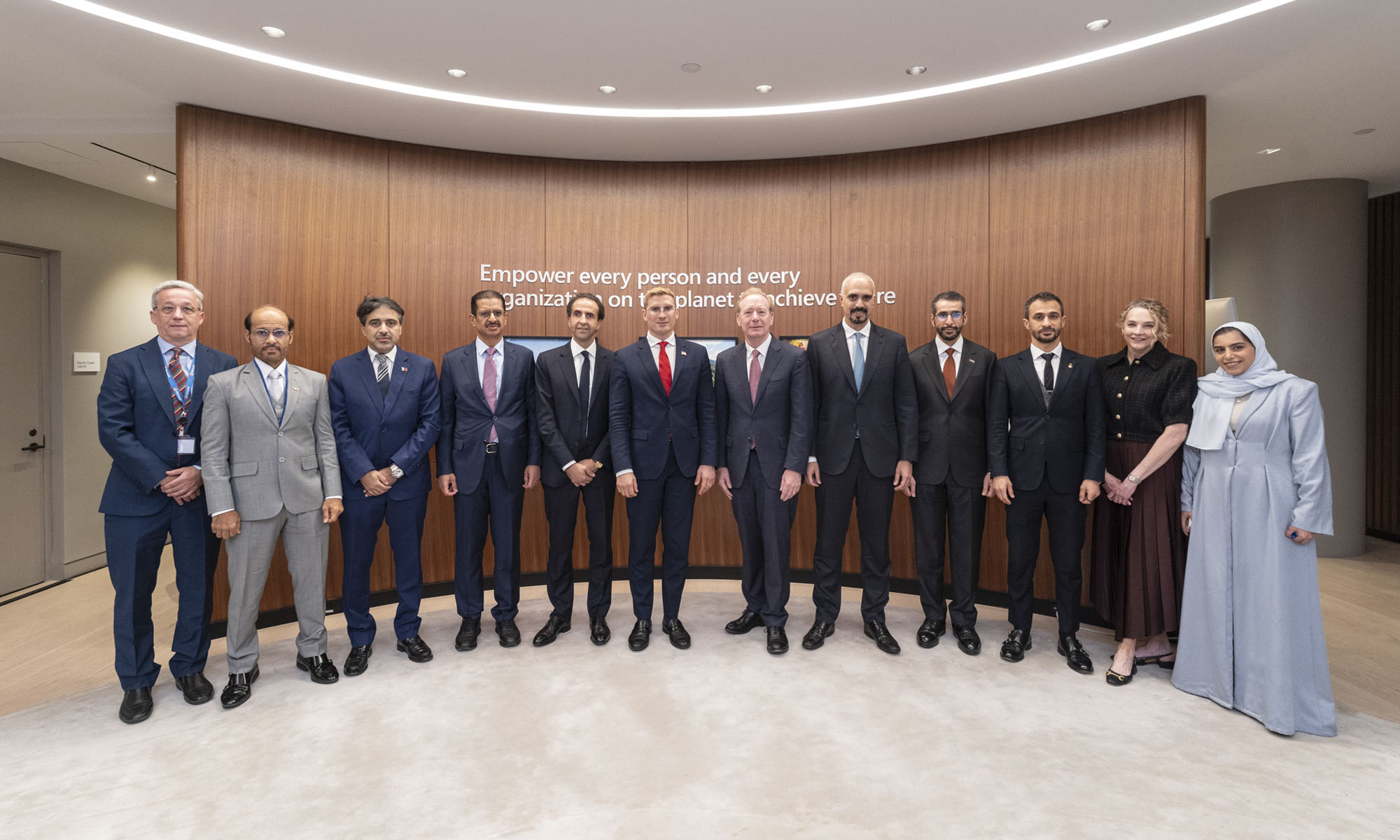
Microsoft is planning more than $10 billion of investment across the UAE, Saudi Arabia, Qatar and Kuwait through 2030, Vice Chair and President Brad Smith told Reuters, calling the spending schedule aggressive. The Iranian conflict that began on February 28 has not persuaded the company to scale back.
“We’re sustaining all the investments we planned to make before this conflict started, and we are in fact adding to them,” Smith said. The $10 billion-plus total does not, however, show how large those additions are.
The investment, which Smith described as part of Microsoft’s continued infrastructure expansion, is aimed at cloud and AI infrastructure and at the company’s growing regional operations. Microsoft also intends to put more than $400 million into subsea and terrestrial connectivity across the Middle East by 2030.
The spending fits the region’s own ambitions too. Gulf governments have been investing heavily in AI infrastructure as part of a push to diversify their economies beyond oil and gas and turn themselves into global technology hubs. Major cloud and AI providers have been drawn in part by the land and relatively low-cost energy on offer.
Microsoft is widening its partnerships with regional AI companies, though not on identical terms. In 2024, it invested $1.5 billion in Abu Dhabi-based G42 for a minority stake, and Smith currently sits on G42’s board. Saudi Arabia’s Humain and Qatar’s Qai are working with Microsoft on selected priority areas, but Smith said the company does not plan to make capital investments in either.
Also Read: Egypt’s Mobile Wallets Are Booming, But Cash Still Has Power
The conflict has added another strand to Microsoft’s work in the region. Since it began, Smith said, the company has supported regional partners with digital resilience assessments, and it is now working with Gulf countries through a digital resilience initiative focused on preparedness and the protection of critical data.
So far, the company has given no country-by-country breakdown of the investment, citing security among other factors. So while the headline figure is public, how Microsoft divides the spending among the four countries is not.

Microsoft Plans $10 Billion-Plus Gulf Expansion Despite Iran Conflict

In Kuwait, Your Surgeon Might Be Operating From Another Country

Qatar Folds 45 State Companies Into A Single Investment Platform

Trip.com Is Betting An AI Agent Will Book Your Next Vacation

Meta’s New $499 Plan Puts A Price On Reaching A Real Person

Apple’s First Folding iPhone Arrives Late To A Shrinking Market
Trip.com Is Betting An AI Agent Will Book Your Next Vacation

Egypt’s Mobile Wallets Are Booming, But Cash Still Has Power

OKX Bets Streaming Perks Can Take Crypto Mainstream Across MENA

Apple’s Latest Product Releases Make The Headlines


-
 News2 weeks ago
Apple’s First Folding iPhone Arrives Late To A Shrinking Market
-
 News2 weeks ago
Trip.com Is Betting An AI Agent Will Book Your Next Vacation
-
 News2 weeks ago
Egypt’s Mobile Wallets Are Booming, But Cash Still Has Power
-
 News2 weeks ago
OKX Bets Streaming Perks Can Take Crypto Mainstream Across MENA