
News
Clicks Bets On Physical Keyboards With CES 2026 Launch
The startup is unveiling a BlackBerry-inspired companion device and a detachable keyboard aimed at users looking to dial back smartphone overload.


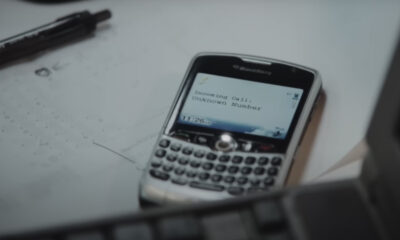
Clicks Technology is pushing physical keyboards back into the spotlight with a new hardware lineup set to debut at CES 2026 in Las Vegas. The headline product, the Clicks Communicator, is a BlackBerry-inspired device designed to sit alongside an existing iPhone or Android phone, not replace it.
The pitch is straightforward: Modern smartphones are built for feeds, not focus. The Communicator narrows that scope to core communication — emails, texts, calls and voice notes — while keeping everything else out of the way. Messages sync from a primary phone, but the device itself is meant to reduce how often users feel pulled back to a glass slab.
Clicks is leaning on a behavior that is already common among professionals: carrying a second phone to separate work from personal life or to escape constant notifications. The Communicator formalizes that habit with a purpose-built companion that stays connected without demanding attention. A main smartphone is still required for it to work.
The hardware leans heavily into nostalgia: A compact touchscreen sits above a prominent physical keyboard, echoing the proportions of classic BlackBerry devices. The keyboard is touch-sensitive, allowing users to scroll without reaching for the screen, and supports voice note recording. Several features abandoned by mainstream phones also make a return, including a 3.5mm headphone jack, a physical airplane mode switch, expandable microSD storage, and support for both SIM cards and eSIMs.
Specs are firmly mid-range. The Communicator runs Android 16, carries a 50-megapixel rear camera and a 24-megapixel front camera, weighs 170 grams, and stands 131.5mm tall.
The device will retail for $499. Clicks is taking $199 reservation deposits now and offering a limited $299 early-bird price, cutting $100 off the final cost ahead of its release later in 2026. The company has not yet confirmed an exact shipping date.
Also Read: Samsung Galaxy S26 Ultra Leaks Point To February 2026 Reveal
Clicks is also expanding the idea beyond a dedicated device: The newly announced Power Keyboard is a detachable physical keyboard that connects to smartphones and other screens via MagSafe or Qi2. A sliding mechanism allows it to fit different phone sizes, and it works in both portrait and landscape modes. Clicks says it can also pair with tablets, smart TVs, and AR or VR systems.
“Power Keyboard brings a consistent, confident typing experience to all your smart devices,” said Clicks president Kevin Michaluk.
The Power Keyboard is priced at Dh295 in the UAE, is available for preorder, and is expected to ship in the spring. For Clicks, the message is clear: tactile input is no longer nostalgia. It is being positioned as a counterpoint to the attention economy built into today’s smartphones.




News
Abu Dhabi’s Robot Kitchen Is Serving Up Biryani, Not Burgers
Circus SE wants to put a tiny automated factory inside the buildings where Gulf residents live and work, bypassing part of last-mile delivery.
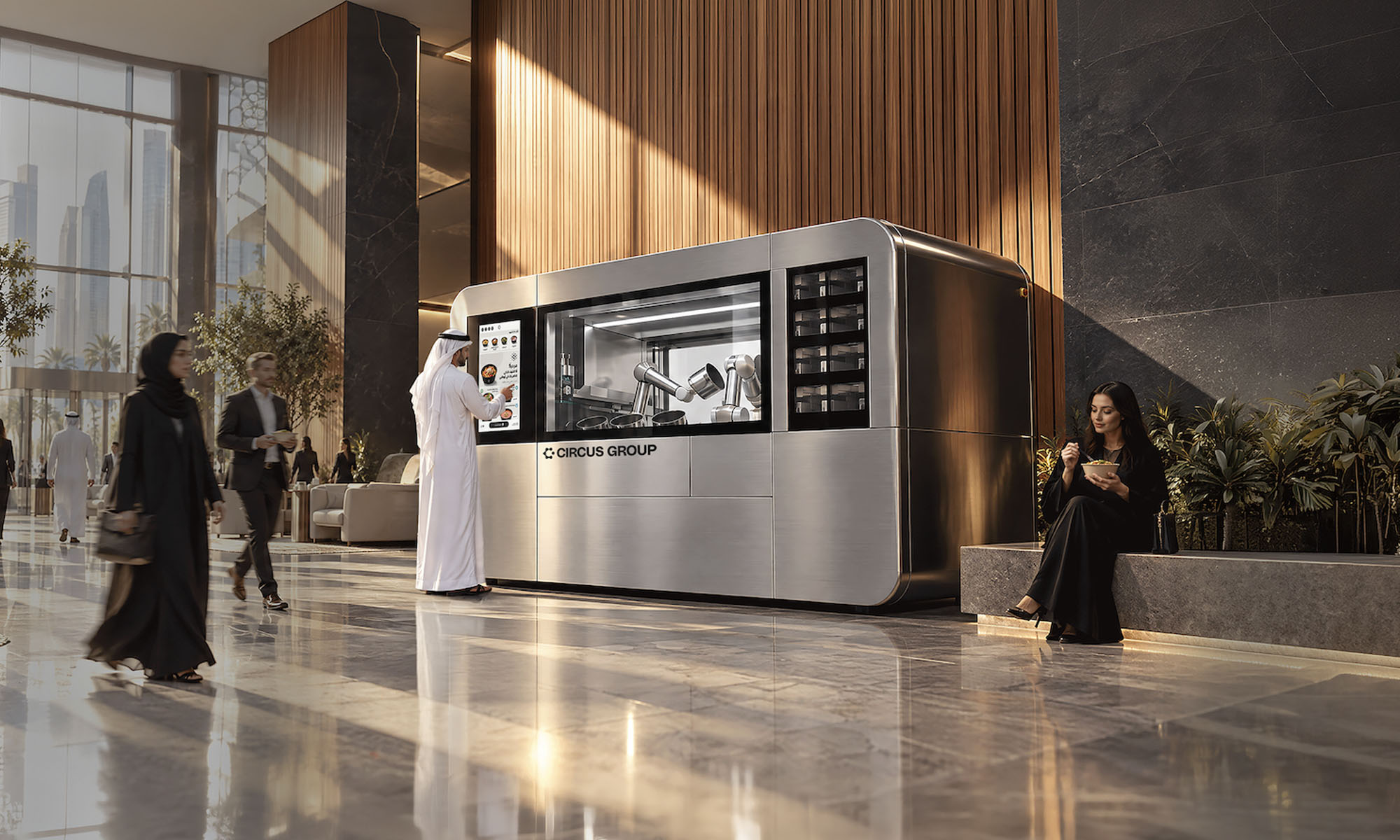
The most telling thing about a new autonomous kitchen now running in Abu Dhabi’s Marina Square is what it won’t cook:
“We don’t do fast food,” says Nikolas Bullwinkel, Founder and CEO of Circus SE. “We’ve actively decided not to build a machine that can only do burgers”.
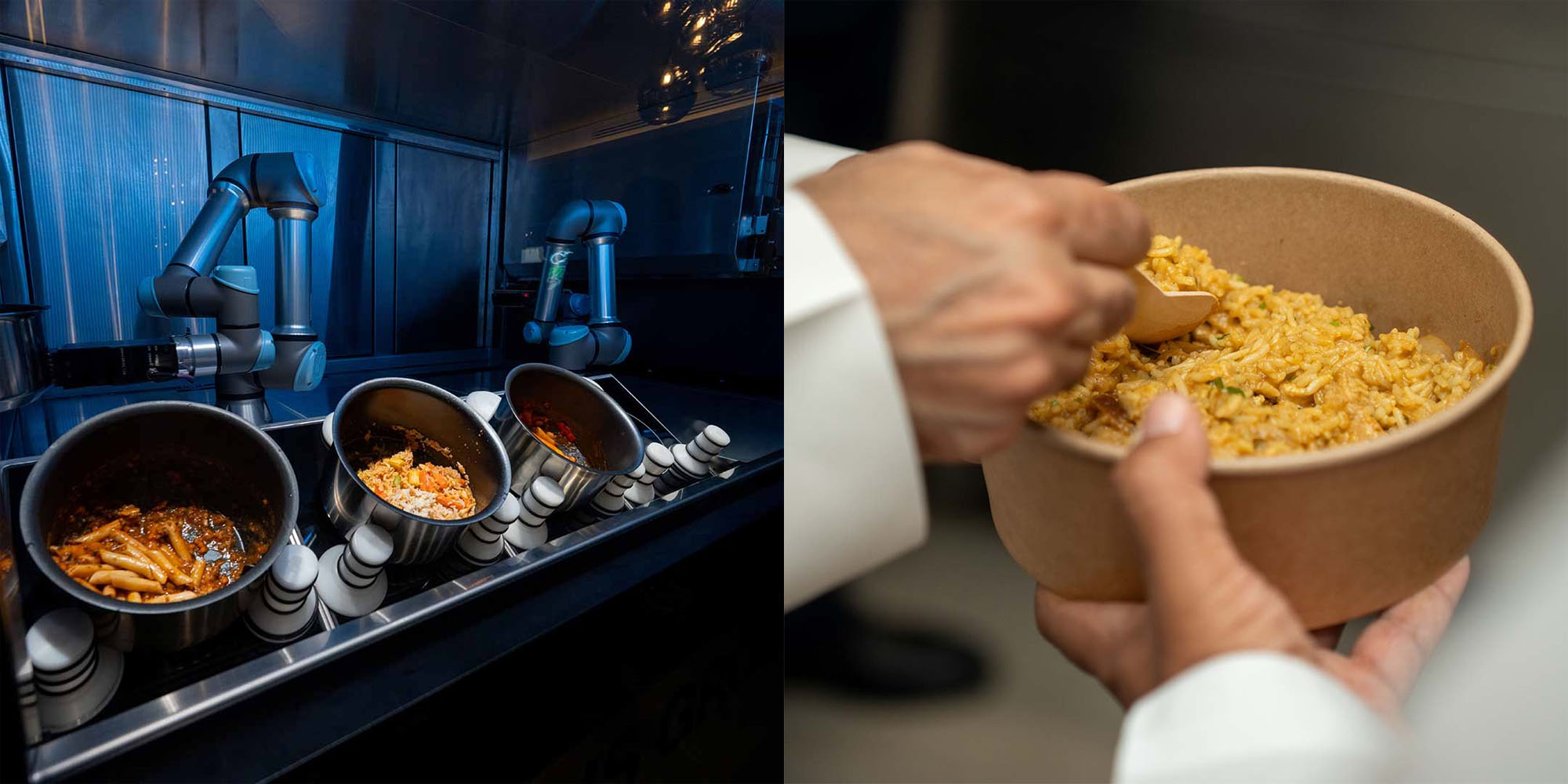
Instead, the CA-1 system is built around pot-based cooking: curries, pastas, soups and rice dishes. After experimenting with highly personalized recipes, Circus deliberately leaned back toward recognizable food. “We’re going with a chicken biryani because you know it,” Bullwinkel says of the AED 40 dish.
The Germany-based robotics and food technology company operates across eight countries, and Abu Dhabi is its first deployment outside Europe. More locations are expected there and in Dubai.
In Germany, its units can be placed in supermarkets, gas stations, airports and hospitals. In the Gulf, Bullwinkel wants them inside residential and office buildings, replacing some of the complexity of last-mile delivery. “We’re basically bringing a very tiny factory a few square meters into your building,” he says. Catering company Royal Prestige supplies the ingredients and knowledge of local tastes.
The CA-1 manages up to 36 refrigerated ingredient silos alongside automated induction cooking, robotic plating and a self-cleaning dishwasher. Two robotic arms move ingredients through the system with minimal human intervention. It can produce up to 120 hot meals an hour, and a meal such as rice and curry can take around three to four minutes.
Also Read: Ooredoo Qatar’s 5G+ Network Is Built For Machines As Much As People
Five cameras and multiple sensors monitor heat, temperature and consistency, an attempt to approximate what a chef perceives. “You can hear something gets burned, you can smell it, you can see it at some point,” Bullwinkel says. CircusOS, the company’s operating system, adjusts recipes in real time.
You might think of the platform as a threat to kitchen staff, but Bullwinkel frames Circus as a way for chefs to develop recipes and distribute them at scale. With that being said, rising labor costs and shortages are also part of his case for automation.

Abu Dhabi’s Robot Kitchen Is Serving Up Biryani, Not Burgers

Sennheiser’s MOMENTUM 5 Series Bets On Batteries You Can Swap

UAE’s 3-Minute University Registration Runs On Government Data

How Online Ads Became A Delivery System For Zero-Click Spyware

Shokz OpenDots 2 Review: Clip-On Audio Gets A Bass-Heavy Makeover

Dubai Says Its Deepfake Detector Needs Just 7 Seconds Of Video

New Disney+ Streaming App Has Officially Launched In The UAE

NEOPAY Wants To Follow Merchants Across Channels And Borders

RØDE’s Low-Profile Studio Arm Is Designed To Stay Out Of Shot

G42’s Inception42 Wants AI To Show Its Work Before Investors Commit


-
 News3 weeks ago
Dubai Says Its Deepfake Detector Needs Just 7 Seconds Of Video
-
 News2 weeks ago
New Disney+ Streaming App Has Officially Launched In The UAE
-
 News3 weeks ago
NEOPAY Wants To Follow Merchants Across Channels And Borders
-
 News4 weeks ago
RØDE’s Low-Profile Studio Arm Is Designed To Stay Out Of Shot