
News
Dubai Integrates LiDAR & Digital Twins For Road Management
The Road and Traffic Authority hopes to enhance road maintenance with faster, safer, and more accurate assessments.

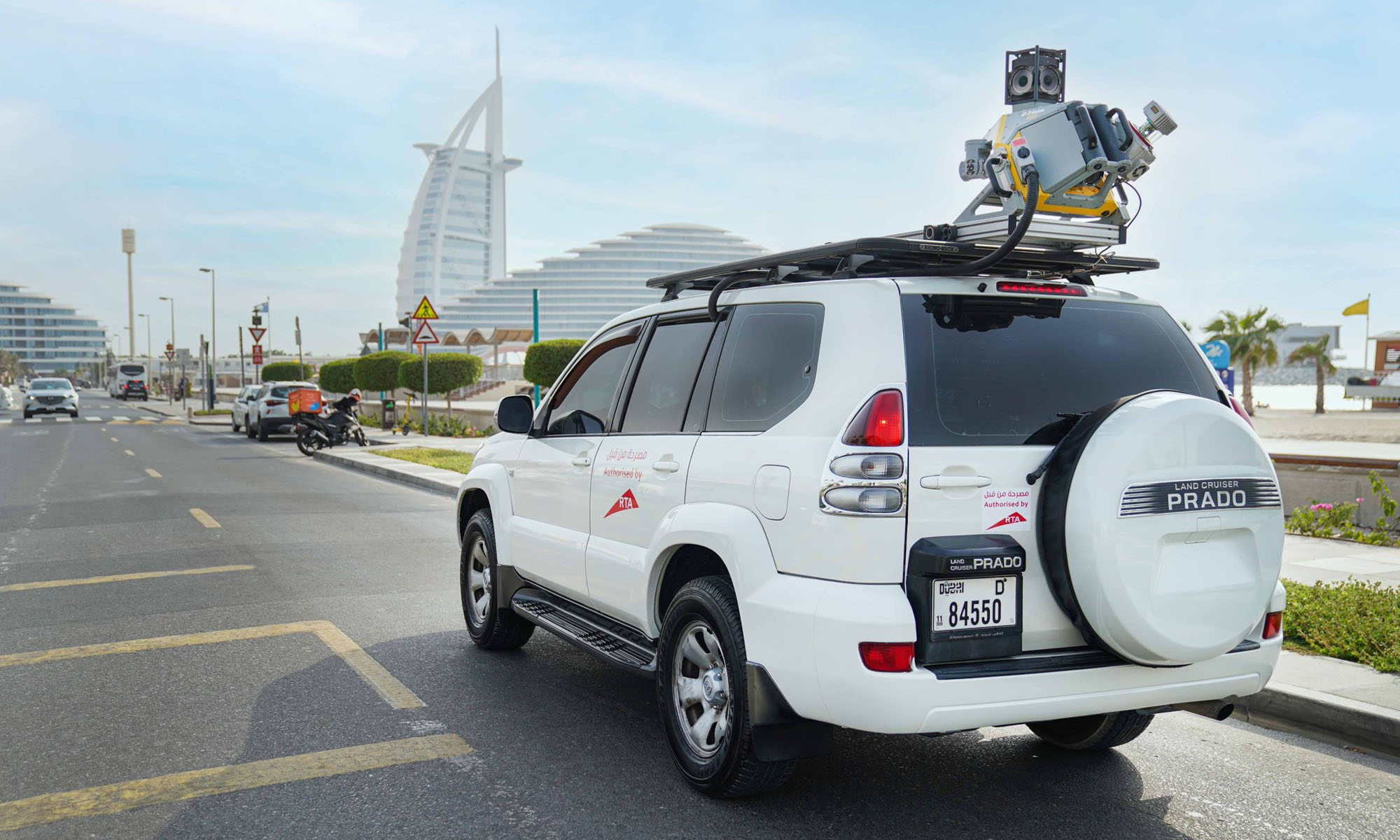
Dubai’s Roads and Transport Authority (RTA) is stepping up its road maintenance game by introducing LiDAR — short for Light Detection and Ranging — into its asset management system. This tech shift is part of a broader strategy to modernize how the city monitors and maintains its roads, using data-driven insights from digital twin platforms.
RTA has adopted the latest LiDAR (Light Detection and Ranging) technology to assess the condition of road assets and enhance the accuracy of data used in digital twin platforms. The initiative supports the development of preventive, predictive, and proactive maintenance… pic.twitter.com/8I7j9J9haw
— RTA (@rta_dubai) April 9, 2025
LiDAR isn’t new to the tech world, but RTA’s application of it marks a leap in how public infrastructure is managed. Instead of relying on slower, traditional visual inspections, lasers scan and map road conditions in real time. The result? Faster, more accurate data collection that feeds into advanced maintenance strategies — both preventive and predictive.
Hussain Al Banna, CEO of the Traffic and Roads Agency at RTA, highlighted the efficiency gains. “LiDAR technology delivers a remarkable boost in performance and speed, delivering up to 300% compared to traditional visual inspections,” he said. It’s a move that fits with Dubai’s broader vision of becoming a global model for smart, sustainable cities.
Accuracy is another key benefit. According to Al Banna, LiDAR offers up to 95% accuracy when assessing road conditions. This precision enhances the reliability of the data used for infrastructure decisions and helps streamline maintenance planning.
Also Read: Checkout.com Set To Launch Card Issuing In The UAE
LiDAR also enables safer inspections of high-up or hard-to-reach assets — think traffic lights, road signs, and lighting poles. This kind of efficiency isn’t just about numbers; it also reduces (or even eliminates) the need for manual labor in hazardous environments.
The scale of coverage is another game-changer. LiDAR will allow the RTA to scan around 80 kilometers of roads in a single day — a massive improvement compared to older methods, which typically cap out at 3 kilometers per day. Scanning can also be done on the move, at speeds between 30 and 100 km/h, helping to avoid road closures and traffic blockages.
Al Banna also emphasized the value of this real-time, high-resolution data in long-term planning: “This advanced technology delivers highly accurate data and detailed analysis of asset conditions, supporting the long-term sustainability of the Assets Condition Index (ACI)”. He noted that it helps in smart scheduling of maintenance, especially predictive tasks, by prioritizing based on strategic needs.






News
Trip.com Is Betting An AI Agent Will Book Your Next Vacation
Abu Dhabi, Jazeera Airways and a run of hotel deals give the company more inventory. Its Mastercard demo says the most about where booking technology is headed.

Most of what Trip.com Group announced at Arabian Travel Market 2026 this week reads like the standard expansion playbook of an online travel agency: a new agreement with a tourism board, a run of hotel partnerships, an airline deal. However, one item was considerably more interesting: a demonstration built with Mastercard of an AI agent that doesn’t just suggest trips but also pays for them.

The showcase put TripGenie, the company’s AI travel assistant, to work searching, selecting and completing purchases inside a single booking flow, with Mastercard’s Agent Suite for Merchants handling the payment step and Network International processing the transactions on the merchant side. It’s limited for now to attractions and ancillary services, but the partners plan a phased commercial rollout from early 2027.
“As traveller expectations change, technology and AI will play an increasingly important role in how people plan their journeys,” says Schubert Lou, CEO of Trip.com.
Meanwhile, in more conventional news, CEO Lou and Saleh Mohamed Al Geziry (Director General for Tourism at the Department of Culture and Tourism – Abu Dhabi), signed an agreement building on the two organizations’ existing partnership, with joint marketing and Abu Dhabi destination content to be pushed across Trip.com Group’s platforms.
Also Read: Musk’s Boring Company Wants To Dig 150 KM Of Tunnel Under The UAE
On accommodation, the group expanded its partnerships with JA Hotels & Resorts, Ishraq Hospitality and Aleph Hospitality and deepened its work with Silkhaus, which brings vacation homes into a portfolio that has so far leaned on hotels. Jazeera Airways signed a strategic partnership intended to widen the Kuwaiti carrier’s reach and encourage earlier bookings, tied to Kuwait’s own tourism ambitions.
The company moved into a larger Dubai office earlier this year and describes its long-term aim as a two-way ecosystem: sending Middle East travelers abroad while drawing international visitors in.

Trip.com Is Betting An AI Agent Will Book Your Next Vacation

Meta’s New $499 Plan Puts A Price On Reaching A Real Person

OKX Bets Streaming Perks Can Take Crypto Mainstream Across MENA

Musk’s Boring Company Wants To Dig 150 KM Of Tunnel Under The UAE

Egypt’s Mobile Wallets Are Booming, But Cash Still Has Power

RØDE’s New DS3 Studio Arm Is Built For Heavier Creator Setups

Visa’s Return To Syria Starts With A Test And A Bank In Lebanon

Former Rockstar Director Dismisses GTA 6 Leaks As “Nothing Burger”

Dubai Turns AI On Its Own Civil Service To Measure Productivity

Apple’s Latest Product Releases Make The Headlines


-
 News3 weeks ago
Visa’s Return To Syria Starts With A Test And A Bank In Lebanon
-
 News2 weeks ago
Apple’s Latest Product Releases Make The Headlines
-

 News1 week ago
Apple’s First Folding iPhone Arrives Late To A Shrinking Market
-
 News1 week ago
Egypt’s Mobile Wallets Are Booming, But Cash Still Has Power