
News
Abu Dhabi And NVIDIA Launch First Joint AI And Robotics Lab
Based at the Abu Dhabi Technology Innovation Institute, the project is part of the UAE’s drive to expand its global AI research footprint.


Abu Dhabi has partnered with NVIDIA to launch the Middle East’s first joint research lab dedicated to artificial intelligence and robotics.
Based at the Technology Innovation Institute (TII), the TII-NVAITC Joint Lab for AI and Robotics will accelerate research into humanoid systems, embodied AI models and autonomous platforms with applications across multiple industries.
The agreement was made official by Dr. Najwa Aaraj, CEO of TII, and Marc Domenech, regional director for NVIDIA Enterprise in the META region, in the presence of senior officials from the Advanced Technology Research Council (ATRC) and NVIDIA executives Simon See and John Josephakis.
“This collaboration with NVIDIA marks a major step toward building AI-enhanced robotic systems capable of reasoning, adapting, and acting in complex environments,” Aaraj said. “We are accelerating the convergence of perception, control, and language as part of efforts to advance intelligent robotics”.
Also Read: Fiverr Cuts 250 Jobs In Shift To “AI-First Company” Strategy
The partnership gives TII access to NVIDIA’s edge GPU chips and advanced computing platforms, integrated with TII’s own research in AI, robotics and high-performance computing. The institute will also build on its Falcon family of large language models — the largest developed in the Middle East — to support robotics applications.
NVIDIA executive Carlo Ruiz said the initiative extends the global NVAITC network into robotics for the first time in the region. “By working with TII in Abu Dhabi, we are helping researchers and innovators accelerate breakthroughs that will shape the future of intelligent systems,” he said.
UAE’s AI Ambitions
The launch of the joint lab reinforces the UAE’s national AI strategy, announced in 2017, which aims to embed artificial intelligence across sectors such as healthcare, education and logistics. The UAE wants AI to contribute up to 20 percent of non-oil GDP by 2031, with the domestic market projected to grow from Dh12.7 billion in 2023 to over Dh170 billion by 2030 — a compound annual growth rate of 44 percent.
Supporting this vision, the government has introduced Chief AI Officers across ministries, established AI-focused academic institutions, and run international exchange programs. In June, 50 Emirati AI leaders toured the US to meet with Google, Meta, OpenAI and Microsoft.
The TII-NVIDIA lab adds to a growing list of partnerships designed to strengthen the UAE’s role in AI and robotics, both regionally and globally.



News
Egypt’s Mobile Wallets Are Booming, But Cash Still Has Power
Egypt’s telecom regulator says $57.6 billion moved through more than 57 million wallets in six months. And one operator handled 77% of the value.
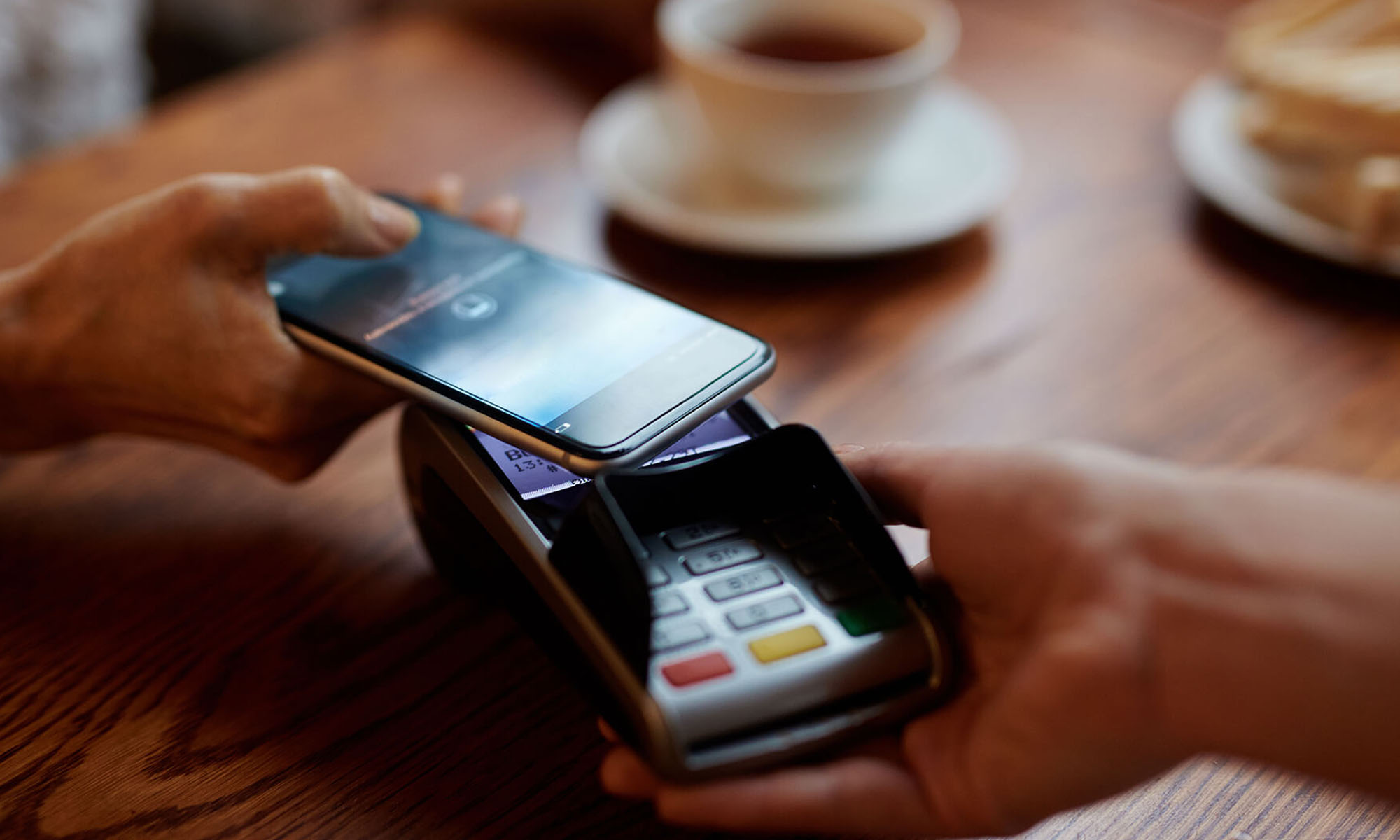
Egypt’s mobile wallets handled EGP 2.96 trillion ($57.6 billion) in transactions in the first half of 2026, according to the National Telecom Regulatory Authority – a 56% rise on the EGP 1.90 trillion ($36.9 billion) recorded a year earlier. Transactions grew faster still, up 62% to 2.22 billion, while registered wallets climbed 23% to 57.01 million.
On one reading, that is exactly what Egypt’s regulators have been pushing for: a payments system that runs through telecom-linked wallets rather than banknotes. But the same data shows how far cash still reaches into it. Cash withdrawals made up just 12% of the transactions taking money out of wallets, yet 75% of the value withdrawn or spent.
Money arrives mostly from bank accounts: transfers through InstaPay accounted for 78% of deposit transactions and 58% of the value deposited, while incoming remittances from abroad made up 3% of deposit transactions but 10% of their value. Once inside, it largely moves between wallets – wallet-to-wallet transfers accounted for 54% of all transactions and 67% of total value, with mobile and internet top-ups a distant second at 25% of volume. In effect, the wallet is serving as a transfer layer: the place money passes through between the bank account and the banknote.
That layer also runs predominantly through one operator. Vodafone Cash held 53% of registered wallets and 57% of active ones, but handled 69% of transactions and 77% of their value. Its nearest rival, e& money, held 23% of registered wallets but 14% of transaction value; Orange Cash 20% and 8%; WE Pay 4% of wallets. How many of the 57.01 million are active is not stated.
Also Read: Visa’s Return To Syria Starts With A Test And A Bank In Lebanon
Adoption is rather uneven in other respects. Men held 38 million wallets, or 67% of the total, against 19 million held by women. Users aged 26 to 45 accounted for half of all wallets, and Cairo alone had 10.6 million, or 19% of the national total, with Giza next at 6.5 million.
The NTRA says it is continuing to work with telecom operators on the regulatory framework for wallet services, part of a wider effort to expand electronic payments and financial inclusion. Its own figures show that effort succeeding on the way in. On the way out, three-quarters of the value still leaves as cash.

Egypt’s Mobile Wallets Are Booming, But Cash Still Has Power

Apple’s First Folding iPhone Arrives Late To A Shrinking Market

Apple’s Latest Product Releases Make The Headlines

Visa’s Return To Syria Starts With A Test And A Bank In Lebanon

RØDE’s New DS3 Studio Arm Is Built For Heavier Creator Setups

Anghami’s New Elite Program Starts With A Three-Decade Catalog

Dubai’s aradus Wants AI To Run The Back Office Of Physical Trade

Qatar Is Getting Its First EV Plant, Built To Cope With Gulf Heat

Qatar Airways Flies The World’s First Starlink-Equipped 787-9

Former Rockstar Director Dismisses GTA 6 Leaks As “Nothing Burger”


-
 News3 weeks ago
Former Rockstar Director Dismisses GTA 6 Leaks As “Nothing Burger”
-
 News3 weeks ago
RØDE’s New DS3 Studio Arm Is Built For Heavier Creator Setups
-

 News3 weeks ago
Dubai Turns AI On Its Own Civil Service To Measure Productivity
-
 News3 weeks ago
Visa’s Return To Syria Starts With A Test And A Bank In Lebanon