
News
Samsung’s Next Unpacked Could Bring Two Galaxy Z Fold 8 Models
A global RAM shortage is shaping what Samsung can deliver, with the Z Flip 8 tipped for modest refinements rather than a redesign.

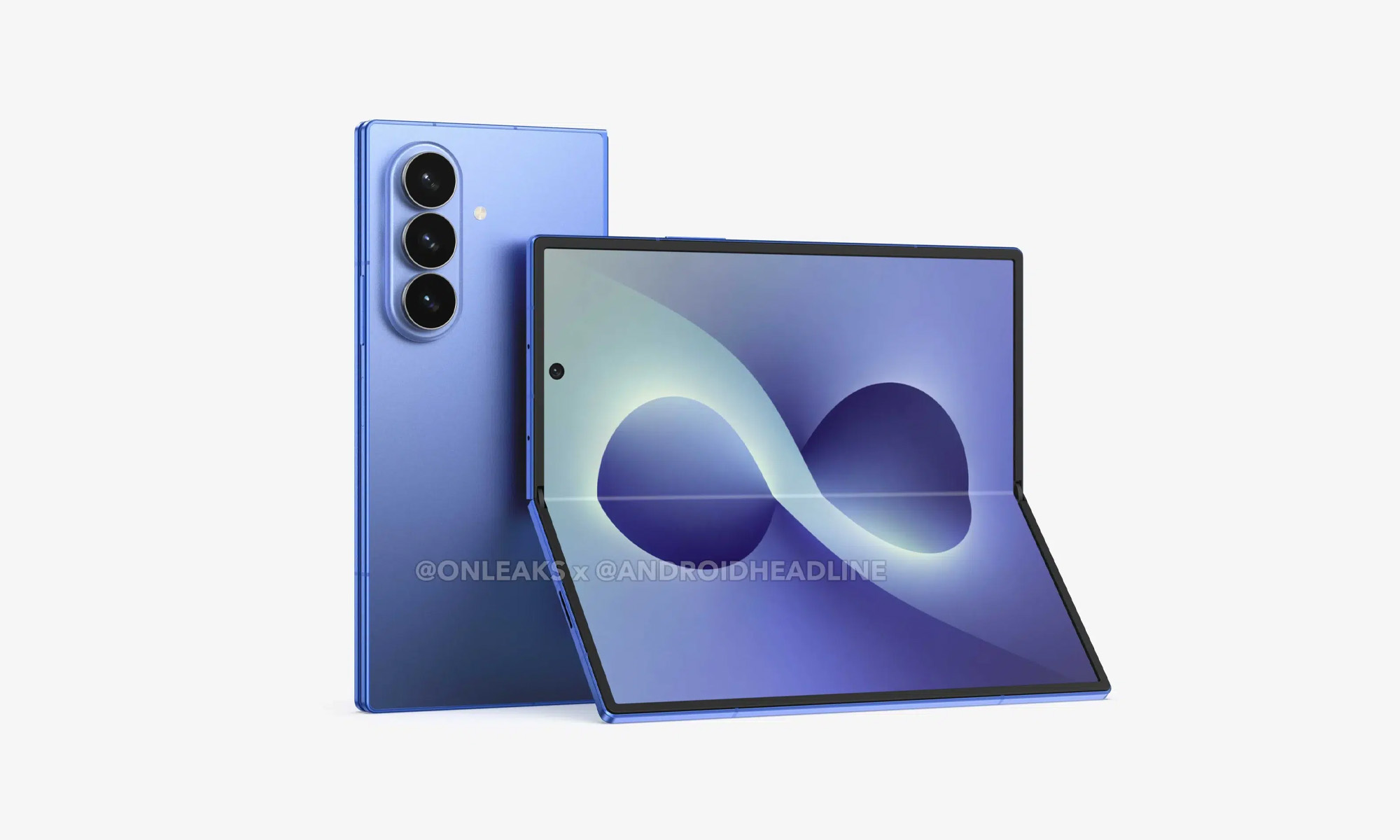
Samsung has set its next Galaxy Unpacked event for July 22 in London, and the company is keeping details close, saying only that it “will introduce its latest Galaxy innovations that build on its leadership in foldables”. The rumor mill has so far been considerably less restrained.
Leaks point to two or three new phones, headlined by what would be a first for Samsung: two book-style foldables launched at the same event. The standard Galaxy Z Fold 8 is rumored to get a wider main display, giving movies and shows a better aspect ratio when the phone is opened. The trade-off may come at the back, where the base model is tipped to carry two rear cameras rather than the three found on the Z Fold 7.
Above it would sit the Galaxy Z Fold 8 Ultra, a new top-tier model said to feature display technology that makes the crease less visible, an updated processor, three rear cameras and possibly faster charging. There is room for skepticism about how the features shake out between the two models — a wider display arguably belongs on the flagship rather than the base device — but Samsung’s cryptic social media teasers about a wider phone suggest real changes are coming to the Fold line either way.
Also Read: Logitech’s New Folding Mouse Is Designed For Work On The Go
A Galaxy Z Flip 8 is all but certain, with a reworked hinge, improved performance and potentially a lighter chassis. A major redesign looks unlikely, though: the global RAM shortage has reportedly made bigger upgrades cost-prohibitive this year.
The Galaxy Watch 9, Galaxy Watch Ultra 2 and Samsung’s Android XR glasses could also make an appearance, although some or all of those may be held back until later in the fall. Ahead of the event, Samsung has opened reservations that come with a $30 credit for anyone who pre-orders.
The presentation streams live on Samsung.com and Samsung’s YouTube channel at 9 AM ET on July 22.




News
Meta’s New AI Tool Builds Images From Public Instagram Photos
Muse Image lets anyone generate AI visuals from your public posts, unless you find the opt-out that’s buried in your account settings.

Meta has a new AI image generator, and it comes with a feature that has privacy advocates alarmed. Muse Image, launched Tuesday by the company’s Superintelligence Labs division, lets users generate AI images by @ mentioning any public Instagram account — pulling that person’s photos into the creation without their knowledge.
The tool is available through the Meta AI app, WhatsApp, and Instagram Stories. Meta says it “uses advanced reasoning to understand complex prompts, seamlessly blending multiple photos into high-quality creations you can download and share anywhere”. The tagging is the flashpoint: “Tagging a username lets Meta AI use public photos to build a visual that’s ready to post,” the company says. Every public Instagram profile can be used unless its owner has explicitly opted out.
That default has drawn sharp criticism. Public Citizen, the consumer advocacy nonprofit, called the feature “an egregious invasion of user privacy”. “Meta has once again chosen the creepiest possible path,” said J.B. Branch, the group’s director of federal AI governance and technology policy. “People should not wake up to discover their face has become raw material for someone else’s AI experiment”. “Instead of asking for meaningful consent, Meta quietly defaults users into the system and buries the opt-out in account settings,” Branch added. “It’s a playbook we’ve come to expect from a company with a long history of putting its business interests ahead of the public”.
Also Read: WhatsApp Usernames Are Coming: Here’s How To Claim Yours
Despite the concerns, it’s worth noting that private accounts are already protected. Muse Image requires access to public photos, and anyone trying to tag a private profile will be told the account can’t be used. Public accounts, on the other hand, must opt out manually. To do that, users will need to go to their profile, tap the menu in the top-right corner, then Sharing and Reuse. Under “Allow people to reuse your content on Instagram and with AI features at Meta,” you’ll find separate toggles for Posts and Reels — switch both off to keep your images and videos out of other people’s AI creations.

Meta’s New AI Tool Builds Images From Public Instagram Photos

Tamper With The Recording LED & Meta’s Glasses Kill Camera

Samsung’s Next Unpacked Could Bring Two Galaxy Z Fold 8 Models

OpenAI Cleared To Launch GPT-5.6 Publicly After Government Review

Dubai Certifies The World’s First Purpose-Built Air Taxi Vertiport

Instagram Now Lets You Tune Its Algorithm, But There’s One Big Catch

Deezer’s Free AI Detector Reveals What’s Hiding In Your Playlists

Max Fashion Brings AI Virtual Try-Ons To Gulf Online Shoppers

Logitech’s New Folding Mouse Is Designed For Work On The Go

LUVED Is A New Curated Preloved Marketplace For The UAE


-

 News2 months ago
DJI Teases Dual-Camera Osmo Pocket 4P For 2026 Launch
-

 Web32 months ago
2026 Crypto Trends: Bitcoin, ETFs & The Future Of Payments
-

 News2 months ago
Lebanon Ministers Meet Visa Over National Digital Payment Platform
-
 News2 months ago
At I/O 2026, Sundar Pichai Concedes AI Must Deliver Real Value