
News
Bybit And Ghaf Labs Partner To Advance MENA Web3 Adoption
The duo plans to co-develop startups, talent, and lifestyle use cases that bring crypto closer to everyday life.


Bybit, the world’s second-largest crypto exchange, has announced a multi-year strategic partnership with Dubai-based Web3 advisory firm Ghaf Labs to accelerate blockchain adoption and ecosystem development across the Middle East and North Africa (MENA).
The Memorandum of Understanding (MOU) formalizes a collaboration designed to position the MENA region as a global Web3 hub, focusing on innovation, regulatory support, and real-world blockchain applications — from finance to hospitality.
“Our partnership with Ghaf Labs is rooted in a shared vision for the MENA region — one where crypto isn’t just adopted, but lived,” said Helen Liu, COO and Partner at Bybit. “From developer tooling to lifestyle integration, we’re building the bridges that bring crypto into everyday life”.
Through the partnership, Bybit and Ghaf Labs will offer equity-free grants, access to resources, and strategic guidance for startups working at the intersection of blockchain, AI, and sustainability — three pillars of the region’s digital transformation agenda.
Bybit and Ghaf Labs will also focus on nurturing a robust talent pipeline through university programs, bootcamps, and hackathons aimed at empowering developers and entrepreneurs in Arabic- and English-speaking communities.
“This partnership with Bybit reflects our shared commitment to advancing Web3 infrastructure, education, and institutional engagement,” said Feras Al Sadek, Co-Founder and Managing Partner at Ghaf Labs. “Together, we aim to accelerate innovation and continue to position the UAE as a global hub for digital assets”.
Also Read: Meet The AltoVolo Sigma: A 1,608HP Personal eVTOL Jet
Beyond infrastructure and talent, the partnership also seeks to amplify crypto’s real-world utility through products like the Bybit Card, which connects digital assets to high-end experiences. Early use cases include premium travel perks with Grand Millennium Hotels in Dubai — part of a broader push to embed crypto in lifestyle, luxury, and day-to-day spending.
The collaboration will also strengthen Web3’s cultural footprint through co-branded regional events like the Crypto Polo Cup and Crypto Fight Night, blending sport, entertainment, and crypto to spark mainstream engagement.
With this MOU, Bybit and Ghaf Labs plan to further explore institutional integration, innovation funding, and sector-specific blockchain use cases, including applications in finance, hospitality, and education. The initiative complements the UAE’s broader strategy to establish itself as a digital-first economy.




News
Microsoft Plans $10 Billion-Plus Gulf Expansion Despite Iran Conflict
Security is shaping Microsoft’s approach, from resilience work with governments to what it will say about how the money splits by country.
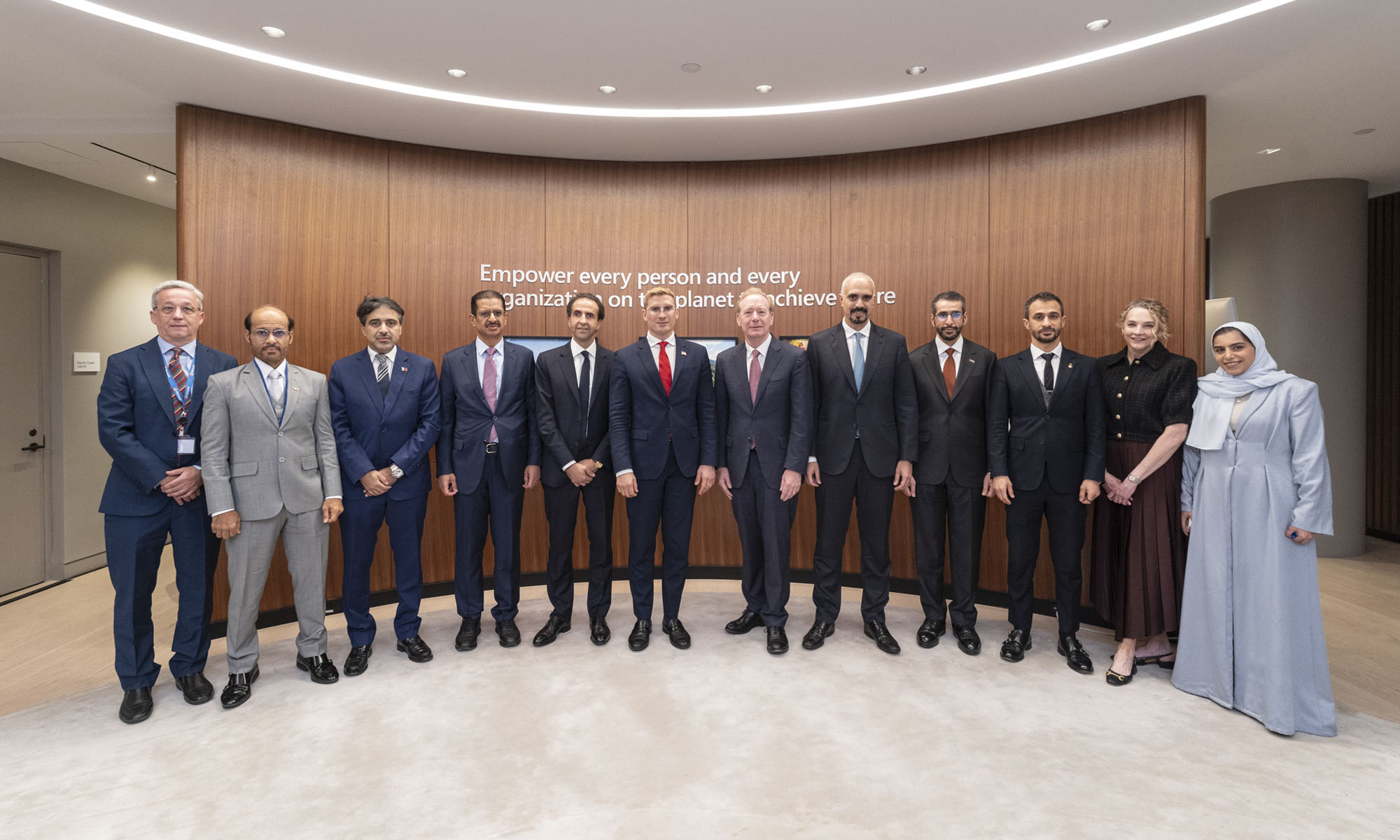
Microsoft is planning more than $10 billion of investment across the UAE, Saudi Arabia, Qatar and Kuwait through 2030, Vice Chair and President Brad Smith told Reuters, calling the spending schedule aggressive. The Iranian conflict that began on February 28 has not persuaded the company to scale back.
“We’re sustaining all the investments we planned to make before this conflict started, and we are in fact adding to them,” Smith said. The $10 billion-plus total does not, however, show how large those additions are.
The investment, which Smith described as part of Microsoft’s continued infrastructure expansion, is aimed at cloud and AI infrastructure and at the company’s growing regional operations. Microsoft also intends to put more than $400 million into subsea and terrestrial connectivity across the Middle East by 2030.
The spending fits the region’s own ambitions too. Gulf governments have been investing heavily in AI infrastructure as part of a push to diversify their economies beyond oil and gas and turn themselves into global technology hubs. Major cloud and AI providers have been drawn in part by the land and relatively low-cost energy on offer.
Microsoft is widening its partnerships with regional AI companies, though not on identical terms. In 2024, it invested $1.5 billion in Abu Dhabi-based G42 for a minority stake, and Smith currently sits on G42’s board. Saudi Arabia’s Humain and Qatar’s Qai are working with Microsoft on selected priority areas, but Smith said the company does not plan to make capital investments in either.
Also Read: Egypt’s Mobile Wallets Are Booming, But Cash Still Has Power
The conflict has added another strand to Microsoft’s work in the region. Since it began, Smith said, the company has supported regional partners with digital resilience assessments, and it is now working with Gulf countries through a digital resilience initiative focused on preparedness and the protection of critical data.
So far, the company has given no country-by-country breakdown of the investment, citing security among other factors. So while the headline figure is public, how Microsoft divides the spending among the four countries is not.

Microsoft Plans $10 Billion-Plus Gulf Expansion Despite Iran Conflict

In Kuwait, Your Surgeon Might Be Operating From Another Country

Qatar Folds 45 State Companies Into A Single Investment Platform

Trip.com Is Betting An AI Agent Will Book Your Next Vacation

Meta’s New $499 Plan Puts A Price On Reaching A Real Person

Apple’s First Folding iPhone Arrives Late To A Shrinking Market
Trip.com Is Betting An AI Agent Will Book Your Next Vacation

Egypt’s Mobile Wallets Are Booming, But Cash Still Has Power

OKX Bets Streaming Perks Can Take Crypto Mainstream Across MENA

Apple’s Latest Product Releases Make The Headlines


-
 News3 weeks ago
Apple’s First Folding iPhone Arrives Late To A Shrinking Market
-
 News2 weeks ago
Trip.com Is Betting An AI Agent Will Book Your Next Vacation
-
 News2 weeks ago
Egypt’s Mobile Wallets Are Booming, But Cash Still Has Power
-
 News2 weeks ago
OKX Bets Streaming Perks Can Take Crypto Mainstream Across MENA