
News
Dubai Future Forum 2024 Welcomes An Era Of Transformative Change
The two-day event is hosting thought leaders from 100 countries to discuss ideas on technology, sustainability, and long-term thinking.

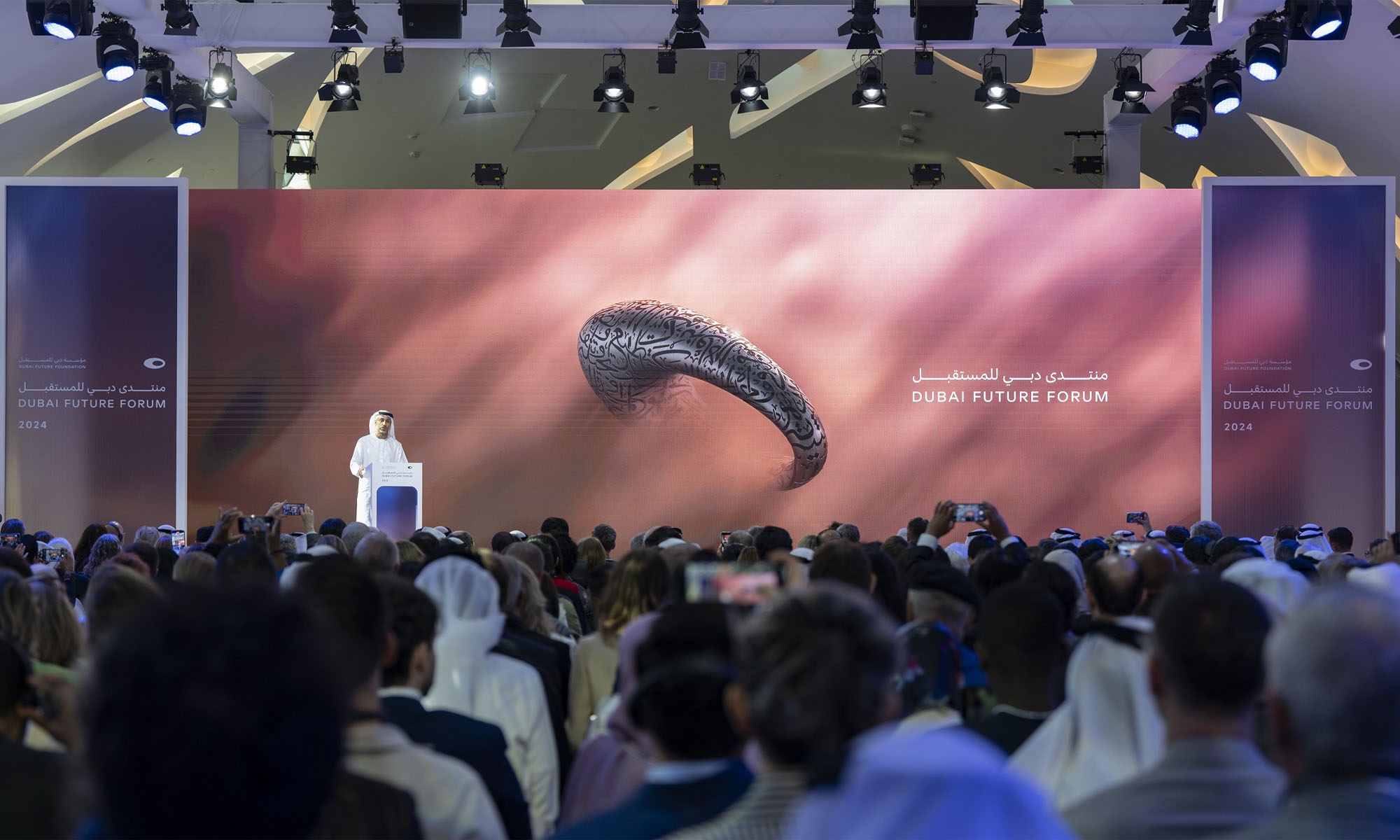
The third edition of the Dubai Future Forum is now on its second day at the iconic Museum of the Future. By the time doors close later today, 2,500 thought leaders from 100 nations will have gathered at an event that organizers have described as “the world’s premier gathering of futurists”.
Kicking off the proceedings, His Excellency Khalfan Belhoul, CEO of the Dubai Future Foundation (DFF), remarked: “Over the next 12 months, we won’t just witness change — it will be a series of era-defining moments. The future is evolving faster than we, or even our ancestors, could have ever envisioned. […] We are entering an era where every industry must embrace future design and transformation — or risk being left behind”.
Empowering Future Generations & Strengthening Local Communities
In a panel titled “From Deep Space to Deep Ocean – A Journey of Exploration and Discovery,” Sara Sabry, the first Arab and African female astronaut, urged governments to create more opportunities for young people in their home countries. Addressing the issue of brain drain during her session at the forum, she emphasized the necessity of building robust local ecosystems.
The panel then delved into how exploration fosters optimism, strengthens resilience, and addresses critical global issues like climate change and biodiversity conservation. The discussion spotlighted the Arab world’s potential to lead the field in space, oceanic, and Earth sciences.
Technological Innovations In Exploration
Prof. Oussama Khatib, an expert in deep-sea robotics and leader of the OceanOneK project, discussed how robotics are aiding underwater exploration.
“Technology today allows us to touch, operate, and intervene at 1,000 meters underwater. This is a gamechanger for how we interact with our planet,” he said, pointing out how recent advancements could inspire Arab inventors and developers across the region.
National Geographic Explorer Suaad Al Harthi also added to the discussion by explaining how cutting-edge technologies are helping conservation: “Technology like satellite telemetry enables us to monitor ecosystems we can’t physically access, allowing us to conserve biodiversity and tackle climate challenges more effectively,” she explained.
Redefining Time
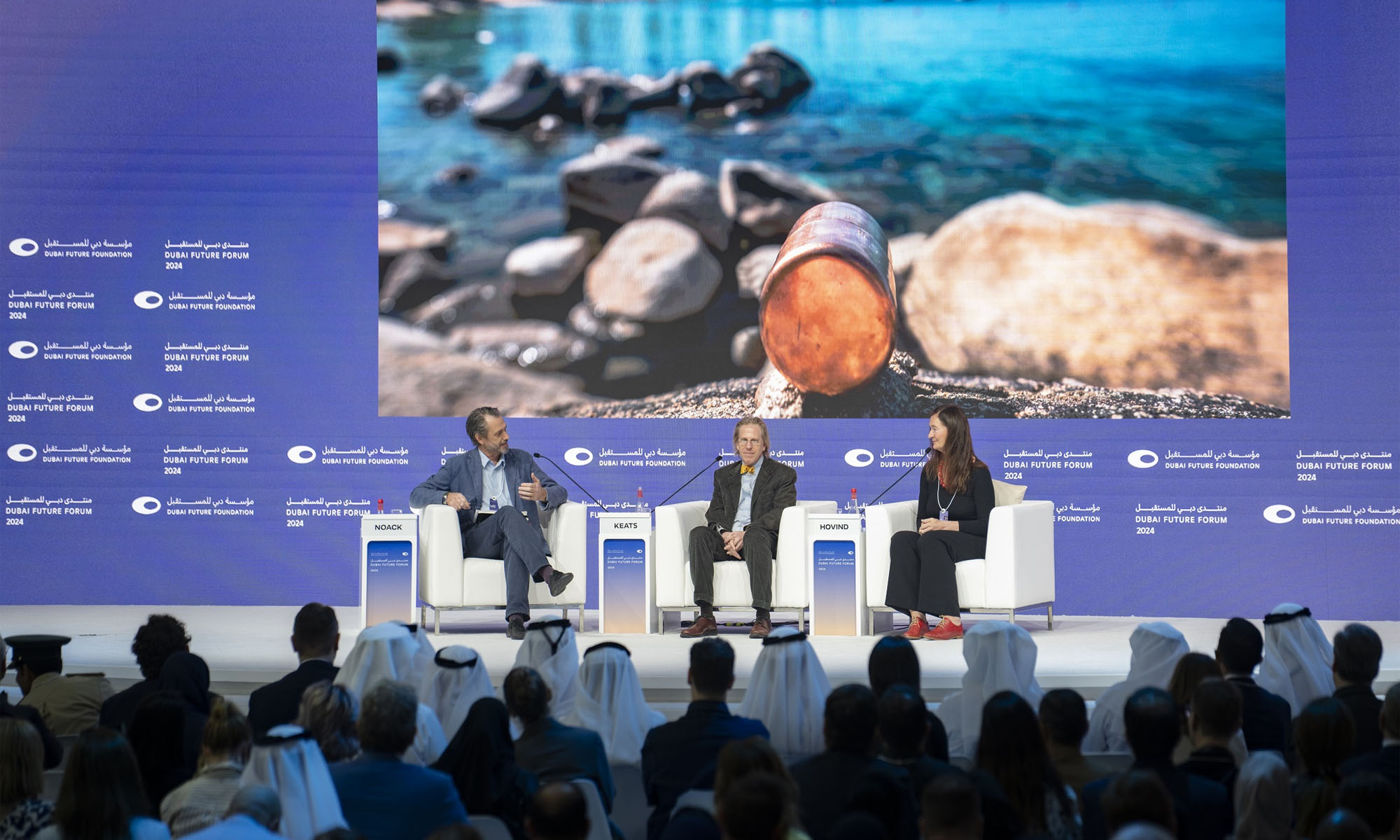
A fireside chat entitled, “Concepts of Time: How Do They Shape Our Future?” drew plenty of interest, with experimental philosopher Jonathan Keats leading the discussion.
Keats, creator of the Millennium Camera project, which captures a single image over a thousand years, emphasized the value of speculative long-term thinking: “If we only think about today’s problems using today’s tools, we reinforce those problems. What we desperately need is an outside perspective — history can provide that, but so can the future,” he said.
Meanwhile, Anne Beate Hovind, Chair of the Future Library Trust, also joined the conversation, “I love practical utopias — dreams within reach. These are visions we can create tomorrow. Young people often have a different understanding of time; they’re impatient for change. We need to show them that their actions today can shape the long-term future,” she said, encouraging collaboration across generations to build sustainable solutions.
Also Read: Google To Launch AI Hub In Saudi Arabia, Aiming For $71B GDP Boost
Honoring The Sci-Fi Visionaries Of Tomorrow
Finally, the event also celebrated winners of the DFF’s inaugural sci-fi writing competition, “Echoes of Tomorrow.” Mohammad Abu Hawash took first prize with “The Interstellar Haj,” exploring the theme of transforming humanity. Second place went to Zainab BH for “The Lifeline,” and Killian MacDonald claimed third with “The Last Selkie.” The top ten stories will be published on the Dubai Future Forum website, showcasing some of the diverse and thought-provoking visions of humanity’s future.





News
Microsoft Plans $10 Billion-Plus Gulf Expansion Despite Iran Conflict
Security is shaping Microsoft’s approach, from resilience work with governments to what it will say about how the money splits by country.
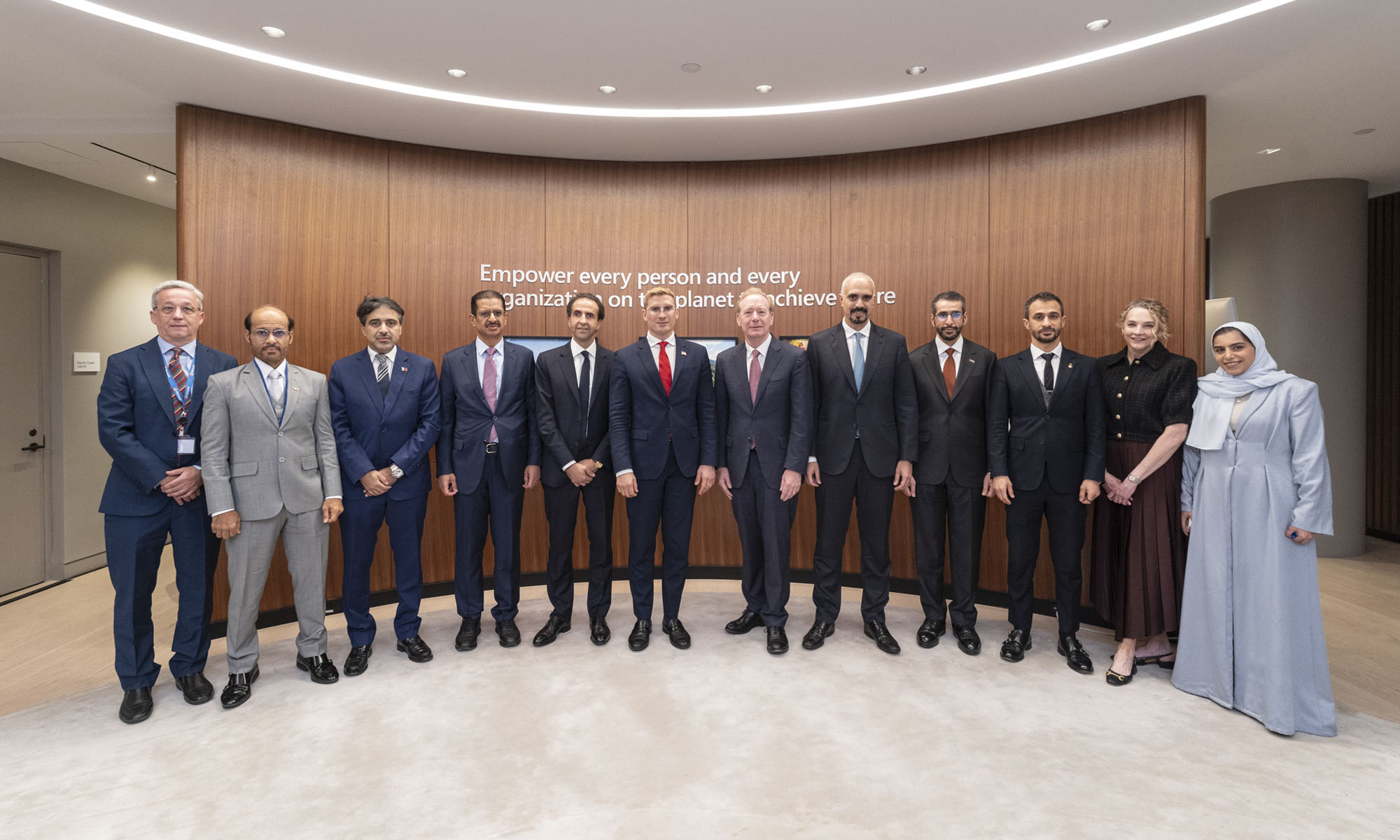
Microsoft is planning more than $10 billion of investment across the UAE, Saudi Arabia, Qatar and Kuwait through 2030, Vice Chair and President Brad Smith told Reuters, calling the spending schedule aggressive. The Iranian conflict that began on February 28 has not persuaded the company to scale back.
“We’re sustaining all the investments we planned to make before this conflict started, and we are in fact adding to them,” Smith said. The $10 billion-plus total does not, however, show how large those additions are.
The investment, which Smith described as part of Microsoft’s continued infrastructure expansion, is aimed at cloud and AI infrastructure and at the company’s growing regional operations. Microsoft also intends to put more than $400 million into subsea and terrestrial connectivity across the Middle East by 2030.
The spending fits the region’s own ambitions too. Gulf governments have been investing heavily in AI infrastructure as part of a push to diversify their economies beyond oil and gas and turn themselves into global technology hubs. Major cloud and AI providers have been drawn in part by the land and relatively low-cost energy on offer.
Microsoft is widening its partnerships with regional AI companies, though not on identical terms. In 2024, it invested $1.5 billion in Abu Dhabi-based G42 for a minority stake, and Smith currently sits on G42’s board. Saudi Arabia’s Humain and Qatar’s Qai are working with Microsoft on selected priority areas, but Smith said the company does not plan to make capital investments in either.
Also Read: Egypt’s Mobile Wallets Are Booming, But Cash Still Has Power
The conflict has added another strand to Microsoft’s work in the region. Since it began, Smith said, the company has supported regional partners with digital resilience assessments, and it is now working with Gulf countries through a digital resilience initiative focused on preparedness and the protection of critical data.
So far, the company has given no country-by-country breakdown of the investment, citing security among other factors. So while the headline figure is public, how Microsoft divides the spending among the four countries is not.

Microsoft Plans $10 Billion-Plus Gulf Expansion Despite Iran Conflict

In Kuwait, Your Surgeon Might Be Operating From Another Country

Qatar Folds 45 State Companies Into A Single Investment Platform

Trip.com Is Betting An AI Agent Will Book Your Next Vacation

Meta’s New $499 Plan Puts A Price On Reaching A Real Person

Apple’s First Folding iPhone Arrives Late To A Shrinking Market
Trip.com Is Betting An AI Agent Will Book Your Next Vacation

Egypt’s Mobile Wallets Are Booming, But Cash Still Has Power

OKX Bets Streaming Perks Can Take Crypto Mainstream Across MENA

Apple’s Latest Product Releases Make The Headlines


-
 News3 weeks ago
Apple’s First Folding iPhone Arrives Late To A Shrinking Market
-
 News2 weeks ago
Trip.com Is Betting An AI Agent Will Book Your Next Vacation
-
 News2 weeks ago
Egypt’s Mobile Wallets Are Booming, But Cash Still Has Power
-
 News2 weeks ago
OKX Bets Streaming Perks Can Take Crypto Mainstream Across MENA