News
Intel Unveils Lunar Lake Chips With AI Capabilities For Copilot+
The CPUs will launch in early Q4 boasting upgrades including an 80% faster GPU and 5 times greater AI performance.


Intel has announced that its upcoming Lunar Lake chips, designed for Copilot+ AI PCs, will be released this fall. However, at this year’s Computex, the company provided more detailed technical information.
Lunar Lake CPUs will feature an enhanced neural processing unit (NPU), delivering up to 48 TOPs (tera operations per second) of AI performance. This is a significant improvement compared to Intel’s previous Meteor Lake chips, which offered a 10 TOPS NPU.

In addition, the new 8-core CPUs will also feature an Xe2 GPU, promising 80% faster gaming performance compared to the previous generation, plus an AI accelerator with an additional 67 TOPS of performance.
However, the most significant (and unexpected) news is that Lunar Lake will also include onboard memory, in a similar manner to Apple Silicon. Lunar Lake chips will be available in 16GB or 32GB configurations, and allow Intel to reduce latency and system power consumption by up to 40% by positioning the memory closer to the processor cores.
Regarding connectivity, the new chips will support the latest standards: Wi-Fi 7, Bluetooth 5.4, PCIe Gen5, and Thunderbolt 4. It is surprising, however, that Intel has not committed to Thunderbolt 5, even though it plans to introduce the standard later this year.
Also Read: Top Free AI Chatbots Available In The Middle East
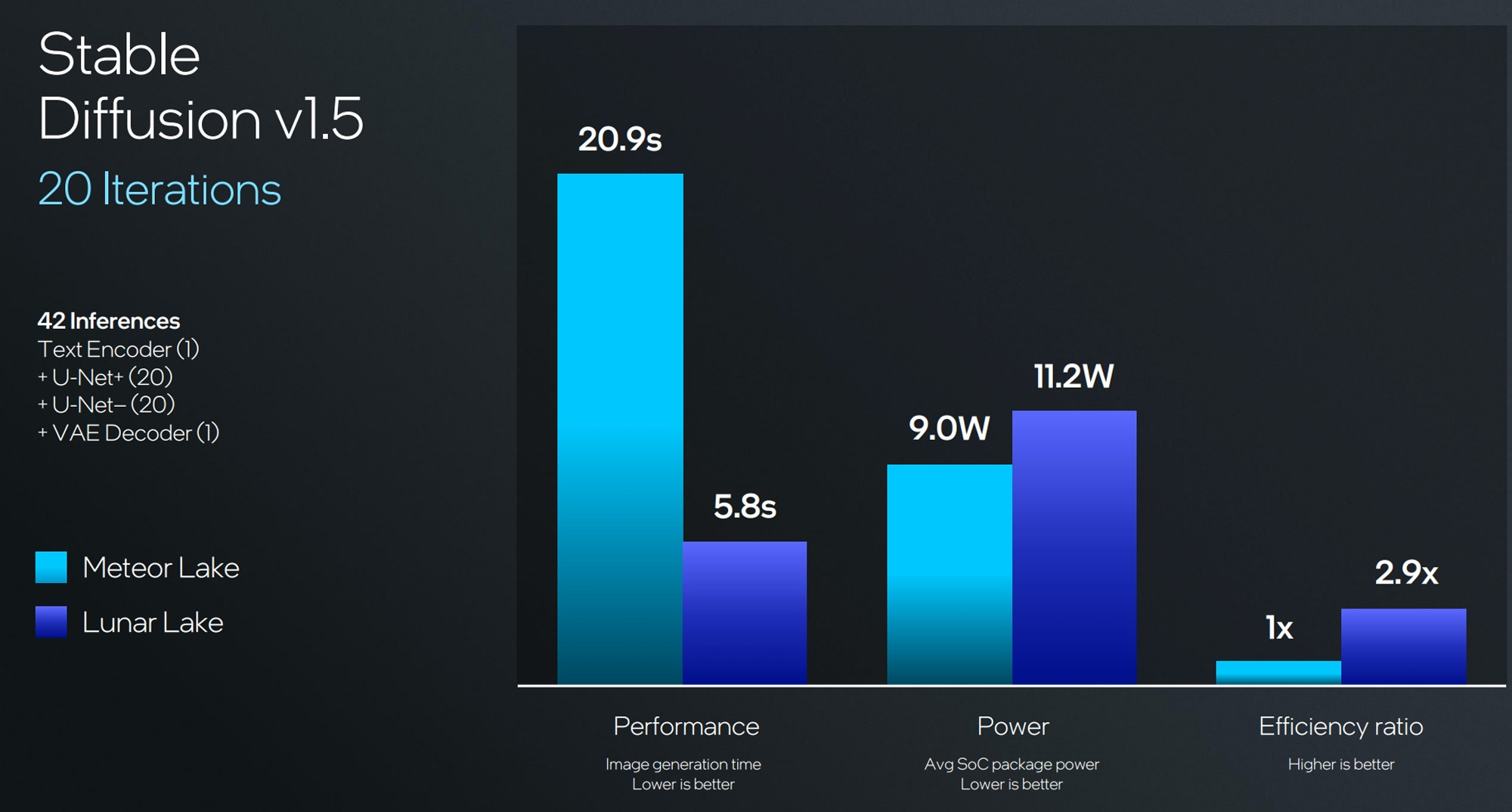
With the release still some months away, Intel has yet to disclose specific chip models or detailed specifications. Nonetheless, based on company benchmarks, Lunar Lake is expected to outperform Meteor Lake significantly. When running Stable Diffusion, Lunar Lake completed 20 iterations in 5.8 seconds, compared to 20.9 seconds for Meteor Lake.
Intel’s game-changing new chips certainly look like something for enthusiasts to get excited about, especially as over 80 different AI laptop models from 20 manufacturers will ship with the new hardware before 2024 is out.




News
Lebanon Ministers Meet Visa Over National Digital Payment Platform
Finance and technology ministers say a comparative study and roadmap will follow before any decision on adopting a model.


Lebanon’s finance and technology ministers met representatives from Visa last week to discuss a proposed unified national digital payment platform for government services, according to a readout from the Ministry of Finance.
The meeting brought together Finance Minister Yassin Jaber, Minister of State for Technology and Artificial Intelligence Kamal Shehadeh, a Visa delegation, and experts from both ministries. Discussion focused on whether Lebanon could establish a single platform through which citizens and institutions would pay taxes, fees, fines and other official transactions electronically, using mobile phones and other digital channels.
The Visa delegation presented examples from countries that have adopted unified government payment platforms, including the United Arab Emirates, Singapore, Estonia and Jordan. According to the readout, the examples were presented as having increased collection rates and expanded financial inclusion.
Talks covered settlement mechanisms, direct transfer to the treasury account, financial reconciliation, risk management, cybersecurity, fees, and an operational model that would involve the private sector. The parties agreed to continue technical and institutional consultations, prepare a comparative study, and develop an implementation roadmap before any decision on adopting a model for Lebanon.
Jaber said the Ministry of Finance had already enabled citizens to pay using credit cards and e-wallets through transfer companies, but described the proposed platform as a further step. He framed the development of electronic payment and collection systems as a priority within the ministry’s modernization plan.
Also Read: Deezer Says AI Tracks Now Make Up 44% Of Uploads
Shehadeh outlined the citizen-facing concept as a single mobile application through which users could settle obligations to ministries, government institutions and other bodies.
“The idea, in short, is that any citizen downloads an application on their mobile phone, through which they can pay all service obligations for all ministries, government institutions, or those owned by the Lebanese state, and others as well, as the platform is not limited only to state institutions,” he said.
Shehadeh added that the platform would not displace banks and money transfer companies that currently provide collection services to the state, calling it complementary to their work.

Lebanon Ministers Meet Visa Over National Digital Payment Platform

AltoVolo Releases Sigma Footage & Sets Date For Demonstrator

Careem Launches Lebanon Aid Drive With WFP

United Arab Emirates To Quit OPEC After 59 Years

YouTube Tests Conversational AI Search Tool

Deezer Says AI Tracks Now Make Up 44% Of Uploads

Yango Ride Introduces In-Chat Trip Planning In ChatGPT

NVIDIA Puts GPT-5.5 Codex In Hands Of 10,000 Staff
YouTube Tests Conversational AI Search Tool