
News
Private Photoshoots, Powered By AI And Built For Arab Women
self.space offers a fully private, tech-led studio experience designed for women in the GCC who value modesty, control, and beautifully natural results.


In a region where modesty and privacy aren’t just preferences but lived and religious principles, traditional photography studios can feel alien, especially for women. The lights, the lens, the presence of strangers — it all creates tension. self.space, a new concept launching in Dubai this September, wants to change that.
The idea is simple but radical: step into a sealed, boutique-like room, alone. There’s no photographer, no audience — just you, a smart mirror, and cinema or studio-grade hardware. What happens next is entirely in your hands.
First piloted at the 2024 Arab Media Summit, the concept struck an immediate chord. Emirati women queued for hours to try it. Some emerged in tears, telling the team it was the first time they had loved a photo of themselves — not because the camera made them look different, but because for once, they felt in control.
“We discovered that people reject their photos mainly because tension never leaves their faces — not because they or the photographers lack talent or beauty,” say co-founders Mitia Muravev (CEO) and Peter Bondarenko (CPO). “That unease is sharper in the Arab world, where privacy and modesty are woven into daily life”.
Mitia steers the brand’s vision and partnerships, while Peter engineers the technology stack — from embedded cameras and soft LED rigs to edge AI and encryption. The result? A user-led shoot experience that’s as secure as it is elegant.
Also Read: Twitch Launches Arabic Right-To-Left Interface For Web & Mobile
Inside the studio, images are captured with a tap. An onboard neural model enhances color and smooths skin in real-time — editorial polish, minus the fakery. Each shot is encrypted and uploaded to a private gallery, accessible only via a one-time code sent to the user’s phone.
The space itself is intentionally calming: part spa, part tech capsule. “We don’t sell photos,” the team insists. “We sell a moment of radical self-ownership. The beauty was already there — our tech just lets you relax enough to see it”.
With over 4,000 users and zero data privacy incidents during early activations, self.space is betting big on the region. The flagship studio opens in Al Quoz this September — and the team has their sights set on turning privacy-first photography into the new norm across the GCC.



News
Egypt’s Mobile Wallets Are Booming, But Cash Still Has Power
Egypt’s telecom regulator says $57.6 billion moved through more than 57 million wallets in six months. And one operator handled 77% of the value.
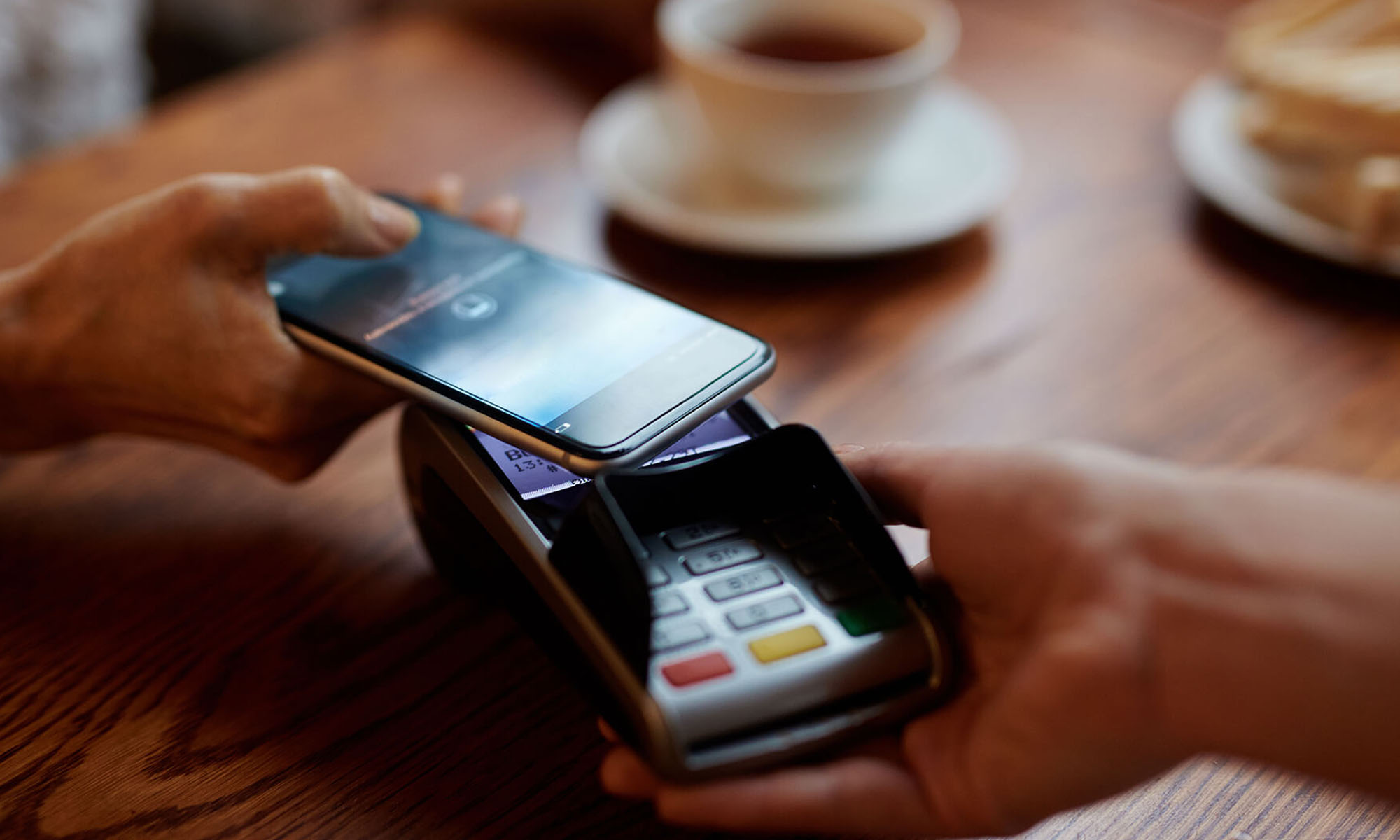
Egypt’s mobile wallets handled EGP 2.96 trillion ($57.6 billion) in transactions in the first half of 2026, according to the National Telecom Regulatory Authority – a 56% rise on the EGP 1.90 trillion ($36.9 billion) recorded a year earlier. Transactions grew faster still, up 62% to 2.22 billion, while registered wallets climbed 23% to 57.01 million.
On one reading, that is exactly what Egypt’s regulators have been pushing for: a payments system that runs through telecom-linked wallets rather than banknotes. But the same data shows how far cash still reaches into it. Cash withdrawals made up just 12% of the transactions taking money out of wallets, yet 75% of the value withdrawn or spent.
Money arrives mostly from bank accounts: transfers through InstaPay accounted for 78% of deposit transactions and 58% of the value deposited, while incoming remittances from abroad made up 3% of deposit transactions but 10% of their value. Once inside, it largely moves between wallets – wallet-to-wallet transfers accounted for 54% of all transactions and 67% of total value, with mobile and internet top-ups a distant second at 25% of volume. In effect, the wallet is serving as a transfer layer: the place money passes through between the bank account and the banknote.
That layer also runs predominantly through one operator. Vodafone Cash held 53% of registered wallets and 57% of active ones, but handled 69% of transactions and 77% of their value. Its nearest rival, e& money, held 23% of registered wallets but 14% of transaction value; Orange Cash 20% and 8%; WE Pay 4% of wallets. How many of the 57.01 million are active is not stated.
Also Read: Visa’s Return To Syria Starts With A Test And A Bank In Lebanon
Adoption is rather uneven in other respects. Men held 38 million wallets, or 67% of the total, against 19 million held by women. Users aged 26 to 45 accounted for half of all wallets, and Cairo alone had 10.6 million, or 19% of the national total, with Giza next at 6.5 million.
The NTRA says it is continuing to work with telecom operators on the regulatory framework for wallet services, part of a wider effort to expand electronic payments and financial inclusion. Its own figures show that effort succeeding on the way in. On the way out, three-quarters of the value still leaves as cash.

Egypt’s Mobile Wallets Are Booming, But Cash Still Has Power

Apple’s First Folding iPhone Arrives Late To A Shrinking Market

Apple’s Latest Product Releases Make The Headlines

Visa’s Return To Syria Starts With A Test And A Bank In Lebanon

RØDE’s New DS3 Studio Arm Is Built For Heavier Creator Setups

Anghami’s New Elite Program Starts With A Three-Decade Catalog

Dubai’s aradus Wants AI To Run The Back Office Of Physical Trade

Qatar Is Getting Its First EV Plant, Built To Cope With Gulf Heat

Qatar Airways Flies The World’s First Starlink-Equipped 787-9

Former Rockstar Director Dismisses GTA 6 Leaks As “Nothing Burger”


-
 News3 weeks ago
Former Rockstar Director Dismisses GTA 6 Leaks As “Nothing Burger”
-
 News3 weeks ago
RØDE’s New DS3 Studio Arm Is Built For Heavier Creator Setups
-
 News3 weeks ago
Dubai Turns AI On Its Own Civil Service To Measure Productivity
-
 News3 weeks ago
Visa’s Return To Syria Starts With A Test And A Bank In Lebanon