
News
Dubai Expands Content Creators Program To Health & Science
The newest phase of the initiative trains digital storytellers to communicate medical topics clearly and credibly.


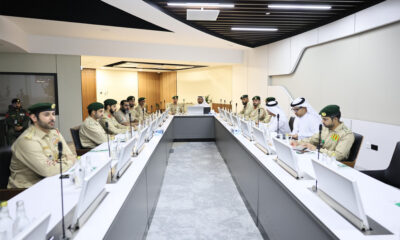
Dubai has launched the second phase of its Content Creators Program, led by the Dubai Press Club (DPC) in partnership with Dubai Health, to raise the quality of health and science content across digital media.
The initiative builds on Dubai’s push to professionalize local content creation. It trains creators to turn complex medical information into clear, reliable stories that connect with wider audiences and support national health awareness. Participants will learn to simplify technical topics and use digital storytelling to present them accurately and responsibly across platforms.
Mona Al Marri, Vice Chairperson and Managing Director of the Dubai Media Council and President of DPC, said the move reinforces Dubai’s media strategy. “Dubai continues to invest in nurturing creative talent and placing media at the heart of its development strategies,” she said. “The latest phase, focusing on health, reflects our commitment to building a professional, knowledge-driven media landscape”.
Dr. Amer Sharif, CEO of Dubai Health and President of Mohammed Bin Rashid University of Medicine and Health Sciences, said the partnership marks “a new chapter in health media,” joining creativity with scientific accuracy to build a more informed public. He noted that linking the media and health sectors helps ensure accurate, engaging communication keeps pace with innovation in healthcare.
Training is delivered with support from TikTok, YouTube, Dubai Media Academy, Edraak Media Academy, Artificial Intelligence Journalism for Research and Forecasting, Blinx, and The Collective Mind. Sessions cover storytelling, AI-assisted production, and short-form video creation for social platforms such as Instagram and YouTube.
Also Read: Abu Dhabi Sets 2027 Target For AI-Run Government
Running until November 2025, the phase targets young creators, healthcare professionals, and media students. It follows the first edition of the program, launched with the Ministry of Economy, which focused on business and economic content. That phase produced a cohort of digital creators now active across UAE media platforms.
By shifting focus to health and science, Dubai is linking its media development agenda with public awareness — an intersection that’s becoming central to the region’s digital growth.



News
Egypt’s Mobile Wallets Are Booming, But Cash Still Has Power
Egypt’s telecom regulator says $57.6 billion moved through more than 57 million wallets in six months. And one operator handled 77% of the value.
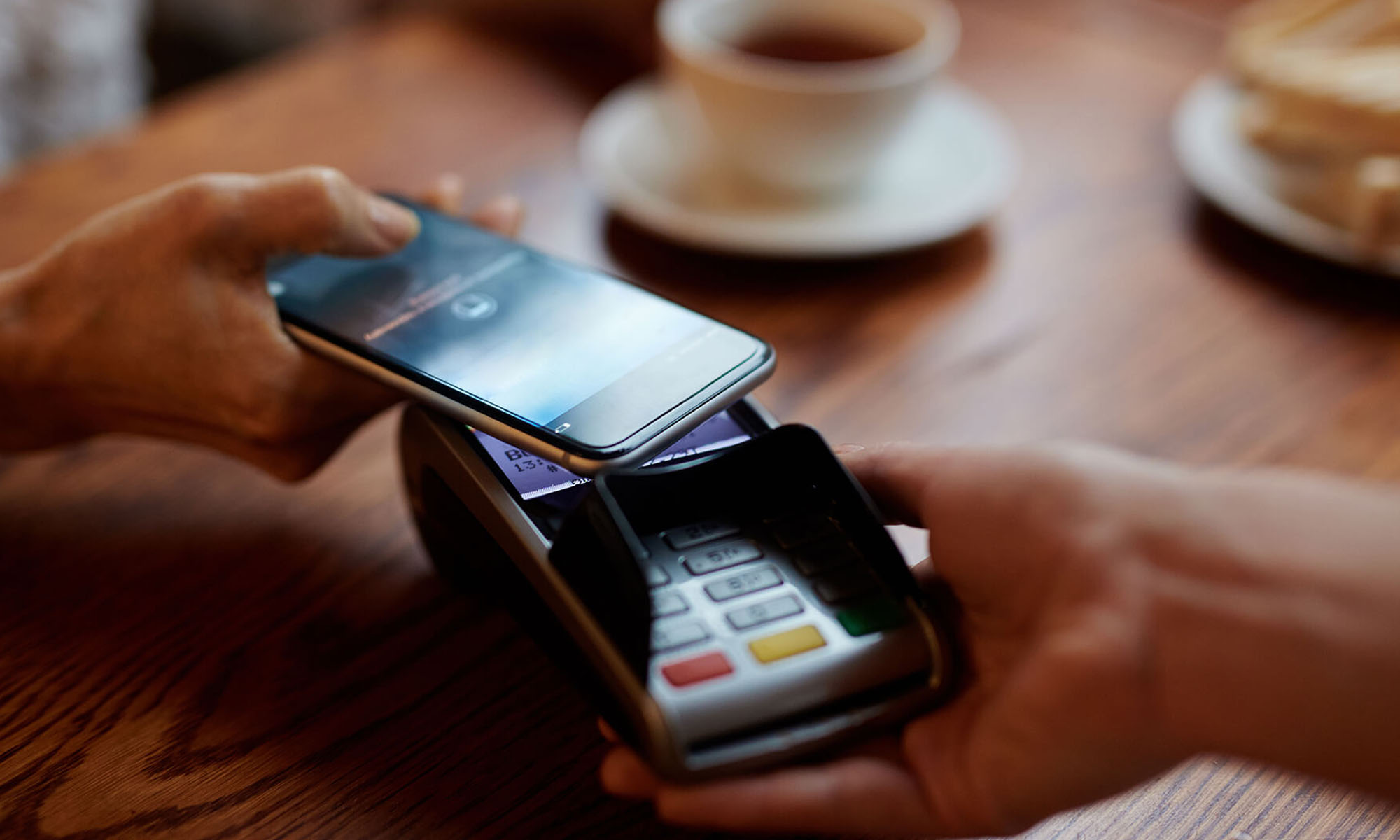
Egypt’s mobile wallets handled EGP 2.96 trillion ($57.6 billion) in transactions in the first half of 2026, according to the National Telecom Regulatory Authority – a 56% rise on the EGP 1.90 trillion ($36.9 billion) recorded a year earlier. Transactions grew faster still, up 62% to 2.22 billion, while registered wallets climbed 23% to 57.01 million.
On one reading, that is exactly what Egypt’s regulators have been pushing for: a payments system that runs through telecom-linked wallets rather than banknotes. But the same data shows how far cash still reaches into it. Cash withdrawals made up just 12% of the transactions taking money out of wallets, yet 75% of the value withdrawn or spent.
Money arrives mostly from bank accounts: transfers through InstaPay accounted for 78% of deposit transactions and 58% of the value deposited, while incoming remittances from abroad made up 3% of deposit transactions but 10% of their value. Once inside, it largely moves between wallets – wallet-to-wallet transfers accounted for 54% of all transactions and 67% of total value, with mobile and internet top-ups a distant second at 25% of volume. In effect, the wallet is serving as a transfer layer: the place money passes through between the bank account and the banknote.
That layer also runs predominantly through one operator. Vodafone Cash held 53% of registered wallets and 57% of active ones, but handled 69% of transactions and 77% of their value. Its nearest rival, e& money, held 23% of registered wallets but 14% of transaction value; Orange Cash 20% and 8%; WE Pay 4% of wallets. How many of the 57.01 million are active is not stated.
Also Read: Visa’s Return To Syria Starts With A Test And A Bank In Lebanon
Adoption is rather uneven in other respects. Men held 38 million wallets, or 67% of the total, against 19 million held by women. Users aged 26 to 45 accounted for half of all wallets, and Cairo alone had 10.6 million, or 19% of the national total, with Giza next at 6.5 million.
The NTRA says it is continuing to work with telecom operators on the regulatory framework for wallet services, part of a wider effort to expand electronic payments and financial inclusion. Its own figures show that effort succeeding on the way in. On the way out, three-quarters of the value still leaves as cash.

Egypt’s Mobile Wallets Are Booming, But Cash Still Has Power

Apple’s First Folding iPhone Arrives Late To A Shrinking Market

Apple’s Latest Product Releases Make The Headlines

Visa’s Return To Syria Starts With A Test And A Bank In Lebanon

RØDE’s New DS3 Studio Arm Is Built For Heavier Creator Setups

Anghami’s New Elite Program Starts With A Three-Decade Catalog

Dubai’s aradus Wants AI To Run The Back Office Of Physical Trade

Qatar Is Getting Its First EV Plant, Built To Cope With Gulf Heat

Qatar Airways Flies The World’s First Starlink-Equipped 787-9

Former Rockstar Director Dismisses GTA 6 Leaks As “Nothing Burger”


-
 News3 weeks ago
Former Rockstar Director Dismisses GTA 6 Leaks As “Nothing Burger”
-
 News3 weeks ago
RØDE’s New DS3 Studio Arm Is Built For Heavier Creator Setups
-

 News3 weeks ago
Dubai Turns AI On Its Own Civil Service To Measure Productivity
-
 News3 weeks ago
Visa’s Return To Syria Starts With A Test And A Bank In Lebanon