
News
AltoVolo Releases Sigma Footage & Sets Date For Demonstrator
AltoVolo has released prototype flight footage and says it has completed a preliminary design review, with a full-scale demonstrator due by end-2026.


AltoVolo released flight footage of its Sigma prototype aircraft today and said it has completed preliminary design work, with a full-scale demonstrator targeted for completion by the end of 2026.
The two-seat hybrid-electric aircraft uses a tilting open-rotor propulsion system. AltoVolo calls the configuration HyperTOL — short for Hybrid Performance Takeoff and Landing.
The company said the preliminary design review is now complete, production aircraft details have been locked, and work has moved into detailed engineering and certification. The full-scale demonstrator is intended to support a manufacturing readiness review, though AltoVolo has not disclosed a build location or capital requirement for that phase.
AltoVolo also revealed that it has appointed a Head of Certification, and said the company has recruited aerospace personnel with experience on complex aircraft programs. AltoVolo says it is targeting full type certification and is engaging with certification requirements as the design moves into detailed engineering.
The Sigma’s open-rotor design has replaced an earlier electric ducted fan configuration following a study of performance, certification, and commercialization factors. The change is said to double hover time. Performance figures cited include a 165 mph cruise speed, 220 mph top speed, 500-mile hybrid range, 250-mile electric-only range, 45-minute hover endurance, 270 kg payload, and a maximum takeoff weight of 980 kg. Estimated takeoff noise runs between 65 and 70 dB(A) at 100 meters.
Also Read: YouTube Tests Conversational AI Search Tool
AltoVolo noted that Sport Pilot certificate holders should be able to operate the Sigma with 25 hours of training, largely limited to fair-weather and daylight conditions. According to the company, license restriction has partly driven the two-seat rather than three-seat configuration.
The company’s funding round remains open; terms and investor details were not disclosed. AltoVolo said it plans to announce exhibition appearances in the coming weeks but gave no dates or locations.
Founder Will Wood previously led design at an unnamed US eVTOL startup in 2024. The company also cites earlier work supporting Aston Martin, Ferrari, and autonomous vehicle firm Wayve.







News
G42’s Inception42 Wants AI To Show Its Work Before Investors Commit
Launched at SuperReturn Middle East, Alpha is pitched at sovereign wealth funds and private equity firms underwriting bigger deals on tighter timelines.
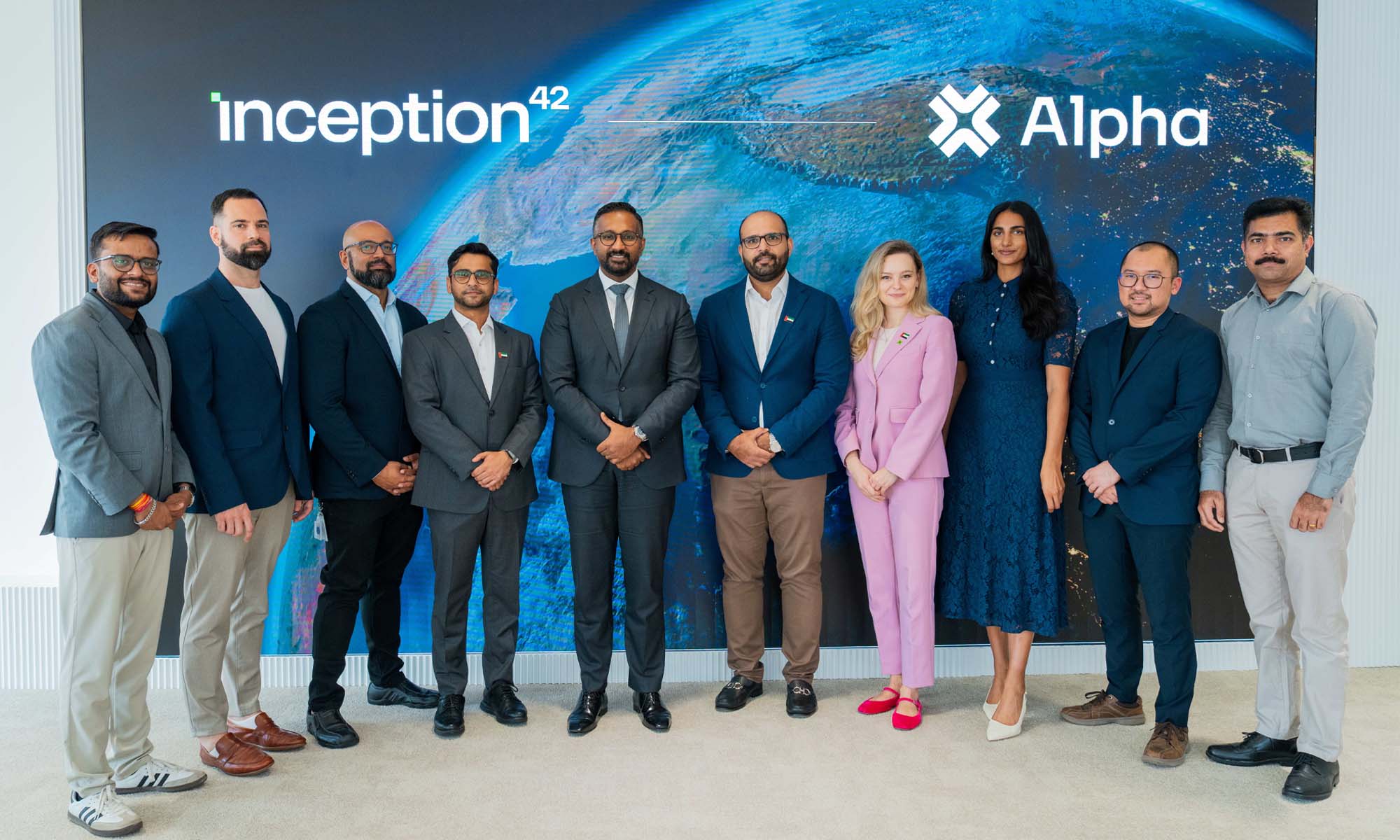
Inception42, G42’s agentic AI company, believes that institutional investors want AI they can check, not just AI that saves time. Its new tool, Alpha, launched at SuperReturn Middle East, is designed to draft investment memos in which every claim points back to its source.
Alpha is aimed at private equity firms, sovereign wealth funds and institutional allocators, which Inception42 says are underwriting larger, more complex positions under tighter timelines. Most AI tools, it argues, speed up individual tasks such as a memo draft or a comps table but leave the investment strategy scattered across files, inboxes and committee decks.
Teams upload Confidential Information Memoranda, diligence packs and portfolio data, which Alpha turns into insights grounded in that material. It checks how complete the diligence is, flagging gaps before they become late-stage surprises, then scores the deal against criteria the institution sets and drafts the memo.
Sourcing every claim is the core of Inception42’s Alpha pitch. Investment committees, the company says, have little time to challenge the evidence, and the audit trail is meant to give them more certainty. The company also promises institutions proof that their own strategy was applied consistently on every deal.
Also Read: Dubai Says Its Deepfake Detector Needs Just 7 Seconds Of Video
“Every investment committee wants the same thing: the full picture of a deal and the confidence to act on it,” says Ashish Koshy, CEO of Inception42. “Alpha gives deal teams and committee members that picture, with every insight traceable to its source, so speed and rigor finally pull in the same direction”.
Alpha is available as SaaS, and investment data, Inception42 says, stays under the institution’s control at every step. Firms can tailor the tool with custom agents, and Alpha Skills will eventually add reusable, practitioner-designed workflows for tasks such as comparables analysis and credit assessment.
The company says Alpha is already proven in the region’s most significant financial institutions. If the tool works as described, committees get an investment memo they can interrogate rather than simply take on trust.

Shokz OpenDots 2 Review: Clip-On Audio Gets A Bass-Heavy Makeover

G42’s Inception42 Wants AI To Show Its Work Before Investors Commit

WHOOP Goes Arabic, Betting On The Gulf’s Appetite For Health Data

New Disney+ Streaming App Has Officially Launched In The UAE

Dubai Says Its Deepfake Detector Needs Just 7 Seconds Of Video

In Kuwait, Your Surgeon Might Be Operating From Another Country

Microsoft Plans $10 Billion-Plus Gulf Expansion Despite Iran Conflict

Qatar Folds 45 State Companies Into A Single Investment Platform

NEOPAY Wants To Follow Merchants Across Channels And Borders

RØDE’s Low-Profile Studio Arm Is Designed To Stay Out Of Shot


-
 News3 weeks ago
In Kuwait, Your Surgeon Might Be Operating From Another Country
-
 News3 weeks ago
Microsoft Plans $10 Billion-Plus Gulf Expansion Despite Iran Conflict
-
 News3 weeks ago
Qatar Folds 45 State Companies Into A Single Investment Platform
-
 News2 weeks ago
NEOPAY Wants To Follow Merchants Across Channels And Borders