
News
Abu Dhabi-Backed Tech Sculpture To Be Installed In Houston
Created for the LAGI 2019 design competition in Abu Dhabi, the high-tech installation will double as a renewable power plant.

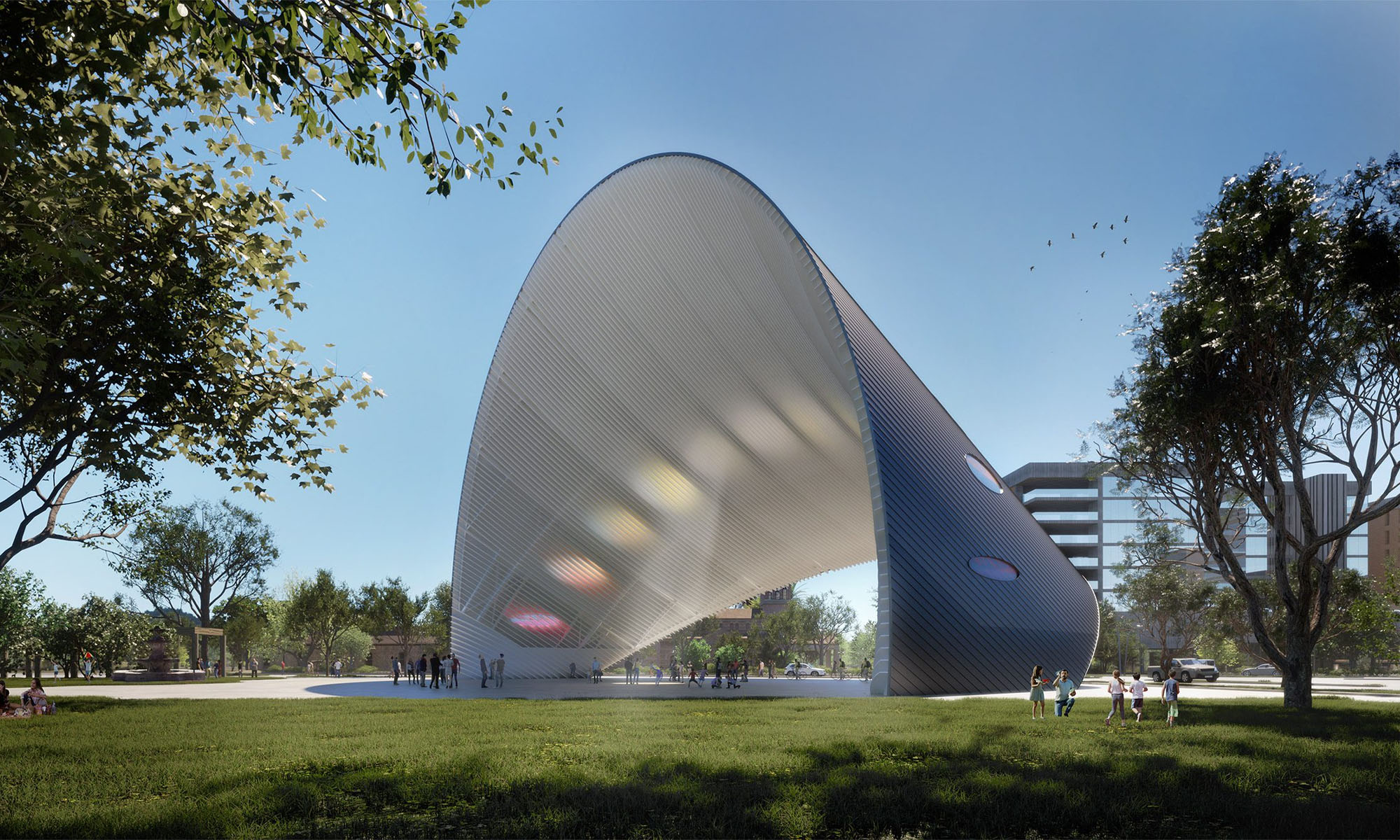
“The world’s largest sundial”, designed by Berlin architect Riccardo Mariano, is set to be installed in the city of Houston, Texas, in the city’s East End neighborhood in 2024.
The project was made possible by the Land Art Generator Initiative partnership with Masdar City, an Abu Dhabi urban development dedicated to creating sustainable cities and lifestyles. For those unaware, Houston, Texas, is twinned with the capital of the United Arab Emirates, hence the connection.
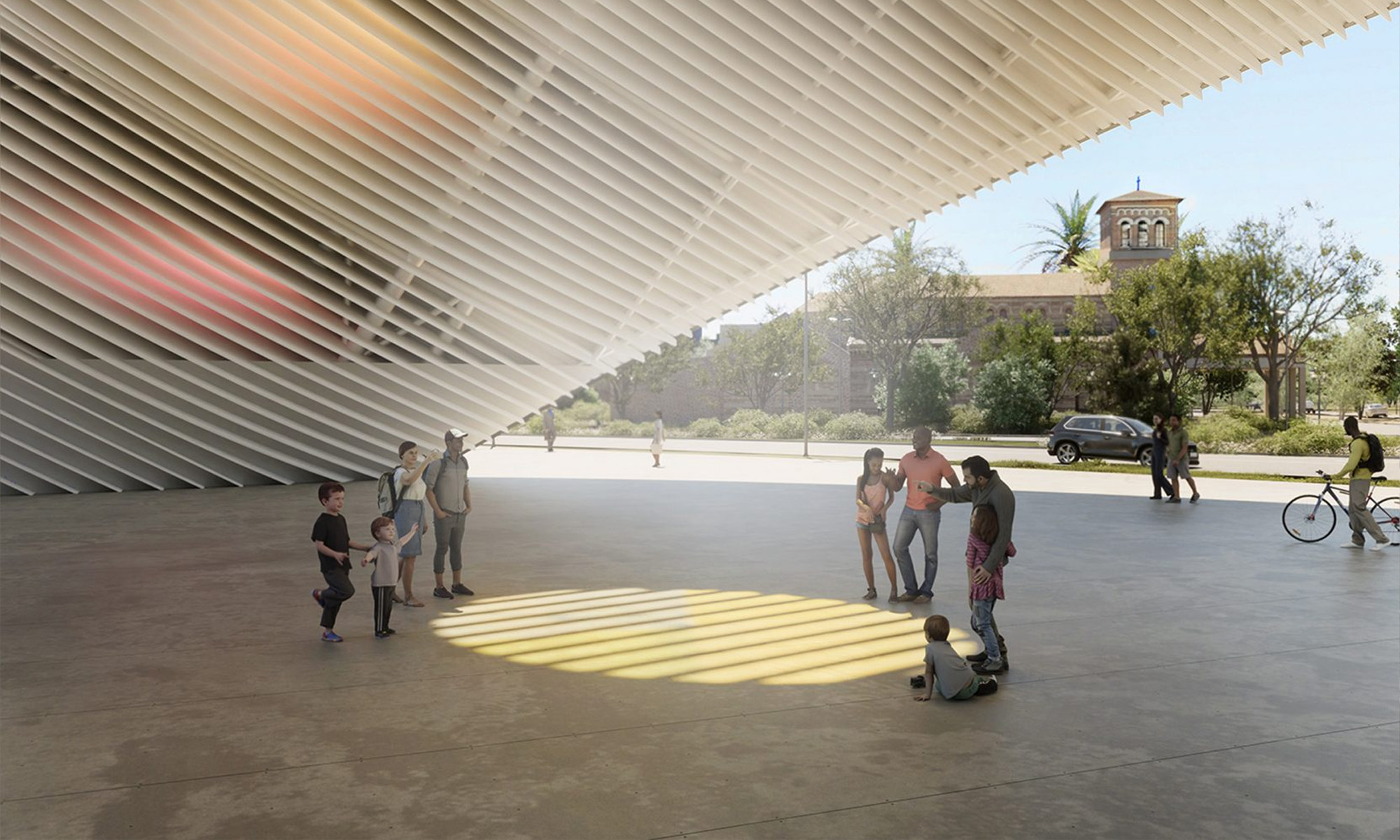
The 30-meter-tall sundial will be known as the Arco del Tiempo (Arch of Time) and functions as an interactive clock, casting sunlight onto the surface of Guadalupe Plaza Park. The installation’s geometry, carefully designed according to Houston’s latitude and longitude, is accurate throughout the seasons and hours of the day.
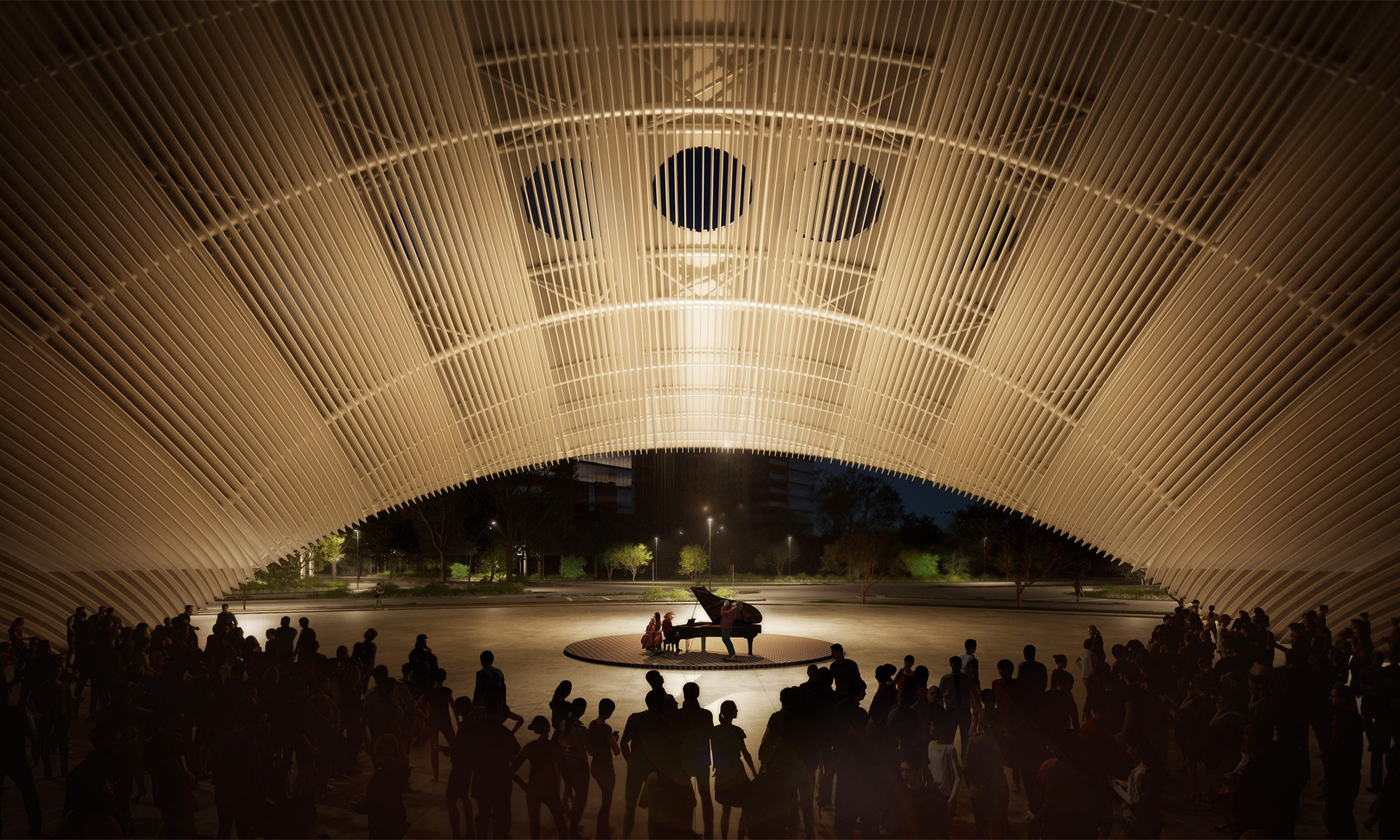
However, the Arco del Tiempo is far more than just a sculpture. The project will also serve as a renewable energy power generation plant. The finished arch will incorporate solar modules on its south-facing side, generating around 400 megawatt-hours of electricity annually — the equivalent energy consumption of 40 local homes.
Also Read: Kuwait Bans Cryptocurrencies, Putting An End To Virtual Assets
“It was a pleasure to be part of the LAGI competition in 2019, and we’re very excited to see the winning entry come to life—particularly in Abu Dhabi’s sister city,” said Chris Wan, Associate Director of Sustainability and Corporate Social Responsibility at Masdar City. “We know that public art plays a significant role in the fabric of a city, and Arco del Tiempo is so much more than public art: it will also educate the public about sustainability while celebrating and advocating for it. It’s a powerful combination. I hope to see more art like it in the cities of the future”.
Over its lifetime, the Arco del Tiempo is projected to generate over 12 million kilowatt-hours of renewable energy, effectively removing 8,500 metric tons of CO2.



News
Syria Just Got Its First Super App Featuring Built-In Digital Payments
Built by UAE-based Syrian founders with the Ministry of Tourism’s backing, My Syria lands as visitor numbers more than double.
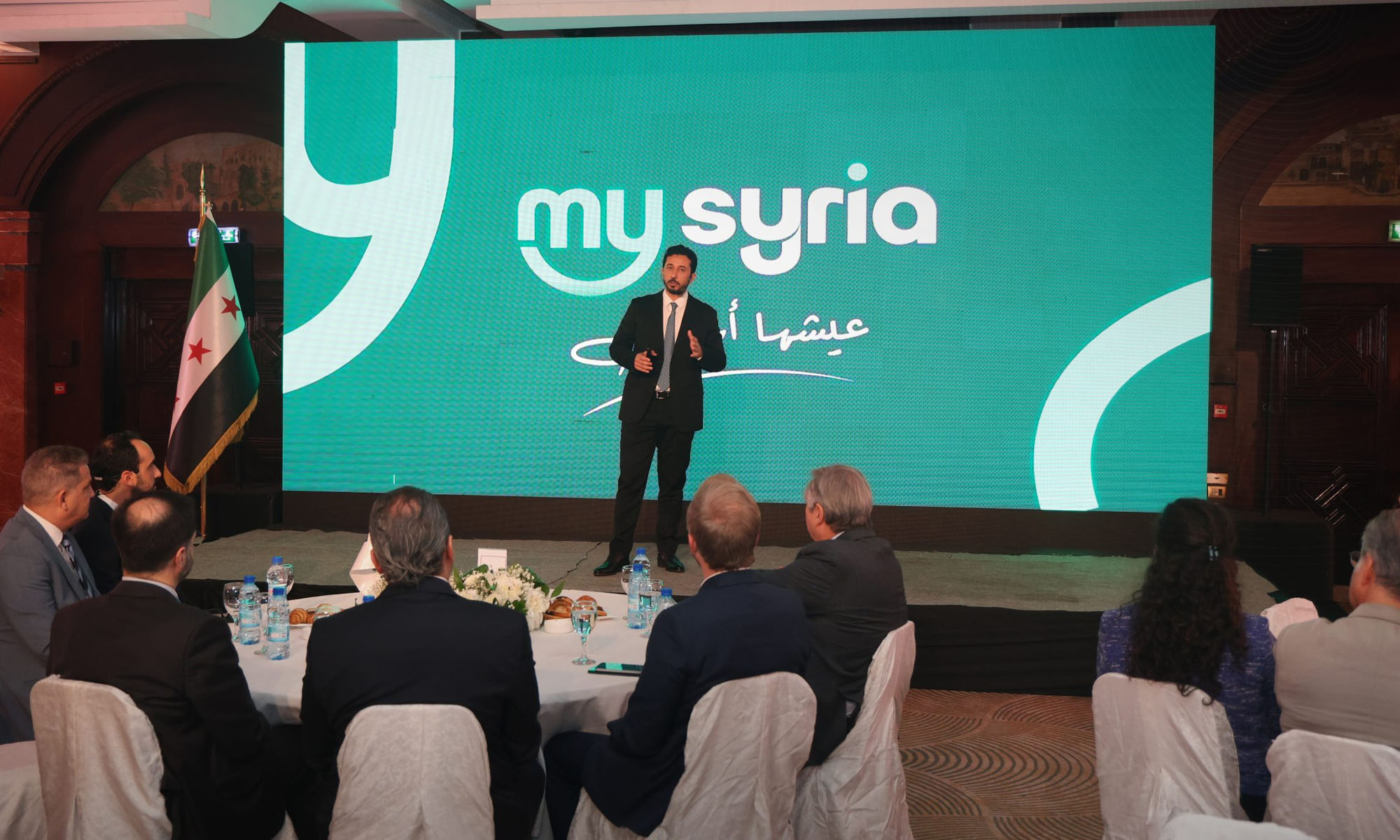
For most of the past decade, paying for anything in Syria with an international card was effectively impossible. Sanctions, a collapsed banking sector, and years of isolation left the country running on cash. That is what makes the launch of My Syria — the country’s first super app — more than a routine product announcement.
Developed by 121 Living, a company founded by four UAE-based Syrian entrepreneurs — Rami Kaiem, Feras Kaiem, Waseem Qudmani, and Kinan Madi — the app launched in Damascus on July 30 under the patronage of Minister of Tourism Mazen Al-Salhani. It bundles hotels, restaurants, transport, attractions, food delivery, and other lifestyle services into a single platform, currently offering eight services with plans to expand to more than 40 verified tourism and hospitality providers across the country.
Although the app already sounds enticing, the headline feature is its built-in payments. My Syria is the first platform in Syria to support cross-border digital payments through Apple Pay, Google Pay, Visa, Mastercard, and American Express — familiar tools for international visitors, and a route into the digital economy for local businesses that have long operated outside it.
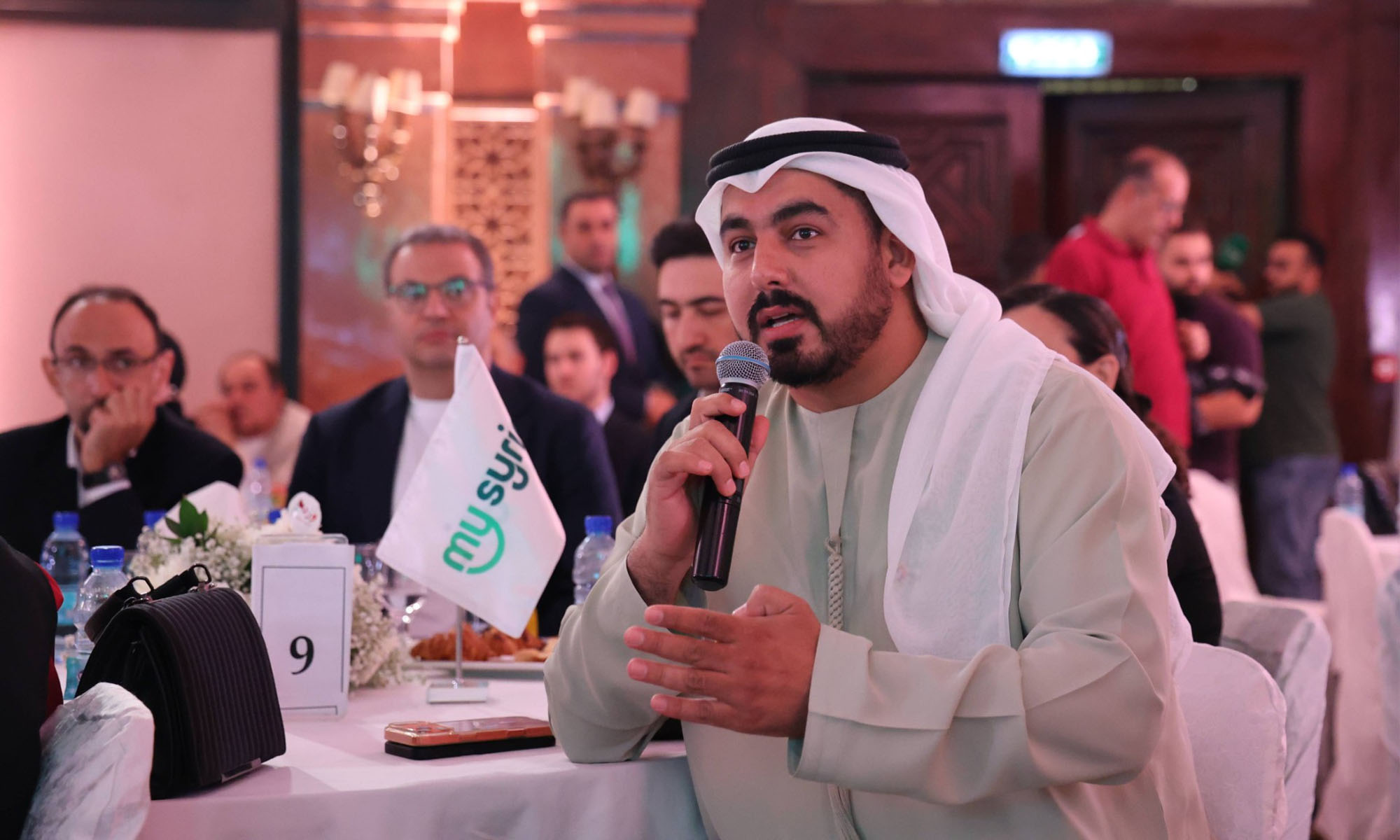
The launch rides on a sharp rebound for the troubled country. Syria’s tourism sector recorded 3.52 million visitor arrivals in the first half of 2026, a 111 percent increase over the 1.67 million during the same period in 2025 — a mix of returning expatriates, regional visitors, and international tourists.
Also Read: This UAE Platform Wants To Replace Fashion Photo Shoots With AI
The Ministry of Tourism, which supported and supervised the app’s development, frames the launch as proof of concept for a wider strategy. “Digital transformation is one of the Ministry’s strategic priorities because it enables us to build a more competitive, connected and investment-ready tourism sector,” Al-Salhani said, inviting technology companies “globally, regionally and locally” to explore opportunities across the wider economy.
For 121 Living, this is phase one, with additional services and expanded geographic coverage planned. Whether a super app can flourish in a market still rebuilding its infrastructure is an open question, but for the first time in years, a visitor to Damascus can pay for dinner with their phone.

Syria Just Got Its First Super App Featuring Built-In Digital Payments

Shokz OpenFit Pro Review: Open-Ear Audio Finally Grows Up

This UAE Platform Wants To Replace Fashion Photo Shoots With AI

Nike And Hyperice’s New Slides Heat And Vibrate Your Feet

Samsung’s Fold Goes Wide, And The Whole Galaxy Range Gets Pricier

Meta’s New AI Tool Builds Images From Public Instagram Photos

TikTok Hopes Labels And Literacy Will Tame AI-Generated Content

Tamper With The Recording LED & Meta’s Glasses Kill Camera

YouTube Rolls Out Supervised Children’s Accounts Across MENA

Samsung’s Galaxy Watch 9 And Ultra 2 Specs Leak Ahead Of Unpacked


-

 News2 months ago
LUVED Is A New Curated Preloved Marketplace For The UAE
-
 News2 months ago
Instagram Now Lets You Tune Its Algorithm, But There’s One Big Catch
-

 News2 months ago
Max Fashion Brings AI Virtual Try-Ons To Gulf Online Shoppers
-

 News2 months ago
Deezer’s Free AI Detector Reveals What’s Hiding In Your Playlists