
News
Dubai Police Launch Dh223,000 Cybersecurity Contest
The “Capture the Flag” challenge and new cyber platform are part of a wider push on digital safety within the Emirate.


Dubai Police have unveiled a new Dh223,000 hacking contest, putting students and professionals through their paces during Cybersecurity Awareness Month.
The “Capture the Flag” challenge is split into three tracks: school students competing for Dh40,000, university entrants for Dh78,000, and professionals for Dh95,000. Online qualifiers run from October 5 until the end of the month, with finalists meeting at the Dubai Police Officers’ Club on October 25-26. Officers said the aim is to surface talent in penetration testing that could bolster future security efforts.
The competition comes as demand for skilled cybersecurity specialists continues to climb across the region. Governments and private firms alike are turning to ethical hackers to stress-test networks, with the UAE positioning itself as a training ground for digital defense.
The contest is only one element of a broader campaign. Police are staging dialogue sessions, workshops for schools and universities, and a forum for businesses to sharpen awareness. The Protection Centre “Hemyah,” better known for programs on drugs or bullying, has shifted focus this month to online threats.
A new digital portal, ecrimehub, went live alongside the campaign. It offers guides on common scams, a library of 60 awareness videos, and an AI assistant that police say can answer questions with near-perfect accuracy. Users can upload screenshots for instant fraud checks. Weekly quizzes will add a public engagement element, with prizes for winners at month’s end.
Also Read: Abu Dhabi’s TII Rolls Out Fiber Laser For Surgery And Industry
“On the ecrimehub website, technology meets public safety in an innovative way,” explained Major Engineer Khalil Al Hosani, Acting Deputy Director of the Cybercrime and Artificial Intelligence Crimes Department.
Police stressed that fraud reports submitted through the portal are investigated immediately, with suspicious accounts or numbers shut down when possible. The push underscores the UAE’s effort to harden its digital landscape and promote safer use of technology, in line with national strategies to build a secure and resilient society.






News
Microsoft Plans $10 Billion-Plus Gulf Expansion Despite Iran Conflict
Security is shaping Microsoft’s approach, from resilience work with governments to what it will say about how the money splits by country.
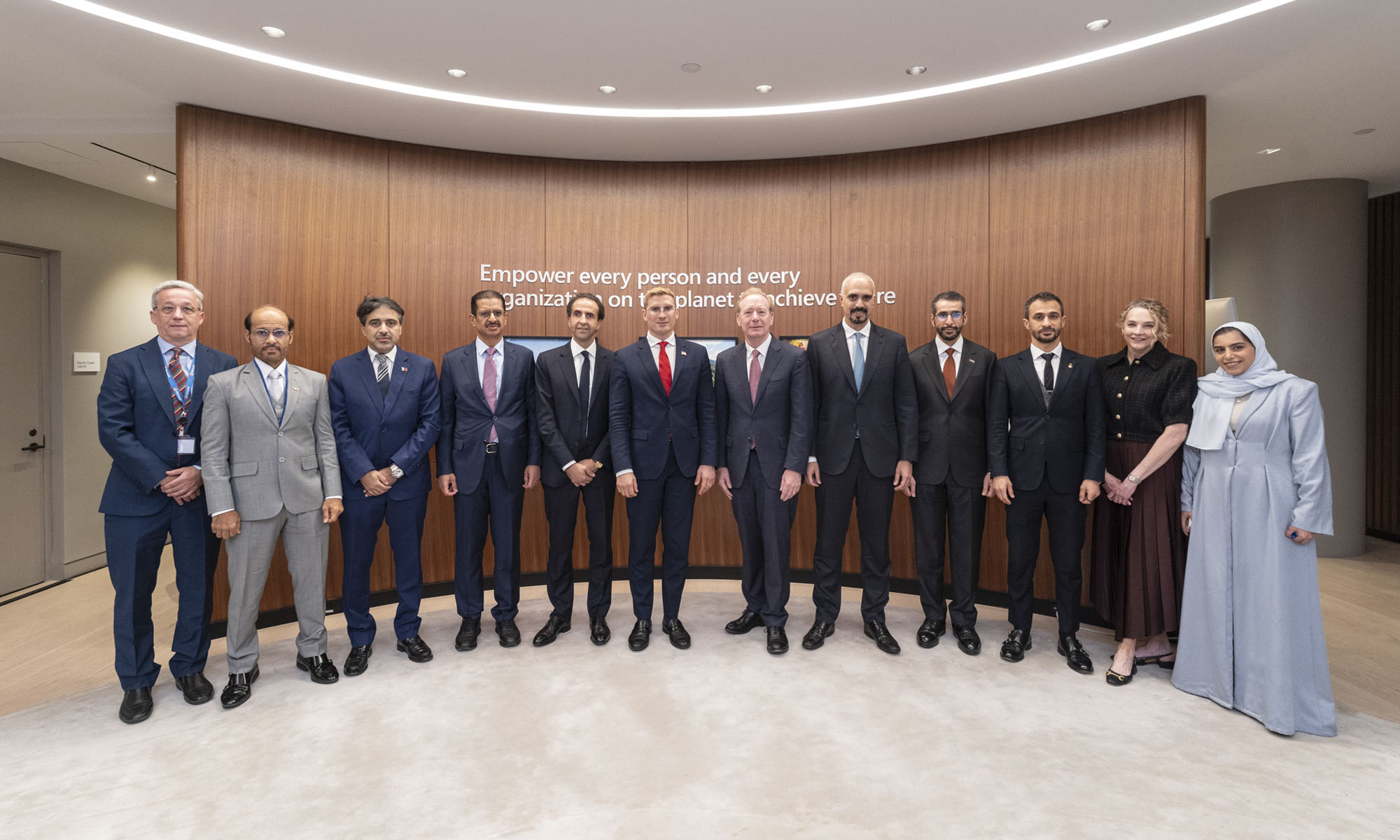
Microsoft is planning more than $10 billion of investment across the UAE, Saudi Arabia, Qatar and Kuwait through 2030, Vice Chair and President Brad Smith told Reuters, calling the spending schedule aggressive. The Iranian conflict that began on February 28 has not persuaded the company to scale back.
“We’re sustaining all the investments we planned to make before this conflict started, and we are in fact adding to them,” Smith said. The $10 billion-plus total does not, however, show how large those additions are.
The investment, which Smith described as part of Microsoft’s continued infrastructure expansion, is aimed at cloud and AI infrastructure and at the company’s growing regional operations. Microsoft also intends to put more than $400 million into subsea and terrestrial connectivity across the Middle East by 2030.
The spending fits the region’s own ambitions too. Gulf governments have been investing heavily in AI infrastructure as part of a push to diversify their economies beyond oil and gas and turn themselves into global technology hubs. Major cloud and AI providers have been drawn in part by the land and relatively low-cost energy on offer.
Microsoft is widening its partnerships with regional AI companies, though not on identical terms. In 2024, it invested $1.5 billion in Abu Dhabi-based G42 for a minority stake, and Smith currently sits on G42’s board. Saudi Arabia’s Humain and Qatar’s Qai are working with Microsoft on selected priority areas, but Smith said the company does not plan to make capital investments in either.
Also Read: Egypt’s Mobile Wallets Are Booming, But Cash Still Has Power
The conflict has added another strand to Microsoft’s work in the region. Since it began, Smith said, the company has supported regional partners with digital resilience assessments, and it is now working with Gulf countries through a digital resilience initiative focused on preparedness and the protection of critical data.
So far, the company has given no country-by-country breakdown of the investment, citing security among other factors. So while the headline figure is public, how Microsoft divides the spending among the four countries is not.

Microsoft Plans $10 Billion-Plus Gulf Expansion Despite Iran Conflict

In Kuwait, Your Surgeon Might Be Operating From Another Country

Qatar Folds 45 State Companies Into A Single Investment Platform

Trip.com Is Betting An AI Agent Will Book Your Next Vacation

Meta’s New $499 Plan Puts A Price On Reaching A Real Person

Apple’s First Folding iPhone Arrives Late To A Shrinking Market
Trip.com Is Betting An AI Agent Will Book Your Next Vacation

Egypt’s Mobile Wallets Are Booming, But Cash Still Has Power

OKX Bets Streaming Perks Can Take Crypto Mainstream Across MENA

Apple’s Latest Product Releases Make The Headlines


-
 News3 weeks ago
Apple’s First Folding iPhone Arrives Late To A Shrinking Market
-
 News2 weeks ago
Trip.com Is Betting An AI Agent Will Book Your Next Vacation
-
 News2 weeks ago
Egypt’s Mobile Wallets Are Booming, But Cash Still Has Power
-
 News2 weeks ago
OKX Bets Streaming Perks Can Take Crypto Mainstream Across MENA