
News
IDC Saudi Arabia CIO Summit 2022 Will Explore KSA’s Digital Transformation
The two-day event will explore the Kingdom’s accelerated pace of innovation, its evolving technology landscape, and present-day strategies.

Saudi Arabia is undergoing a remarkable digital transformation guided by its Saudi Vision 2030 strategic framework, whose overarching goal is to lessen the country’s dependence on oil by diversifying its economy and enhancing innovation. The IDC Saudi Arabia CIO Summit 2022 edition will explore the Kingdom’s digital transformation over the course of two days filled with discussions, panel sessions, and keynote presentations from regional and global technology experts alike.
“This event will explore the Kingdom’s accelerated pace of innovation, its evolving technology landscape, and present-day strategies that the country’s organizations are implementing to transform into digitally resilient future enterprises,” states International Data Corporation (IDC) on its website.
The in-person event will be hosted on September 19 & 20, 2022 at the Fairmont Hotel Riyadh, a luxurious five-star hotel located in the Business Gate Complex, and those who would like to attend it can register free of charge to learn how the Kingdom’s CIOs and their international partners are building resilient digital infrastructures to make Saudi Arabia a leading ICT nation within the next decade.
Hamza Naqshbandi, Associate Vice President (Saudi Arabia & Bahrain) at IDC, will kick off the event with a welcome address, and his speech will be followed by a talk about tech strategies for a digital-first world given by Steven Frantzen, IDC’s Senior Vice President & Regional Managing Director (EMEA).
The long list of confirmed speakers who will share their valuable experience with the attendees of the IDC Saudi Arabia CIO Summit 2022 edition includes experts in the field, respected practitioners, and leaders from the industry, including:
- Jason Roos, CIO of King Abdullah University of Science and Technology (KAUST).
- Phil Andrews, Regional Vice President of Northern and Eastern Europe for Red Hat.
- Stephane Monboisset, Business Development Manager at Fortinet.
- Zaid Ghattas, Senior Commercial Lead at AMD.
- Turki Aldahmash, Executive Director of Business Technology (CTO) at National Center for Performance Measurement (Adaa).
- Neil Harbisson, the world’s first officially recognized human cyborg.
In addition to its main agenda, the IDC Saudi Arabia CIO Summit 2022 edition will also play host to the IDC Excellence Awards to recognize the efforts of the country’s leading technology executives across 3 categories (CISO of the Year, CIO of the Year, and Women in Technology & Business), with a winner and 10 finalists named in each. A live awards ceremony will be held on Day 2 and hosted on a virtual platform.
As a premier global provider of market intelligence, advisory services, and events for the information technology sector, IDC is deeply familiar with the impact of technology on the world around us. Its worldwide network of 1,300 analysts spans 110 countries, helping public and private sector decision-makers alike make fact-based technology decisions to achieve their key business objectives.




News
Microsoft Plans $10 Billion-Plus Gulf Expansion Despite Iran Conflict
Security is shaping Microsoft’s approach, from resilience work with governments to what it will say about how the money splits by country.

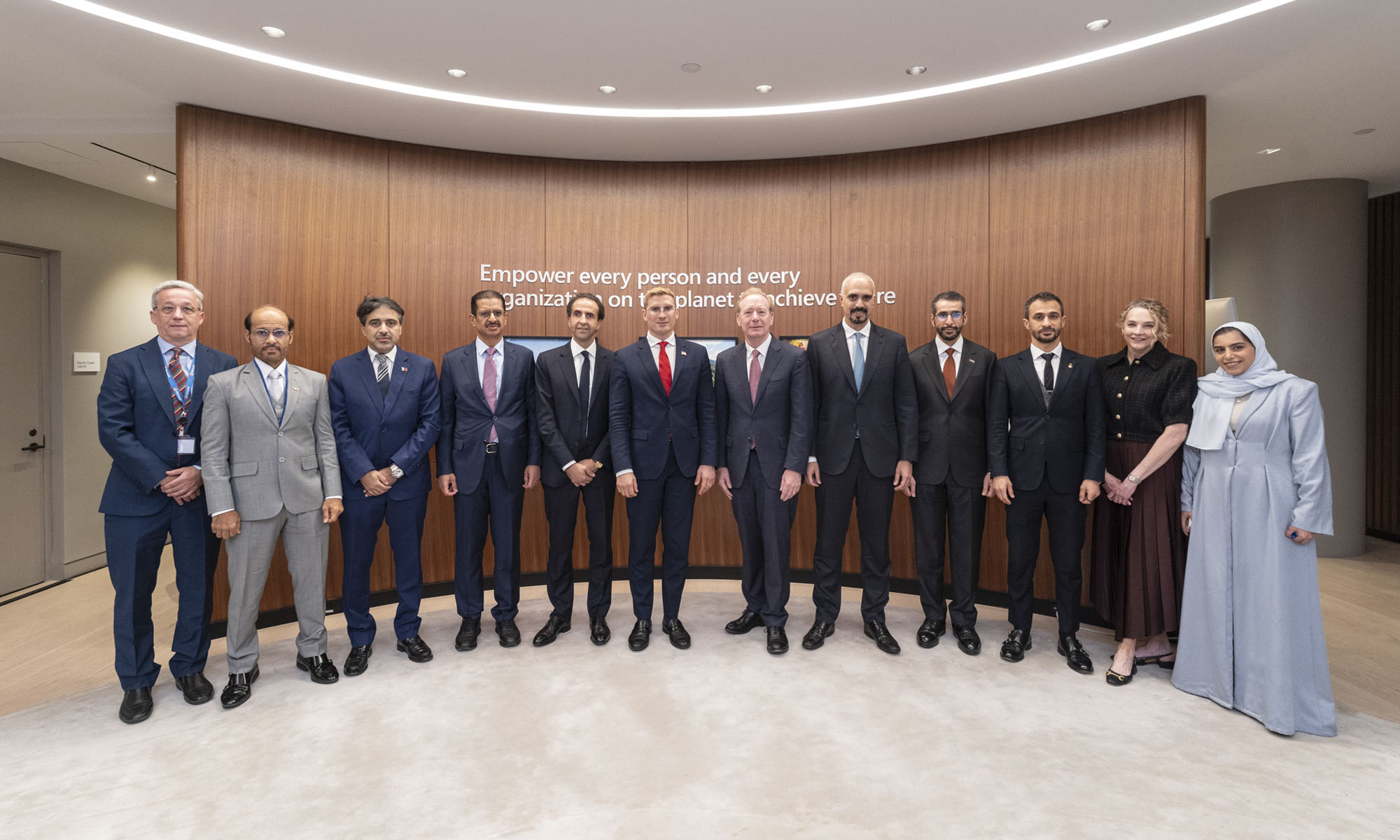
Microsoft is planning more than $10 billion of investment across the UAE, Saudi Arabia, Qatar and Kuwait through 2030, Vice Chair and President Brad Smith told Reuters, calling the spending schedule aggressive. The Iranian conflict that began on February 28 has not persuaded the company to scale back.
“We’re sustaining all the investments we planned to make before this conflict started, and we are in fact adding to them,” Smith said. The $10 billion-plus total does not, however, show how large those additions are.
The investment, which Smith described as part of Microsoft’s continued infrastructure expansion, is aimed at cloud and AI infrastructure and at the company’s growing regional operations. Microsoft also intends to put more than $400 million into subsea and terrestrial connectivity across the Middle East by 2030.
The spending fits the region’s own ambitions too. Gulf governments have been investing heavily in AI infrastructure as part of a push to diversify their economies beyond oil and gas and turn themselves into global technology hubs. Major cloud and AI providers have been drawn in part by the land and relatively low-cost energy on offer.
Microsoft is widening its partnerships with regional AI companies, though not on identical terms. In 2024, it invested $1.5 billion in Abu Dhabi-based G42 for a minority stake, and Smith currently sits on G42’s board. Saudi Arabia’s Humain and Qatar’s Qai are working with Microsoft on selected priority areas, but Smith said the company does not plan to make capital investments in either.
Also Read: Egypt’s Mobile Wallets Are Booming, But Cash Still Has Power
The conflict has added another strand to Microsoft’s work in the region. Since it began, Smith said, the company has supported regional partners with digital resilience assessments, and it is now working with Gulf countries through a digital resilience initiative focused on preparedness and the protection of critical data.
So far, the company has given no country-by-country breakdown of the investment, citing security among other factors. So while the headline figure is public, how Microsoft divides the spending among the four countries is not.

Microsoft Plans $10 Billion-Plus Gulf Expansion Despite Iran Conflict

In Kuwait, Your Surgeon Might Be Operating From Another Country

Qatar Folds 45 State Companies Into A Single Investment Platform

Trip.com Is Betting An AI Agent Will Book Your Next Vacation

Meta’s New $499 Plan Puts A Price On Reaching A Real Person

Apple’s First Folding iPhone Arrives Late To A Shrinking Market
Trip.com Is Betting An AI Agent Will Book Your Next Vacation

Egypt’s Mobile Wallets Are Booming, But Cash Still Has Power

OKX Bets Streaming Perks Can Take Crypto Mainstream Across MENA

Musk’s Boring Company Wants To Dig 150 KM Of Tunnel Under The UAE


-
 News3 weeks ago
Apple’s First Folding iPhone Arrives Late To A Shrinking Market
-
 News2 weeks ago
Trip.com Is Betting An AI Agent Will Book Your Next Vacation
-
 News2 weeks ago
Egypt’s Mobile Wallets Are Booming, But Cash Still Has Power
-
 News2 weeks ago
OKX Bets Streaming Perks Can Take Crypto Mainstream Across MENA