
News
LinkedIn’s New AI Tools Rethink How Job Seekers Discover Career Paths
By understanding intent, not just keywords, LinkedIn’s AI helps users find more meaningful job matches — even in roles they hadn’t considered.


LinkedIn is rolling out new AI-powered job search tools designed to match users with better career opportunities — whether or not they know exactly what they’re looking for.
The new features allow job seekers to describe their goals in natural language instead of relying on rigid keywords or exact job titles. Want to explore “business development in the video game industry” or “use your marketing skills to help fund cancer research”? LinkedIn’s AI now understands even the most abstract of intents and can recommend roles that align — even if job listings don’t use those specific terms.
“It’s about helping people express what they want to do in their own words,” said Rohan Rajiv, head of career products at LinkedIn. “Our AI figures out the semantics behind that and matches it with relevant opportunities”.
This evolution in job search is powered by large language models (LLMs), the same kind of AI that fuels tools like ChatGPT. These models excel at inferring meaning from both job descriptions and user profiles, identifying matches that traditional search engines might miss. For instance, the AI can assume a web developer is proficient in HTML, even if they haven’t explicitly listed it on their profile.
Another tool, called Job Match, assesses how well a user fits a role based on their skills and experience. It also pinpoints gaps — like missing certifications or limited exposure to a required technology — helping users better prepare before they apply.
LinkedIn’s AI also offers context around job listings, such as whether an employer is actively hiring, whether a role is promoted on the platform, and typical wait times between application and response.
Also Read: Zurich University AI Researchers Ran Secret Test On Reddit Users
Erran Berger, LinkedIn’s VP of engineering, explained that recruiters are also overwhelmed: “They’re spending up to five hours a day filtering through applications, and over half don’t meet basic requirements”. The new AI features aim to improve quality on both sides, helping candidates apply more strategically and saving time for hiring teams.
With over 15 million job postings and 11,000 job applications submitted every minute on LinkedIn, these tools are a major step toward transforming a job market that often feels inefficient and transactional.
CEO Ryan Roslansky framed the update as part of LinkedIn’s long-term evolution: “Twenty years ago, we connected recruiters with passive candidates. Today, we’re using AI to redefine what’s possible in job discovery”.


News
Microsoft Plans $10 Billion-Plus Gulf Expansion Despite Iran Conflict
Security is shaping Microsoft’s approach, from resilience work with governments to what it will say about how the money splits by country.
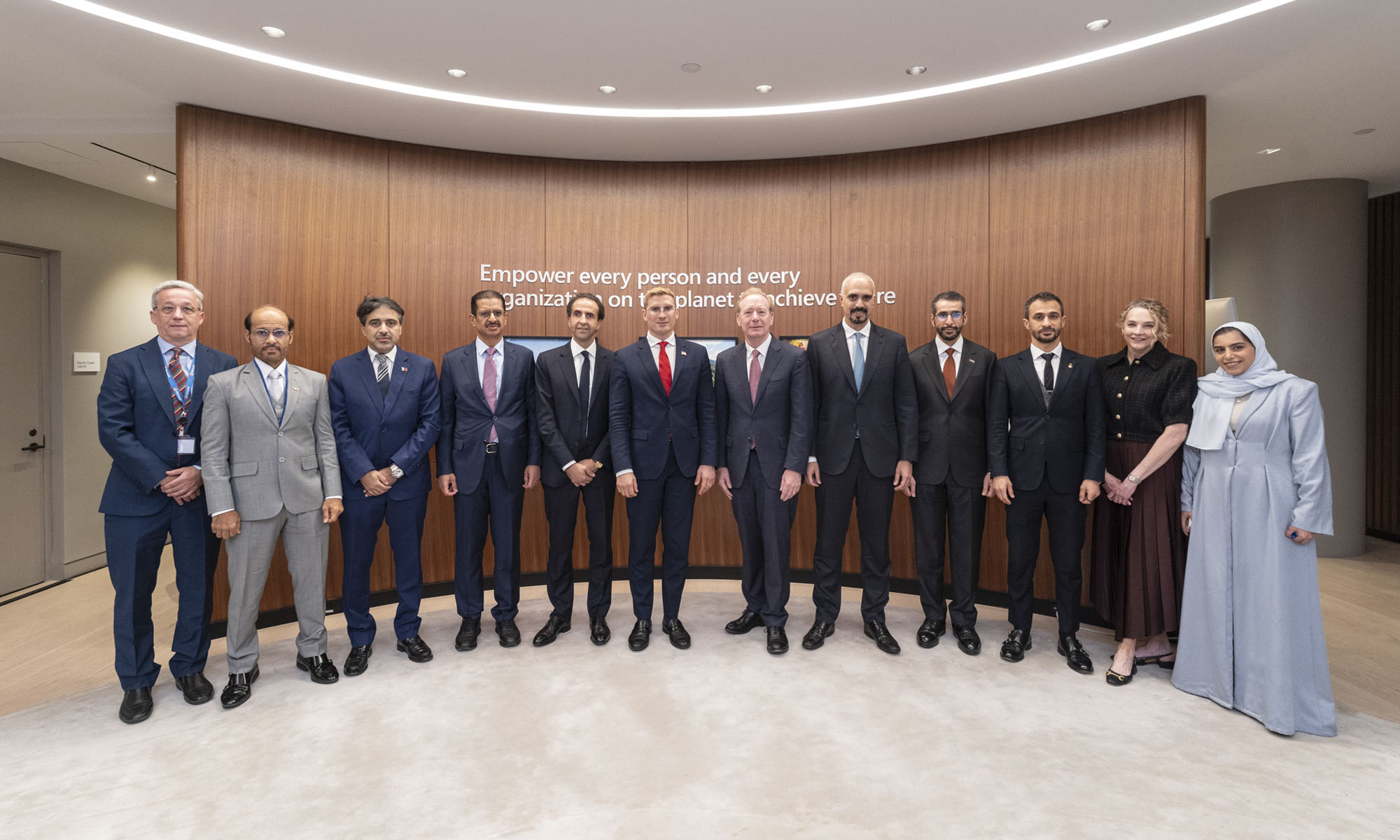
Microsoft is planning more than $10 billion of investment across the UAE, Saudi Arabia, Qatar and Kuwait through 2030, Vice Chair and President Brad Smith told Reuters, calling the spending schedule aggressive. The Iranian conflict that began on February 28 has not persuaded the company to scale back.
“We’re sustaining all the investments we planned to make before this conflict started, and we are in fact adding to them,” Smith said. The $10 billion-plus total does not, however, show how large those additions are.
The investment, which Smith described as part of Microsoft’s continued infrastructure expansion, is aimed at cloud and AI infrastructure and at the company’s growing regional operations. Microsoft also intends to put more than $400 million into subsea and terrestrial connectivity across the Middle East by 2030.
The spending fits the region’s own ambitions too. Gulf governments have been investing heavily in AI infrastructure as part of a push to diversify their economies beyond oil and gas and turn themselves into global technology hubs. Major cloud and AI providers have been drawn in part by the land and relatively low-cost energy on offer.
Microsoft is widening its partnerships with regional AI companies, though not on identical terms. In 2024, it invested $1.5 billion in Abu Dhabi-based G42 for a minority stake, and Smith currently sits on G42’s board. Saudi Arabia’s Humain and Qatar’s Qai are working with Microsoft on selected priority areas, but Smith said the company does not plan to make capital investments in either.
Also Read: Egypt’s Mobile Wallets Are Booming, But Cash Still Has Power
The conflict has added another strand to Microsoft’s work in the region. Since it began, Smith said, the company has supported regional partners with digital resilience assessments, and it is now working with Gulf countries through a digital resilience initiative focused on preparedness and the protection of critical data.
So far, the company has given no country-by-country breakdown of the investment, citing security among other factors. So while the headline figure is public, how Microsoft divides the spending among the four countries is not.

Microsoft Plans $10 Billion-Plus Gulf Expansion Despite Iran Conflict

In Kuwait, Your Surgeon Might Be Operating From Another Country

Qatar Folds 45 State Companies Into A Single Investment Platform

Trip.com Is Betting An AI Agent Will Book Your Next Vacation

Meta’s New $499 Plan Puts A Price On Reaching A Real Person

Apple’s First Folding iPhone Arrives Late To A Shrinking Market
Trip.com Is Betting An AI Agent Will Book Your Next Vacation

Egypt’s Mobile Wallets Are Booming, But Cash Still Has Power

OKX Bets Streaming Perks Can Take Crypto Mainstream Across MENA

Musk’s Boring Company Wants To Dig 150 KM Of Tunnel Under The UAE


-
 News3 weeks ago
Apple’s First Folding iPhone Arrives Late To A Shrinking Market
-
 News2 weeks ago
Trip.com Is Betting An AI Agent Will Book Your Next Vacation
-
 News2 weeks ago
Egypt’s Mobile Wallets Are Booming, But Cash Still Has Power
-
 News2 weeks ago
OKX Bets Streaming Perks Can Take Crypto Mainstream Across MENA