
News
NVIDIA Puts GPT-5.5 Codex In Hands Of 10,000 Staff
The chipmaker has significantly expanded OpenAI’s latest model across teams from engineering to HR under tight internal controls.

NVIDIA has started rolling out OpenAI’s GPT-5.5 model through the Codex coding agent to more than 10,000 employees, extending the tool well beyond software teams and into core business functions.
The deployment covers engineering, product, legal, marketing, finance, sales, HR, operations and developer programs. Staff are using Codex for coding, internal research and routine knowledge work as companies test whether AI agents can move from demos to daily use.
GPT-5.5 is running on NVIDIA’s GB200 NVL72 rack-scale systems, linking OpenAI’s newest model directly to the chipmaker’s latest infrastructure push. NVIDIA said the systems cut cost per million tokens by 35 times and raise token output per second per megawatt by 50 times versus earlier generations.
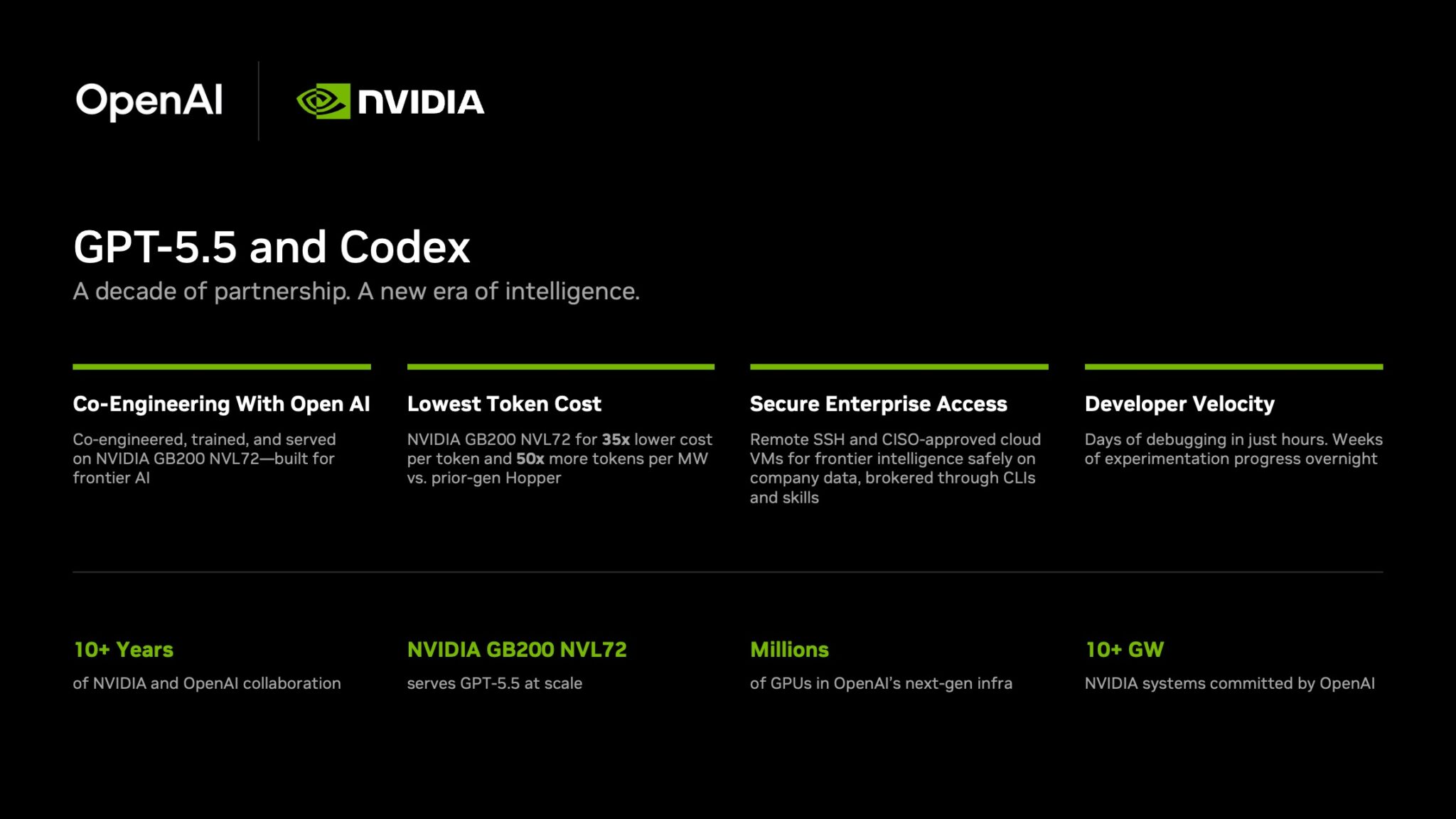
Inside the company, it says the effects are immediate. Debugging work that once took days is being finished in hours and experiments across large codebases that used to stretch over weeks are now handled overnight. Teams are also building features from natural-language prompts with fewer failed runs.
In a company-wide note urging staff to adopt the tool, CEO Jensen Huang wrote: “Let’s jump to lightspeed. Welcome to the age of AI.”
Security remains central to the rollout. Codex can connect through Secure Shell to approved cloud virtual machines, allowing agents to work with company data without moving it outside approved environments. NVIDIA said it assigned cloud VMs to employees so agents run in isolated sandboxes with full audit trails.
Also Read: Deezer Says AI Tracks Now Make Up 44% Of Uploads
The company added that the setup uses a zero-data-retention policy. Access to production systems is read-only through command-line tools and internal automation layers.
The move also highlights NVIDIA’s long relationship with OpenAI. NVIDIA said the partnership began in 2016, when Huang personally delivered the first DGX-1 AI supercomputer to OpenAI’s San Francisco office.
The two companies have since worked across hardware and model deployment. NVIDIA also said OpenAI plans to deploy more than 10 gigawatts of NVIDIA systems for future AI infrastructure.
For Gulf markets pouring money into sovereign AI and enterprise automation, the signal is clear: internal AI agents are moving from pilot phase to standard tooling.



News
Deezer Says AI Tracks Now Make Up 44% Of Uploads
The streamer says nearly 75,000 AI-made songs now hit its platform each day, even as those tracks account for just 1% to 3% of plays.
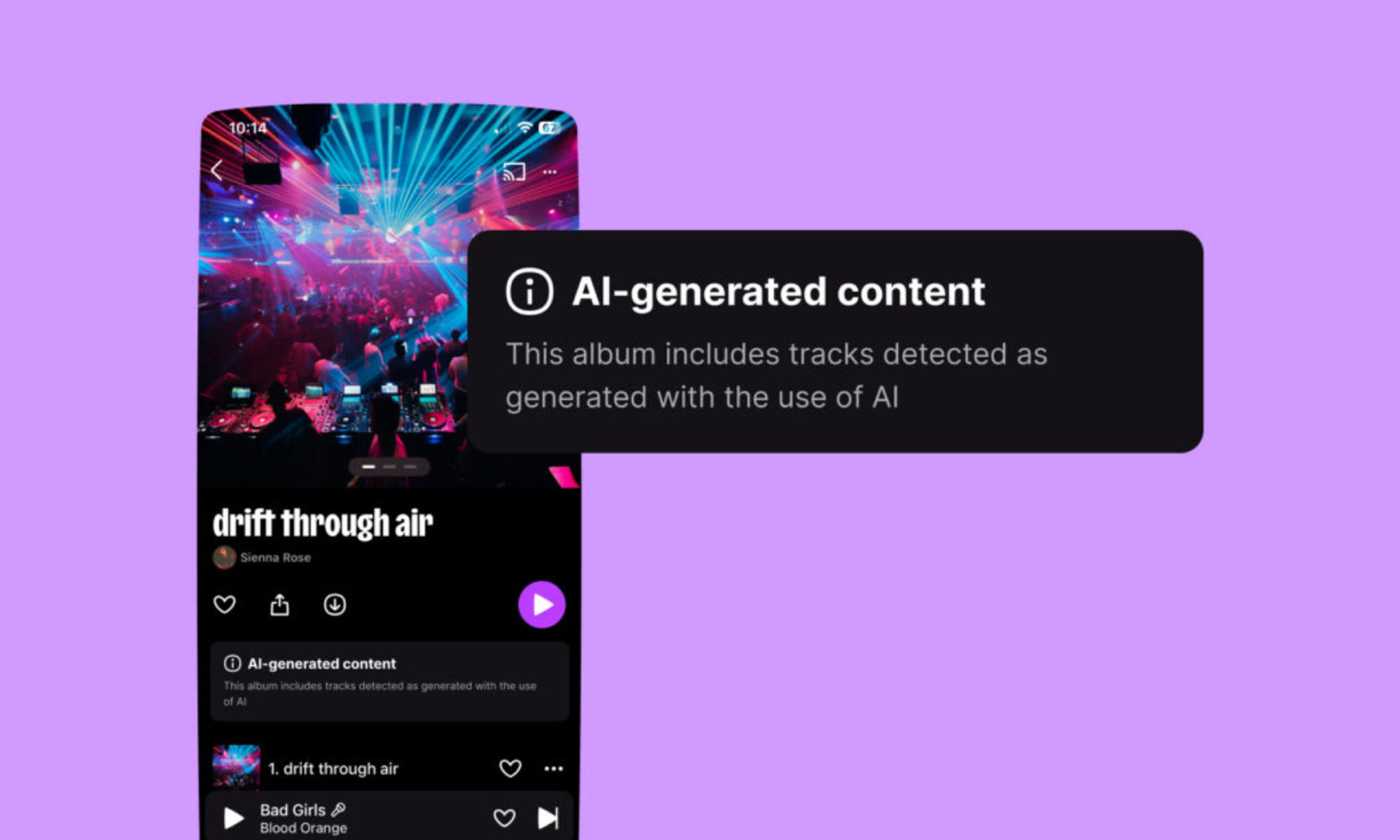
AI-generated music is becoming a real headache for music platforms, according to Deezer. The streaming service says it now receives nearly 75,000 AI-made tracks a day, equal to about 44% of all daily uploads to the platform.
The figure is up sharply from 10,000 daily AI uploads when Deezer launched its detection tool back in January 2025. The jump shows how quickly products such as Suno and Udio have made song creation cheap, fast, and easy to scale.
Despite the volume, Deezer says AI tracks still only account for 1% to 3% of total streams. The music gets few human listeners, but upload pressure is rising. The company says it is also seeing more “fraudulent” submissions.
Its response so far has been practical. Deezer has removed AI-generated songs from recommendation systems, demonetized them, and stopped storing high-resolution versions of those files.
The company also says it’s the only streaming platform currently tagging AI-generated tracks at scale, using that claim to position its moderation tools as a wider industry model.
“AI-generated music is now far from a marginal phenomenon and as daily deliveries keep increasing, we hope the whole music ecosystem will join us in taking action to help safeguard artist’s rights and promote transparency for fans,” CEO Alexis Lanternier said in a blog post.
Deezer has started licensing the detection technology to other companies, turning an internal control system into a commercial product. It says the tool can already identify music created with Suno and Udio, and can be extended to other generators if training data is available.
Also Read: Nano Banana 2 Arrives In MENA For Google Gemini Users
The company is also working on detection methods that would not require training datasets, a harder technical step that could widen coverage as new music models appear.
Rivals are taking mixed approaches. Spotify has rolled out policies aimed at curbing AI music. Apple Music is asking artists and labels to disclose AI-made tracks. Qobuz has begun automated labeling, while Bandcamp has banned AI music outright.
For now, Deezer’s numbers suggest the real issue is not listener demand. It’s supply.

NVIDIA Puts GPT-5.5 Codex In Hands Of 10,000 Staff

Deezer Says AI Tracks Now Make Up 44% Of Uploads

Yango Ride Introduces In-Chat Trip Planning In ChatGPT

Nano Banana 2 Arrives In MENA For Google Gemini Users


