
News
Omar Yaghi Becomes Saudi Arabia’s First Nobel Laureate In Chemistry
The award marks a historic moment for Saudi science and underscores Vision 2030’s focus on research and innovation.


Professor Omar Yaghi has won the 2025 Nobel Prize in Chemistry, the first Saudi citizen to receive the prestigious honor. The Royal Swedish Academy of Sciences recognized him for founding the field of reticular chemistry and developing metal-organic and covalent organic frameworks — materials now used in clean energy, environmental technologies and clean water harvesting.
Yaghi’s discoveries have reshaped material science, allowing molecules to form complex, functional networks with applications from carbon capture to hydrogen storage. His frameworks have opened routes to new industrial materials and commercial uses, bridging basic chemistry and engineering. As a professor at the University of California, Berkeley, he has published more than 300 papers and been cited over 250,000 times, placing him among the world’s most influential chemists.
Dr. Munir Eldesouki, president of King Abdulaziz City for Science and Technology (KACST), said the award “reflects the wise leadership’s vision of making the Kingdom a global center for science, knowledge, and innovation”. He added that Yaghi’s work on nanomaterials capable of pulling water from air “is a remarkable example of how science transforms passion into impact”.
Yaghi’s career has also brought him major international honors, including the King Faisal Prize in Science, the Wolf Prize in Chemistry, and the Albert Einstein World Award of Science. His recognition extends across both academic and industrial sectors for advancing sustainability-focused technologies.
Also Read: Dubai Expands Content Creators Program To Health & Science
Recently granted Saudi citizenship, Omar Yaghi serves as co-director of the KACST-UC Berkeley Center of Excellence for Nanomaterials for Clean Energy Applications, advisor to the KACST president, and board member of the Research, Development, and Innovation Authority. His appointment aligns with the Kingdom’s push to attract global talent and strengthen research partnerships as part of Vision 2030.
His Nobel win anchors Saudi Arabia on the global research map, a signal of how far its science ambitions have advanced under Vision 2030.




News
New Disney+ Streaming App Has Officially Launched In The UAE
The app’s recommendations now factor in what’s popular in the UAE, and a dedicated Junior Mode gives kids their own corner of Disney+.

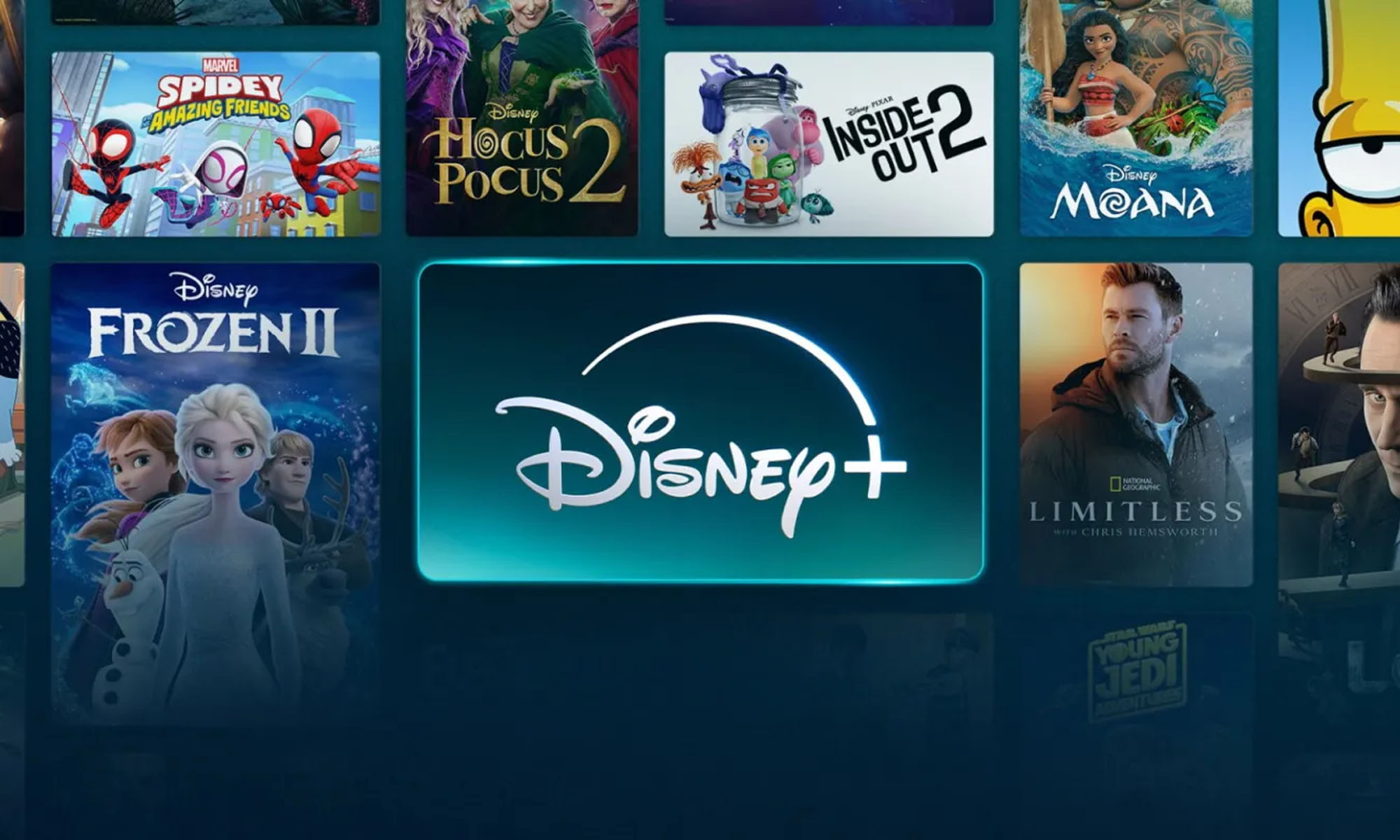
A new Disney+ app has officially launched in the UAE, and subscribers can now keep watching their favorite titles when they travel. Disney+ says access extends across supported markets in Europe, the United States and beyond.
The app is built around a dynamic homepage and simpler navigation, with recommendations drawn from each customer’s viewing habits and what’s popular in the UAE. Content from Hulu and ESPN is now easier to find alongside Disney+’s own library, the company says. Audio and subtitles come in up to 25 languages, and supported devices get high-quality video and sound.
For families, the app includes Junior Mode, a dedicated, simplified version of Disney+ for younger viewers, built around age-appropriate shows and movies. It sits alongside existing controls such as PIN-protected profiles, customizable content ratings and account notifications when a profile is changed.
The catalog still spans Disney, Pixar, Marvel, Star Wars, National Geographic, Hulu and FX. Returning series include Season 8 of “The Kardashians,” Season 23 of “Grey’s Anatomy” and Season 38 of “The Simpsons”. Also on the service are the second season of International Emmy and BAFTA Award-winning series “Rivals,” comedy “Only Murders in the Building,” Walt Disney Animation Studios’ “Zootropolis 2” and 20th Century Studios’ “Send Help”.
Also Read: Best Video Streaming Services In The Middle East
Marvel Television’s “VisionQuest” is on the way, and Disney’s live-action “Moana” is due later this autumn. Beyond Hollywood, the Turkish title “Halef” is coming to the platform alongside a lineup of Korean entertainment: Korean-Japanese romantic comedy “Merry Berry Love” is streaming now, and “The Remarried Empress” arrives November 4.
Existing subscribers will be prompted to download the new app and sign in with their current credentials, with on-screen steps covering account confirmation and profile setup. Subscriptions start at AED 49.99 per month and can be canceled at any time.
For UAE subscribers planning to travel, the update will likely be well received, but Disney has left one question open. It confirms Europe and the United States as supported markets but doesn’t yet say which others fall under and beyond.

New Disney+ Streaming App Has Officially Launched In The UAE

Dubai Says Its Deepfake Detector Needs Just 7 Seconds Of Video

OpenAI Has Announced A Visual Ad Format For ChatGPT

For etisalat, More Bandwidth Is A Matter Of Digital Sovereignty

NEOPAY Wants To Follow Merchants Across Channels And Borders

Trip.com Is Betting An AI Agent Will Book Your Next Vacation

Musk’s Boring Company Wants To Dig 150 KM Of Tunnel Under The UAE

OKX Bets Streaming Perks Can Take Crypto Mainstream Across MENA

Meta’s New $499 Plan Puts A Price On Reaching A Real Person

Apple’s First Folding iPhone Arrives Late To A Shrinking Market


-
 News3 weeks ago
Trip.com Is Betting An AI Agent Will Book Your Next Vacation
-
 News4 weeks ago
Musk’s Boring Company Wants To Dig 150 KM Of Tunnel Under The UAE
-
 News3 weeks ago
OKX Bets Streaming Perks Can Take Crypto Mainstream Across MENA
-
 News3 weeks ago
Meta’s New $499 Plan Puts A Price On Reaching A Real Person