
News
Passwords Are No Longer Required To Sign Into Google Accounts
Google will allow users to replace passwords and 2FA with passkeys.

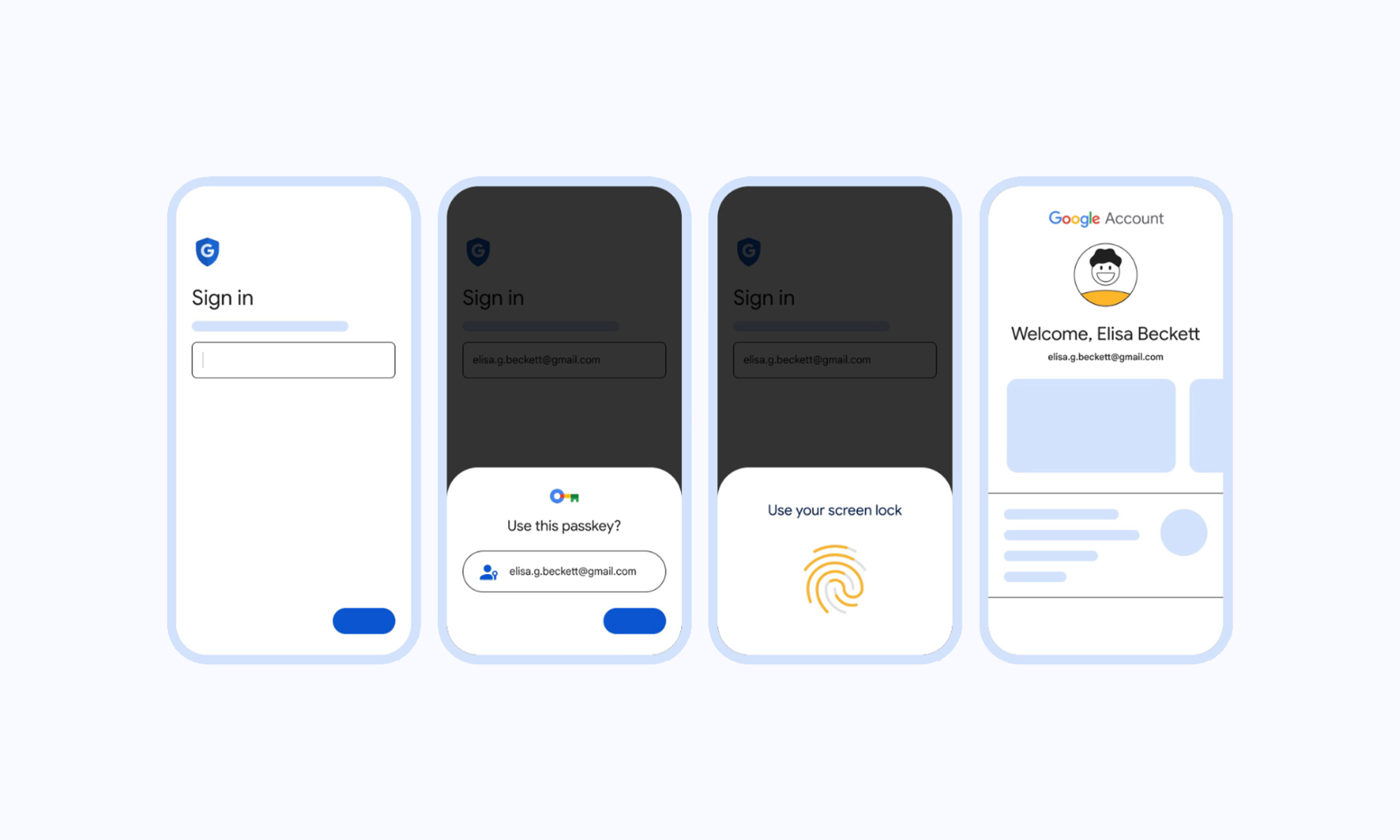
Google has taken a step towards a passwordless future, announcing that passkey functionality is being added to all Google accounts.
Passkeys are cryptographic tools that allow users to ditch passwords and two-factor verification when signing in. Google, along with Apple and Microsoft, are keen to push the technology, which uses a local PIN or a device’s biometric tools such as fingerprint scanners or Face ID.
Biometric data from passkeys isn’t shared with third parties and only exists on a user’s device, providing enhanced security since no passwords can be hacked or stolen.
When a passkey is added to a Google account, users will be prompted for it on new sign-ins or when potentially suspicious activity is detected. Passkeys can be stored on any compatible hardware, including iPhones with iOS 16 and Android devices running Android 9 and above. Users can access passkeys on other devices by using services such as iCloud or password managers like 1Password. In addition, Google also allows the following:
- Accounts can be accessed temporarily using someone else’s device by selecting “use a passkey from another device” to create a one-time sign-in.
- Passkeys can be revoked immediately in the account settings section if a user suspects a security breach, or a device is lost or stolen.
- Users of Google’s Advanced Protection Program (a free service providing additional security against phishing and malware) can use passkeys instead of physical security keys.
Also Read: Abu Dhabi Scientists Create Electronic Appetite Regulation Pill
If you’d prefer to log in to your account the traditional way, Google will continue to support regular passwords for the foreseeable future, allowing users without a biometric device to make the change once they eventually upgrade their hardware.





News
Samsung And Spotify Offer Free Premium Deal In MENA
Nearly seven in ten streams in the region come from 18-to-34-year-olds — the audience Samsung is hoping to entice into its ecosystem.
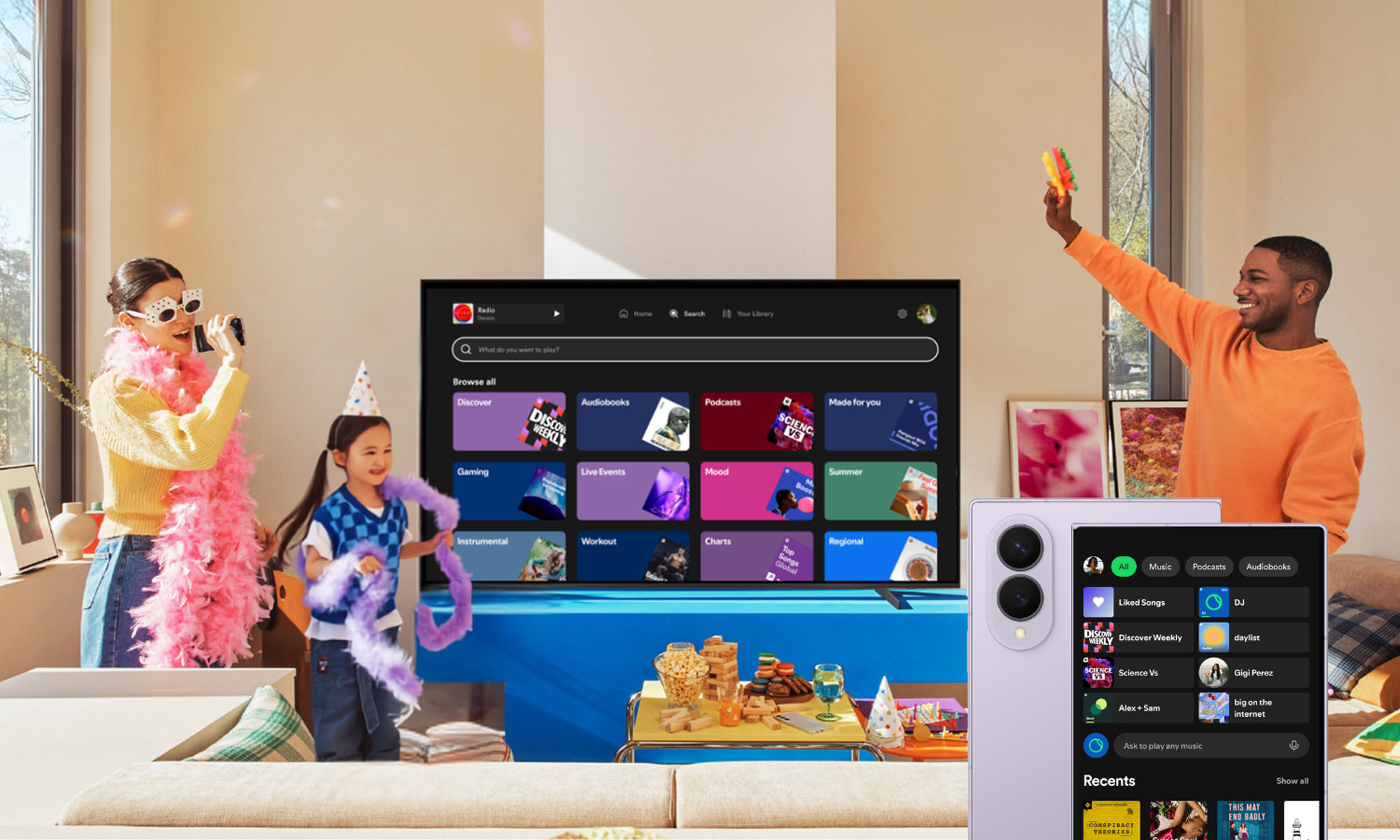
Samsung has announced a partnership with Spotify spanning the Middle East, North Africa, and Türkiye, bundling Spotify Premium with select devices across its ecosystem. The headline offer — up to four months of Premium for free — is a first for the region.
Customers in Saudi Arabia, the UAE, and Türkiye who buy any OLED or 98-inch television, or any Galaxy S or Z series mobile device, get four months of Spotify Premium. The offer, tiered by market and device, is available at retail and on Samsung.com, and redeemed through the Samsung Promotion and Samsung Members apps.
For Samsung, the strategy is less about free music than about lock-in. The Korean tech giant’s pitch is continuity: a track starts on a Galaxy smartphone through Galaxy Buds on the commute, moves to a Samsung TV and soundbar in the living room, and stays controllable from a Galaxy Watch. The more seamlessly music travels between those devices, the harder it becomes to swap any one of them for a rival’s.
“Technology should bring people closer to the things they love, and few things connect people the way music does,” said Omar Saheb, Regional VP of Marketing and Online Business at Samsung Electronics MENA. The partnership, he added, gives customers “a genuine reason to choose Samsung for the experience, not only the product”.
Also Read: Shokz OpenFit Pro Review: Open-Ear Audio Finally Grows Up
For subscribers, Premium brings the usual package: ad-free listening, offline downloads, richer audio quality on Galaxy Buds and Samsung sound devices, and Jam, which lets friends build a shared queue.
“At Spotify, we are always working to make every listening moment feel more personal, meaningful, and worth it,” said Rami Jamal, Head of Partnerships at Spotify for South Asia, Middle East, and Africa.
The demographics go a long way to explaining the strategy. Across MENA, Türkiye, and Pakistan, nearly seven in ten Spotify streams come from listeners aged 18 to 34, according to the company — precisely the audience Samsung wants inside its hardware ecosystem before buying habits harden.

Samsung And Spotify Offer Free Premium Deal In MENA

Lebanon’s 5G Era Begins With 150 Stations And A $1M Budget

Syria Just Got Its First Super App Featuring Built-In Digital Payments

Shokz OpenFit Pro Review: Open-Ear Audio Finally Grows Up

This UAE Platform Wants To Replace Fashion Photo Shoots With AI

TikTok Hopes Labels And Literacy Will Tame AI-Generated Content

Samsung’s Galaxy Watch 9 And Ultra 2 Specs Leak Ahead Of Unpacked

Gulf AI Job Vacancies Nearly Triple, But Hiring Stays Lopsided

Dubai Police Finishes 65 Projects, Says AI Is The Next Priority

Beirut Wins US Flight Access, But Carriers Aren’t Sold Yet


-
 News3 weeks ago
Gulf AI Job Vacancies Nearly Triple, But Hiring Stays Lopsided
-
 News3 weeks ago
Dubai Police Finishes 65 Projects, Says AI Is The Next Priority
-
 News3 weeks ago
Beirut Wins US Flight Access, But Carriers Aren’t Sold Yet
-

 News3 weeks ago
Samsung’s Fold Goes Wide, And The Whole Galaxy Range Gets Pricier